
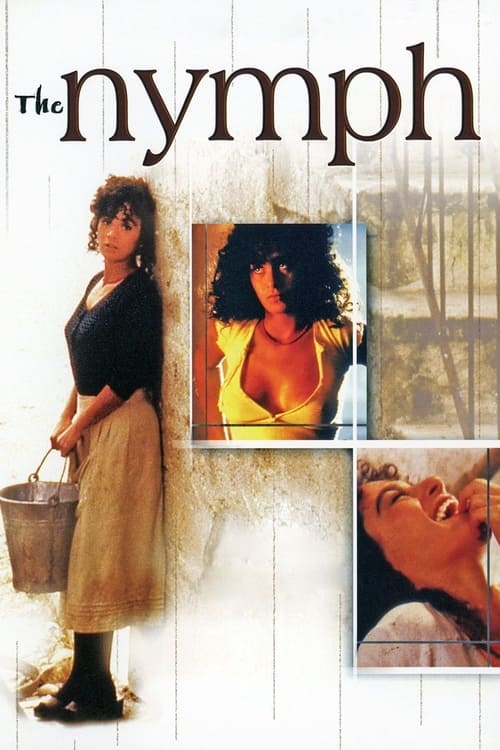


















Popular
What role does the setting play in the development of the plot?
How do the supporting characters influence the protagonist's journey?
What are the key motivations of the antagonist in the story?
What is the significance of the nymph character in the story?
How does the protagonist's relationship with the nymph evolve throughout the film?
Should I watch it?
Ask Your Own Question

What is the plot?
Sorry, we aren't able to watch and write up a full detailed plot yet. Check back in a few days.






What is the ending?
In the ending of "The Nymph," the main character, a young woman named Tania, confronts the consequences of her actions and the supernatural forces at play. The film culminates in a tragic resolution where Tania's fate intertwines with the mystical elements surrounding her, leading to a poignant conclusion that leaves a lasting impact on the characters involved.
As the film approaches its climax, Tania finds herself in a secluded forest, a place that has been central to the story's supernatural occurrences. The atmosphere is thick with tension, and the air is charged with an otherworldly energy. Tania, having been drawn deeper into the realm of the nymphs, faces the reality of her choices and the sacrifices that must be made.
In a pivotal scene, Tania encounters the nymphs, ethereal beings who embody the beauty and danger of nature. They reveal the truth about their existence and the price of Tania's desire to connect with them. The nymphs, both alluring and menacing, represent the duality of nature--its capacity for creation and destruction. Tania's internal struggle is palpable as she grapples with her longing for freedom and the cost that comes with it.
As the confrontation escalates, Tania's emotional state shifts from hope to despair. She realizes that her connection to the nymphs has consequences not only for herself but also for those she loves. The tension reaches a breaking point when Tania must make a choice: to embrace her newfound identity among the nymphs or to return to her human life, leaving behind the enchantment that has captivated her.
In the final moments, Tania chooses to sacrifice her human life, fully embracing the nymph's world. This decision is marked by a hauntingly beautiful transformation, as she becomes one with the forest, her essence merging with the natural world. The scene is visually striking, with light filtering through the trees, casting an ethereal glow around her as she fades into the nymph realm.
The fate of the other main characters is equally poignant. Tania's love interest, who has been searching for her throughout the film, arrives just in time to witness her transformation. His heart is filled with sorrow and longing as he realizes that Tania has chosen a path that separates them forever. The emotional weight of this moment is heavy, as he grapples with the loss of the woman he loves to a world he cannot enter.
The film concludes with a lingering sense of melancholy, as the forest stands silent, a testament to Tania's choice. The nymphs continue to dance among the trees, a reminder of the beauty and danger that lies within nature. The final shot captures the essence of Tania's transformation, leaving the audience with a haunting image of her spirit intertwined with the forest, forever a part of the mystical world she chose over her human existence.
Is there a post-credit scene?
The Nymph, produced in 1996, does not have a post-credit scene. The film concludes its narrative without any additional scenes or content after the credits roll. The story wraps up with the resolution of the main plot, focusing on the emotional and psychological journeys of the characters involved, particularly the themes of love, loss, and the supernatural elements that permeate the film. The absence of a post-credit scene allows the audience to reflect on the film's themes and the fates of the characters as the credits play.
What role does the setting play in the development of the plot?
The setting, often depicted as a lush, enchanting forest, plays a crucial role in establishing the film's atmosphere. It serves as a backdrop for the protagonist's encounters with the nymph, enhancing the sense of magic and danger. The forest's beauty contrasts with the underlying tension of the narrative, reflecting the protagonist's internal conflict and the seductive yet perilous nature of the nymph.
How do the supporting characters influence the protagonist's journey?
The supporting characters serve as foils to the protagonist, each representing different perspectives on love, desire, and the supernatural. Their interactions provide insight into the protagonist's internal struggles, often challenging their perceptions and decisions. These characters help to illuminate the consequences of the protagonist's choices, ultimately shaping their path and growth throughout the film.
What are the key motivations of the antagonist in the story?
The antagonist is driven by jealousy and a desire to protect their own interests, which are threatened by the nymph's influence over the protagonist. Their motivations stem from a fear of losing control and a deep-seated need to assert dominance in a world where the nymph's power disrupts the status quo. This creates a compelling conflict that propels the narrative forward.
What is the significance of the nymph character in the story?
The nymph character serves as a central figure in the narrative, embodying both allure and danger. She represents the intersection of desire and the supernatural, drawing the protagonist into a world that blurs the lines between reality and fantasy. Her interactions with the main characters reveal their deepest fears and desires, ultimately leading to transformative experiences.
How does the protagonist's relationship with the nymph evolve throughout the film?
Initially, the protagonist is captivated by the nymph's beauty and mystery, leading to a sense of obsession. As the story progresses, this infatuation turns into a struggle for control, as the protagonist grapples with the consequences of their desires. The relationship becomes a tumultuous journey of self-discovery, revealing the protagonist's vulnerabilities and the darker aspects of their personality.
Is this family friendly?
"The Nymph," produced in 1996, is not considered family-friendly due to several potentially objectionable elements. The film contains scenes that may be unsettling for children or sensitive viewers, including:
- Violence: There are instances of physical confrontations and aggressive behavior that may be disturbing.
- Sexual Content: The film includes suggestive themes and scenes that may not be appropriate for younger audiences.
- Dark Themes: The narrative explores complex emotional states, including despair and obsession, which may be heavy for children to process.
- Supernatural Elements: The presence of supernatural beings and eerie atmospheres may be frightening for sensitive viewers.
These aspects contribute to a tone that is more suited for mature audiences.









