












Popular
What motivates Julien Sorel to pursue a career in the clergy despite his ambitions for social advancement?
How does Julien's relationship with Madame de Rênal evolve throughout the film?
What role does the character of Count de La Mole play in Julien's life?
What internal conflicts does Julien face regarding his feelings for Madame de Rênal and his ambitions?
How does the theme of hypocrisy manifest in the character of Julien Sorel?
Should I watch it?
Ask Your Own Question

What is the plot?
Sorry, we aren't able to watch and write up a full detailed plot yet. Check back in a few days.
More Movies Like This
Browse All Movies →









What is the ending?
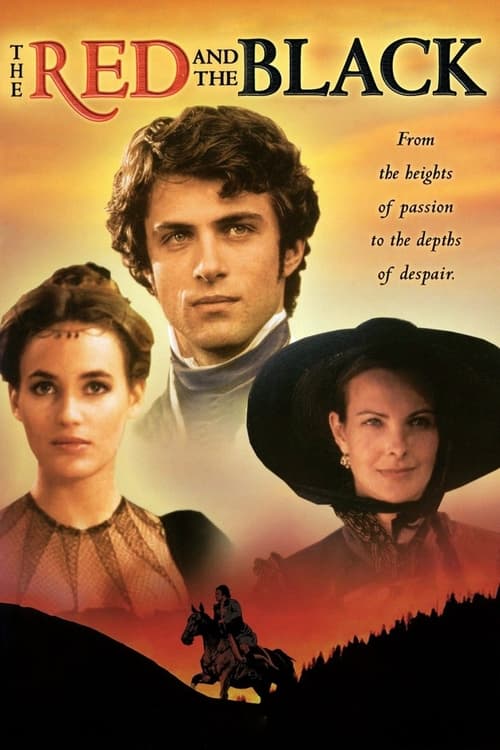
In the ending of "The Red and the Black," Julien Sorel faces the consequences of his actions after being discovered in a compromising situation. He is sentenced to death for the murder of Madame de Rênal. In his final moments, he reflects on his life and the choices he made, ultimately meeting his fate with a sense of resignation.
As the film draws to a close, Julien Sorel, having been arrested for the attempted murder of Madame de Rênal, finds himself in a grim prison cell. The atmosphere is heavy with despair, and the weight of his actions bears down on him. He is haunted by memories of his past, particularly his tumultuous relationships with the women in his life, including Madame de Rênal and Mathilde de la Mole.
In a series of flashbacks, we see Julien's rise from humble beginnings to a position of ambition and desire. His aspirations to climb the social ladder have led him to betray those who cared for him. The emotional turmoil within him is palpable; he grapples with feelings of love, betrayal, and regret.
As he awaits his trial, Julien is visited by Madame de Rênal, who, despite the pain he has caused her, still harbors feelings for him. Their encounter is charged with tension, as she expresses her sorrow and forgiveness, revealing the depth of her love. Julien, however, is conflicted; he feels both remorse for his actions and a sense of inevitability about his fate.
The trial itself is a spectacle, with the townspeople eager to witness the downfall of a man who dared to challenge societal norms. Julien's defense is weak, and the evidence against him is overwhelming. The courtroom is filled with whispers and gasps as the verdict is read: guilty. The sentence is death.
In the final scenes, Julien is led to the guillotine. The atmosphere is somber, and the crowd is a mix of curiosity and disdain. As he walks to his execution, he reflects on his life choices, the fleeting nature of ambition, and the love he lost. His thoughts drift to Mathilde, who has been left heartbroken by his actions.
In his last moments, Julien displays a sense of calm acceptance. He acknowledges the consequences of his ambition and the pain he has caused to those he loved. As the blade falls, the screen fades to black, leaving the audience to ponder the tragic trajectory of Julien's life and the societal constraints that shaped his fate.
Madame de Rênal, despite her suffering, finds a semblance of peace in her forgiveness of Julien. Mathilde, on the other hand, is left to grapple with the loss of the man she loved, forever marked by the tragedy of their relationship. The film closes on a note of melancholy, emphasizing the themes of ambition, love, and the harsh realities of societal expectations.
Is there a post-credit scene?
The movie "The Red and the Black," produced in 1997, does not contain a post-credit scene. The film concludes its narrative without any additional scenes or content after the credits roll. The story wraps up with the resolution of the main character, Julien Sorel's, journey, leaving the audience to reflect on the themes of ambition, love, and societal constraints that have been explored throughout the film.
What motivates Julien Sorel to pursue a career in the clergy despite his ambitions for social advancement?
Julien Sorel, the protagonist, is driven by a complex mix of ambition, desire for power, and a longing for acceptance. Coming from a humble background as the son of a carpenter, he sees the clergy as a means to elevate his social status. His intelligence and charisma lead him to believe that he can manipulate the church's influence to achieve his goals. However, his motivations are also intertwined with a deep-seated need for validation and recognition, stemming from his childhood experiences.
How does Julien's relationship with Madame de Rênal evolve throughout the film?
Julien's relationship with Madame de Rênal begins as a passionate and illicit affair, rooted in their mutual attraction and the thrill of secrecy. Initially, Madame de Rênal is captivated by Julien's youthful ambition and charm, while Julien is drawn to her beauty and the affection she offers, which contrasts sharply with his harsh upbringing. As their relationship deepens, it becomes a source of emotional conflict for both characters, with Julien struggling between his ambitions and genuine feelings for her. Ultimately, their bond is tested by societal pressures and Julien's relentless pursuit of status.
What role does the character of Count de La Mole play in Julien's life?
Count de La Mole serves as a pivotal figure in Julien's life, representing both opportunity and the complexities of social hierarchy. Initially, the Count is impressed by Julien's intellect and ambition, offering him a position in his household. This relationship provides Julien with a glimpse into the upper echelons of society, fueling his aspirations. However, the Count's eventual disapproval of Julien's past actions and his relationship with Madame de Rênal highlights the precarious nature of Julien's social ascent and the limitations imposed by class distinctions.
What internal conflicts does Julien face regarding his feelings for Madame de Rênal and his ambitions?
Julien grapples with intense internal conflicts as he navigates his feelings for Madame de Rênal and his relentless ambition. On one hand, he experiences genuine love and affection for her, which brings him emotional fulfillment and a sense of belonging. On the other hand, his ambition drives him to pursue a life of power and prestige, often leading him to view relationships as mere stepping stones. This dichotomy creates a profound sense of guilt and confusion within Julien, as he struggles to reconcile his desires for both love and social elevation, ultimately leading to tragic consequences.
How does the theme of hypocrisy manifest in the character of Julien Sorel?
Julien Sorel embodies the theme of hypocrisy through his dual nature and the masks he wears to navigate different social environments. He often presents himself as a devout and pious individual to gain favor within the church and among the aristocracy, while internally he harbors ambitions that contradict these outward displays of virtue. This duplicity is particularly evident in his relationships, where he manipulates the affections of both Madame de Rênal and later, Mathilde de La Mole, to further his own goals. Julien's hypocrisy ultimately leads to his downfall, as the very society he seeks to conquer exposes his true nature.
Is this family friendly?
The Red and the Black, produced in 1997, is a film that explores complex themes and contains several elements that may not be suitable for children or sensitive viewers. Here are some potentially objectionable or upsetting aspects:
-
Themes of Ambition and Betrayal: The protagonist, Julien Sorel, navigates a world filled with ambition, manipulation, and betrayal, which may be difficult for younger audiences to fully understand or appreciate.
-
Romantic Relationships: The film includes romantic entanglements that involve manipulation and power dynamics, which may be uncomfortable for some viewers.
-
Violence and Conflict: There are scenes that depict emotional and psychological conflict, as well as moments of tension that could be distressing.
-
Social Class Struggles: The film addresses issues of class disparity and societal expectations, which may be heavy themes for younger viewers.
-
Moral Ambiguity: Characters often face moral dilemmas, and the exploration of their darker motivations may be unsettling for some.
Overall, while the film is rich in narrative and character development, its themes and content may not be appropriate for all audiences, particularly children.







