
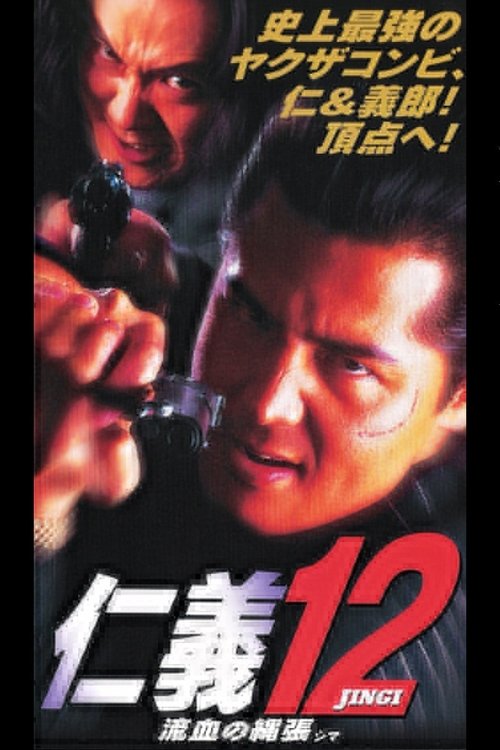






Popular
What motivates the main character, Kuroda, in his quest for revenge throughout the film?
How does the relationship between Kuroda and his brother influence the events of the story?
What role does the character of Yoko play in Kuroda's journey?
How does the film depict the conflict between rival yakuza factions?
What is the significance of the setting in Shima for the characters and the plot?
Should I watch it?
Ask Your Own Question

What is the plot?
Sorry, we aren't able to watch and write up a full detailed plot yet. Check back in a few days.








What is the ending?
In the ending of "Jingi 12: Bloody Territory (Shima)," the film culminates in a violent confrontation between rival yakuza factions. The main character, Kuroda, faces betrayal and loss, leading to a tragic resolution that underscores the themes of loyalty and the harsh realities of yakuza life. The film concludes with a sense of inevitability, as Kuroda's fate is sealed by the choices he and others have made.
As the final act unfolds, the tension escalates. Kuroda, having navigated a treacherous landscape of alliances and enmities, finds himself cornered. The scene shifts to a dimly lit warehouse, where the air is thick with anticipation. Kuroda stands resolute, his face a mask of determination, yet his eyes betray a flicker of doubt. He knows that the confrontation with his enemies is imminent, and the stakes have never been higher.
The rival yakuza members, led by a ruthless antagonist, enter the scene, their presence commanding and menacing. The atmosphere crackles with hostility as both sides exchange heated words, each taunting the other. Kuroda's internal struggle is palpable; he reflects on the bonds he has forged and the betrayals he has suffered. The weight of his decisions hangs heavily on him, and he grapples with the consequences of a life steeped in violence.
As the confrontation escalates, gunfire erupts, shattering the tense silence. Kuroda fights fiercely, his movements a blend of desperation and skill. The camera captures the chaos of the battle, with flashes of gunfire illuminating the dark corners of the warehouse. Kuroda's allies fall around him, and he feels the sting of loss as he witnesses the downfall of those he once considered brothers.
In a pivotal moment, Kuroda confronts the antagonist in a brutal showdown. The two men exchange blows, their fight a visceral representation of their conflicting ideologies. Kuroda's resolve is tested as he recalls the sacrifices made by his comrades. The emotional weight of the battle is evident; each punch thrown is not just a physical blow but a culmination of years of loyalty and betrayal.
Ultimately, Kuroda emerges victorious, but the victory is bittersweet. As he stands over the defeated antagonist, the realization of what he has lost sinks in. The camera lingers on Kuroda's face, capturing the mixture of triumph and sorrow. He has survived, but at what cost? The warehouse, once a battleground, now feels like a tomb for the dreams and lives that have been extinguished.
In the aftermath, Kuroda is left to contemplate his future. The remaining members of his faction gather around him, their faces etched with grief and uncertainty. The bonds that once held them together are frayed, and the weight of their losses hangs heavily in the air. Kuroda's fate is left ambiguous; he stands at a crossroads, embodying the struggle between the life he has known and the possibility of redemption.
As the film draws to a close, the camera pulls back, revealing the desolate landscape outside the warehouse. The sun begins to rise, casting a pale light over the scene, symbolizing the dawn of a new day but also the lingering shadows of the past. Kuroda's journey is a testament to the harsh realities of the yakuza world, where loyalty is fleeting, and the consequences of one's choices are inescapable. The film ends on a note of somber reflection, leaving the audience to ponder the true cost of a life lived in the shadows.
Is there a post-credit scene?
In "Jingi 12: Bloody Territory (Shima)," there is no post-credit scene. The film concludes its narrative without any additional scenes or content after the credits roll. The story wraps up with the resolution of the main conflicts and character arcs, leaving the audience with a sense of closure regarding the events that transpired throughout the film. The focus remains on the intense drama and the emotional journeys of the characters, culminating in a powerful ending that reflects the themes of loyalty, betrayal, and the harsh realities of yakuza life.
What motivates the main character, Kuroda, in his quest for revenge throughout the film?
Kuroda is driven by a deep sense of betrayal and loss after the murder of his brother, which fuels his desire for vengeance against those responsible. His internal struggle is marked by a mix of grief and anger, pushing him to confront the violent world of yakuza and the moral dilemmas that come with it.
How does the relationship between Kuroda and his brother influence the events of the story?
The bond between Kuroda and his brother is central to the narrative, as their close relationship highlights Kuroda's motivations for revenge. Flashbacks reveal their shared dreams and aspirations, making Kuroda's quest for vengeance not just a personal vendetta but a means to honor his brother's memory.
What role does the character of Yoko play in Kuroda's journey?
Yoko serves as both a love interest and a moral compass for Kuroda. Her presence brings moments of tenderness and humanity to Kuroda's otherwise brutal path, and her concerns about his violent choices create tension, forcing Kuroda to confront the consequences of his actions.
How does the film depict the conflict between rival yakuza factions?
The film portrays the rivalry between yakuza factions through intense and violent confrontations, showcasing the brutal reality of gang warfare. The power struggles are depicted with graphic violence, highlighting the stakes involved and the personal vendettas that drive the characters, particularly Kuroda.
What is the significance of the setting in Shima for the characters and the plot?
The setting of Shima is significant as it represents both a physical territory and a metaphorical battleground for loyalty and power. The island's isolation amplifies the tension between the characters, as they navigate their loyalties and rivalries in a confined space, making every confrontation feel more personal and intense.
Is this family friendly?
"Jingi 12: Bloody Territory (Shima)" is not considered family-friendly due to its mature themes and graphic content. Here are some potentially objectionable or upsetting aspects that may occur:
-
Violence: The film contains intense scenes of gang violence, including physical confrontations and bloodshed, which may be disturbing for younger viewers or sensitive individuals.
-
Mature Themes: The narrative explores themes of crime, betrayal, and the harsh realities of life within the yakuza, which may be complex and unsettling for children.
-
Strong Language: The dialogue includes coarse language and profanity, which may not be suitable for younger audiences.
-
Emotional Turmoil: Characters experience significant emotional distress, including loss and betrayal, which could be upsetting for sensitive viewers.
-
Substance Abuse: There are depictions of drug use and alcohol consumption, which may not be appropriate for children.
These elements contribute to the film's overall tone and may not be suitable for a younger audience or those who are sensitive to such content.