














Popular
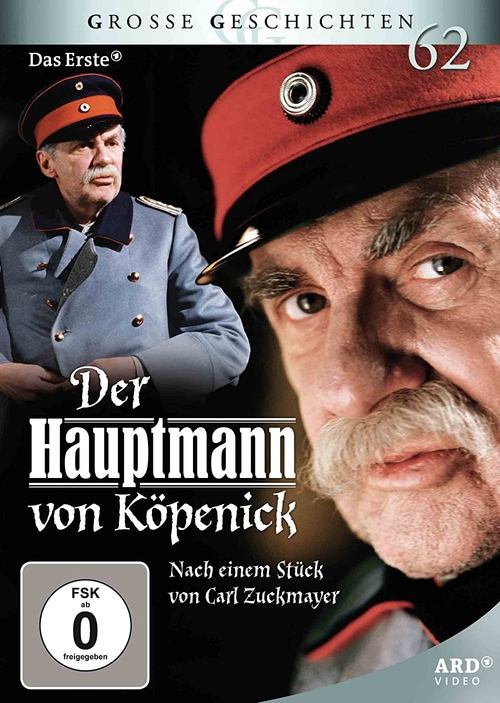
Who is the main character in Der Hauptmann von Köpenick and what motivates his actions?
What is the significance of the uniform that Wilhelm Voigt steals?
How does Wilhelm Voigt's impersonation of a captain affect the townspeople?
What role does the setting of Köpenick play in the story?
How do the authorities react to Wilhelm Voigt's actions throughout the film?
Should I watch it?
Ask Your Own Question

What is the plot?
Sorry, we aren't able to watch and write up a full detailed plot yet. Check back in a few days.





What is the ending?
In the ending of "Der Hauptmann von Köpenick," the protagonist, Wilhelm Voigt, is arrested after his elaborate ruse as a captain in the German army is uncovered. Despite his initial triumph and the respect he garners from the townspeople, he faces the harsh reality of his actions. The film concludes with Voigt being taken away by the authorities, leaving behind a poignant reflection on identity, authority, and the absurdity of societal structures.
As the final scenes unfold, we see Wilhelm Voigt, having successfully commandeered the town of Köpenick, basking in the fleeting glory of his impersonation. Dressed in a captain's uniform, he has managed to convince the townspeople and even the local authorities of his fabricated identity. The townspeople, initially enamored by his presence, celebrate him as a hero, unaware of the impending consequences of his deception.
However, the atmosphere shifts dramatically when the real military authorities arrive. Voigt's façade begins to crumble as the officers confront him, revealing the truth behind his impersonation. The tension escalates as Voigt, who had once felt empowered and in control, is now faced with the stark reality of his situation. The joy and admiration he experienced from the townspeople quickly dissipate, replaced by a sense of betrayal and confusion among them.
As he is apprehended, Voigt's internal struggle becomes evident. He grapples with the irony of having achieved a moment of respect and authority only to be stripped of it in an instant. The townspeople, who had rallied around him, now watch helplessly as he is taken away, their expressions a mix of admiration for his audacity and sorrow for his downfall.
In the final moments, Voigt is led away by the police, his dreams of a new life shattered. The film closes on a somber note, emphasizing the futility of his quest for dignity and recognition in a society that ultimately values conformity over individuality. The fate of Voigt is sealed as he faces imprisonment, a stark reminder of the consequences of challenging the established order.
The other characters, such as the townspeople who initially supported Voigt, are left in a state of disillusionment. They are forced to confront the reality of their own complicity in the farce, having celebrated a man who, despite his noble intentions, ultimately deceived them. The film leaves viewers with a lingering sense of the absurdity of authority and the human desire for recognition, encapsulated in Voigt's tragic journey.
Is there a post-credit scene?
The movie "Der Hauptmann von Köpenick," produced in 1997, does not contain a post-credit scene. The film concludes its narrative without any additional scenes or content after the credits roll. The story wraps up with the resolution of the main plot, focusing on the character of Wilhelm Voigt and his experiences as he impersonates a captain in the German army, highlighting themes of authority, identity, and social justice. The ending leaves the audience reflecting on the implications of Voigt's actions and the societal structures he challenges throughout the film.
Who is the main character in Der Hauptmann von Köpenick and what motivates his actions?
The main character is Wilhelm Voigt, a skilled shoemaker who has been released from prison after serving time for forgery. His motivation stems from a deep sense of frustration and alienation from society, as he struggles to find a place in a world that has marginalized him. Voigt's desire for respect and recognition drives him to impersonate a captain in order to assert authority and reclaim his dignity.
What is the significance of the uniform that Wilhelm Voigt steals?
The uniform that Wilhelm Voigt steals is a pivotal symbol in the film. It represents not only authority and power but also the societal structures that Voigt feels excluded from. When he dons the uniform, he transforms from a mere shoemaker into a figure of command, allowing him to manipulate the perceptions of those around him and challenge the rigid social hierarchy.
How does Wilhelm Voigt's impersonation of a captain affect the townspeople?
Wilhelm Voigt's impersonation of a captain initially instills fear and respect among the townspeople, who are conditioned to obey authority figures. As he takes control of the town, the citizens are both bewildered and fascinated by his audacity. His actions reveal their own complicity in blindly following authority, and they begin to question their own roles within the societal structure.
What role does the setting of Köpenick play in the story?
The setting of Köpenick, a small town in Germany, plays a crucial role in the story as it embodies the bureaucratic and authoritarian nature of early 20th-century German society. The town's rigid social order and the presence of military authority create a backdrop that amplifies Voigt's rebellion against the system. The contrast between the mundane life of the town and Voigt's extraordinary actions highlights the absurdity of the social norms.
How do the authorities react to Wilhelm Voigt's actions throughout the film?
The authorities initially react with disbelief and confusion to Wilhelm Voigt's actions. As he successfully executes his plan, they become increasingly frustrated and embarrassed by their inability to control the situation. Their reactions range from anger to ridicule, ultimately culminating in a sense of helplessness as Voigt's audacity exposes the flaws in their own authority and the absurdity of their bureaucratic processes.
Is this family friendly?
"Der Hauptmann von Köpenick," produced in 1997, is generally considered suitable for a family audience, but it does contain some elements that may be sensitive for children or more sensitive viewers.
-
Themes of Authority and Rebellion: The film explores themes of authority, social injustice, and rebellion against oppressive systems, which may be complex for younger viewers to fully grasp.
-
Depictions of Poverty and Desperation: The protagonist, Wilhelm Voigt, experiences significant hardship and poverty, which may evoke feelings of sadness or discomfort.
-
Military and Government Authority: There are scenes involving military personnel and government officials that may be intimidating or unsettling for some viewers, particularly children.
-
Emotional Struggles: The character's internal conflicts and emotional struggles, including feelings of alienation and frustration, may resonate deeply and could be upsetting for sensitive viewers.
-
Social Commentary: The film contains social commentary on the treatment of individuals by society, which may provoke thought and discussion that could be heavy for younger audiences.
Overall, while the film is not overtly graphic or violent, its themes and emotional depth may require parental guidance for younger viewers.









