






Popular
What role do the supporting characters play in the protagonist's journey?
What is the significance of the magical portrait in the story?
How does the protagonist's relationship with the portrait evolve throughout the film?
What challenges does the protagonist face in trying to harness the power of the portrait?
How does the climax of the film relate to the protagonist's understanding of the portrait?
Should I watch it?
Ask Your Own Question

What is the plot?
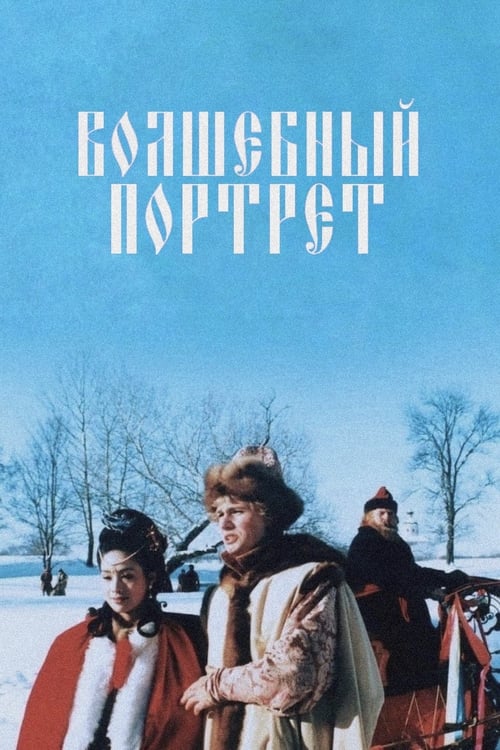
The film opens just before Christmas in a snowy Russian village, where Ivan is told by prophecy that he will meet a foreign beauty. That promise hangs in the winter air like falling snow, and when the forest sorceress later rewards him for his kindness with a magical portrait, the prophecy begins to feel less like fortune-telling and more like fate taking shape in his hands.
Ivan is a gentle young man, the kind of person who receives impossible things without suspicion. He carries the portrait back through the cold village and looks at it as though it is already a window into another life. Painted on the surface is a beautiful Chinese woman named Xiao Qing, and the sight of her strikes him so hard that he falls in love at once, before he even understands who she is or why she seems so painfully alive. The portrait is not just an image. It has presence, warmth, and a strange sorrow in its stillness. Ivan is drawn to it in the way lonely people are drawn to miracles. He gazes at her face, and the film lets that first moment linger long enough to show that this is not ordinary attraction but a spell crossing from one soul into another.
Then the impossible happens. The portrait comes to life.
Xiao Qing steps out of the painted stillness and speaks to Ivan, and the story turns from a fairy tale gesture into a deeper tragedy. She tells him the astonishing truth of her fate. She is not merely a beautiful woman from far away. She has been taken from her parents by the evil sorcerer-emperor An Yuan Pa, who abducted her against her will because he wanted to make her his wife. The act is not presented as a romantic conquest or even a simple kidnapping; it is domination, the theft of a daughter from her family, her identity reduced to something he believes he can own. The revelation gives weight to every earlier image. Her beauty is no longer simply enchanting. It is wounded.
Her story grows stranger and more heartbreaking. Xiao Qing's brother painted the portrait, and in a desperate act of love or rescue, her soul moved into the painting. The villain was left behind with only her body, but not truly her body as a living, feeling self. What remains with him is described as a barely living shell, an insensitive doll, a hollowed-out remnant with no soul in it. The portrait has become her refuge, her prison, and her true existence at once. This is the film's central magical twist: Xiao Qing is both present and absent, embodied in art while her physical self is trapped under the sorcerer-emperor's control. The portrait is not a symbol of her beauty but the vessel of her survival.
Once this truth is revealed, the emotional center of the film shifts completely. Ivan's love is no longer only the innocent enchantment of a boy struck by a beautiful image. It becomes a rescue love, a devotion that has to cross nations, impossible magic, and the tyranny of An Yuan Pa. The evil sorcerer-emperor learns or senses where the portrait is, and his desire for Xiao Qing becomes active pursuit. He is not simply a distant backstory villain anymore. He wants the portrait so he can regain her soul and restore his control over her. Every movement of the plot now tightens around that object. The portrait is both the key to her freedom and the target of the man who stole her life.
The film's world broadens after this revelation. Ivan's village, once a place of snowbound ordinary life, is only the start. The forest where the sorceress gives him the portrait becomes the threshold between his home and the larger fantasy quest. China, Xiao Qing's homeland, stands as the lost origin point of her family and the site of the wound that defines her. And somewhere beyond Ivan's immediate world lies the imperial domain of An Yuan Pa, where possession and sorcery have turned a woman into a captive soul. The story begins to feel like two tales braided together: one of a village boy discovering love, and one of a stolen princess fighting to remain herself.
As the danger grows, Ivan's determination deepens. The film follows him away from the familiar Russian landscape and into a more legendary journey. He goes from snowy Suzdal to the Great Chinese Wall in search of the woman he loves. That movement matters because it turns the story into an epic crossing, not just a chase. The widening distance mirrors the emotional gap between who Xiao Qing is and what An Yuan Pa has done to her. Ivan is no longer simply admiring the portrait. He is traveling into the world of the miracle itself, trying to reach the living person behind it.
Along the way, the magical logic of the film keeps sharpening the stakes. The portrait remains at the heart of every threat and promise. It is the place where Xiao Qing's soul resides, which means that whoever controls the portrait controls whether she remains herself. The villain's search for it is not abstract greed; it is a direct attempt to undo the brother's salvation and restore the emperor's power. This makes every confrontation feel intimate. If An Yuan Pa finds the portrait, he can take back what was lost. If Ivan can keep it safe and reach Xiao Qing, there may be a chance to break the enchantment and reunite soul with body on the terms of love rather than coercion.
The emotional texture of the film is built out of contrasts: snow and firelight, home and exile, a painted face and a living voice. Ivan's feelings for Xiao Qing are sincere, but they are also tested by the sheer scale of her suffering. She is not a fantasy prize. She is a woman whose life has been shattered by power, and the film makes that clear through the sorrow in her account. The moment she speaks, the portrait ceases to be merely an object of desire and becomes a testimony. Her words turn the story from a romance into a rescue narrative.
An Yuan Pa's presence hangs over everything, even in scenes where he is not directly visible. He is the force of violation that makes the whole adventure necessary. His goal is not simply to possess beauty, but to reclaim control over a woman who escaped him through her brother's intervention. The soul-transfer backstory is the film's most important twist because it redefines the apparent body-soul relationship of the characters. Xiao Qing's true self survives inside the portrait, while the body the villain retains is empty in the deepest sense. The horror of his situation is quiet but profound: he has what looks like the woman, but not the woman herself. That emptiness makes his pursuit of the portrait feel desperate and sinister, as if he is trying to repair a theft he committed by committing another theft.
The story builds toward Ivan's final journey, and that journey carries the emotional promise of the opening prophecy into a more solemn form. He was told before Christmas that he would meet a foreign beauty, and now that prophecy has become destiny fulfilled in the most difficult possible way. He has met her, loved her, and learned that loving her means confronting the forces that tried to erase her. The film's tension comes from whether a simple good man can outwit or outlast sorcery and imperial cruelty. Ivan is not a warrior by nature, which makes his persistence more moving. He acts because his heart has already chosen.
By the time he reaches the Great Chinese Wall, the scale of the quest has become fully mythic. The wall functions like the edge of the known world, a monumental border between escape and captivity, between the possibility of reunion and the machinery of the sorcerer-emperor's control. Ivan's arrival there suggests that the search is nearing its decisive moment. He has crossed from his own snowy village to the far side of the world for love, and the film frames that movement as an act of courage equal to any battle.
The available plot information does not describe a blood-soaked massacre or a series of confirmed on-screen deaths, and the story appears to move through abduction, magic, pursuit, and rescue rather than killing. That absence is itself important. The danger in the film is not that bodies fall one after another, but that identities are stolen, souls separated, and love turned into captivity. The true stakes are spiritual and emotional. The villain's violence is the violence of possession, not slaughter.
In the end, the story resolves as a fairy-tale rescue rather than a tragedy. Ivan's journey from the snowy Russian village to the Great Chinese Wall completes the romantic quest set in motion by the prophecy and the portrait. The film closes on the promise that he has gone the distance to find Xiao Qing, the beloved he was meant to meet and the woman whose soul was hidden in painted form. The final movement emphasizes fulfillment: the prophecy is answered, the magical object has driven the story to its destination, and love has carried Ivan across continents to the place where Xiao Qing's fate is bound.
What remains most vivid at the end is the image of the portrait itself: a painted face that is also a living soul, a love story trapped inside an object, and a young man who believes enough in that image to cross the world for it. The resolution belongs not to An Yuan Pa's power but to the persistence of memory, love, and rescue. Ivan reaches the far edge of his journey, Xiao Qing's story has been fully revealed, and the film ends with the sense that the bond between them has outlasted the sorcerer's attempt to own her.



What is the ending?
In the ending of "The Magical Portrait," the protagonist, a young artist named Lily, discovers the true power of her enchanted portrait. After a series of trials and emotional growth, she learns to embrace her creativity and the importance of self-acceptance. The film concludes with Lily using her artistic gift to bring joy to her community, while the magical portrait serves as a reminder of her journey and the friendships she has forged.
As the final act unfolds, the scene opens in Lily's quaint studio, where the once vibrant colors of her paintings now seem muted, reflecting her internal struggle. The magical portrait, which had initially granted her the ability to bring her art to life, now hangs silently on the wall, a symbol of her lost confidence. Lily stands before it, her brow furrowed with doubt, as she recalls the moments of joy and despair that led her to this point.
In a pivotal moment, her best friend, Max, enters the studio, sensing her turmoil. He encourages her to remember the joy that art once brought her, urging her to paint from her heart rather than relying solely on the magic of the portrait. This heartfelt conversation reignites a spark within Lily, and she begins to paint again, pouring her emotions onto the canvas. The colors start to brighten, reflecting her renewed spirit.
As she paints, the portrait begins to shimmer, responding to her newfound passion. The magical energy surges, and the room fills with a warm glow. In a breathtaking sequence, Lily's artwork comes to life, filling the studio with vibrant creatures and landscapes that dance around her. This moment symbolizes her acceptance of her artistic identity, showcasing her growth from a hesitant artist to a confident creator.
The climax reaches its peak when Lily decides to host an art exhibition in her community, showcasing her work and the magic of her portrait. The townspeople gather, their faces filled with awe and wonder as they witness the living art. Lily stands at the center, her heart swelling with pride and joy as she sees the impact of her creativity on others. The portrait, now glowing with a soft light, serves as a backdrop to her triumph.
In the final scenes, the community celebrates Lily's success, and she realizes that the true magic lies not in the portrait itself but in her ability to inspire and connect with others through her art. The film closes with a shot of Lily, surrounded by friends and admirers, her smile radiant as she embraces her role as an artist. The portrait, now a cherished reminder of her journey, hangs proudly in her studio, symbolizing her growth and the bonds she has formed.
As the credits roll, viewers are left with a sense of hope and inspiration, reflecting the film's themes of self-discovery, the power of creativity, and the importance of community support. Each character, from Lily to Max, has played a crucial role in her journey, and their fates intertwine as they continue to support one another in their artistic endeavors.
Is there a post-credit scene?
The Magical Portrait, produced in 1997, does not feature a post-credit scene. The film concludes with a heartfelt resolution, focusing on the main character's journey and the lessons learned throughout the story. As the credits roll, the audience is left with a sense of closure and the emotional weight of the narrative, but there are no additional scenes or hints at future adventures after the credits. The film wraps up its themes of self-discovery and the power of art without extending the story further.
What role do the supporting characters play in the protagonist's journey?
The supporting characters serve as mirrors and foils to the protagonist, each representing different aspects of life and ambition. They challenge the protagonist's views and push them to confront their own motivations. For instance, a close friend may encourage the protagonist to pursue their dreams, while a rival may embody the fears of failure, creating tension and driving the protagonist's development.
What is the significance of the magical portrait in the story?
The magical portrait serves as a central plot device that embodies the protagonist's desires and aspirations. It has the power to bring to life the emotions and dreams of the characters, particularly the main character, who longs for a more fulfilling existence. The portrait's magic is both a blessing and a curse, as it reveals the characters' innermost thoughts and feelings, leading to moments of joy and conflict.
How does the protagonist's relationship with the portrait evolve throughout the film?
Initially, the protagonist is captivated by the portrait, seeing it as a means to escape their mundane life. As the story progresses, their relationship becomes more complex; they begin to understand that the portrait reflects not only their dreams but also their fears and insecurities. This evolution leads to a deeper self-awareness and ultimately a confrontation with the reality of their desires.
What challenges does the protagonist face in trying to harness the power of the portrait?
The protagonist faces numerous challenges, including external obstacles such as societal expectations and personal relationships that complicate their quest. Internally, they grapple with self-doubt and the fear of what it means to truly pursue their dreams. These challenges culminate in a pivotal moment where the protagonist must decide whether to embrace the portrait's magic or confront the reality of their life without it.
How does the climax of the film relate to the protagonist's understanding of the portrait?
In the climax, the protagonist experiences a moment of revelation regarding the portrait's true nature. They realize that the magic of the portrait is not just about fulfilling wishes but about understanding oneself and accepting the imperfections of life. This realization leads to a critical choice that defines their character arc, ultimately shaping their future and their relationship with both the portrait and their own identity.
Is this family friendly?
"The Magical Portrait," produced in 1997, is generally considered family-friendly, but it does contain some scenes that may be unsettling for younger viewers or sensitive individuals.
-
Mild Frightening Imagery: There are moments where the magical elements of the portrait create eerie or unsettling visuals that could be surprising or frightening for children.
-
Emotional Conflict: Characters experience moments of sadness, disappointment, and conflict that may evoke strong emotions. These scenes may be intense for younger audiences who are sensitive to emotional turmoil.
-
Themes of Loss: The narrative touches on themes of loss and longing, which could be upsetting for children who may not fully understand these concepts.
-
Mild Peril: Some scenes involve characters in situations of danger or distress, which could be alarming for younger viewers.
Overall, while the film is designed for a family audience, these elements may require parental guidance for younger children.









