
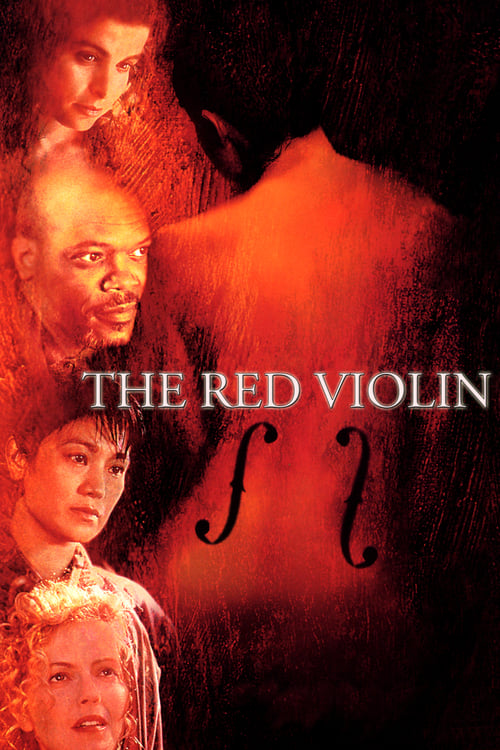
































Popular
What is the significance of the red violin in the story?
How does the character of Nicolo Bussotti influence the violin's legacy?
What happens to the red violin when it reaches the hands of the child prodigy, Kaspar?
How does the character of the modern-day auctioneer, Charles Morritz, relate to the red violin?
What role does the character of the orphaned girl, who inherits the violin, play in the story?
Should I watch it?
Ask Your Own Question

What is the plot?
Sorry, we aren't able to watch and write up a full detailed plot yet. Check back in a few days.




What is the ending?
In the ending of "The Red Violin," the violin, after traveling through various hands and experiences, is finally auctioned in modern-day Montreal. The auctioneer reveals its history, and the last owner, a wealthy collector, is revealed to be the son of the violin's original maker. The film concludes with the violin being sold for a significant sum, symbolizing its enduring legacy and the emotional connections it has forged through time.
Now, let's delve into the ending in a more detailed narrative fashion.
As the film approaches its conclusion, we find ourselves in a contemporary auction house in Montreal. The atmosphere is charged with anticipation as collectors and enthusiasts gather to witness the sale of the legendary red violin. The camera pans across the room, capturing the glint of wealth and the hushed whispers of excitement. The auctioneer, a poised and charismatic figure, steps forward to present the violin, which has become a symbol of artistry and tragedy.
He begins to recount the violin's storied past, detailing its creation by the master luthier Nicolo Bussotti in 17th-century Italy. The audience listens intently as the auctioneer describes the violin's journey through time, touching on the lives it has influenced and the sorrows it has witnessed. The narrative shifts to the violin's first owner, a young prodigy named Anna, whose passion for music is palpable. Her tragic fate, marked by loss and heartache, resonates with the audience, evoking a sense of empathy for the instrument that has been a silent witness to her struggles.
As the auctioneer continues, the story unfolds further, revealing the violin's connection to various characters: the ambitious musician in Vienna, the grieving father in China, and the talented boy in Montreal. Each vignette is interspersed with flashbacks, showcasing the emotional weight carried by the violin and the impact it has had on each of its owners. The camera captures the expressions of the bidders, their faces reflecting a mix of desire and reverence for the instrument that has transcended time and tragedy.
The auctioneer finally reveals the violin's estimated value, and the bidding begins. Tension fills the room as the price climbs higher, each bid echoing the legacy of the violin. Among the bidders is a wealthy collector, who is revealed to be the son of the violin's original maker, Nicolo Bussotti. This connection adds a layer of poignancy to the scene, as the audience realizes that the violin has returned to its roots, symbolizing a full circle in its journey.
As the bidding reaches its climax, the auctioneer's voice rises above the din, and the final bid is placed. The gavel strikes, and the room erupts in applause. The collector, visibly moved, takes possession of the violin, cradling it as if it were a long-lost child. The camera lingers on his face, capturing a mixture of triumph and sorrow, as he acknowledges the weight of the violin's history.
In the final moments, the film cuts to a close-up of the red violin, resting in its case, a testament to the lives it has touched and the stories it has carried. The screen fades to black, leaving the audience with a sense of closure and reflection on the enduring power of music and the connections it fosters across generations.
The fates of the main characters are intertwined with the violin's journey. Anna, the young prodigy, is lost to tragedy, her dreams unfulfilled. The ambitious musician in Vienna faces his own struggles, ultimately leading to a life marked by regret. The grieving father in China finds solace in the violin, but his journey is also steeped in loss. The talented boy in Montreal, who briefly possesses the violin, is left with a profound appreciation for its beauty and history. Finally, the collector, as the son of the maker, embodies a sense of legacy and continuity, suggesting that while the characters may face their own fates, the violin endures as a symbol of their shared experiences and emotions.
Is there a post-credit scene?
The Red Violin does not have a post-credit scene. The film concludes with the resolution of the story surrounding the titular violin, which has traveled through different times and places, connecting the lives of various characters. The final moments focus on the violin's fate and its significance, leaving the audience with a sense of closure regarding its journey rather than introducing any additional scenes after the credits.
What is the significance of the red violin in the story?
The red violin serves as a central symbol throughout the film, representing the connection between the various characters and their emotional journeys. Crafted by the legendary violin maker Nicolo Bussotti in 17th century Italy, the violin is imbued with a mysterious red varnish that is said to be made from the blood of his wife, who died during childbirth. This tragic backstory adds layers of sorrow and passion to the instrument, influencing the lives of everyone who comes into contact with it.
How does the character of Nicolo Bussotti influence the violin's legacy?
Nicolo Bussotti, the violin maker, is portrayed as a passionate and tormented artist. His deep love for his wife and the pain of her loss drive him to create the red violin, which he believes embodies their connection. His internal struggle and the sacrifices he makes for his art set the stage for the violin's journey through time, affecting each subsequent owner and their relationship with music and love.
What happens to the red violin when it reaches the hands of the child prodigy, Kaspar?
When the red violin comes into the possession of Kaspar Weiss, a gifted young violinist in 18th century Austria, it becomes a source of both inspiration and torment. Kaspar's talent is undeniable, but he is also subjected to the pressures of his ambitious teacher and the expectations of society. The violin amplifies his emotional struggles, leading to a tragic climax where he ultimately succumbs to the weight of his talent and the haunting legacy of the instrument.
How does the character of the modern-day auctioneer, Charles Morritz, relate to the red violin?
Charles Morritz, a contemporary auctioneer, becomes deeply fascinated by the red violin when it is brought to auction. His character is driven by a desire to uncover the violin's history and the stories of its previous owners. As he learns about the violin's past, he becomes emotionally invested, reflecting on the themes of love, loss, and the passage of time. His journey reveals how the violin continues to resonate with the human experience, bridging the gap between past and present.
What role does the character of the orphaned girl, who inherits the violin, play in the story?
The orphaned girl, who inherits the red violin at the end of the film, represents the culmination of the violin's journey through time. Her character embodies innocence and the potential for new beginnings. As she holds the violin, it symbolizes hope and the continuation of its legacy. Her connection to the instrument suggests that despite the pain and tragedy associated with it, the red violin can also bring joy and inspiration to future generations.
Is this family friendly?
"The Red Violin," produced in 1998, is a film that explores deep emotional themes and historical contexts, which may not be suitable for younger audiences or sensitive viewers. Here are some potentially objectionable or upsetting aspects:
-
Death and Loss: The film deals with themes of mortality, including the death of key characters, which may be distressing for children.
-
Abandonment: There are scenes that depict the abandonment of a child, which can evoke feelings of sadness and anxiety.
-
Violence: Some scenes include violence or the threat of violence, particularly in historical contexts, which may be unsettling.
-
Emotional Turmoil: Characters experience significant emotional struggles, including jealousy, betrayal, and despair, which may be intense for younger viewers.
-
Historical Contexts: The film touches on historical events that involve suffering and conflict, which may be difficult for children to understand.
-
Substance Abuse: There are references to substance abuse that may not be appropriate for younger audiences.
Overall, while the film is a rich narrative about art and human experience, its themes and scenes may be more suitable for mature audiences.









