





























Popular
What motivates the main character, Pierre, to take the journey he embarks on?
How does the relationship between Pierre and his estranged son evolve throughout the film?
What role does the setting play in Pierre's journey?
What significant event triggers Pierre's decision to leave his home?
How does the character of the elderly woman he meets impact Pierre's journey?
Should I watch it?
Ask Your Own Question

What is the plot?
Sorry, we aren't able to watch and write up a full detailed plot yet. Check back in a few days.






What is the ending?
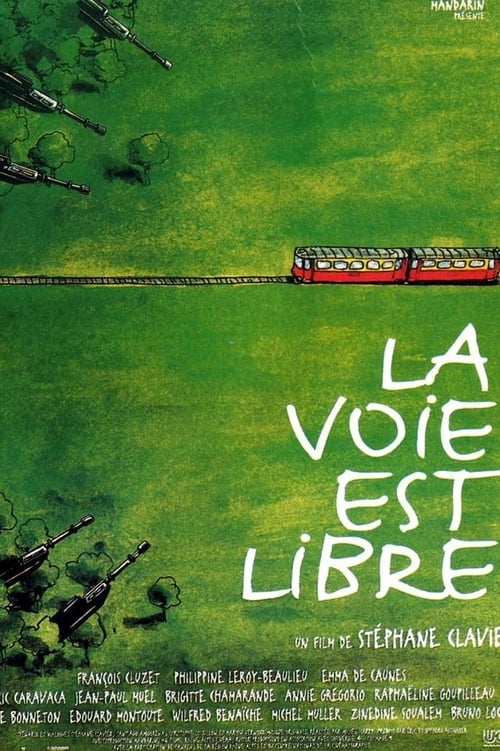
In the ending of "La voie est libre," the main character, a man named Pierre, confronts the realities of his life and the choices he has made. He ultimately decides to embrace a new path, leading to a sense of liberation. The film concludes with a poignant moment of reflection, as Pierre finds a way to move forward, leaving behind the burdens of his past.
As the film approaches its conclusion, we find Pierre in a state of turmoil, grappling with the consequences of his decisions. The scene opens with him standing alone in a dimly lit room, the weight of his past choices pressing heavily on his shoulders. The camera captures the flickering shadows on the walls, mirroring the conflict within him. He reflects on the relationships he has strained, particularly with his estranged family and friends, and the dreams he has let slip away.
In the next scene, Pierre takes a walk through the city, the bustling streets filled with life contrasting sharply with his internal struggle. He observes families and couples, their laughter echoing in his ears, reminding him of what he has lost. The cinematography highlights his isolation, with wide shots of him walking alone amidst the crowd, emphasizing his sense of disconnection from the world around him.
As he continues his journey, Pierre encounters a former friend, who offers him a moment of connection. Their conversation is filled with unspoken tension, as they both acknowledge the distance that has grown between them. Pierre's friend expresses concern for him, urging him to reconsider his choices. This moment serves as a catalyst for Pierre, igniting a flicker of hope within him. The emotional weight of their exchange is palpable, as Pierre realizes that he is not as alone as he thought.
The climax of the film occurs when Pierre returns to his family home, a place filled with memories both cherished and painful. The atmosphere is thick with nostalgia as he steps inside, the familiar sights and sounds flooding back. He finds his family gathered, a mix of tension and anticipation hanging in the air. The scene is charged with emotion as Pierre confronts his loved ones, expressing his regrets and desires for reconciliation. The dialogue is raw and honest, revealing the depth of his internal conflict and the longing for connection.
In the final moments, Pierre makes a decisive choice to embrace a new beginning. He steps outside, the sunlight breaking through the clouds, symbolizing hope and renewal. The camera captures his face, a mixture of relief and determination as he walks away from the past. The film closes with a wide shot of him walking down a path, the road ahead open and inviting, signifying his commitment to moving forward.
As the credits roll, we see glimpses of the other main characters: Pierre's family members, who are left to process the impact of his choices, and his friend, who watches him go with a sense of cautious optimism. Each character is left with their own journey to navigate, but Pierre's decision to seek a new path resonates as a powerful message of personal growth and the possibility of redemption.
Is there a post-credit scene?
The movie "La voie est libre," produced in 1998, does not feature a post-credit scene. The film concludes its narrative without any additional scenes or content after the credits roll. The story wraps up with a focus on the characters' journeys and resolutions, leaving no further developments or surprises for the audience to discover after the main storyline has ended.
What motivates the main character, Pierre, to take the journey he embarks on?
Pierre is driven by a deep sense of loss and a desire for redemption. After the death of his wife, he feels disconnected from life and seeks to find meaning in his existence. His journey is not just physical but also emotional, as he grapples with his grief and attempts to reconnect with his past.
How does the relationship between Pierre and his estranged son evolve throughout the film?
Initially, Pierre's relationship with his son is strained, marked by years of silence and unresolved issues. As the story progresses, their interactions reveal layers of misunderstanding and pain. Through shared experiences and confrontations, they begin to communicate more openly, leading to moments of vulnerability that help mend their fractured bond.
What role does the setting play in Pierre's journey?
The setting serves as a reflection of Pierre's internal state. The landscapes he traverses, from desolate roads to vibrant towns, mirror his emotional journey from isolation to connection. Each location he visits brings new challenges and encounters that force him to confront his past and ultimately shape his path toward healing.
What significant event triggers Pierre's decision to leave his home?
The significant event that triggers Pierre's departure is a poignant moment of reflection at his wife's grave. Overwhelmed by memories and the weight of his grief, he realizes that staying in one place only deepens his sorrow. This moment acts as a catalyst, pushing him to seek closure and a new direction in life.
How does the character of the elderly woman he meets impact Pierre's journey?
The elderly woman serves as a pivotal figure in Pierre's journey, offering wisdom and perspective that challenge his worldview. Her stories and experiences resonate with him, prompting him to reconsider his own life choices. Through their interactions, she becomes a symbol of hope and resilience, encouraging Pierre to embrace change and confront his fears.
Is this family friendly?
"La voie est libre," produced in 1998, is a film that explores themes of family, personal struggle, and the complexities of human relationships. While it is not overtly graphic or violent, there are elements that may be considered objectionable or upsetting for children or sensitive viewers.
-
Emotional Turmoil: The film delves into deep emotional struggles, including themes of loss, regret, and familial conflict, which may be intense for younger audiences.
-
Family Conflict: There are scenes depicting arguments and tension within the family, which could be distressing for children who may not fully understand the dynamics of adult relationships.
-
Depictions of Vulnerability: Characters experience moments of vulnerability and despair, which may evoke strong emotional responses and could be unsettling for sensitive viewers.
-
Mature Themes: The film touches on themes of abandonment and the search for belonging, which may resonate deeply and provoke thought or discomfort.
Overall, while "La voie est libre" is not explicitly inappropriate, its emotional depth and mature themes may require parental guidance for younger viewers.









