





























Popular
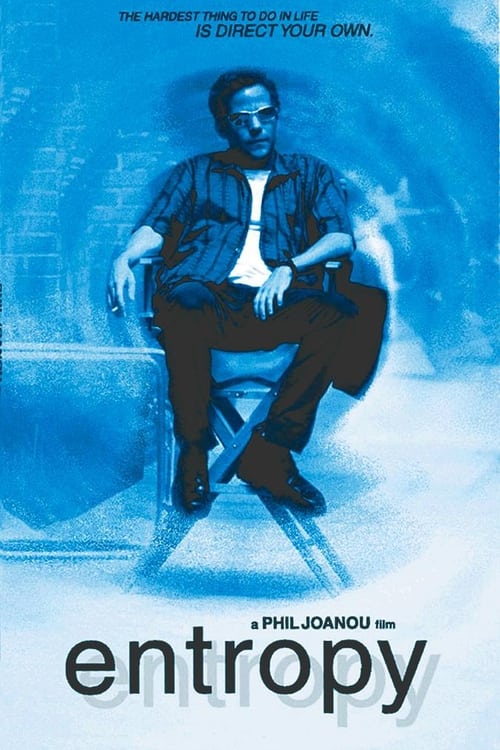
What motivates the character of Nick in the film Entropy?
How does the relationship between Nick and his girlfriend evolve throughout the film?
What role does the character of 'M' play in Nick's journey in Entropy?
How does the film depict the theme of chaos in Nick's life and work?
What significance does the character of the producer have in Nick's journey?
Should I watch it?
Ask Your Own Question

What is the plot?
Sorry, we aren't able to watch and write up a full detailed plot yet. Check back in a few days.







What is the ending?
In the ending of "Entropy," the main character, a filmmaker named Nick, faces the consequences of his chaotic lifestyle and relationships. After a series of tumultuous events, he finds himself at a crossroads, reflecting on his choices and the people around him. The film concludes with a sense of unresolved tension, as Nick grapples with his feelings for his ex-girlfriend, and the reality of his life as an artist.
As the film draws to a close, Nick is at a party, surrounded by friends and acquaintances, but he feels increasingly isolated. He has a moment of clarity about his relationships, particularly with his ex-girlfriend, and he realizes that he must confront his past. The film ends with Nick looking out at the city, contemplating his future and the nature of his existence.
As the final scenes of "Entropy" unfold, we find ourselves at a vibrant party in a loft, filled with the pulsating energy of music and laughter. The camera weaves through the crowd, capturing the eclectic mix of people, each lost in their own world of revelry. Nick, the protagonist, stands somewhat apart from the festivities, his expression a blend of contemplation and disconnection. He is surrounded by friends, yet he feels an emotional distance that seems to grow with each passing moment.
The atmosphere is charged with a sense of chaos, mirroring Nick's internal struggle. He watches as his friends engage in flirtations and deep conversations, but his mind drifts back to his ex-girlfriend, the beautiful and enigmatic character who has haunted his thoughts throughout the film. The party serves as a backdrop for Nick's introspection, a stark contrast to the vibrant life around him.
As the night progresses, Nick's thoughts become increasingly focused on his past relationship. He recalls moments of passion and connection, but also the pain of their breakup. The camera captures his conflicted emotions, the flicker of hope mixed with the weight of regret. He knows he must confront these feelings, yet he hesitates, caught between the desire to reach out and the fear of vulnerability.
In a pivotal moment, Nick steps outside onto a balcony, seeking solace in the cool night air. The city sprawls beneath him, a sea of lights that twinkle like stars. Here, he allows himself to reflect on the choices he has made, the paths he has taken, and the people he has hurt. The weight of his artistic ambitions and the chaos of his lifestyle press down on him, and he feels the pull of entropy--an inevitable decline into disorder.
As he stands there, lost in thought, he is approached by a friend who tries to engage him in conversation. However, Nick's mind is elsewhere, and he struggles to connect. The friend eventually leaves, and Nick is left alone with his thoughts once more. It is in this solitude that he realizes he must take action, to confront the unresolved feelings that linger in his heart.
The film culminates in a moment of decision. Nick returns to the party, searching for his ex-girlfriend amidst the crowd. The camera follows him as he navigates through the throng of people, each face a blur as he focuses on his goal. When he finally spots her, the world around him fades away, and all that matters is this moment of reconnection.
As he approaches her, the tension is palpable. They exchange glances filled with unspoken words, a mixture of longing and uncertainty. Nick takes a deep breath, summoning the courage to speak. The dialogue is sparse but loaded with emotion, as they both acknowledge the past and the pain they have caused each other. There is a sense of vulnerability as they stand face to face, the noise of the party fading into the background.
The film does not provide a neat resolution; instead, it leaves their conversation open-ended. Nick's fate remains uncertain, as does the future of their relationship. The camera pulls back, capturing the two of them in the midst of the chaotic party, symbolizing the complexity of human connections and the struggle to find meaning amidst the chaos of life.
As the screen fades to black, the audience is left with a lingering sense of ambiguity. Nick's journey reflects the broader themes of the film--art, love, and the inevitable entropy that comes with both. Each character's fate is intertwined with Nick's, as they all navigate their own struggles with connection and disconnection, leaving viewers to ponder the nature of relationships and the choices that define us.
Is there a post-credit scene?
The movie "Entropy," produced in 1999, does not have a post-credit scene. The film concludes without any additional scenes or content after the credits roll. The narrative wraps up with the main characters reflecting on their experiences and the complexities of life, love, and the passage of time, leaving the audience with a sense of closure regarding the story.
What motivates the character of Nick in the film Entropy?
Nick, played by Stephen Dorff, is a passionate and somewhat disillusioned filmmaker struggling with the chaos of his life and career. His motivation stems from a desire to create meaningful art while grappling with the complexities of love and relationships, particularly with his girlfriend, who is also a source of emotional turmoil for him.
How does the relationship between Nick and his girlfriend evolve throughout the film?
Nick's relationship with his girlfriend, played by a character named 'M', is tumultuous and marked by passion and conflict. Initially, they share a deep connection, but as the story progresses, their differing aspirations and emotional needs lead to misunderstandings and tension, ultimately forcing Nick to confront his own insecurities and the reality of their relationship.
What role does the character of 'M' play in Nick's journey in Entropy?
'M' serves as both an inspiration and a source of conflict for Nick. She embodies the ideal of artistic freedom and emotional depth that Nick aspires to, yet her own struggles and desires create friction in their relationship. Her presence challenges Nick to confront his fears about commitment and the nature of love, pushing him to grow as both a person and an artist.
How does the film depict the theme of chaos in Nick's life and work?
Entropy visually and narratively illustrates chaos through Nick's experiences in the film industry and his personal life. The nonlinear storytelling, rapid scene changes, and the unpredictable nature of his relationships reflect the disorder he feels. This chaos is a constant backdrop, influencing his creative process and emotional state, ultimately leading him to seek clarity amidst the turmoil.
What significance does the character of the producer have in Nick's journey?
The producer, who represents the commercial side of filmmaking, serves as a foil to Nick's artistic ambitions. Their interactions highlight the tension between artistic integrity and the pressures of the industry. The producer's pragmatic approach to filmmaking forces Nick to confront the realities of his aspirations, pushing him to question what he is willing to sacrifice for his art.
Is this family friendly?
"Entropy," produced in 1999, is not considered family-friendly due to its mature themes and content. Here are some potentially objectionable or upsetting aspects that may occur:
-
Sexual Content: The film includes scenes that depict sexual situations and nudity, which may be inappropriate for younger audiences.
-
Substance Use: Characters are shown using drugs and alcohol, which could be concerning for sensitive viewers or children.
-
Emotional Turmoil: The film explores complex emotional states, including depression and existential crises, which may be distressing for some viewers.
-
Violence and Conflict: There are moments of interpersonal conflict that may involve aggressive behavior or emotional confrontations.
-
Adult Themes: The narrative delves into themes of love, loss, and the struggles of adulthood, which may be difficult for younger viewers to fully comprehend or process.
These elements contribute to the film's overall tone and may not be suitable for all audiences, particularly children or those sensitive to such content.









