













Popular
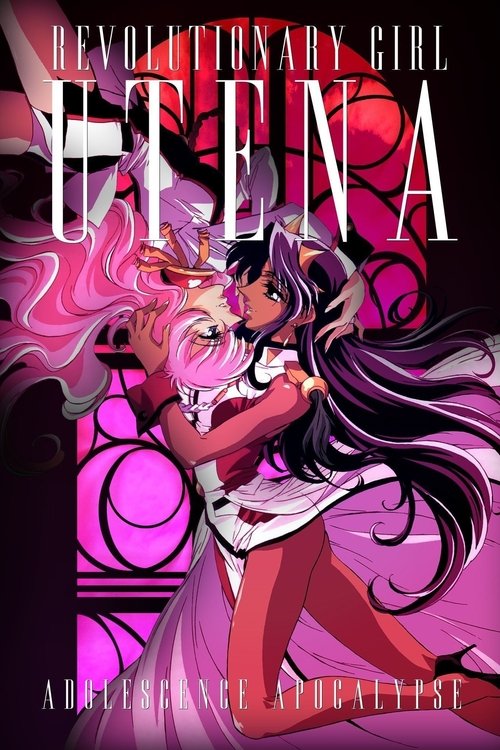
What role do the duels play in the development of Utena and Anthy's relationship?
What is the significance of Utena's prince and how does it influence her character?
How does Anthy Himemiya's character evolve throughout the film?
What is the significance of the Rose Signet and how does it affect the characters?
How does the film portray the theme of gender roles through Utena and Anthy's characters?
Should I watch it?
Ask Your Own Question

What is the plot?
Sorry, we aren't able to watch and write up a full detailed plot yet. Check back in a few days.

What is the ending?
In the ending of Revolutionary Girl Utena: The Movie, Utena Tenjou confronts Akio Ohtori in a climactic duel. After a fierce battle, Utena realizes the truth about the world and her own desires. She sacrifices herself to save Anthy Himemiya, who is revealed to be the Rose Bride. In the end, Utena's sacrifice leads to a transformation in Anthy, who ultimately chooses her own path, breaking free from the cycle of manipulation and control.
As the final scenes unfold, Utena and Anthy are seen in a surreal, dreamlike state, where Utena's spirit encourages Anthy to embrace her freedom. The film concludes with a poignant moment of liberation, as Anthy walks away from the oppressive world of Ohtori Academy, symbolizing a new beginning.
The ending of Revolutionary Girl Utena: The Movie begins with a tense atmosphere as Utena Tenjou stands resolute, facing Akio Ohtori in the grand, ethereal arena of Ohtori Academy. The sky is a swirling mass of colors, reflecting the emotional turmoil of the characters. Utena, clad in her signature white uniform, embodies determination and courage, her heart set on saving Anthy Himemiya, the Rose Bride, who has been ensnared in a cycle of manipulation and despair.
As the duel commences, the air crackles with tension. Utena wields her sword with grace and ferocity, each clash resonating with the weight of her convictions. Akio, with his suave demeanor and dark intentions, counters her every move, revealing the depths of his control over the academy and its inhabitants. The battle is not just physical; it is a clash of ideals, with Utena fighting for freedom and love, while Akio represents the oppressive forces of fate and power.
In a pivotal moment, Utena begins to understand the true nature of her quest. She realizes that the power she sought to wield was not merely to win duels but to break the chains that bind Anthy. This revelation strikes her deeply, and her resolve strengthens. As she faces Akio, she declares her intention to save Anthy, not just from him, but from the very cycle of despair that has trapped them both.
The duel reaches its climax as Utena, fueled by her love for Anthy, unleashes a powerful strike against Akio. However, in a moment of desperation, Akio reveals the truth about the Rose Bride's curse and the nature of their world. Utena is momentarily shaken, but she quickly regains her focus, understanding that her fight is not just against Akio but against the very concept of predestined roles.
In a heart-wrenching moment, Utena makes the ultimate sacrifice. She chooses to give up her own life to save Anthy, a decision that encapsulates her growth and the depth of her feelings. As she falls, the world around them begins to shift, the oppressive atmosphere of Ohtori Academy dissolving into a more vibrant, hopeful landscape.
Anthy, witnessing Utena's sacrifice, is profoundly affected. The layers of her own trauma begin to peel away as she confronts her feelings of love and loss. In the aftermath of Utena's act, she stands at a crossroads, faced with the choice of continuing the cycle of despair or embracing her newfound freedom.
In the final scenes, Utena's spirit appears to Anthy, encouraging her to break free from the chains of her past. The imagery is surreal, with bright colors and ethereal landscapes symbolizing hope and liberation. Anthy, now empowered by Utena's love and sacrifice, steps away from the shadows of Ohtori Academy, symbolizing her choice to forge her own path.
As the film concludes, the fate of each character is poignantly illustrated. Utena, though physically gone, lives on in Anthy's heart, her spirit a guiding light. Anthy, liberated from her role as the Rose Bride, walks towards a future filled with possibilities, embodying the film's themes of love, sacrifice, and the quest for personal freedom. The oppressive grip of Akio is broken, leaving him to fade into the background, a symbol of the toxic forces that can be overcome through love and self-determination. The film closes on a note of hope, suggesting that true revolution comes from within, and that the bonds of love can transcend even the darkest of fates.
Is there a post-credit scene?
In "Revolutionary Girl Utena: The Movie," there is no post-credit scene. The film concludes with a powerful and surreal ending that encapsulates the themes of revolution, identity, and the cyclical nature of fate. After the climactic duel between Utena and Anthy, the narrative leaves viewers with a sense of ambiguity and reflection on the characters' journeys, but it does not include any additional scenes or content after the credits roll. The film's conclusion is designed to resonate with the audience, inviting them to ponder the implications of the story rather than providing further narrative resolution.
What role do the duels play in the development of Utena and Anthy's relationship?
The duels serve as a catalyst for Utena and Anthy's relationship, forcing them to confront their feelings and the societal expectations placed upon them. Each duel represents not only a physical challenge but also an emotional one, as Utena fights to protect Anthy from the manipulative forces of Ohtori Academy. The stakes of the duels heighten their bond, revealing the depth of their connection and the sacrifices they are willing to make for each other.
What is the significance of Utena's prince and how does it influence her character?
Utena Tenjou, the protagonist, is deeply influenced by her childhood encounter with a prince who saved her. This memory shapes her desire to become a prince herself, embodying ideals of chivalry and heroism. Her quest to protect Anthy and challenge the oppressive structures at Ohtori Academy stems from this foundational experience, driving her to confront the duels and the mysteries surrounding the Rose Bride.
How does Anthy Himemiya's character evolve throughout the film?
Anthy Himemiya begins as a seemingly passive character, often referred to as the Rose Bride, who is bound to the dueling system. As the story progresses, her complex relationship with Utena reveals layers of her personality, including her pain and desire for freedom. The climax of the film showcases her struggle against her own fate and the oppressive forces at play, ultimately leading to a pivotal moment of self-assertion.
What is the significance of the Rose Signet and how does it affect the characters?
The Rose Signet is a powerful symbol that represents the dueling system and the control it exerts over the characters. For Utena, receiving the signet signifies her entry into the world of dueling and her commitment to protect Anthy. For Anthy, the signet represents her entrapment within the cycle of duels and her role as the Rose Bride. The signet's power and the choices it compels the characters to make are central to their development and the unfolding of the plot.
How does the film portray the theme of gender roles through Utena and Anthy's characters?
The film intricately explores gender roles through Utena's defiance of traditional femininity and her embrace of a 'prince' identity, challenging societal norms. In contrast, Anthy embodies the archetype of the damsel in distress, yet her character reveals the complexities of her situation. As the narrative unfolds, both characters navigate and subvert these roles, leading to a deeper commentary on empowerment, identity, and the constraints imposed by gender expectations.
Is this family friendly?
Revolutionary Girl Utena: The Movie contains several themes and scenes that may be considered objectionable or upsetting for children or sensitive viewers. Here are some aspects to be aware of:
-
Violence and Duels: The film features intense duels between characters, which can be graphic and emotionally charged. The violence is often symbolic but can still be disturbing.
-
Death and Loss: Themes of death and the emotional impact of loss are prevalent throughout the film. Characters experience significant trauma related to these themes.
-
Psychological Manipulation: The film explores complex psychological themes, including manipulation and control, which may be difficult for younger viewers to understand.
-
Existential Themes: The narrative delves into existential questions about identity and purpose, which may be heavy and confusing for children.
-
Romantic and Sexual Undertones: There are subtle romantic and sexual themes, including complex relationships and emotional entanglements that may not be suitable for younger audiences.
-
Surreal Imagery: The film employs surreal and abstract visuals that can be unsettling or confusing, contributing to an overall atmosphere of unease.
These elements combine to create a film that, while artistically significant, may not be appropriate for all viewers, particularly younger children or those sensitive to such themes.









