
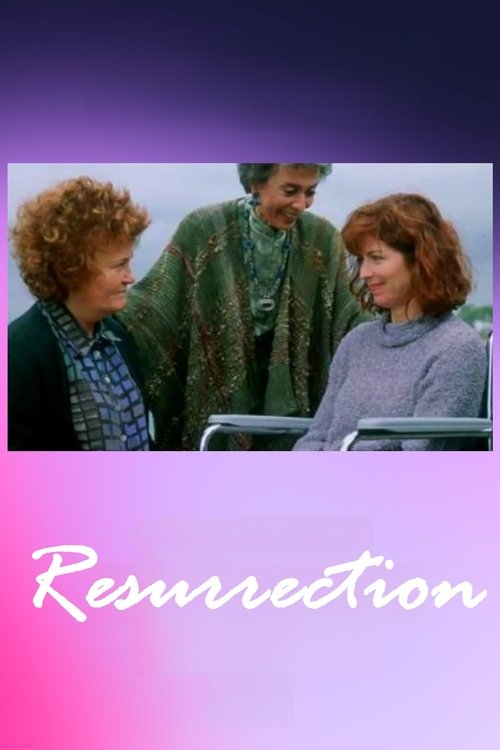












Popular
What is the significance of the character of the detective in Resurrection?
How does Edna's relationship with her father influence her actions in the film?
What role does the theme of resurrection play in Edna's character development?
How does the film depict the concept of faith through Edna's experiences?
What is the significance of the final confrontation between Edna and the antagonist?
Should I watch it?
Ask Your Own Question

What is the plot?
Sorry, we aren't able to watch and write up a full detailed plot yet. Check back in a few days.
More Movies Like This
Browse All Movies →





What is the ending?
In the ending of the movie "Resurrection," the protagonist, a detective named John Prudhomme, confronts the serial killer he has been pursuing. The killer, who has been using a series of gruesome murders to create a twisted form of resurrection, is ultimately defeated. John is left grappling with the emotional aftermath of the case, reflecting on the darkness he has encountered.
As the film concludes, John is seen walking away from the chaos, burdened by the weight of his experiences, but also with a sense of resolution. The fate of the killer is sealed, and John's journey through the darkness has changed him forever.
Now, let's delve into the ending in a more detailed, chronological narrative.
The climax of "Resurrection" unfolds in a dimly lit warehouse, where John Prudhomme, portrayed by Christopher Lambert, finally tracks down the elusive serial killer, a man named the "Resurrectionist." The atmosphere is thick with tension as John enters the space, his heart pounding, a mix of fear and determination coursing through him. The warehouse is cluttered with remnants of the killer's gruesome work, a chilling testament to the lives lost.
As John navigates through the shadows, he recalls the victims and the horrific methods the killer employed to create his twisted version of resurrection. Each step he takes is heavy with the weight of the lives he could not save, and the emotional toll of the investigation is evident on his face. He is not just hunting a murderer; he is confronting the darkness that has seeped into his own soul.
Suddenly, the killer appears, a gaunt figure shrouded in darkness, his eyes gleaming with madness. A tense confrontation ensues, filled with psychological warfare as the killer taunts John, revealing his motivations and the philosophy behind his actions. The killer believes he is granting his victims a form of immortality through death, a perverse resurrection that John cannot comprehend. The dialogue is charged, each word a dagger, as John struggles to maintain his composure.
In a desperate struggle, John fights back against the killer, fueled by a mix of rage and sorrow. The physical confrontation is brutal, showcasing John's determination to end the cycle of violence. As they grapple, the warehouse becomes a battleground of wills, with John's resolve clashing against the killer's twisted ideology.
Ultimately, John gains the upper hand. In a moment of clarity amidst the chaos, he realizes that he must not only stop the killer but also confront the darkness within himself. With a final surge of strength, he overpowers the killer, leading to a climactic moment where he must make a choice: to kill the man who has caused so much pain or to let justice take its course. In a moment of restraint, John chooses to hand the killer over to the authorities, symbolizing a rejection of the cycle of violence.
As the police arrive, the killer is taken away, his laughter echoing in the distance, a haunting reminder of the evil that lurks in the world. John stands amidst the wreckage, his face a mask of exhaustion and relief. The emotional weight of the case hangs heavily on him, and he is left to grapple with the memories of the victims and the darkness he has faced.
In the final scenes, John walks away from the warehouse, the night air cool against his skin. He is changed, marked by the experiences he has endured. The camera lingers on his face, capturing the mixture of sorrow and resolve. He knows that while he has stopped one killer, the battle against darkness is far from over. The film closes with John's silhouette fading into the night, a man forever altered by the horrors he has witnessed, yet still standing, still fighting against the shadows.
The fate of the main characters is sealed: the killer is apprehended, facing justice for his heinous acts, while John is left to navigate the emotional aftermath, a testament to the resilience of the human spirit in the face of overwhelming darkness.
Is there a post-credit scene?
The movie "Resurrection," produced in 1999, does not have a post-credit scene. The film concludes its narrative without any additional scenes or content after the credits roll. The story wraps up with a focus on the main themes of faith, redemption, and the struggle between good and evil, leaving the audience to reflect on the events that have transpired without any further revelations or cliffhangers.
What is the significance of the character of the detective in Resurrection?
The detective in Resurrection serves as a crucial figure who embodies the tension between the rational world and the supernatural elements of the story. His investigation into the mysterious events surrounding the protagonist, a woman named Edna, reveals the psychological and emotional turmoil she experiences. The detective's skepticism contrasts with Edna's deepening belief in the supernatural, highlighting her internal struggle and the impact of her past traumas.
How does Edna's relationship with her father influence her actions in the film?
Edna's relationship with her father is fraught with tension and unresolved issues, which significantly influences her motivations throughout the film. Her father's abusive behavior in her childhood has left deep emotional scars, leading her to seek validation and understanding. This complex dynamic drives her to confront her past, ultimately pushing her towards a path of self-discovery and empowerment as she grapples with her father's legacy.
What role does the theme of resurrection play in Edna's character development?
The theme of resurrection is central to Edna's character arc, as she undergoes a profound transformation throughout the film. Initially portrayed as a woman haunted by her past, Edna's journey towards self-acceptance and healing mirrors the concept of resurrection. Her encounters with supernatural elements force her to confront her fears and traumas, leading to a rebirth of her identity and a newfound strength to reclaim her life.
How does the film depict the concept of faith through Edna's experiences?
Faith is depicted in Resurrection through Edna's evolving belief in the supernatural and her quest for understanding. As she experiences inexplicable events, her faith is tested, leading her to question her reality and the nature of her existence. This internal conflict is visually represented through her interactions with the supernatural, which serve as catalysts for her spiritual awakening and ultimately guide her towards acceptance of her past.
What is the significance of the final confrontation between Edna and the antagonist?
The final confrontation between Edna and the antagonist is a climactic moment that encapsulates her journey of empowerment. This encounter is not just a physical battle but also a symbolic representation of Edna confronting her deepest fears and the remnants of her traumatic past. The intensity of this scene is heightened by Edna's emotional state, as she channels her pain into strength, ultimately reclaiming her agency and redefining her identity in the face of adversity.
Is this family friendly?
"Resurrection," produced in 1999, is not considered family-friendly due to several potentially objectionable or upsetting scenes. Here are some aspects that may be concerning for children or sensitive viewers:
-
Violence and Gore: The film contains graphic depictions of violence, including scenes of murder and bloodshed that may be disturbing.
-
Themes of Death and Resurrection: The central themes revolve around death, the afterlife, and resurrection, which may be unsettling for younger audiences.
-
Psychological Horror Elements: The film includes intense psychological moments that can evoke fear and anxiety, particularly in relation to the characters' struggles and traumas.
-
Mature Themes: There are discussions and portrayals of existential questions and moral dilemmas that may be too complex or distressing for children.
-
Emotional Distress: Characters experience significant emotional turmoil, including grief and despair, which could be upsetting for sensitive viewers.
Overall, the film's dark themes and graphic content make it more suitable for mature audiences.









