























Popular
What challenges do the main characters face in their pursuit of a music career?
How does Dee's relationship with his mother influence his decisions throughout the film?
What role does the character of the rival rapper play in Dee's journey?
How do the friendships among Dee, his friends, and their dynamics evolve throughout the film?
What pivotal moment leads Dee to realize the importance of staying true to himself?
Should I watch it?
Ask Your Own Question

What is the plot?
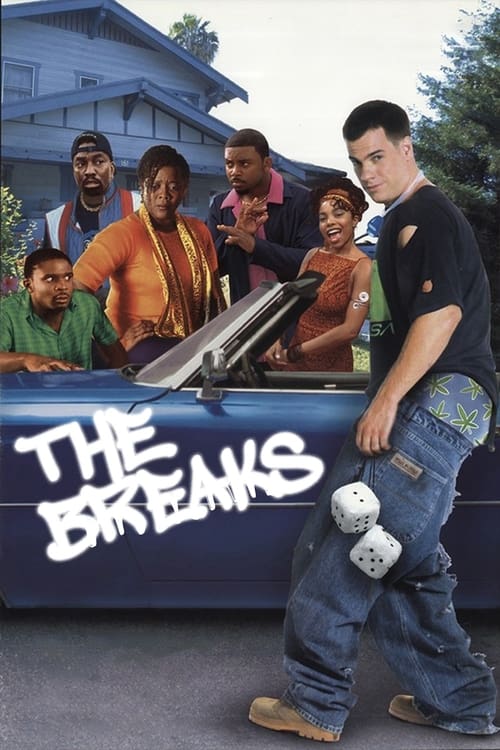
Derrick King wakes up on a Sunday in South-Central Los Angeles with the kind of swagger that has always protected him from looking too closely at how ridiculous his life is, but the day is already tilted toward disaster. He is an Irish white man adopted into a Black family, and he has grown up in Compton speaking, dressing, and carrying himself like the neighborhood kid he believes himself to be. The film's central joke is also its central wound: Derrick is completely at home in a culture that has claimed him, yet he is still profoundly unready for adult responsibility. That tension snaps into motion almost immediately when his mother catches him in bed with a woman on the couch and loses patience at last, throwing him out and delivering the ultimatum that drives the whole movie: he can come back only if he brings home milk by evening.
The demand is absurdly simple, which is exactly why it becomes impossible. Derrick takes it as a test he can still pass, a chance to prove to his mother, his girlfriend, and himself that he is not just another useless slacker. He leaves the house with the milk mission hanging over him like a deadline written in neon, and from that moment the movie becomes a single-day spiral through South Central, each stop making his situation worse. The air of the neighborhood feels hot, pressured, and unstable, as though every street corner is waiting to ambush him. Derrick is still trying to bluff his way into dignity when he goes to work, but even that collapses almost instantly: he learns he has been fired by his uncle. The loss lands with particular humiliation because it strips away the last ordinary route he might have used to recover control. If he had a job, he might have replaced the milk, patched things over, and limped home. Instead, the day begins to expose all the ways he has been drifting.
From there, the errands and confrontations stack up with punishing speed. Derrick's self-image as a tough, Black, streetwise local runs headlong into the fact that he is being hunted by the consequences of his own behavior. A local gangbanger wants him for money and vengeance because Derrick has slept with the man's girlfriend earlier that day, which turns one private mistake into an ongoing threat. The threat gives the movie one of its recurring rhythms: Derrick is never allowed to finish one problem before the next one arrives, and every attempted escape only reroutes him into another humiliation. At the same time, the film keeps undercutting his bravado by making his surroundings feel larger and meaner than he is. He is not navigating a clean chain of comic set pieces so much as a hostile maze of social punishment.
The police deepen that pressure. Derrick runs into LAPD officers wearing Confederate flag shoulder patches, an image that makes their hostility feel both absurd and openly menacing. They represent not merely bad luck but institutional contempt, and they treat him as a nuisance to be contained rather than a young man in trouble. His car is impounded, which is another brutal little theft of agency, and he is tossed into the drunk tank. The arrest pauses the forward motion of his day, but it does not give him rest. Instead, it turns the film outward, making clear that Derrick is trapped between street violence and official violence, with no system prepared to help him. The comedy of the film comes from how over-the-top each situation becomes; the despair comes from the fact that none of it is really random. Derrick keeps getting dragged downward by a life he has never learned to manage.
Released from one problem only to be slammed into another, Derrick keeps moving through the neighborhood in search of the milk that now stands in for everything he lacks: responsibility, self-control, adulthood, and the ability to think beyond the next impulse. Along the way, the movie repeatedly reminds us that he is not simply a selfish idiot. He has flashes of decency, and those small flashes matter because they are the only things that distinguish him from the parade of exploiters, predators, and fools he meets. One of the most important of these moments comes when he shows kindness to a near-sighted kid. The act is small enough to seem meaningless in the middle of all the chaos, but the story treats it as a moral pivot. In a film where almost every decision Derrick makes is either stupid or desperate, this one is pure, uncalculated generosity. It is one of the first signs that he might still be redeemable.
That possibility becomes more important as the day grows stranger. Derrick's route through South Central becomes less like a quest than a series of bruising detours through comic nightmare. He is shot at at some point in the day, and the fact of being shot at pushes the film into a more dangerous register than mere embarrassment or slapstick. He is also imprisoned in a store basement by gay sadists, one of the film's most outrageous and extreme setbacks. The basement captivity feels like a fever-dream interruption in the middle of his already collapsing day, one more absurd trap in a story that seems determined to humiliate him from every angle. The sources do not provide every step of how he gets there, but the effect is clear: Derrick is stripped of freedom again, forced into another enclosed space where he cannot simply talk or charm his way out. Each confinement echoes the others. First his mother throws him out, then police cage him, then strangers physically trap him. The structure of the film keeps translating irresponsibility into captivity, as if the world is insisting that Derrick cannot remain a boy forever.
The women in his life also continue to define the shape of the day. His mother is the judge whose verdict matters most, and her no-nonsense ultimatum gives the movie its emotional spine. The woman he loves, or hopes to win back, dismisses him as childish, which sharpens the film's central irony: Derrick's entire self-presentation is macho and streetwise, but the people closest to him keep seeing immaturity beneath the costume. He wants to be taken seriously, and the film repeatedly shows that he has not yet done the work required to deserve that seriousness. The milk quest becomes a public audition for adulthood, and every failure makes the gap between his self-image and reality more visible.
What makes the story build momentum rather than simply pile on nonsense is the way each setback narrows his options. Losing his job removes money. Losing his car removes mobility. Arrest removes time. Being chased removes safety. Being trapped removes control. All that remains is persistence, and even that is shaky because Derrick is so often his own worst enemy. He is described in the available material as brainless, thoughtless, and sex-crazed, and the film leans into those traits as both comic engine and character flaw. He has no disciplined plan. He has impulse, swagger, and just enough luck to keep moving. That luck is not random, though. The kindness he shows to the near-sighted kid plants the suggestion that the world is not entirely indifferent to him. In a story built on punishment, even a tiny humane act can bend the outcome.
The tension toward the climax comes from the ticking clock that hangs over everything. This is a single-day story, and the mother's deadline is simple: Derrick must get home by evening with the milk or he is out for good. The movie never lets the audience forget that the evening is approaching. Every confrontation steals more time. Every wrong turn makes the distance between Derrick and home feel larger. Even without a detailed minute-by-minute transcript, the structure is unmistakable: the closer it gets to evening, the more the film pushes him through absurdity toward a final reckoning. He has to survive the neighborhood, the police, the gang threat, the humiliation, and his own mistakes, all while protecting the one fragile object that would allow him back inside his family.
The most important revelation in the film is not a new plot fact but the recontextualization of Derrick himself. He is not Black, despite believing himself to be and living as though he is; he is an Irish white man raised by a Black family in Compton. The movie does not treat that as a secret mystery so much as the premise that makes every other scene mean something different. Derrick's identity is both sincere and performative: he genuinely belongs to the family and the community that raised him, but he also uses that identity as armor against accountability. By the time the day starts breaking him apart, the illusion that he can coast on personality alone is gone. He has to become someone capable of doing a simple, concrete thing.
The exact mechanics of the ending are not fully laid out in the available sources, but the central direction of the story is clear: the chaos of the day is meant to force Derrick toward either ruin or growth, and the milk is the test that decides which of those possibilities wins. The film's last movement is built around whether he can return home in time, having endured humiliation, violence, arrest, and absurd captivity without completely losing himself. Because the sources specifically note that the kindness he shows to the near-sighted kid may prove to be his salvation, the ending likely ties Derrick's survival not to toughness but to decency. That is the movie's quiet reversal. The one thing that might save him is not his pose, not his sexual bravado, and not his ability to talk like he belongs in the hood. It is the fact that, beneath all that noise, he still has enough heart to help someone who cannot help himself.
By the time the final stretch arrives, the film has turned a carton of milk into a full measure of Derrick's character. He has been forced to confront every version of himself the day can produce: the son, the boyfriend, the worker, the target, the prisoner, the clown, the survivor. The mother's house remains the emotional endpoint of the journey, because that is where the question began and where the answer must be delivered. If he gets there, he is not merely bringing milk home; he is trying to bring back some proof that he can change. If he fails, he remains the same reckless child whose own life has finally outgrown him.
The movie's final effect comes from the contrast between the enormity of the day and the triviality of the object that decides it. Derrick is not trying to solve a murder, uncover a conspiracy, or win a fortune. He is trying to buy milk and make it home before evening. The comic genius of The Breaks lies in how it turns that tiny errand into an odyssey through identity, racial performance, family disappointment, police harassment, sexual chaos, and the humiliating fragility of being a man who has never fully grown up. Every confrontation strips a layer away until all that is left is whether Derrick King can finally do one simple thing right.





What is the ending?
In the ending of "The Breaks," the main characters, Dee, David, and their friend, are faced with the consequences of their choices in the music industry. After a series of challenges and betrayals, they ultimately find a way to stay true to themselves and their passion for hip-hop, leading to a hopeful resolution for their futures.
As the film approaches its climax, the tension builds around Dee and David's aspirations in the music industry. They have been navigating the cutthroat world of hip-hop, dealing with rivalries, personal conflicts, and the pressures of success. The stakes are high as they prepare for a crucial performance that could define their careers.
Scene by scene, the ending unfolds with Dee and David reflecting on their journey. They confront the reality of their situation, realizing that the music industry is not just about fame and fortune but also about authenticity and staying true to their roots. The emotional weight of their struggles is palpable as they grapple with the choices they have made and the friendships they have forged.
In a pivotal moment, Dee and David take the stage for their performance. The atmosphere is electric, filled with anticipation and the energy of the crowd. As they perform, they channel their experiences, pouring their hearts into the music. The performance serves as a cathartic release, showcasing their growth and resilience. The audience responds enthusiastically, validating their hard work and dedication.
After the performance, the characters experience a sense of relief and accomplishment. They realize that despite the challenges they faced, they have remained true to themselves and their passion for hip-hop. The bond between Dee, David, and their friend strengthens as they celebrate their success together, acknowledging the importance of friendship and loyalty in their journey.
In the final moments, the film leaves the audience with a sense of hope. Dee and David look towards the future, ready to embrace whatever comes next, knowing that they have each other's support. The ending emphasizes the idea that while the path to success may be fraught with obstacles, staying true to oneself and one's values is ultimately what matters most.
The fates of the main characters are intertwined with their choices. Dee and David emerge from their experiences with a renewed sense of purpose, ready to face the challenges of the music industry together. Their friend, who has been a constant support, also finds a sense of belonging and fulfillment in their shared journey. The film concludes on a hopeful note, suggesting that their story is just beginning, and the future holds endless possibilities for them in the world of hip-hop.
Is there a post-credit scene?
The movie "The Breaks," produced in 1999, does not have a post-credit scene. The film concludes without any additional scenes or content after the credits roll. The story wraps up with the main characters reflecting on their journey and the challenges they faced in the hip-hop industry, leaving the audience with a sense of closure regarding their arcs and the themes of ambition and friendship explored throughout the film.
What challenges do the main characters face in their pursuit of a music career?
The main characters, particularly Dee and his friends, face numerous challenges in their pursuit of a music career, including financial struggles, the pressure of competition in the music industry, and the need to navigate personal relationships that are strained by their ambitions. They encounter obstacles such as disapproving family members, the temptation of quick money through illegal means, and the harsh realities of the music business, which often prioritizes commercial success over artistic integrity.
How does Dee's relationship with his mother influence his decisions throughout the film?
Dee's relationship with his mother is complex and deeply influential. She represents a voice of caution and practicality, urging him to focus on education and a stable future rather than the uncertain path of a music career. This creates internal conflict for Dee, who is passionate about music but feels the weight of his mother's expectations. Her disapproval often leads him to make choices that distance him from his dreams, highlighting the struggle between familial loyalty and personal ambition.
What role does the character of the rival rapper play in Dee's journey?
The rival rapper serves as a significant antagonist in Dee's journey, embodying the competitive nature of the music industry. This character not only challenges Dee's talent but also represents the darker side of ambition, as he is willing to undermine others to achieve success. The rivalry pushes Dee to confront his own insecurities and ultimately motivates him to refine his skills and prove himself, making the rivalry a catalyst for his growth as an artist.
How do the friendships among Dee, his friends, and their dynamics evolve throughout the film?
The friendships among Dee and his friends are central to the narrative, showcasing both the strength and fragility of their bonds. As they navigate the ups and downs of their music aspirations, their dynamics shift; moments of camaraderie are often punctuated by jealousy, misunderstandings, and the strain of competition. Key scenes illustrate how their loyalty is tested, particularly when personal ambitions clash with group goals, ultimately leading to moments of reconciliation and reaffirmation of their friendship.
What pivotal moment leads Dee to realize the importance of staying true to himself?
A pivotal moment for Dee occurs during a critical performance where he is faced with the choice of compromising his artistic vision for commercial appeal. This moment is charged with tension as he grapples with the expectations of the industry versus his own values. The realization hits him when he sees the impact of authenticity on the audience, leading him to understand that true success lies in being genuine to himself and his music, rather than conforming to external pressures.
Is this family friendly?
"The Breaks," produced in 1999, is a film that centers around the world of hip-hop and the struggles of aspiring artists. While it captures the vibrant culture and the passion for music, it does contain elements that may not be suitable for children or sensitive viewers.
-
Language: The film features strong language, including profanity, which may be inappropriate for younger audiences.
-
Violence: There are scenes that depict street violence and confrontations, which could be distressing for some viewers.
-
Drug References: The film includes references to drug use and the drug trade, which may be concerning for families.
-
Adult Themes: There are mature themes related to relationships, ambition, and the challenges of the music industry that may not resonate well with younger viewers.
-
Emotional Struggles: Characters experience significant emotional turmoil, including feelings of betrayal, disappointment, and the pressure to succeed, which could be heavy for sensitive audiences.
Overall, while "The Breaks" offers a glimpse into the hip-hop scene and the pursuit of dreams, its content may not be suitable for all viewers, particularly children.







