













Popular
What motivates Asako to leave her hometown and pursue a new life in the city?
How does Asako's relationship with her childhood friend evolve throughout the film?
What role do the ruby shoes play in Asako's journey?
How does Asako's character change after moving to the city?
What is the significance of the recurring theme of memory in Asako's relationships?
Should I watch it?
Ask Your Own Question

What is the plot?
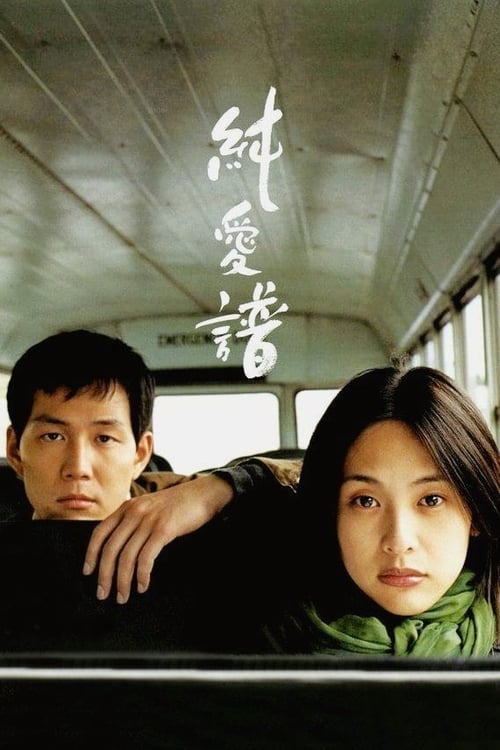
U-in E lives in Seoul, South Korea, and every weekday morning his alarm drags him out of a bed that is always too big for just one person. He is in his late twenties, maybe early thirties, with a boyish face that still hasn't learned how to look like an adult. He dresses in ill‑fitting shirts and cheap ties and rides the subway wedged in among strangers, then walks the same gray streets to the same gray building where he works as a low‑level civil servant in a district community bureau. His duties are numbing: laminating identification cards, stamping papers, handing out flyers, processing other people's lives one form at a time.
He is bored, chronically and deeply bored, and he is lonely in a way that he doesn't know how to name. At work, people greet him politely enough, but conversations never last; his colleagues talk around him, not to him. When he eats lunch in the building cafeteria, he usually eats alone.
There is, however, one exception to the grayness of this office world: Mia, the young woman who works in the same building. Mia's full name is never announced in the public spaces he haunts; to him she is simply Mia, the girl with the punk clothes and the dyed hair like a strip of burning coal across her head. Her hair is a vivid scarlet that catches the fluorescent light, and she moves through the corridors with a self‑possessed swagger, as if none of the rules that sit so heavily on everyone else can touch her. She laughs loudly with her friends, flicks ash from her cigarette outside the entrance, and breezes past him without seeing him.
U‑in notices Mia long before she ever becomes aware of him. From the first time he sees that red hair bob past his desk, she becomes the bright spot in his day. He times his bathroom breaks in the hope of passing her in the hallway. He stands a little longer at the copy machine near her department, pretending to wait for papers that have already printed. When she slips into the women's bathroom, he lingers nearby, his heart pounding, the worst parts of himself waking up.
At night, his voyeurism continues in another form. In his cramped apartment, lit by the cold glow of an aging monitor, he cruises soft‑core pornographic and "near‑naughty" websites, scrolling through galleries of women he will never meet. This is the year 2000, and accessing such sites is not as effortless as it will later become. They ask for registration, subscriptions, credit card numbers, and he is both too cheap and too cautious to pay. He clicks around the free previews, frustrated, half‑aroused, and always left wanting.
His fingers, one of them oddly numb for reasons the film never fully explains, hover over the mouse, searching for something that will cut through the dullness. On some nights, he opens a cheap graphics program and amuses himself by cutting and pasting: the face of a woman from the office slapped onto a half‑naked body from a downloaded photo. He laughs, half with shame, half with pride at his own cleverness, as if this childish digital collage could stand in for real intimacy.
At the bureau, his voyeurism spills into the real world. He learns the rhythms of the building: when women use the bathroom, when the hallway is quiet. He drifts past the women's restroom and, when he thinks no one can see, he eases the door open a crack, listening for the rustle of skirts, the running water. There is a sequence where he leans against the tiled wall, eye pressed to the thin gap, breathing fast, catching fragments of Mia's red hair at the sink. It is awful and pathetic and all he knows how to do.
Mia senses something. One day, as she pushes out of the bathroom, she finds him loitering too close. She pauses, her eyes narrowing. "What are you doing here?" she asks, her voice flat, edged with contempt. He stammers, "N‑nothing, I was just…" but she is already walking away, flicking him off with a bored glance that says he doesn't matter and never will. She is flippant, dismissive, in no mood to humor the office creep.
Humiliations stack up. In his apartment building, a water tank on the roof has begun to leak. Notices appear on the wall near the mailboxes, asking residents to arrange repairs. U‑in reads them, shrugs, and does nothing. His landlord calls, annoyed, but he lets the phone ring. The problem is always something his future self will solve. Days pass. The drip above his ceiling grows, then becomes a steady trickle. One afternoon, he returns home to find his floor already slick, the hallway damp. By the time he finally does anything, it is too late: the tank gives way. A sudden sequence of rushing water, neighbors shouting, stairwells turning into waterfalls – his negligence has literally flooded the entire building. The scene is played with absurdist humor: he stands ankle‑deep in water in his underwear, holding a plastic bucket as if that could fight the deluge, as furious neighbors scream around him. The world is drowning because he could not be bothered to care.
In another misadventure, he attends a friend's fundraiser dinner – a modest gathering in some small Seoul restaurant where co‑workers and acquaintances try to raise money for a project. There is karaoke. Everyone takes turns singing. U‑in, desperate to impress, drinks too much. Under the neon karaoke screen, he warbles a ballad off‑key, sweat beading on his forehead. The room spins; the crowd's polite laughter turns to concern. Mid‑chorus, the microphone slips from his fingers, and he collapses on the table, bringing glasses and plates crashing down with him. He wakes later, ashamed, with a pounding headache and a vague memory of people stepping over him.
His days are a loop of embarrassment and fantasy, of work and screens and imagined women.
Hundreds of kilometers away, in Tokyo, another lonely figure is drawing up plans for her own disappearance.
Aya, whose online persona will soon be known as Asako, works at a health club – or health center – that smells of disinfectant and recirculated air. She is small, black‑haired, with a quiet face that can slide from blankness to an anxious smile in a heartbeat. She spends her days folding towels, checking membership cards, wiping down machines, moving through corridors filled with the thud of treadmills and the music others use to sculpt their bodies.
Her inner life, however, is on a different track entirely. She has grown tired of herself, of what she calls her inability to figure out how to live a "normal" life. There is a scene early in her story where she addresses the camera, or perhaps an unseen listener, and lays out her plan with eerie calm. She explains that her grandfather died by holding his breath; that, as a child, she was told this story and somehow it stuck inside her as both a horror and a lesson. Now, she says, she has decided to follow him.
She says – or something very close to it – "I'm going to kill myself in one month. I'll hold my breath until I die." She has a peculiar twist in mind that makes her smile, a little bitterly: she wants to do it exactly as her plane crosses the International Date Line, so that no one will know for sure if she died today or yesterday. She imagines the news report: the time of death ambiguous, the timeline folded. It is a private joke with existential stakes.
To carry out this plan, she needs money. She lusts after a pair of ruby‑colored shoes she has seen in a shop window, shoes whose glossy red leather glows under display lights. They are too expensive for her, and yet she feels she cannot die without them. They become more than footwear: they are a symbol of the glamorous, cinematic version of herself she wants to be in that final moment, stepping out of life in style. She tries them on in the store, looking at herself in the mirror, her ordinary clothes suddenly anchored by this splash of decadent color. The clerk tells her the price. Her face falls, but the desire remains.
She is also studying in some kind of college prep program, trying to move toward a future she no longer believes in. One evening, she sits at a worn desk with thick exam prep books spread in front of her, her eyes unfocused. Numbers and kanji blur. She flips the book shut. "What's the point?" she murmurs. The path to a respectable life feels like a joke she has grown tired of pretending to find funny.
At the health club, she befriends Rie, a co‑worker whose cheerfulness is brittle at the edges. Rie talks about dancing; about the club she goes to at night where the lights are dim and the music loud, and about her fascination with Middle‑Eastern men, whom she imagines as exotic, romantic, everything Japanese men are not. Over shared cigarettes on the fire escape, Rie confides, "Sometimes I think if I just met the right foreign guy, everything would change." Aya listens, half‑amused, half‑sad. She doesn't say that she is not planning to give her life that chance.
Their friendship gives Aya a thin thread of connection, but it cannot anchor her. She is fired from the health club after a period – the exact confrontation is not detailed in the sources, but we can see the broad strokes: a manager calling her into a back office, a quiet dismissal, Aya standing on the sidewalk outside with a cardboard box of her few belongings, looking up at the building from which she has just been excised. Losing the job only hardens her resolve. If the world does not need her, why should she keep trying to belong to it?
She calculates costs: the plane ticket to wherever her chosen flight will cross the International Date Line, the pair of ruby shoes that has become non‑negotiable, the incidental expenses of living one more month. Her current savings are nowhere near enough. She decides, almost casually, to quit her college prep as well, freeing up time for jobs that pay faster. The future is canceled; only the countdown matters now.
The Internet, that new and expanding space that has already swallowed so much of U‑in's evenings, holds an answer for her as well. She discovers that there are websites that pay young women to perform in front of webcams: not full‑blown hardcore pornography, but soft‑core shows designed to titillate lonely men who pay by the minute. It is not the sort of job she imagined for herself, but it offers what she needs: quick money, anonymity of a sort, and a way to control who sees what.
She arranges to work as an online camera model, choosing the name Asako for this persona, perhaps because it sounds pretty, perhaps because it creates a line between the girl who will die and the girl who performs. For her shows, she wears the ruby shoes once she finally manages to obtain them – the sources emphasize that she uses this job to fully pay for both the trip and the titular shoes – and constructs sets of herself in flattering light. The shoes, glowing red under the webcam's cheap sensor, become a fetishized object both within the film and on the screens of men like U‑in.
Back in Seoul, U‑in's life is about to change with a single piece of spam.
One evening, he opens his email and sees a subject line alongside the familiar junk: an offer promising something about "your dream woman." Normally he would delete such messages without reading, but boredom has lowered his defenses. He clicks.
The link takes him to a slickly designed site that greets him with an invitation: describe your ideal woman, it says. Type in her age, hair color, personality traits, everything you dream about. The promise is that the system will find her for you, that somewhere in its database there is a real woman waiting who matches the profile in your head.
U‑in leans closer to the screen. For the first time in a while, the world tilts into the realm of possibility. He thinks of Mia, of her dyed red hair, the way she slouches in her chair in the smoking area, the way she never, ever looks at him. He begins typing as if he could reprogram reality: red hair, punk style, rebellious, sarcastic, beautiful. He fills the form with Mia's characteristics, pouring his obsession into the empty text boxes.
He clicks submit.
The system whirs, imaginary gears turning. Then a profile pops up on his screen: not Mia, of course, but Asako – Aya's online persona, listed as a model currently active on a soft‑core webcam site. The algorithm, designed more to route users toward available content than to honor their input, has matched the phrases "red hair," "sexy," "fun" with a database of web girls and spat out this Japanese woman with ruby shoes and dyed hair on demand. The bait‑and‑switch is built into the business model, but for U‑in it feels like fate.
The site informs him that to watch her live shows, he will need to register and pay. That means using a credit card, which he does not have. For a moment, he balks. But the thumbnail image of Asako, half‑turned toward the camera with a teasing smile and those incredible red shoes on her feet, pulls him forward. He goes to a bank, fills out forms, and obtains his first credit card specifically to pay for access to her webcam performances. The very first purchase he makes on credit in his life is not for something tangible, but for proximity to a woman who doesn't know he exists.
When he logs into the site properly for the first time, his heart thrums. The connection is slow; the video is grainy. But there she is: Asako, live from some room in Tokyo, posing for the camera with a mix of coyness and detachment. She wears short skirts, sometimes lingerie, and often those ruby shoes, which gleam against the cheap background. She giggles at the scrolling chat messages, though we know that the giggle is practiced, something she has learned to deploy at set intervals to keep the paying men hooked.
On his side of the screen, in the little apartment that still smells faintly of mildew from the water‑tank disaster, U‑in is entranced. Here is the red‑haired woman he asked for – never mind that the hair dye and the name are stage props, that the traits he typed in belonged to Mia. He begins to convince himself that this is destiny. He leans toward the monitor as if being closer to the pixels will get him closer to her.
Night after night, he returns to the site. His new credit card balance climbs. "Just one more show," he tells himself, each time. He watches her undress to the extent the contract allows, pose, smile, turn her feet this way and that so the shoes catch the light. He fills his days with something to look forward to: not meetings with real people, not dates, but scheduled sessions with a woman on a screen who does not know his name.
The film cross‑cuts between their lives, building a rhythm of parallel isolation.
In Tokyo, Aya counts the days of her month‑long deadline. She sets a calendar on the wall and marks off dates in red pen. Each crossed‑out square is both victory and loss. She works increasingly as Asako, learning how to angle the webcam, how to tease the camera slowly enough that the men keep paying. She receives transfers of money which bring her closer to her goals: the plane ticket, the last payment on the ruby shoes.
She practices holding her breath, timing herself, pushing her lungs to their limit. In one scene, she sits on the edge of her bathtub, head submerged in the half‑filled tub, eyes open, the world above water muffled. She emerges gasping, the sound sharp in the small apartment, then writes down the number of seconds on a notepad. She must be able to hold it long enough, she thinks, to cross from life into whatever comes next.
Her grandfather's photo sits on a shelf: a faded image of an older man, the family story around him condensed to a single bizarre fact – that he died by simply not breathing until he stopped. She wonders how he felt in those last moments, whether he was afraid, whether he regretted it. In some imagined inner monologue, she asks him. There is, of course, no answer.
Rie continues to orbit Aya's life, chattering about the men at the dance club, about a handsome Middle‑Eastern guy who smiled at her across the floor. She urges Aya to come dancing, to meet someone, to feel alive. Aya smiles and shakes her head. "I'm busy," she says. The audience knows that this busyness is toward death, not life.
In Seoul, U‑in becomes more useless at his day job. He sneaks peeks at Asako's archived shows during work hours, minimizing windows whenever someone walks past his desk. His infatuation with Mia fades into the background as he invests his fantasies in the more accessible, more pliable Asako. Mia remains as she always was: a real person with real boundaries, not interested in him. Asako, in contrast, is always there when he logs in, ready to smile for him and dozens of others.
That does not mean he gives up his old patterns entirely. He still moves awkwardly through the office corridors, sometimes following Mia at a distance, his gaze dragging along the curve of her back. When he tries to offer her a small gift – a trinket, perhaps, or a drink voucher – she rebuffs him with irritated impatience. "No, thanks," she says sharply, not slowing down. The film does not push this thread toward violence, but it does leave a sour taste; his inability to see women as anything other than objects of desire is laid bare.
His numb finger, the one he keeps shaking absently, remains a small unresolved mystery in the background, a nagging presence like a psychosomatic symptom of his emotional deadness.
Time accelerates. The month Aya has allotted herself's nearly over. The date circled in her mind glows brighter with each passing day. She has, through her webcam work and perhaps other side jobs, scraped together enough for her plane ticket and fully paid for the ruby shoes that have become the crown jewels of her planned exit.
She goes to the travel agency or the airline website, books a flight that crosses the International Date Line. She imagines the plane's map display, the dotted line crossing that invisible boundary where tomorrow becomes yesterday and today becomes something that cannot be pinned down. The ticket's details – flight number, departure time – are left unstated in the reviews, but we understand that they become coordinates in her private narrative of vanishing.
On the day she finally owns the ruby shoes outright, there is a small ritual. She sets them on the floor in front of her, polishes them with a soft cloth, then slips her feet into them slowly, savoring the tight hug of the leather. She stands and walks around her room, the heels tapping a syncopated rhythm on the floorboards. She looks at herself in a full‑length mirror: Aya, not Asako, wearing the shoes that belong to both versions of her. For a moment, she feels powerful, as if she could choose any life. Then she remembers that she has already chosen to end this one.
The film does not give us a clear date on the calendar, but it makes us feel the imminence.
On his side, U‑in's obsession peaks. His nights, his credit limit, his thoughts all revolve around Asako. He fantasizes about her not just as the sexual performer he watches, but as some perfect partner fate has delivered to him through the magic of algorithms and spam. He imagines conversations with her, images of them walking together through Seoul streets, her ruby shoes clicking on Korean pavement.
He is aware, in a vague way, that she is in Japan – the site lists her country, the snippets of Japanese she occasionally speaks into the webcam mark her as foreign. That only deepens his romantic fantasy. She is exotic, distant, a dream that exists just one credit‑card charge away.
The film's structure, as critics note, increasingly emphasizes "crossings" between their narratives. Scenes echo each other: Aya staring into a bathroom mirror, timing her breath; U‑in staring into his computer monitor, timing his connection. Aya walking alone through Tokyo streets glittering with advertisements; U‑in trudging through Seoul avenues lined with different but equally oppressive ads. Thematic rhymes suggest that they are both trapped in similar patterns of consumerist longing, despite the national and physical distance between them.
As the date of Aya's planned suicide nears, she becomes even more introspective. In a late‑night webcam session, she smiles less, her eyes shadowed with unspoken thoughts. She may speak about time zones and the Date Line in a half‑joking way, playing up her fantasy of a death that confuses the calendars. On the other side of the screen, U‑in, too wrapped up in his desire, may not notice the sadness behind the performance.
The exact nature of their climactic "crossing" is not clearly detailed in any available written source. There is no documented scene in which U‑in flies to Japan or Aya flies to Korea and they meet in person. Instead, the film seems to double down on their mediated connection: he sees her more intensely, she feels the weight of unseen gazes more acutely, the Internet serves as both bridge and barrier.
On the day of the flight, Aya packs light. She chooses a simple outfit that will showcase the ruby shoes: perhaps a plain dress that does not compete with the saturated red. She tucks her ticket and passport into a small bag, locks the door of her apartment for what she believes is the last time. There is no dramatic farewell; she has not told Rie, has not written letters to family. Her departure is as anonymous as the lives she has been performing for. The audience watches her move through the airport's fluorescent limbo, a small figure among many, her shoes flashing as she walks.
She boards the plane. The overhead bins slam shut. Flight attendants recite safety routines in practiced voices. As the cabin hums with takeoff's rising engines, Aya stares at the map screen in front of her, at the small plane icon that will crawl across a stylized globe. Somewhere out there, invisible yet very real, lies the International Date Line she has mythologized.
At the same time – or nearly so, in cinematic parallel – U‑in sits in his darkened apartment, logging once more into the site where Asako's window should appear. Perhaps this is the time he always watches her. The site's interface loads; his numbed finger clicks through muscle memory. But tonight, maybe, her camera does not turn on. The space where her pixelated figure should be remains blank. A "model offline" icon flickers.
He refreshes. He checks archived videos, replays old performances, anything to feel close to her. On his TV or computer, news headlines might play in the background – perhaps something about flights, time zones, international stories – but he is deaf to everything but his own disappointment and growing panic. Critics do not specify whether the film uses such a literal news device, only that Aya's suicide plan centers on the idea of it being reportable as a strange time‑zone puzzle.
On the plane, as it arcs through the sky, the lights dim for the night phase of the flight. Passengers pull down shades, adjust seats. Some sleep, some watch in‑flight movies. Aya sits upright, feet planted firmly in her ruby shoes on the carpet. She inhales. She holds. She tries to become the girl in her own story: the one who will leave the world by sheer force of will, by refusing its most basic demand.
The film's available synopses stop short of confirming whether she succeeds. Reviewers describe her as "planning" to kill herself on an international flight, by holding her breath as her grandfather did, but none of them explicitly state, "Aya dies on the plane," or describe her body being found, the reaction of flight attendants, or any coda showing her death's aftermath. It is possible the film ends with an ambiguity: perhaps cutting away as she holds her breath, or shifting back to U‑in as he awaits her image that will never again go live.
What we can say with certainty is this: Aya's death, if it occurs, is a suicide by breath‑holding, caused by herself alone, following the model of her grandfather's bizarrely self‑imposed death. There are no murders, no accidents that kill other characters, no violent confrontations that end in blood. U‑in does not kill anyone; Mia does not die; Rie does not die. The only fatal act is Aya's attempt to erase herself at the edge of world time, and that act, cinematically, is left unrevealed in full detail by existing descriptions.
In Seoul, after the unnamed climax of Aya's flight, U‑in is left with his life. Reviews characterize the film's tone as melancholic but laced with absurd humor; there is no twist in which he descends into violence. He remains a lonely civil servant whose grand love story was always one‑sided and technologically mediated. Whether he ever learns that Asako has quit, vanished, or possibly died is not specified. Most likely, from the film's described structure, his story closes on a note of unresolved yearning: perhaps he sits at his computer, staring at an empty window, the glow of the monitor reflected in his tired eyes.
Aya's final fate, deliberately or not, mirrors that emptiness. If she dies on that plane, she slips away anonymously among strangers, her ruby shoes unseen by anyone who knew how much they meant to her. If she does not, if the film leaves her drawing breath again and again in the dark cabin, then she is left suspended in the same question that motivated her plan: what now, if not death?
The film ends not with some grand romantic union but with two figures adrift in a globalized, digitized Asia: E U‑in in Seoul, still surrounded by forms to stamp and screens to watch; Aya/Asako in Tokyo or beyond, her image dispersed across servers and memories. Their lives touched only through the latency of a streaming feed and the echo of a spam email's false promise. Who lives? U‑in, Mia, Rie, the faceless office workers and club dancers. Who may die? Aya, by her own hand, following an idea that seemed more real to her than any of them ever did.
No confrontations resolve in courtroom showdowns, no secrets are exposed by detectives. Instead, the confrontations are small and internal: Aya confronting her fear and her desire for control over her own ending; U‑in confronting, or failing to confront, the void at the center of his existence, the way he hides from real women behind screens and stolen glimpses.
The movie's final scenes, according to critics, lean into its balance of realism and stylized melancholy, refusing the neat closure of a conventional romance. There is no scene of U‑in and Aya embracing at an airport, no miraculous redemption that teaches him to love healthily or her to value her life. The resolution is quieter, more unsettling: a world in which technology can connect Seoul and Tokyo in an instant, but where two solitary people, each reaching out in their own distorted way, still fail to truly touch each other.



What is the ending?
In the ending of "Asako in Ruby Shoes," Asako confronts her feelings and the reality of her relationships. She ultimately chooses to embrace her independence and the life she has built for herself, leaving behind the complexities of her past.
As the film approaches its conclusion, we find Asako in a moment of reflection. She stands in her apartment, surrounded by the remnants of her life in the city. The camera captures her contemplative expression, revealing the weight of her decisions. She has been through a tumultuous journey, marked by love, loss, and self-discovery.
In a pivotal scene, Asako receives a call from her former lover, who has been a significant figure in her life. The conversation is charged with unspoken emotions, as they both grapple with the memories of their time together. Asako's voice trembles slightly, revealing her vulnerability, but she maintains a sense of resolve. She acknowledges the past but expresses her desire to move forward, indicating that she has found strength in her independence.
The film then shifts to a scene where Asako is seen walking through the city streets, her ruby shoes glinting in the sunlight. This moment symbolizes her newfound confidence and the choices she has made. The vibrant colors of the city contrast with her earlier struggles, highlighting her transformation. As she walks, she passes familiar places that evoke memories, but she does not linger. Instead, she continues on her path, embodying a sense of purpose.
In the final moments, Asako stands at a crossroads, both literally and metaphorically. She looks ahead, contemplating her future. The camera lingers on her face, capturing a mix of hope and determination. Asako takes a deep breath and steps forward, leaving behind the shadows of her past. The screen fades to black, signifying her commitment to embracing the unknown and the possibilities that lie ahead.
Asako's journey concludes with her choosing to prioritize her own happiness and growth, illustrating a powerful message about self-empowerment and the importance of moving on from past relationships. The fate of her former lover remains ambiguous, but it is clear that Asako is ready to forge her own path, free from the burdens of her past.
Is there a post-credit scene?
Asako in Ruby Shoes does not have a post-credit scene. The film concludes its narrative without any additional scenes after the credits roll. The story wraps up with a focus on the emotional journey of the protagonist, Asako, and her experiences, leaving the audience to reflect on the themes of love, identity, and the passage of time. The ending emphasizes the resolution of her internal conflicts and the choices she has made throughout the film, providing a sense of closure without the need for further scenes.
What motivates Asako to leave her hometown and pursue a new life in the city?
Asako is driven by a desire for independence and self-discovery. She feels stifled in her small hometown and yearns for the excitement and opportunities that the city promises. This motivation is compounded by her complex feelings about her past relationships, particularly with her childhood friend.
How does Asako's relationship with her childhood friend evolve throughout the film?
Asako's relationship with her childhood friend is marked by a deep emotional connection that is both comforting and confining. As they grow up, their bond is tested by Asako's desire for freedom and her friend's reluctance to change. This tension ultimately leads to Asako's decision to leave, highlighting her struggle between attachment and the need for personal growth.
What role do the ruby shoes play in Asako's journey?
The ruby shoes symbolize Asako's aspirations and the transformative power of her choices. They represent her desire to step into a new identity and embrace the unknown. Throughout the film, the shoes serve as a reminder of her dreams and the sacrifices she must make to achieve them.
How does Asako's character change after moving to the city?
After moving to the city, Asako undergoes significant personal growth. Initially, she is overwhelmed by the fast-paced urban life, but as she navigates new relationships and challenges, she becomes more assertive and self-reliant. This evolution reflects her journey towards finding her own voice and identity, separate from her past.
What is the significance of the recurring theme of memory in Asako's relationships?
Memory plays a crucial role in shaping Asako's relationships, particularly her recollections of her childhood friend. These memories influence her decisions and emotional responses, creating a sense of nostalgia that both comforts and haunts her. The film explores how these memories impact her ability to form new connections and move forward in her life.
Is this family friendly?
"Asako in Ruby Shoes," produced in 2000, contains several elements that may not be suitable for children or sensitive viewers. Here are some potentially objectionable aspects:
-
Themes of Loss and Grief: The film explores deep emotional themes surrounding loss, which may be upsetting for younger audiences or those sensitive to such topics.
-
Romantic Relationships: There are scenes depicting complex romantic relationships that may include emotional turmoil, which could be confusing or distressing for children.
-
Substance Use: The film includes instances of characters using alcohol, which may not be appropriate for younger viewers.
-
Intense Emotional Moments: Several scenes feature characters experiencing intense emotional pain, which could be overwhelming for sensitive viewers.
-
Mature Language: There are instances of strong language that may not be suitable for a family-friendly viewing experience.
These elements contribute to a narrative that is more suited for mature audiences, as they delve into the complexities of human emotions and relationships.









