

























Popular
What motivates Chuckie to want a new mother in Rugrats in Paris?
How does the character of Kimi impact the story and Chuckie's journey?
What role does the theme park play in the plot of Rugrats in Paris?
How does the character of Chas Finster evolve throughout the movie?
What is the significance of the wedding scene in Rugrats in Paris?
Should I watch it?
Ask Your Own Question

What is the plot?
Sorry, we aren't able to watch and write up a full detailed plot yet. Check back in a few days.







What is the ending?
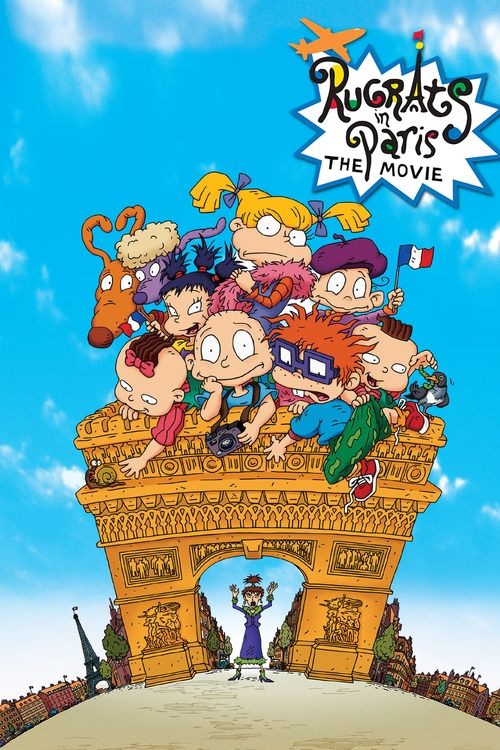
At the end of "Rugrats in Paris: The Movie," the Rugrats help Chuckie find a new mother, and they succeed in bringing joy to him and his father, Chas. The movie concludes with a heartwarming scene at the Eiffel Tower, where the characters celebrate their friendship and family.
As the climax of "Rugrats in Paris: The Movie" unfolds, the scene shifts to the grand finale at the Eiffel Tower. The Rugrats, having faced numerous challenges throughout their adventure in Paris, are determined to help their friend Chuckie find a new mother. The emotional stakes are high, as Chuckie has been feeling insecure about his family since his mother passed away.
The scene begins with the Rugrats gathering together, their faces filled with determination. They know that Chuckie's father, Chas, is set to marry the villainous and self-centered Coco LaBouche, who has shown little regard for Chuckie's feelings. The children devise a plan to stop the wedding and ensure that Chuckie finds a loving mother figure.
As the wedding ceremony begins, the atmosphere is filled with excitement and tension. The Rugrats sneak into the venue, their tiny hearts racing as they navigate through the crowd. They witness Chas standing at the altar, looking hopeful yet oblivious to Coco's true nature. The children, led by Tommy, rally together, whispering encouragement to one another as they prepare to make their move.
In a pivotal moment, the Rugrats burst into the ceremony, causing a delightful commotion. They call out to Chas, expressing their concerns about Coco and how she does not truly care for Chuckie. The audience gasps, and Coco's facade begins to crack as she realizes that her plans are being thwarted. The children's bravery shines through as they stand united, showcasing the strength of their friendship and loyalty.
Chuckie, feeling a mix of fear and hope, steps forward. He bravely tells his father that he wants a mother who will love him for who he is, not someone who will treat him poorly. This heartfelt declaration resonates with Chas, who looks down at his son with a mixture of pride and concern. The emotional weight of the moment hangs in the air, as Chas realizes the importance of Chuckie's happiness.
As the scene progresses, Coco's true colors are revealed, and she becomes increasingly frustrated with the Rugrats' interference. In a comical yet tense moment, she tries to regain control of the situation, but the children's antics only serve to highlight her selfishness. The audience begins to side with the Rugrats, cheering them on as they fight for Chuckie's right to a loving family.
Finally, in a climactic turn of events, Chas makes the decision to call off the wedding. He turns to Chuckie, kneeling down to his level, and reassures him that they will find someone who truly cares for them both. The relief washes over Chuckie's face, and he smiles, feeling a sense of belonging and love.
In the aftermath, the scene shifts to a beautiful montage at the Eiffel Tower. The Rugrats, along with Chas and Chuckie, celebrate their victory. They are surrounded by the stunning Parisian skyline, the sun setting in the background, casting a warm glow over the group. The children laugh and play, their bond stronger than ever, symbolizing the importance of friendship and family.
As the movie draws to a close, the characters reflect on their journey. Chuckie feels a renewed sense of hope, knowing that he is not alone and that he has friends who will always support him. Chas, too, feels a weight lifted off his shoulders, ready to embrace the future with his son. The final scene captures the essence of their adventure, leaving the audience with a heartwarming message about love, family, and the power of friendship.
Is there a post-credit scene?
In "Rugrats in Paris: The Movie," there is indeed a post-credit scene that adds a humorous touch to the film's conclusion. After the credits roll, the scene opens with the Rugrats, who are now back home after their adventurous trip to Paris. The camera focuses on Tommy, Chuckie, Phil, and Lil as they gather around a television set, excitedly watching a video of their escapades in the City of Light.
As they watch, the scene shifts to a montage of their various adventures, including their encounters with the Eiffel Tower, the fun at the amusement park, and the moments spent with their new friend, Kimi. The kids are animatedly commenting on the footage, laughing and reminiscing about their experiences.
Suddenly, the video cuts to a clip of Angelica, who is seen in a dramatic pose, declaring that she is the "Queen of Paris." The Rugrats burst into laughter at her over-the-top antics, showcasing their camaraderie and the lighthearted spirit of their friendship. The scene encapsulates the joy and silliness that defines the Rugrats series, leaving the audience with a warm, nostalgic feeling as the movie comes to a close.
What motivates Chuckie to want a new mother in Rugrats in Paris?
Chuckie, feeling the absence of a mother figure in his life, is deeply affected by the happiness he sees in his friends who have both parents. His longing for a new mother is sparked when he witnesses the joy and love that comes from having a nurturing figure, especially when he sees how much his friends cherish their mothers. This desire intensifies when he learns that his father, Chas, is considering marrying someone, which makes him hopeful yet anxious about the changes that could come.
How does the character of Kimi impact the story and Chuckie's journey?
Kimi, introduced as a new character in Rugrats in Paris, plays a pivotal role in Chuckie's emotional journey. She is a spirited and adventurous girl who quickly becomes a friend to Chuckie. Her presence helps Chuckie realize that he can open his heart to new relationships. Kimi's carefree attitude and her own desire for family resonate with Chuckie, encouraging him to embrace the idea of having a new mother and to confront his fears about change.
What role does the theme park play in the plot of Rugrats in Paris?
The theme park, Reptarland, serves as the central setting for much of the film's action and adventure. It is where the Rugrats embark on their journey to Paris, and it symbolizes both the excitement and chaos of childhood. The park is filled with vibrant attractions and whimsical characters, including the beloved Reptar. The various rides and experiences at Reptarland reflect the children's imaginations and fears, particularly Chuckie's anxiety about his father's potential marriage, making it a crucial backdrop for the unfolding story.
How does the character of Chas Finster evolve throughout the movie?
Chas Finster, Chuckie's father, undergoes significant character development in Rugrats in Paris. Initially portrayed as a nervous and overprotective parent, Chas grapples with the idea of dating and potentially remarrying. His journey is marked by his desire to make Chuckie happy while also confronting his own fears of change and commitment. As the story progresses, Chas becomes more confident, ultimately realizing that he can find love again and that it can positively impact both his and Chuckie's lives.
What is the significance of the wedding scene in Rugrats in Paris?
The wedding scene in Rugrats in Paris is a climactic moment that encapsulates the film's themes of family and acceptance. It is filled with emotional tension as Chuckie grapples with his fears of losing his father to a new mother. The scene is visually stunning, featuring elaborate decorations and a whimsical atmosphere that contrasts with Chuckie's internal struggle. Ultimately, the wedding serves as a turning point for Chuckie, as he learns to embrace the idea of love and family in new forms, culminating in a heartfelt resolution.
Is this family friendly?
"Rugrats in Paris: The Movie" is generally considered family-friendly, but there are a few scenes and aspects that might be potentially objectionable or upsetting for some children or sensitive viewers:
-
Emotional Themes of Family and Separation: The film explores themes of family dynamics, including feelings of abandonment and the desire for a parent's love, which may resonate deeply with some children.
-
Conflict and Tension: There are moments of conflict between characters, particularly involving Chuckie's feelings about his mother and the challenges of finding a new family member, which could be emotionally intense.
-
Scary Situations: Some scenes involve the characters facing fears, such as Chuckie's anxiety about his mother and the intimidating presence of the villain, which may be frightening for younger viewers.
-
Mild Humor: The film includes some slapstick humor and mild potty jokes that might not sit well with all parents, though they are typical of the series' style.
-
Villainous Character: The character of Coco LaBouche, who is portrayed as a somewhat mean and manipulative figure, may be unsettling for some children due to her antagonistic behavior.
Overall, while the film contains these elements, it is crafted to be accessible and entertaining for a young audience, with a focus on friendship, family, and adventure.