
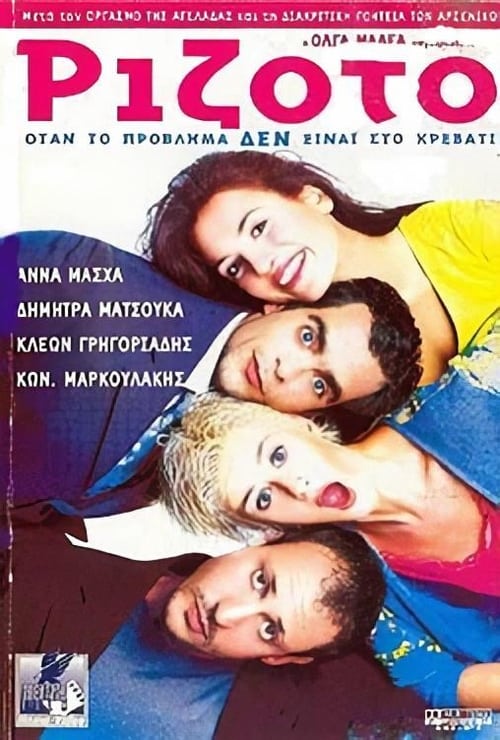











Popular
What role does the character of Elena play in Marco's journey?
How does the character of Marco evolve throughout the film?
What is the significance of the risotto dish in the film?
How does the film depict the relationship between food and memory?
What is the conflict between Marco and his father, and how is it resolved?
Should I watch it?
Ask Your Own Question

What is the plot?
You appear to mean Placido Rizzotto (2000), the Italian historical drama about the trade-union leader murdered by the mafia in postwar Sicily, not a film titled Risotto. The available sources support the broad historical arc, but they do not provide a verified scene-by-scene transcript, so what follows is a careful chronological narrative reconstruction grounded in those summaries rather than a claim of exhaustive line-level detail.
The story opens in postwar Corleone, Sicily, where Placido Rizzotto returns from the war with a hardened political conscience and a deep anti-fascist commitment. He is no longer the same young man who left; the war has clarified for him what power does to ordinary people, and in Corleone he sees that the fascists may be gone but the old violence remains alive in a different form. The land is still dominated by the local Mafia, peasant workers are still exploited, and the unions are still treated as a threat to be crushed rather than a democratic force. Placido immediately becomes one of the town's most dangerous men--not because he carries a gun, but because he speaks openly and organizes people who have been taught to remain silent.
He begins his work among the peasants and laborers, pressing the case that the Mafia's authority is not natural, not honorable, and not inevitable. This is not just a political struggle but a moral one. Placido insists that the land belongs to those who work it, and that the men who have ruled through fear are parasites feeding on poverty. His conviction is so strong that it starts to alter the world around him. One of the most important early turns in the film is the shift in his relationship with his father, Carmelo Rizzotto. At first Carmelo belongs to the older generation of men who have learned to survive by accepting the local order, even when they despise it. Placido argues with him, not with swagger but with patience and force of belief, until Carmelo finally comes to understand that Placido is right and that the Mafia's power is rooted in fear and theft. That reconciliation matters because it confirms Placido's role not only as an organizer but as a man capable of changing minds in a community that has been taught to distrust change.
As Placido grows more effective, the danger around him intensifies. The Mafia cannot simply ignore him, because he is making their control less secure, especially in the unions and in the struggle over land appropriation. The local criminal hierarchy begins to regard him as a problem that must be removed. Within that pressure-cooker environment, personal jealousy and political violence start to fuse. One of the men drawn into hostility toward Placido is Luciano the Lame, a mafia recruit who hates him and envies him. Luciano is not simply a rival in the abstract; he becomes a concentrated expression of the petty resentments and status anxieties that the Mafia can exploit. He resents Placido's influence, his moral certainty, and the respect he earns among ordinary people. The film uses Luciano's bitterness to show how organized crime feeds on wounded pride as much as on money and power.
That personal hostility becomes even more poisonous because of Placido's fiancée. The sources do not provide her name, but they make clear that she is central to the Mafia's strategy of concealment and insult. Luciano envies Placido's fiancée, and that jealousy gives the Mafia an additional pretext to frame what will happen next as a private matter rather than a political execution. The woman is also the daughter of Liggio's lover, which ties the romantic tension to the broader Mafia social world and helps explain how easily the "family" can manipulate appearances. In this environment, honor is not a virtue but a tool: a way of masking power, of turning public murder into a supposedly intimate scandal, and of hiding the political nature of the attack under a cloud of sexual and familial shame.
Placido continues to push forward anyway. He organizes, argues, and refuses intimidation. The film builds a sense of inevitability around him: the more clearly he sees the injustice, the more dangerous he becomes to those who profit from it. The Mafia's fear is not that he is armed; it is that he is persuasive. He can make peasants believe they deserve dignity. He can make a father listen to a son. He can make a village imagine an order beyond submission. That kind of influence is harder for the Mafia to counter than any gunman, because it threatens the foundation of their authority.
The pressure sharpens into open confrontation in the late 1940s, when the struggle over unions, land, and peasant exploitation reaches a decisive point. The film's historical center is 10 March 1948, the night Placido disappears. Up to that point the story has been moving with increasing menace, as if the entire town is narrowing around him. The Mafia's decision is not merely to threaten him but to erase him. On that night he vanishes, and the disappearance itself becomes the first act of the cover-up. He does not simply die; he is removed from the world of the living in a way meant to create confusion, delay, and ultimately silence.
The murder is the film's central death, and the available sources identify it plainly as a Mafia killing in 1948. They do not specify the precise method, but they do make clear that the Mafia's preferred story is one of dishonor rather than politics. This is one of the movie's key revelations: the killers understand that if they can make Placido's death look like a crime of passion, they can drain it of its meaning. In other words, the murder is not only physical; it is rhetorical. They want to kill the man and kill the truth about why he was killed. The whole point of the lie is to make the public believe that Placido's disappearance stems from jealousy, sexual scandal, or family shame instead of the Mafia's war on labor organizing.
That effort to disguise the murder gives the film one of its most important tensions. The question is not just whether Placido will survive--by this point the historical outcome is fixed--but whether his death will be understood correctly. The "family" seeks to take away his fiancée, to reduce the union leader to a man caught in a private conflict, and to present the disappearance as a matter of honor rather than a political assassination. The film emphasizes how cruel and practical this tactic is: it lets murder hide in plain sight by using the social codes of the community itself. This is what makes the Mafia so powerful in the story. They do not merely use violence; they know how to narrate it in a way that protects them.
After Placido disappears, the perspective shifts toward investigation. Captain Carlo Alberto Dalla Chiesa takes up the case, and his presence changes the atmosphere from one of rising social struggle to one of official scrutiny. The sources identify him as the investigator of Placido's disappearance, which implies a formal effort to uncover the truth the Mafia wants buried. His inquiry stands as a counterforce to the silence surrounding the murder. Where the Mafia wants ambiguity, Dalla Chiesa represents the state's attempt--however limited--to restore fact against intimidation. The investigation itself is part of the drama because it marks the point at which Placido stops being only a local organizer and becomes something larger: a symbol whose absence demands explanation.
The film's emotional movement does not end with the investigation, however. It continues by transforming Placido into a legend. The available summary explicitly describes the film as showing "the making of a folk legend and hero," and that is exactly how the story resolves its dramatic tension. Placido's death is not presented as an ending in the ordinary sense. Instead, it becomes the seed of memory, outrage, and political meaning. The Mafia can eliminate a man, but in the film's logic it cannot erase the example he has made. His struggle against corruption, union control, land theft, and peasant exploitation survives the killing that is meant to silence it.
The most devastating emotional note comes from the contrast between the intimate and the political. Placido has to fight not only enemies in the streets but the inherited fear inside his own community and family. His reconciliation with Carmelo Rizzotto shows what he is trying to build: a world where truth can cross generational lines and where men are not forced to kneel before gangsters dressed up as respectable authorities. That makes the final disappearance even more tragic, because it comes just as the possibility of broader change is beginning to take shape. The town loses not just a union leader but a voice that had begun to shift the moral center of the place.
The last phase of the story is therefore defined less by action than by aftermath. Placido's absence hangs over Corleone, and the Mafia's attempt to control the meaning of his death becomes part of the larger battle. The film's historical purpose is clear: it restores the political truth that the killers tried to bury. Placido Rizzotto is not remembered as a man who simply vanished in a private dispute. He is remembered as a trade-union organizer murdered by the Mafia for challenging its grip on labor and land in postwar Sicily. That truth is the final victory the film claims for him.
In the end, there is no rescue, no negotiation, and no survival for Placido. He is murdered, his death is obscured as an affair of honor, and the community is left to reckon with the gap he leaves behind. Luciano the Lame remains a hostile figure in the orbit of Mafia resentment, but the story does not present him as the one who "wins" in any meaningful sense; the real victory belongs to the force that can shape memory and investigation after the killing. Carmelo Rizzotto has already crossed to Placido's side before the end, and that emotional conversion stands as one of the film's quietest but most important resolutions. Captain Carlo Alberto Dalla Chiesa carries the burden of inquiry, representing the effort to name the crime correctly. Placido himself becomes the legend the Mafia cannot fully suppress.
What remains after the final scene is not suspense but historical weight: a dead union leader, a town shadowed by complicity and fear, and a story that insists the murder was political even if the killers wanted it remembered as something sordid and private. The film closes on that transformation, turning Placido's life and disappearance into a public indictment of Mafia power and a memorial to resistance.







What is the ending?
In the ending of "Risotto," the main character, a chef named Marco, faces a pivotal moment in his life as he reconciles his passion for cooking with his personal relationships. After a series of emotional confrontations and realizations, Marco decides to embrace his love for both his craft and the people around him, leading to a bittersweet but hopeful conclusion.
As the film draws to a close, Marco prepares a final meal that symbolizes his journey, reflecting his growth and the connections he has forged. The film ends with a sense of renewal and the promise of new beginnings, as Marco steps into a future where he balances his culinary ambitions with the love and support of those he cares about.
The ending of "Risotto" unfolds with a series of poignant scenes that encapsulate the emotional and narrative arcs of the characters.
Scene 1: The kitchen is alive with the sounds of clattering pots and sizzling pans. Marco, the chef, stands at the stove, his brow furrowed in concentration. He is preparing a special dish, a risotto that he hopes will impress not only his patrons but also himself. The camera captures the steam rising from the pot, mirroring the tension building within him. Marco's internal struggle is palpable; he is torn between his dedication to his culinary art and the relationships that have suffered due to his obsession.
Scene 2: In a quiet moment, Marco receives a visit from his estranged partner, Elena. The atmosphere is thick with unspoken words as they sit across from each other at a small table. Elena's eyes reflect a mix of hurt and longing, while Marco's expression is one of regret. They engage in a heartfelt conversation, where Elena expresses her feelings of abandonment. Marco, feeling the weight of his choices, begins to understand the importance of balance in his life. The scene is charged with emotion, as both characters confront their past and the impact of Marco's ambition on their relationship.
Scene 3: As the evening progresses, Marco decides to host a small gathering for his friends and family, a gesture of reconciliation. The kitchen buzzes with activity as he prepares the risotto, pouring his heart into the dish. The camera captures the vibrant colors of the ingredients, the rhythmic stirring of the pot, and the way Marco's hands move with both skill and care. This scene symbolizes his commitment to not only his craft but also to the people who have supported him.
Scene 4: The gathering begins, and the atmosphere is filled with laughter and warmth. Friends and family gather around the table, sharing stories and memories. Marco serves the risotto, and as his loved ones take their first bites, their expressions shift to delight. The camera lingers on their faces, capturing the joy that food can bring and the connections it fosters. Marco watches, a smile breaking through his earlier tension, as he realizes that his passion for cooking can coexist with his relationships.
Scene 5: In the final moments, Marco steps outside, taking a deep breath of the cool night air. He looks up at the stars, a sense of peace washing over him. The film closes with a shot of him standing alone, yet not lonely, as he reflects on the journey he has taken. The screen fades to black, leaving the audience with a sense of hope and the understanding that Marco has chosen to embrace both his culinary dreams and the love of those around him.
In this ending, Marco's fate is one of renewal; he has learned to balance his passion with his personal life. Elena, too, finds a sense of closure as they begin to rebuild their relationship. The other characters, who have supported Marco throughout his journey, also find joy in the shared experience of food and friendship, highlighting the film's central themes of connection and the importance of nurturing relationships alongside personal ambitions.
Is there a post-credit scene?
The movie "Risotto," produced in 2000, does not feature a post-credit scene. The film concludes its narrative without any additional scenes or content after the credits roll. The story wraps up in a way that leaves the audience with a sense of closure regarding the characters and their journeys, focusing on the themes of love, relationships, and the complexities of life.
What role does the character of Elena play in Marco's journey?
Elena is a pivotal character who challenges Marco's complacency. She represents both a romantic interest and a catalyst for change, pushing him to confront his past and embrace his culinary talents, which leads to significant personal growth.
How does the character of Marco evolve throughout the film?
Marco begins as a disillusioned chef who feels trapped in his routine. As the story progresses, he confronts his fears and insecurities, ultimately finding a renewed passion for cooking and a deeper understanding of his relationships, particularly with his estranged father.
What is the significance of the risotto dish in the film?
In 'Risotto', the dish serves as a metaphor for the characters' relationships and emotional states. The preparation of risotto, which requires patience and attention, parallels the characters' struggles to connect with one another and the complexities of their personal lives.
How does the film depict the relationship between food and memory?
Throughout 'Risotto', food is intricately linked to memory, with various dishes triggering flashbacks for the characters. These moments reveal their past traumas and joys, illustrating how food can evoke powerful emotions and shape personal identities.
What is the conflict between Marco and his father, and how is it resolved?
The conflict between Marco and his father stems from a lack of understanding and communication regarding their shared passion for cooking. This tension is resolved when they come together in the kitchen, allowing them to bond over their love for food, ultimately leading to reconciliation and a deeper familial connection.
Is this family friendly?
"Risotto," produced in 2000, is a film that explores complex themes and relationships, which may not be suitable for younger audiences or sensitive viewers. Here are some potentially objectionable or upsetting aspects:
-
Emotional Turmoil: The film delves into deep emotional struggles and conflicts among characters, which may be intense for children to process.
-
Adult Themes: There are discussions and situations involving adult relationships, including romantic tensions and personal betrayals that may not be appropriate for younger viewers.
-
Family Dynamics: The portrayal of strained family relationships can be heavy and may resonate with viewers who have experienced similar issues, potentially causing discomfort.
-
Visual Imagery: Some scenes may contain visual elements that evoke strong emotions, such as sadness or tension, which could be upsetting for sensitive individuals.
-
Language: There may be instances of strong language or mature dialogue that could be inappropriate for children.
Overall, while "Risotto" offers a rich narrative, its themes and emotional depth may not align with family-friendly viewing.







