
















































Popular
What challenges does the main character, Lisa, face in her pursuit of becoming a beauty queen?
How does Lisa's relationship with her daughter evolve throughout the film?
What role does the character of the pageant director play in Lisa's journey?
How does Lisa's perception of beauty change throughout the film?
What specific events lead to Lisa's moment of self-discovery in the film?
Should I watch it?
Ask Your Own Question

What is the plot?
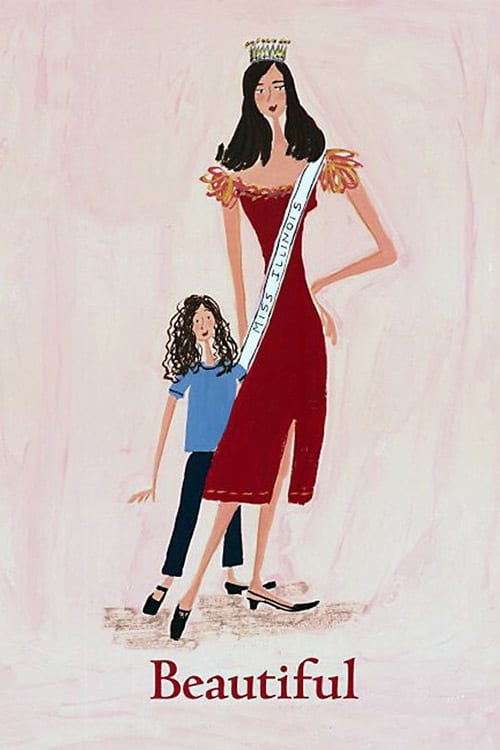
The story of Beautiful (2000) unfolds as a poignant and often harsh journey through the life of Mona Hibbard, a young woman from Naperville, Illinois, whose singular ambition is to win the Miss American Miss (MAM) beauty pageant. From the very beginning, Mona's childhood is marked by dysfunction and neglect. She is graceless and awkward, wearing braces and unflattering costumes in local kids' pageants, where she repeatedly fails to win. Her mother, an alcoholic woman, is unsupportive and harsh, berating Mona for her failures and ultimately threatening to withdraw all financial and emotional support if Mona continues to compete. This early rejection sets the tone for Mona's relentless and often ruthless pursuit of validation through pageantry.
Despite the coldness of her home life, Mona finds solace in her friendship with Ruby Stilwell, a kind and loyal girl whose grandmother also offers Mona the emotional support she desperately lacks. Ruby's unwavering devotion to Mona is a constant throughout the film, even as Mona grows colder and more self-centered in her quest for the crown. Ruby's grandmother's nurturing presence contrasts sharply with Mona's mother's neglect, highlighting the emotional void Mona tries to fill with pageant success.
As Mona grows older, her ambition intensifies, but so do the sacrifices and moral compromises she makes. Early in her adult pageant career, Mona engages in sabotage to gain an edge. A particularly memorable and sinister incident occurs during a competition where a rival contestant, Joyce Perkins, is set to perform a fire baton routine. Mona secretly coats Joyce's baton with glue, causing Joyce's hand to become stuck mid-performance, creating a dangerous situation. Seizing the moment, Mona rushes onstage with a fire extinguisher, "saving" Joyce and earning public admiration. This act, however, sows the seeds of a lifelong enmity, as Joyce becomes a bitter and determined adversary of Mona's.
Mona's personal life becomes more complicated when she discovers she is pregnant. Knowing that mothers are disqualified from competing in the MAM pageant, Mona hides her pregnancy and strikes a secretive and painful arrangement with Ruby: Ruby will raise Mona's daughter, Vanessa, as her own child to protect Mona's eligibility. This agreement deepens Ruby's sacrifices and cements her role as Mona's protector and surrogate family, even as Mona remains emotionally distant and often selfish toward both Ruby and Vanessa.
As Mona climbs the pageant ladder, winning the Illinois state title, she returns to confront her past by visiting her mother's home. This visit is a moment charged with emotional tension. Mona hopes for recognition and support, but instead, she is met with cold rejection. Her mother refuses to attend the national pageant, citing the inconvenience and her husband's unwillingness to go. Worse still, Mona's mother's lecherous husband makes inappropriate advances, forcing Mona to fend him off. In a rare moment of defense, Vanessa stands up for Mona, revealing her fierce loyalty despite the complicated family dynamics. Mona's mother's words cut deep: when Mona asks, "Mom, why do you hate me?" her mother replies, "I don't hate you. I don't understand you." Mona presses on, "What's to understand?" and her mother answers, "I'm afraid of you. That look in your eye, like you were hungry for something, but I could never get you to eat anything!" This confrontation crystallizes the film's central theme of fractured mother-daughter relationships and Mona's lifelong hunger for acceptance.
Meanwhile, Ruby's life takes a tragic turn. Working as a nurse in a nursing home, Ruby faces a crisis when one of her elderly patients dies from an overdose of saved-up medication. Although the death is accidental and not caused by any malicious act, Ruby is arrested and charged with neglect. This event forces Mona to step into the maternal role she has long avoided. With Ruby in prison awaiting trial, Mona must care for Vanessa, a responsibility she initially resists. The relationship between Mona and Vanessa is fraught with tension; Vanessa sees Mona as superficial, mean, and selfish, while Mona struggles to connect emotionally with her daughter.
As the national Miss American Miss pageant approaches--the ultimate goal Mona has pursued her entire life--the stakes are higher than ever. Mona's carefully constructed world begins to unravel as her secrets, manipulations, and sacrifices come to light. The public image Mona has crafted, aided by Vanessa's candid photographs for the pageant, contrasts sharply with the private turmoil she faces. Ruby's arrest and Vanessa's growing awareness of her true parentage expose the fragile foundations of Mona's ambitions.
In the film's climax, Mona is forced to confront her deepest conflicts. At the national pageant venue, she stands on the precipice of achieving her dream, but the reality of her responsibilities weighs heavily. The final confrontation is not with a rival contestant but with herself and her fractured family. The emotional tension reaches a breaking point as Mona realizes that her relentless pursuit of external validation has cost her the chance for genuine connection. The film's ending is deliberately ambiguous but hopeful: Mona's icy exterior begins to thaw as she acknowledges Vanessa not just as a secret to be hidden but as a daughter to be loved. The two leave Mona's childhood home together, finally free from the emotional chains of the past. Ruby is eventually exonerated and reunited with them, completing the fragile family unit.
Throughout Beautiful, the deaths and confrontations serve as critical turning points. The patient's accidental overdose leads to Ruby's arrest, a catalyst for Mona's transformation. The sabotage of Joyce Perkins establishes Mona's ruthless streak and the consequences of her ambition. The confrontation with her mother reveals the emotional wounds that drive Mona's behavior. Each event builds tension and momentum toward the climax, where Mona must choose between the crown and motherhood.
The film closes on a note suggesting that true beauty and liberation come not from trophies or titles but from accepting responsibility and embracing authentic relationships. Mona's journey from a graceless, desperate girl to a woman grappling with the costs of her ambition is marked by pain, sacrifice, and ultimately, a fragile hope for redemption and connection.









What is the ending?
In the ending of the movie "Beautiful," the protagonist, Mona, faces the consequences of her choices as she prepares for the birth of her child. After a series of emotional struggles and confrontations, she ultimately decides to give up her dreams of becoming a beauty queen to focus on her responsibilities as a mother. The film concludes with Mona embracing her new life, accepting her situation, and finding a sense of peace.
Expanding on this, the final scenes of "Beautiful" unfold with a palpable tension as Mona, played by Minnie Driver, is nearing the end of her pregnancy. The setting is filled with a mix of anticipation and anxiety, reflecting her internal conflict. She has been striving for a life of glamour and success, but the reality of impending motherhood weighs heavily on her.
In one poignant scene, Mona is at a beauty pageant rehearsal, surrounded by other contestants who are focused on their own aspirations. The atmosphere is charged with competition, and Mona feels increasingly out of place. As she practices her walk, her mind drifts to the life she envisioned for herself, filled with accolades and recognition. However, the physical discomfort of her pregnancy and the emotional turmoil of her choices begin to surface. She realizes that her dreams of beauty and fame are slipping away, overshadowed by the responsibilities of impending motherhood.
Later, Mona has a heartfelt conversation with her mother, who has been a source of both support and pressure throughout her life. They discuss the sacrifices that come with motherhood, and Mona's mother expresses her own regrets and hopes for her daughter. This moment is crucial as it highlights the generational expectations placed upon women and the struggle between personal ambition and familial duty.
As the climax approaches, Mona is faced with a decision that will define her future. She attends the beauty pageant, where she is both excited and terrified. The event is a spectacle, filled with glitz and glamour, but for Mona, it feels increasingly hollow. When her name is called, she stands on stage, but instead of reveling in the moment, she feels a deep sense of disconnection. The audience's cheers fade into the background as she grapples with her identity and the reality of her situation.
In a pivotal moment, Mona steps away from the spotlight, choosing to leave the pageant. This decision symbolizes her acceptance of her new role as a mother and her rejection of the superficial world she once aspired to conquer. The scene is filled with emotion as she walks away, leaving behind the dreams that no longer resonate with her.
The film concludes with Mona in a quiet, intimate setting, cradling her newborn child. The camera captures her serene expression, a stark contrast to the chaos of the pageant. In this moment, she finds a sense of fulfillment and peace, embracing her identity as a mother. The final shot lingers on her face, reflecting a newfound strength and acceptance of her life's path.
As for the fates of the main characters, Mona ultimately chooses motherhood over her dreams of beauty and fame, finding solace in her new role. Her mother, who has been a complex figure throughout the film, comes to terms with her own past and supports Mona's decision. The film closes on a note of hope, suggesting that true beauty lies not in external validation but in the love and connection one finds in family.
Is there a post-credit scene?
The movie "Beautiful," produced in 2000, does not have a post-credit scene. The film concludes with its final moments, focusing on the resolution of the main character's journey without any additional scenes or content after the credits roll. The story wraps up with a poignant reflection on the protagonist's struggles and aspirations, leaving the audience with a sense of closure regarding her experiences and choices.
What challenges does the main character, Lisa, face in her pursuit of becoming a beauty queen?
Lisa, a single mother living in a small town, faces numerous challenges in her pursuit of becoming a beauty queen. She struggles with her self-image and the societal pressures of beauty standards. Additionally, she must navigate her complicated relationship with her daughter, whom she wants to inspire but also fears will be affected by the harsh realities of the beauty pageant world. Lisa's determination is often tested by her financial struggles and the judgment of others in her community.
How does Lisa's relationship with her daughter evolve throughout the film?
Lisa's relationship with her daughter, who is also named Lisa, evolves significantly throughout the film. Initially, Lisa is focused on her own ambitions and often neglects her daughter's emotional needs. However, as the story progresses, she begins to realize the importance of being a role model and the impact her choices have on her daughter. This realization leads to moments of vulnerability and connection, as Lisa strives to balance her dreams with her responsibilities as a mother.
What role does the character of the pageant director play in Lisa's journey?
The pageant director plays a pivotal role in Lisa's journey, serving as both a mentor and a source of conflict. Initially, the director encourages Lisa, seeing her potential and helping her navigate the pageant world. However, as the competition intensifies, the director's expectations and the cutthroat nature of the pageant industry create pressure that challenges Lisa's self-worth and values. This relationship highlights the duality of support and competition in the pursuit of beauty.
How does Lisa's perception of beauty change throughout the film?
Throughout the film, Lisa's perception of beauty undergoes a significant transformation. At the beginning, she equates beauty with success and validation, believing that winning the pageant will solve her problems. However, as she faces the harsh realities of the beauty industry and the impact it has on her and her daughter's lives, she begins to understand that true beauty lies in authenticity, self-acceptance, and the love she has for her daughter. This shift in perception is crucial to her character development.
What specific events lead to Lisa's moment of self-discovery in the film?
Lisa's moment of self-discovery is catalyzed by several key events throughout the film. One significant moment occurs when she witnesses the negative effects of the pageant culture on other contestants, leading her to question her own motivations. Additionally, a heartfelt conversation with her daughter about their relationship and the pressures of beauty prompts Lisa to reflect on her values. Ultimately, a confrontation with the pageant director forces her to confront the superficiality of the competition, leading to her realization that her worth is not defined by external validation.
Is this family friendly?
The movie "Beautiful," produced in 2000, is not considered family-friendly due to several potentially objectionable or upsetting scenes and themes. Here are some aspects that may be concerning for children or sensitive viewers:
-
Substance Abuse: The film includes scenes depicting drug use, which may be distressing or inappropriate for younger audiences.
-
Sexual Content: There are instances of sexual situations and discussions that may not be suitable for children.
-
Emotional Turmoil: The protagonist experiences significant emotional struggles, including feelings of inadequacy and despair, which could be upsetting for sensitive viewers.
-
Family Dynamics: The film explores complex family relationships, including themes of abandonment and disappointment, which may resonate negatively with some viewers.
-
Mental Health Issues: The portrayal of mental health challenges and the impact on family life may be heavy and difficult for some audiences to process.
These elements contribute to the film's mature themes and overall tone, making it more appropriate for adult viewers.









