




Popular
How does the relationship between Anna and her mother evolve throughout the film?
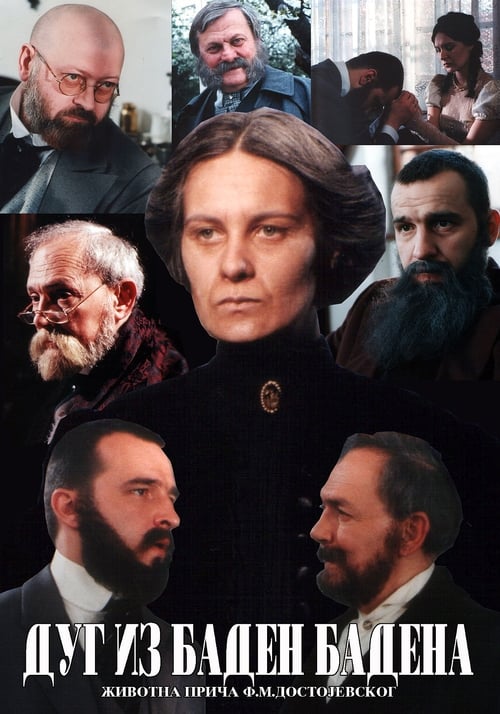
What is the significance of the character Anna in The Debt?
What role does the setting of Baden Baden play in the story?
How does the character of the father influence Anna's decisions?
What are the key moments that reveal Anna's internal struggles?
Should I watch it?
Ask Your Own Question

What is the plot?
The film opens in 1997 in Tel Aviv, where Rachel Singer is being publicly celebrated for a mission that has turned her into a national icon, but the celebration feels brittle from the start because the honor is wrapped around a story she clearly does not want retold in public. Her daughter, Sarah Singer, has just published a book about the old operation, and the launch event forces Rachel to sit under bright lights and hear a polished version of her own past while she visibly recoils from it. Rachel bears a noticeable scar, a silent reminder that whatever happened decades earlier did not end neatly, and when she is asked to read aloud from the chapter describing her final violent encounter with Dieter Vogel, the discomfort on her face makes it obvious that the book is not simply a tribute but an intrusion. At the same event, the past begins to crack open around her because Stefan Gold reappears as part of the old triangle of Mossad agents, and David Peretz, who has been missing for years, is abruptly pulled back into the story by an Israeli official who comes to take him away for questioning. The present tense is already unstable; the public narrative of heroism is being watched, measured, and quietly challenged.
From there the film cuts backward to East Berlin in 1965–66, where Rachel is young, nervous, and on her first field assignment with the Mossad. She arrives to meet David Peretz and Stefan Gold, both more experienced agents, and the three are given an assignment with enormous moral weight: find, capture, and bring back to Israel Dieter Vogel, the infamous Nazi doctor known as "the Surgeon of Birkenau" for his medical experiments on Jews during the Holocaust. Vogel has reinvented himself as a respectable gynecologist in East Berlin, hiding in plain sight behind the language of medicine while remaining the same monster beneath it. The mission is a blend of surveillance, deception, and nerve. Rachel and David pose as a married couple from Argentina, and Rachel takes the most intimate role of all by becoming Vogel's patient at his obstetrics and gynecology clinic, where she can observe him up close and create the opening the team needs. The cover depends on acting natural while every word is measured; one false glance, one wrong pause, and the operation collapses. Rachel must sit across from the man the world has failed to punish and smile as if she is just another patient seeking care.
The scenes in East Berlin carry a constant sense of pressure, because the city itself is a trap. The agents are working under the shadow of the Wall, and every move is designed around getting Vogel out of East Berlin and across the border for trial in Israel. Their first major success comes when they manage to get close enough to abduct him, but the triumph is immediately poisoned by the fact that Vogel is not passive prey. He fights, schemes, and probes for weakness as soon as he is in their hands, and the mission stops feeling like a clean intelligence operation and starts feeling like a desperate containment effort. Rather than the crisp victory the agents imagined, they find themselves trapped with the very man they are supposed to deliver, forced into a hideout where the atmosphere grows increasingly claustrophobic. The safe house becomes a pressure cooker: the captors become exhausted, suspicious, and frightened, while Vogel, monstrously calm and cunning, turns their certainty into doubt.
The emotional center of the 1960s timeline is Rachel, because her first mission becomes a crash course in moral compromise. She is not just chasing a Nazi; she is learning what Mossad work really costs when theory gives way to lived reality. The three agents are supposed to be professionals, but their plan is undone by human panic and the brutal ingenuity of Vogel himself. The film's tension rises as the escape route narrows, and the attempt to move him by train becomes the point where the operation finally breaks. The train sequence is crucial: the agents try to get Vogel out, but Rachel is recognized, the timing slips, and they miss the train, leaving them stranded and forced back into the hideout with Vogel still alive. From that moment on, the mission no longer belongs to strategy; it belongs to fear, guilt, and improvisation. Every corridor feels too small. Every decision feels irreversible.
In the present, the book launch is doing the opposite of what the 1960s agents wanted. Instead of burying the story, Sarah's book forces it into daylight, and that public exposure is the mechanism that reveals the deep lie beneath the official legend. Rachel has spent decades living as a celebrated woman whose name is tied to a heroic version of the mission, but the new attention creates an atmosphere of dread rather than pride. Stefan's reappearance brings the old shame back into the room, and David's return--frantic, troubled, and clearly carrying years of burden--signals that the secret has never really stayed buried. The present-day framework keeps cutting against the past, and the effect is to show that what the public believes is only the polished surface of a much uglier truth.
The film's major revelation arrives through the gradual unraveling of that truth. The story that Rachel, Stefan, and David are celebrated for having killed Vogel after capturing him is shown to be false in its official form. The version honored in public is that they completed a clean revenge mission and returned as heroes. But the hidden reality is that the mission went wrong, the men and women involved covered it up, and the myth of success was manufactured to protect Mossad's reputation and their own lives. The lie matters because it transforms a botched and morally muddied operation into a national fable. Sarah's book unwittingly tears at that fabric by turning a private secret into a public artifact. The old agents are no longer allowed to remain inside the protected story they built for themselves.
As the past catches up to the present, the most important death in the modern timeline occurs: a suicide in 1997 triggers the full disclosure of what really happened. The exact identity behind the death is part of the revelation process rather than the emotional center of the film, but its function is unmistakable. It is the event that starts the collapse of the false narrative and forces the surviving agents toward confrontation. The suicide is not just tragic in itself; it is the pressure release valve that lets the sealed truth escape. Once it happens, the old arrangement can no longer hold. The characters are compelled to face the reality that they have spent thirty years defending a lie.
Back in the East Berlin timeline, Vogel's presence turns psychological warfare into physical danger. He is not merely a target; he is a predator with years of experience manipulating fear, exploiting hesitation, and surviving by reading the weaknesses of everyone around him. The agents' safe house becomes a moral laboratory in which every choice exposes their limits. They are not just trying to keep him from escaping; they are trying to keep themselves from breaking apart under the weight of what they have done and what they may yet have to do. The film makes the captivity feel intimate and menacing at the same time. Vogel is close enough to touch, close enough to hear breathe, and that proximity turns the mission into a confrontation with the past they thought they were hunting.
The present-day Rachel is haunted by the same burden. At the book event, she is expected to perform gratitude and triumph, but what she actually performs is strain. The chapter she reads aloud is the public script of her final confrontation with Vogel, and the reading becomes a kind of forced confession in front of an audience that thinks it is hearing a heroic story. Her scar, visible under the lights, stands as proof that the legend has a body cost, and that the body has never healed cleanly. The gap between the story told about her and the truth lived by her widens until it becomes unbearable. The book, instead of closing a chapter, opens a wound.
The mission's ultimate climax in the 1960s is not a straightforward triumph but the disastrous, morally tangled encounter around Vogel's attempted escape. The agents have him in their custody, but every second increases the chance that he will get away. Rachel's recognition at the crucial moment ruins the transport plan, and the team is forced to retreat with their prisoner back to the hideout. From there, the story drives toward a violent resolution that the public version later turns into myth. The film preserves two versions of Vogel's fate in the broader discourse surrounding the story: one in which he is killed by the agents, and another in which he escapes, humiliating them. What the film gradually makes clear is that the celebrated official story is a cover for a much messier truth. The agents do not emerge as clean victors; they emerge as people who had to fabricate certainty out of failure.
The most devastating revelation is that the trio's fame is built on that fabrication. Rachel, Stefan, and David are credited with having brought justice, but the real outcome is concealed because it would expose Mossad's failure and their own compromised choices. Sarah's book is important precisely because it drags this secret into the open without fully understanding the damage it does. She thinks she is documenting family history and national history, but she is actually destabilizing an old lie that the three surviving agents have built their lives around. Rachel's discomfort at the launch is not only emotional embarrassment; it is the fear that the public story will finally be stripped away and replaced with the truth she has spent decades avoiding.
At the end of the film, the hidden truth is forced fully into daylight in a final confrontation that resolves the long-running chase with Vogel's legacy. After years of living inside the lie, Rachel tracks Vogel down again in the present-day timeline, this time determined to finish what the first mission failed to complete. The confrontation is brutal and deeply personal. Vogel, now older but still carrying the same sense of menace, is trapped by Rachel, and she overpowers him in a tense, physical struggle. The environment becomes a final cage. She then kills him by using an oxygen tank: she shoots it, the tank explodes, and the blast destroys him. This death is the film's actual ending of the Vogel story, the act that finally gives the long-buried revenge narrative its violent completion. It is not a clean victory, though, because it comes after decades of concealment, guilt, and self-deception.
Once Vogel is dead, Rachel does not get relief so much as release. The real emotional ending is her decision to tell Sarah the truth about her past. The story that began as a public tribute becomes a private confession, and the confession changes the meaning of everything that came before. Rachel's revelation is not presented as a triumphant cleansing. It is an act of surrender to reality, an admission that the heroic legend was false, that the mission was more compromised than anyone was allowed to know, and that the price of keeping the secret has shaped her entire life. The film closes on that act of truth-telling rather than on any neat moral resolution. Rachel, Stefan, and David are left not as legends but as damaged survivors of a history they helped distort. The public may remember them as heroes, but the final feeling of the film is the weight of the lie finally broken open, with Rachel standing at the center of it, scarred, exhausted, and at last unable to pretend.
More Movies Like This
Browse All Movies →





What is the ending?
In the ending of "The Debt" from Baden Baden, the main characters confront the consequences of their past actions. The film culminates in a tense confrontation that reveals deep-seated emotions and unresolved conflicts. The fates of the characters are intertwined with their choices, leading to a resolution that is both poignant and reflective of their journeys.
As the film draws to a close, we find ourselves in a dimly lit room where the tension is palpable. The air is thick with unspoken words and the weight of the past. The protagonist, a woman burdened by her history, stands at a crossroads. She is faced with the ghosts of her decisions, and the emotional turmoil is evident on her face. Her eyes flicker with a mix of fear and determination as she prepares to confront the truth.
In the next scene, the atmosphere shifts as she meets with another key character, a man who has been a significant part of her life. Their conversation is fraught with tension, each word laced with the history they share. The dialogue is sharp, revealing the pain and regret that has festered over the years. As they speak, the camera captures the subtle shifts in their expressions, the way their bodies tense or relax, reflecting their internal struggles.
The climax of the film arrives when the protagonist must make a choice that will determine her future. She stands at the edge of a decision, her heart racing as she weighs the consequences. The scene is charged with emotion, the music swelling to heighten the stakes. In a moment of clarity, she chooses to confront her past rather than run from it. This decision is a turning point, not just for her, but for the other characters as well.
As the story unfolds, we see the repercussions of her choice ripple through the lives of those around her. The man she confronted is left to grapple with his own feelings of guilt and responsibility. His fate is intertwined with hers, and as she steps forward, he is forced to reckon with the impact of their shared history. The camera lingers on his face, capturing the realization that he cannot escape the past.
In the final scenes, the protagonist finds a sense of closure. The weight of her decisions begins to lift, and there is a moment of peace as she embraces the possibility of a new beginning. The film ends on a note of ambiguity, leaving the audience to ponder the complexities of forgiveness and the enduring nature of human relationships.
The fates of the main characters are left somewhat open-ended, reflecting the reality that not all conflicts can be neatly resolved. The protagonist moves forward, carrying the lessons of her past, while the man remains in a state of reflection, suggesting that the journey of healing is ongoing. The film closes with a lingering sense of hope, underscoring the idea that while the past shapes us, it does not have to define our future.
Is there a post-credit scene?
The movie "The Debt" from Baden Baden, produced in 2000, does not contain a post-credit scene. The film concludes its narrative without any additional scenes or content after the credits roll. The story wraps up with a focus on the emotional and psychological aftermath of the characters' experiences, leaving the audience to reflect on the themes of guilt, memory, and the complexities of human relationships.
How does the relationship between Anna and her mother evolve throughout the film?
The relationship between Anna and her mother is fraught with tension and unspoken resentment. As the story unfolds, Anna grapples with her mother's expectations and her own desires, leading to moments of confrontation and vulnerability that highlight their complex bond.
What is the significance of the character Anna in The Debt?
Anna is a pivotal character whose journey reflects the emotional and psychological struggles of dealing with past traumas. Her interactions with other characters reveal her internal conflicts and the burden of secrets she carries.
What role does the setting of Baden Baden play in the story?
The setting of Baden Baden serves as a backdrop that enhances the film's themes of nostalgia and memory. The picturesque yet haunting landscapes mirror the characters' emotional states, creating a sense of longing and reflection that permeates the narrative.
How does the character of the father influence Anna's decisions?
Anna's father is a shadowy figure whose absence looms large over her life. His influence is felt in her choices and relationships, as she seeks to understand his legacy while simultaneously trying to forge her own identity, leading to a deep internal conflict.
What are the key moments that reveal Anna's internal struggles?
Key moments that reveal Anna's internal struggles include her solitary walks through the town, her interactions with her mother that often end in silence, and her moments of reflection where she confronts her feelings of inadequacy and the weight of her family's expectations.
Is this family friendly?
The movie "The Debt" from Baden Baden, produced in 2000, contains several elements that may not be suitable for children or sensitive viewers. Here are some potentially objectionable or upsetting aspects:
-
Themes of Betrayal and Guilt: The film explores deep emotional themes, including betrayal and the weight of past decisions, which may be difficult for younger audiences to fully grasp.
-
Intense Emotional Scenes: There are moments of high emotional tension that may evoke feelings of sadness or discomfort, particularly related to family dynamics and personal struggles.
-
Mature Relationships: The film includes complex adult relationships that may involve themes of infidelity or emotional turmoil, which could be confusing or inappropriate for younger viewers.
-
Depictions of Loss: The narrative addresses loss and the impact it has on family members, which could be upsetting for children or those sensitive to themes of grief.
-
Conflict and Confrontation: There are scenes of conflict that may involve raised voices or intense arguments, which could be distressing for some viewers.
Overall, while the film is rich in narrative depth, its emotional weight and mature themes may not be suitable for a family-friendly viewing experience.








