











Popular
What is the relationship between the two main characters, Harry and Jake?
How does Harry's perception of his writing affect his interactions with Jake?
What role does the setting of the coffee shop play in the story?
What is the significance of the photographs Jake takes throughout the film?
How does the theme of failure manifest in Harry's character arc?
Should I watch it?
Ask Your Own Question

What is the plot?
Sorry, we aren't able to watch and write up a full detailed plot yet. Check back in a few days.








What is the ending?
In the ending of "Chinese Coffee," the tension between the two main characters, Harry and Jake, reaches a climax. After a heated confrontation, Harry reveals his deep-seated insecurities and frustrations about his life and work. The film concludes with a sense of unresolved conflict, leaving both characters in a state of emotional turmoil.
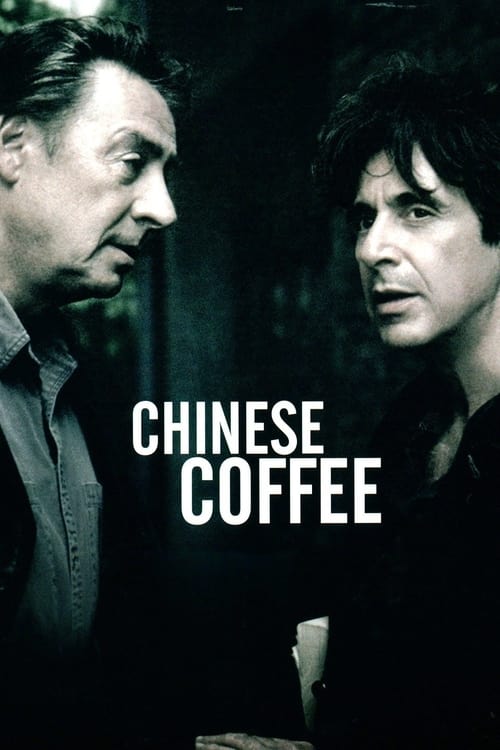
As the final scenes unfold, we find ourselves in Harry's cramped apartment, where the atmosphere is thick with tension. The dim lighting casts shadows on the walls, mirroring the dark emotions that linger between the two men. Harry, played by Al Pacino, is visibly agitated, pacing back and forth as he grapples with his feelings of inadequacy and betrayal. He confronts Jake, portrayed by Jerry Orbach, about the harsh criticism he received regarding his writing. The air is heavy with unspoken words and unresolved issues.
In this charged moment, Harry's vulnerability is laid bare. He expresses his frustrations about his failed aspirations as a writer and the loneliness that envelops him. His voice trembles with a mix of anger and desperation, revealing the depth of his internal struggle. Jake, on the other hand, remains more composed but is clearly affected by Harry's emotional outburst. He tries to maintain a sense of control, but the cracks in his facade begin to show as Harry's words cut deep.
As the confrontation escalates, Harry's anger boils over, leading to a physical altercation. The two men grapple with each other, their emotions spilling out in a chaotic clash of pent-up frustrations. This moment serves as a cathartic release for both characters, but it also highlights the fragility of their friendship. The fight is not just a physical struggle; it symbolizes the deeper conflicts that have been brewing beneath the surface.
After the confrontation, the atmosphere shifts. Harry, now exhausted and emotionally drained, sinks into a chair, his head in his hands. The weight of his failures and the reality of his situation crash down on him. Jake, still standing, looks at Harry with a mix of pity and resignation. The bond they once shared feels irrevocably altered, and the air is thick with the realization that their friendship may never recover from this moment.
In the final moments of the film, the camera lingers on Harry's face, capturing the raw emotion etched across his features. He is left alone in his apartment, surrounded by the remnants of his dreams and aspirations. The screen fades to black, leaving the audience with a haunting sense of unresolved tension and the stark reality of both characters' fates. Harry remains trapped in his cycle of despair, while Jake walks away, burdened by the weight of their confrontation and the knowledge that their relationship has been irrevocably changed. The film closes, leaving viewers to ponder the complexities of friendship, ambition, and the human condition.
Is there a post-credit scene?
The movie "Chinese Coffee," produced in 2000, does not have a post-credit scene. The film concludes with its final moments, focusing on the intense and emotional dialogue between the two main characters, Harry and Jake. The narrative wraps up without any additional scenes or content after the credits roll, leaving the audience to reflect on the themes of friendship, betrayal, and the complexities of personal relationships that have been explored throughout the film.
What is the relationship between the two main characters, Harry and Jake?
Harry and Jake share a complex friendship that is deeply rooted in their past. They are both struggling artists, with Harry being a writer and Jake a photographer. Their relationship is marked by a mix of camaraderie and tension, as they navigate their personal insecurities and failures. Harry often feels overshadowed by Jake's success, leading to jealousy and resentment, while Jake grapples with his own sense of purpose and the impact of his choices on their friendship.
How does Harry's perception of his writing affect his interactions with Jake?
Harry is deeply insecure about his writing, feeling that it lacks value and recognition. This insecurity manifests in his interactions with Jake, as he often seeks validation and approval from him. He oscillates between seeking support and lashing out in frustration, which creates a volatile dynamic. Harry's need for affirmation drives him to confront Jake about his own perceived failures, leading to heated discussions that reveal their vulnerabilities.
What role does the setting of the coffee shop play in the story?
The coffee shop serves as a crucial backdrop for the unfolding drama between Harry and Jake. It is a space where they can engage in candid conversations, reflecting their inner turmoil and the weight of their artistic aspirations. The intimate and somewhat claustrophobic environment amplifies the tension, as the characters confront their fears and desires. The coffee shop becomes a symbol of their stagnation and the crossroads of their lives, where they must face uncomfortable truths.
What is the significance of the photographs Jake takes throughout the film?
Jake's photographs serve as a visual representation of his perspective on life and his relationship with Harry. They capture moments of beauty and truth, contrasting with the emotional turmoil that both characters experience. The photographs symbolize Jake's attempt to find meaning and connection in a world that often feels chaotic. As the story progresses, the photographs also reflect Jake's internal struggles and his desire to communicate his feelings, ultimately revealing the depth of his bond with Harry.
How does the theme of failure manifest in Harry's character arc?
Harry's character arc is heavily influenced by his feelings of failure, both as a writer and as a friend. Throughout the film, he grapples with the notion that he has not achieved the success he desires, leading to a deep sense of inadequacy. This theme manifests in his confrontational behavior towards Jake, as he projects his frustrations onto their friendship. Harry's journey involves confronting these feelings, ultimately leading him to a moment of self-realization about his worth and the nature of his relationships.
Is this family friendly?
"Chinese Coffee," produced in 2000, is not considered family-friendly due to its mature themes and content. The film features several potentially objectionable aspects, including:
-
Strong Language: The dialogue includes frequent use of profanity, which may be inappropriate for younger audiences.
-
Adult Themes: The film explores complex adult relationships, including themes of betrayal, failure, and existential despair, which may be difficult for children to understand or process.
-
Emotional Intensity: The characters experience significant emotional turmoil, including anger, frustration, and sadness, which could be upsetting for sensitive viewers.
-
Substance Use: There are references to alcohol consumption, which may not be suitable for younger viewers.
-
Confrontational Scenes: The film contains intense confrontations between characters that may be distressing, showcasing raw emotions and conflict.
Overall, the film's mature content and emotional depth make it more appropriate for adult audiences.