
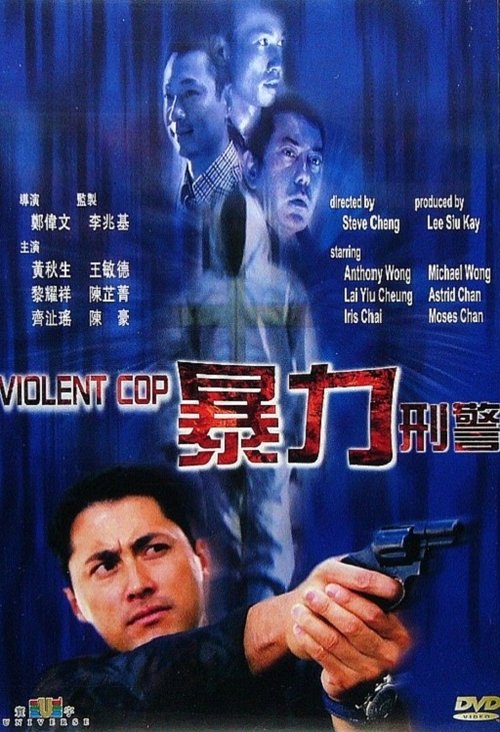









Popular
What motivates the main character, the violent cop, to act the way he does throughout the film?
How does the relationship between the violent cop and his partner evolve during the film?
What role does the antagonist play in the violent cop's journey?
How does the violent cop's past influence his actions in the film?
What significant events lead to the violent cop's ultimate downfall?
Should I watch it?
Ask Your Own Question

What is the plot?
Sorry, we aren't able to watch and write up a full detailed plot yet. Check back in a few days.







What is the ending?
In the ending of "Violent Cop," the protagonist, a troubled and aggressive police officer named Azuma, confronts the criminals he has been pursuing. The film culminates in a violent showdown, leading to Azuma's eventual downfall as he faces the consequences of his brutal methods. The film closes with a sense of ambiguity regarding Azuma's fate, leaving viewers to ponder the implications of his actions.
As the final act unfolds, Azuma, portrayed as a deeply flawed character, finds himself increasingly isolated. His aggressive tactics have alienated him from his colleagues and superiors, and he is haunted by the violence he has inflicted. The tension escalates when he confronts a group of criminals involved in drug trafficking, the very individuals he has been hunting throughout the film.
In a dimly lit warehouse, Azuma enters, his demeanor tense and filled with rage. The atmosphere is thick with anticipation as he faces off against the gang members. The confrontation is brutal; Azuma's raw aggression is on full display as he fights against overwhelming odds. The camera captures the chaos of the scene, with flashes of violence and the sounds of struggle echoing in the background.
As the fight progresses, Azuma's emotional state becomes increasingly unstable. He is driven by a mix of vengeance and desperation, reflecting his internal conflict. The gang members, initially confident, begin to falter under Azuma's relentless assault. However, the tide turns when they manage to overpower him, showcasing the consequences of his reckless approach to justice.
In the climax of the film, Azuma is left battered and defeated, lying on the ground as the criminals stand over him. The scene is heavy with the weight of his choices, illustrating the futility of his violent methods. The camera lingers on Azuma's face, capturing a moment of realization as he grapples with the reality of his situation.
The film concludes with a sense of ambiguity. Azuma's fate remains uncertain as the screen fades to black, leaving viewers to reflect on the cycle of violence and the moral complexities of his character. The final moments serve as a poignant reminder of the consequences of unchecked aggression and the personal toll it takes on those who wield it.
In summary, the ending of "Violent Cop" encapsulates the tragic downfall of Azuma, highlighting the destructive nature of his violent tendencies and the isolation that results from his choices. The fates of the main characters are intertwined with the themes of violence and morality, leaving a lasting impact on the audience.
Is there a post-credit scene?
"Violent Cop," produced in 2000, does not have a post-credit scene. The film concludes without any additional scenes or content after the credits roll. The narrative wraps up with the resolution of the main character's arc, leaving the audience with the weight of the story's themes and the emotional turmoil experienced throughout the film.
What motivates the main character, the violent cop, to act the way he does throughout the film?
The main character, a police officer known for his brutal methods, is driven by a deep-seated sense of justice that often borders on obsession. His violent tendencies stem from a personal vendetta against crime, fueled by past traumas and a desire to protect the innocent. This internal conflict leads him to make morally questionable decisions, as he believes that the ends justify the means.
How does the relationship between the violent cop and his partner evolve during the film?
Initially, the relationship between the violent cop and his partner is strained, as the partner is more by-the-book and disapproves of the cop's brutal methods. However, as the story progresses, the partner becomes increasingly conflicted, torn between loyalty to his friend and the ethical implications of their actions. This tension culminates in moments of confrontation, where the partner challenges the cop's methods, leading to a pivotal moment of reckoning.
What role does the antagonist play in the violent cop's journey?
The antagonist serves as a catalyst for the violent cop's descent into chaos. This character embodies the very crime and corruption that the cop despises, pushing him to his limits. Their confrontations are intense and personal, revealing the cop's vulnerabilities and driving him further into his violent tendencies as he seeks retribution.
How does the violent cop's past influence his actions in the film?
The violent cop's past is marked by trauma and loss, which profoundly influences his current behavior. Flashbacks reveal moments of personal tragedy that have shaped his worldview, leading him to believe that violence is the only way to achieve justice. This backstory adds depth to his character, illustrating how his unresolved issues manifest in his aggressive approach to policing.
What significant events lead to the violent cop's ultimate downfall?
A series of escalating violent encounters and moral compromises lead to the cop's downfall. Key events include a brutal confrontation with criminals that results in collateral damage, the betrayal of his partner, and a final showdown with the antagonist that forces him to confront the consequences of his actions. These moments highlight the tragic trajectory of his character, as he becomes increasingly isolated and consumed by his own violence.
Is this family friendly?
"Violent Cop," produced in 2000, is not considered family-friendly. The film contains several potentially objectionable or upsetting scenes and aspects that may be distressing for children or sensitive viewers.
-
Graphic Violence: The film features intense and explicit scenes of violence, including physical confrontations and brutal beatings, which may be disturbing.
-
Strong Language: There is frequent use of harsh and explicit language throughout the film, contributing to its mature tone.
-
Themes of Corruption and Crime: The narrative explores dark themes such as police corruption, drug trafficking, and moral ambiguity, which may be unsettling.
-
Emotional Turmoil: Characters experience significant emotional distress, including anger, despair, and betrayal, which may be heavy for younger audiences.
-
Substance Abuse: There are depictions of drug use and the impact of addiction, which can be troubling for some viewers.
These elements combine to create a film that is more suitable for mature audiences rather than children or those sensitive to such content.








