









Popular
Who are the key supporting characters that influence Anna's journey?
How does Anna's relationship with her husband evolve throughout the film?
What challenges does the main character face in her pursuit of happiness?
What role does the island play in Anna's transformation?
What internal conflicts does Anna experience throughout the film?
Should I watch it?
Ask Your Own Question

What is the plot?
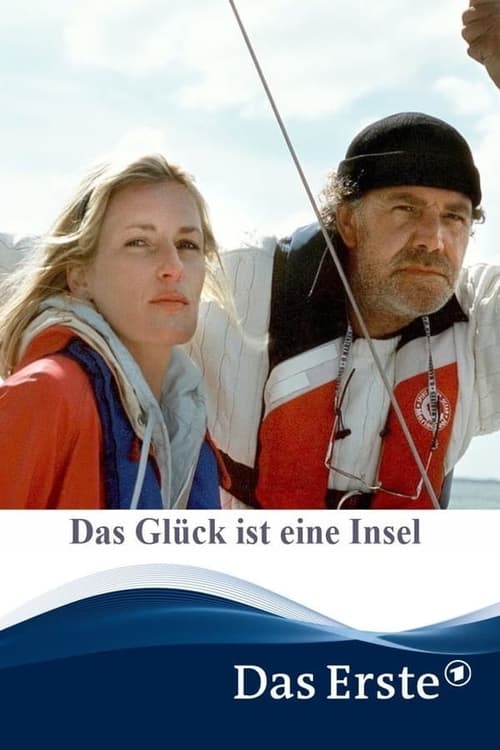
Corinna Jakobs is a young Hamburg lawyer and single mother who is on the verge of a professional breakthrough when her law firm hands her the case of Johann Petersen, a respected but controversial Hamburg fish manufacturer and fleet owner who is being publicly denounced by the eco-activist Dr. Jens Groote as an environmental destroyer. In Hamburg, Corinna's life still feels split in two: on one side is her demanding legal career and her strained engagement to Bruno Höhler, a smug colleague who represents the safe, conventional future her firm expects of her; on the other is her daughter Melanie Jakobs, a chronically ill child whose constant cough has made everyone in her life think in practical terms, especially about where she should spend her next holiday. The film opens into that tension immediately, without any easing into it, and the first pressure point arrives in the shape of a bottle thrown into the sea. Patrick Groote, Jens's son, still grieving the death of his mother in a car accident, writes a message and sends it out across the water in the hope of finding a new woman for his father. The bottle drifts far from the island and ends up on the Hamburg shore, where Melanie finds it, and the two children, strangers separated by sea and circumstance, begin a correspondence that quietly starts to steer the entire story.
That children's exchange is playful at first, almost innocent enough to seem like a side note to the adults' legal war. Patrick lives with his father on a North Sea island, identified in the surrounding descriptions as Amrum, where Jens Groote works as a biologist and environmental activist. He raises orphaned seals at a small station with the help of the young assistant Saskia Janssen, and his life is shaped by his anger at Petersen's fishing fleet, which he believes damages the sea and operates in protected waters. Corinna, meanwhile, is told to solve the matter cleanly and privately. Petersen wants the attacks stopped, the defamation ended, and the legal threat settled. A court fight would be noisy and embarrassing, so Corinna travels with Melanie to the island to try to force Jens Groote into an out-of-court agreement. She arrives as Petersen's advocate, carrying the language of compromise and the authority of law, but from the moment she steps onto the island the film shifts tone. The sea is wide, the wind is raw, and the island feels like a place where people cannot hide from what they really are.
Corinna's first meeting with Jens is not romantic; it is prickly, wary, and charged with mutual irritation. He is rough-edged, principled, and unafraid to speak bluntly. She is composed, intelligent, and determined not to let his charisma weaken her professional position. Yet the film immediately undercuts their stated opposition through the children, because Melanie and Patrick have already become pen pals. Corinna is startled to learn that her daughter has been corresponding with the son of the very man her client is suing, and the discovery turns what might have been a straightforward legal mission into a personal entanglement. The children's scheme becomes obvious: they are not merely writing friendly notes, they are actively trying to engineer a meeting between their lonely parents. Their innocence gives the film much of its momentum, because every adult scene is now shadowed by the feeling that the children see something the adults resist admitting.
At the seal station and around the island house, Corinna begins to observe Jens in a different light. He is not posturing for the press; his concern for the seals, the water, and the island's ecology appears genuine and immediate. He is also a father still living in the emotional wake of his wife's death, and Patrick's bottled wish for a new mother gives the whole setting a melancholy undercurrent. The film does not treat the dead mother as a mystery in the thriller sense; rather, her death in a car accident explains the ache inside Patrick, the way he watches his father, and the urgency with which he tries to create a new family. That emotional need hangs over every scene involving Patrick, who is young enough to be hopeful and old enough to understand loss. Melanie, who is herself ill and often limited by her cough, recognizes that same need in her own life and becomes willing to help her mother find happiness as well.
The adult triangle expands when Bruno Höhler arrives on the island. He is the embodiment of Corinna's old life: polished, professionally useful, and emotionally predictable. His presence also makes the romantic tension visible to everyone. Bruno is the kind of man who expects the future to remain on its appointed track, and he is not prepared for the island's slower, more honest rhythm, where Corinna spends time with Jens and begins to question the life she is defending in Hamburg. At the same time, Saskia Janssen is clearly interested in Jens, adding another layer of friction on the island. Her attraction is less important to the main plot than Corinna's, but it reinforces that Jens is not some remote ideological symbol; he is a man other people want, a widower whose life still draws desire, admiration, and complication.
As the days pass, the film builds its central emotional conflict through a series of shared moments. Corinna accompanies Jens and sees for herself how the fishing fleet affects the water and the seals. A shared boat trip becomes one of the key scenes in this middle section, because Jens uses it to show her the damage caused by Petersen's operations. The sea is not presented as a neutral backdrop; it is active, cold, and morally loaded. Jens speaks with the confidence of someone who has spent years looking at what industry leaves behind, and Corinna is forced to hear his case not as a rhetorical attack but as a lived reality. She begins to understand that her job may be defending the wrong man. That realization does not arrive all at once. Instead, it creeps into her through irritation, curiosity, and then discomfort. She is still committed to her responsibility to Petersen, but the longer she stays, the more impossible it becomes to view Jens as simply an obstruction.
The legal conflict comes to a head when the dispute reaches court. Petersen has already pushed the matter toward an injunction and a demand for damages, threatening Jens with a substantial fine and insisting on a stop to the public accusations. The exact legal machinery is less important than the spectacle Jens makes of it. He appears at the hearing without the lawyer the process expects, but he does not come empty-handed. He brings a young seal with him, turning the courtroom into a stage for ecological argument. His point is blunt and devastatingly simple: humans have alternatives, but a seal depends on fish. The image cuts through the legal formality. It transforms the dispute from a business quarrel into a moral confrontation about who has a right to the sea and who is exploiting it. Corinna, watching this, can no longer pretend that the issue is merely one of reputation management. Jens's theatrical defiance is also sincere, and the fact that he uses a living animal instead of polished legal rhetoric makes the scene unforgettable. It is one of the film's biggest revelations: the environmentalist is not exaggerating to win attention; he is trying to tell the truth in the only way his opponent might feel.
That courtroom moment also shifts Corinna internally. She has spent much of the film trying to maintain professional distance, but the island has already changed the way she sees her own life. Her conversations with Jens are increasingly personal, and the children's scheme keeps forcing them together in settings that feel less like negotiations and more like accidental intimacy. Melanie and Patrick continue trying to create opportunities for their parents to be alone, and their efforts become the film's quiet engine of fate. What looks like childish matchmaking is actually the mechanism by which the adults are pushed toward honesty. Corinna begins to see Jens not as a client's enemy but as a man whose beliefs match his actions. Jens, in turn, starts to see that Corinna is not a cynical corporate lawyer but a woman trapped between duty and conscience.
The tension also deepens because Corinna's private life is collapsing at the same moment that her professional certainties begin to fail. Bruno's presence is no comfort anymore; instead, he sharpens the contrast between what is expected of her and what she is starting to want. He represents the life she can explain to others: stable, respectable, easy to justify. Jens represents the life that feels truer but more dangerous, one that would require her to betray her client and possibly her own carefully managed identity. The film does not overcomplicate this choice. It makes the moral stakes plain: Petersen's business practices are harming the environment, and Corinna gradually accepts that she is on the wrong side. But it also gives the romance real weight, because the attraction is born not just from chemistry but from shared responsibility, admiration, and the sight of two lonely parents recognizing the same wound in one another.
The final crisis arrives at sea, and the film's emotional and narrative threads finally snap into one. The children are caught in danger on the water after Opa Harms, the old boatman, suffers a heart problem. The summaries do not describe the emergency with mechanical detail, but the result is clear: Patrick and Melanie are left in a perilous situation, and the island's adults must respond immediately. The calm, sunlit matchmaking game ends in a real emergency, and all the hidden feelings the film has been building are forced into action. Corinna and Jens are no longer just people who might choose each other; they are parents whose children are in danger, and that shared fear strips away the last of their hesitation.
The rescue sequence carries the climax because it completes the film's central argument in emotional terms. Corinna and Jens have moved from opposition to understanding, from misunderstanding to moral alignment, and now from attraction to partnership. They work together without any legal language in between them, united by the simple urgency of saving their children. The sea that separated them now becomes the setting in which they prove they belong together. The rescue itself is the decisive act, not because it resolves a complicated puzzle, but because it reveals who each person is when the stakes are real. Corinna is courageous and decisive. Jens is reliable and deeply committed. Their children's romantic fantasy becomes an adult reality: the families can no longer remain separate, because the crisis has bound them together.
No further deaths occur in the film's present-day story. The only death mentioned is Patrick's mother, who died earlier in a car accident, and that loss remains part of the background emotional structure rather than an on-screen event. Instead of ending in tragedy, the film resolves into a shared future. After the rescue, the last remaining barriers fall away. Corinna fully accepts that Jens has been right about Petersen's environmental damage, and that acceptance is also an acceptance of the life Jens represents. The story closes with the unmistakable sense that Corinna and Jens are now aligned both morally and personally. The children have succeeded in their odd little matchmaking campaign, but the adults' choice is no longer childish fantasy. It is the result of everything they have seen and survived together: the legal battle, the island's rough beauty, the courtroom seal, the children's letters, the old grief over dead spouses, and the sudden terror of losing the next generation to the sea. In the final movement, the film lets the wind and water fall quiet enough for the new relationship to feel real, and the ending settles on the idea that happiness, like an island, is something reached only after crossing difficult water.









What is the ending?
In the ending of "Das Glück ist eine Insel," the main character, a woman named Anna, finds herself at a crossroads in her life. After a series of emotional struggles and personal revelations, she ultimately decides to embrace her independence and pursue her own happiness. The film concludes with Anna walking away from her past, symbolizing her newfound freedom and the hope for a brighter future.
As the film approaches its conclusion, we see Anna grappling with her feelings and the choices she has made throughout her journey. The scene opens with Anna standing on a picturesque beach, the sun setting in the background, casting a warm golden hue over the landscape. The sound of gentle waves lapping at the shore creates a serene atmosphere, contrasting with the turmoil she has experienced.
In this moment of reflection, Anna recalls the pivotal moments that led her to this point. Flashbacks intersperse with the present, showing her struggles with relationships, her search for identity, and the weight of expectations placed upon her by family and society. Each memory is tinged with emotion, revealing her internal conflict and the desire for freedom from the constraints that have held her back.
As the sun dips lower in the sky, Anna's expression shifts from one of uncertainty to determination. She takes a deep breath, feeling the salty breeze on her face, and begins to walk along the shoreline. The camera follows her, capturing the way her footsteps leave imprints in the sand, symbolizing her journey toward self-discovery and empowerment.
In the final scenes, Anna encounters her former partner, who has been a significant figure in her life. Their conversation is charged with unspoken feelings and unresolved issues. However, instead of clinging to the past, Anna expresses her desire to move forward, emphasizing her need for independence. This moment is pivotal, as it showcases her growth and the strength she has found within herself.
As they part ways, Anna watches him walk away, a bittersweet smile on her face. She understands that while their paths may diverge, she is ready to embrace her own journey. The film closes with Anna standing alone on the beach, the waves crashing around her, symbolizing both the challenges and the beauty of life ahead. The final shot lingers on her face, filled with hope and a sense of liberation, as the screen fades to black.
In summary, the ending of "Das Glück ist eine Insel" encapsulates Anna's transformation from a woman burdened by expectations to one who is ready to forge her own path. Each character's fate is intertwined with her journey, as they all represent different aspects of her struggle for happiness and fulfillment. Anna's decision to prioritize her own happiness serves as a powerful message about the importance of self-discovery and the courage to embrace change.
Is there a post-credit scene?
The movie "Das Glück ist eine Insel," produced in 2000, does not feature a post-credit scene. The film concludes its narrative without any additional scenes or content after the credits roll. The story wraps up with a focus on the emotional resolutions of the characters, leaving the audience with a sense of closure regarding their journeys and experiences throughout the film.
Who are the key supporting characters that influence Anna's journey?
Key supporting characters include a local artist who becomes a confidant and source of inspiration for Anna, as well as a group of island residents who embody different approaches to life and happiness. These characters challenge Anna's views and encourage her to embrace her individuality, ultimately playing a crucial role in her journey towards self-acceptance and fulfillment.
How does Anna's relationship with her husband evolve throughout the film?
Anna's relationship with her husband, Paul, begins as one marked by routine and emotional detachment. As Anna embarks on her journey of self-discovery, their interactions become increasingly strained. Paul is often oblivious to Anna's inner turmoil, leading to conflicts that highlight their growing disconnect. Ultimately, Anna's quest for happiness forces both characters to confront their feelings and the state of their marriage.
What challenges does the main character face in her pursuit of happiness?
The main character, a woman named Anna, faces numerous challenges in her pursuit of happiness, including her struggles with a stagnant marriage, the emotional distance from her husband, and the societal expectations placed upon her. As she navigates her feelings of isolation and discontent, she grapples with the decision to seek fulfillment outside her current life.
What role does the island play in Anna's transformation?
The island serves as a pivotal backdrop for Anna's transformation. It represents both a physical escape from her mundane life and a metaphorical space for self-reflection. The island's beauty and tranquility contrast sharply with her chaotic emotions, allowing her to explore her desires and confront her fears. It is here that she meets new people who challenge her perspectives and help her rediscover her sense of self.
What internal conflicts does Anna experience throughout the film?
Anna experiences significant internal conflicts as she grapples with her desires for independence and the fear of leaving her familiar life behind. She struggles with guilt over her feelings of dissatisfaction and the impact her choices may have on her family. This internal battle is marked by moments of doubt, longing, and ultimately, a quest for authenticity as she seeks to reconcile her past with her aspirations for the future.
Is this family friendly?
"Das Glück ist eine Insel" is generally considered family-friendly, but it does contain some themes and scenes that may be sensitive for children or more sensitive viewers.
-
Emotional Struggles: The film explores themes of loss, longing, and the complexities of family relationships, which may be emotionally intense for younger viewers.
-
Conflict: There are moments of conflict between characters that may involve raised voices or emotional confrontations, which could be unsettling for some.
-
Depictions of Isolation: The characters experience feelings of isolation and despair, which might be difficult for sensitive viewers to process.
-
Mature Themes: The film touches on adult themes such as the search for happiness and the impact of past decisions, which may require a level of maturity to fully understand.
Overall, while the film is not overtly objectionable, its emotional depth and thematic content may require parental guidance for younger audiences.









