







Popular
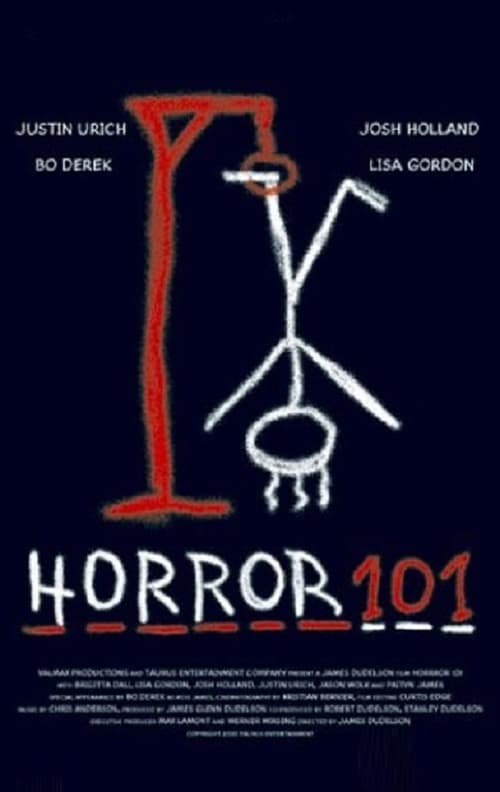
What is the significance of the character played by the professor in Horror 101?
How do the students' personal fears influence their understanding of horror in the film?
What role does the horror film marathon play in the development of the characters?
How does the character of the skeptic challenge the group's understanding of horror?
What is the impact of the supernatural elements introduced in the film?
Should I watch it?
Ask Your Own Question

What is the plot?
Sorry, we aren't able to watch and write up a full detailed plot yet. Check back in a few days.





What is the ending?
In the ending of "Horror 101," the characters confront the reality of their situation as they face the killer. The film culminates in a tense showdown where the survivors must use their knowledge of horror films to outsmart the antagonist. Ultimately, a few characters manage to escape, but not without significant loss and trauma.
As the climax unfolds, the remaining characters find themselves trapped in a house, which has become a deadly arena. They realize that the killer is using their own fears and the tropes of horror films against them. The final confrontation is marked by a desperate struggle for survival, where the characters must confront their own weaknesses and fears. In the end, only a couple of them manage to survive, while others fall victim to the killer's relentless pursuit.
Now, let's delve into the ending in a more detailed, chronological narrative.
The scene opens in the dimly lit living room of the house, where the remaining characters--each grappling with their own fears--gather to devise a plan. The atmosphere is thick with tension, and the flickering lights cast ominous shadows on the walls. They are acutely aware that the killer is among them, lurking in the darkness, and every creak of the floorboards sends shivers down their spines.
As they discuss their options, the group reflects on the horror films they've watched, realizing that they must use the knowledge they've gained to outsmart the killer. One character, who has been particularly obsessed with horror tropes, suggests they set a trap, drawing on the classic strategies seen in their favorite films. The others, though skeptical, agree that they have little choice but to try.
The plan is set into motion. They split up, each taking a position that they believe will give them the upper hand. The tension escalates as they hear the killer moving through the house, the sound of footsteps echoing ominously. One character, filled with dread, decides to confront the killer directly, believing that facing their fear is the only way to survive. This decision leads to a heart-pounding chase through the darkened hallways, where the character's resolve is tested to its limits.
In a pivotal moment, the character who confronted the killer is caught, leading to a brutal struggle. The camera captures the raw emotion of fear and desperation as the character fights for their life. The others hear the commotion and rush to help, but they arrive too late. The scene is harrowing, showcasing the brutal reality of their situation.
As the remaining characters regroup, they are shaken but determined. They realize that they must work together if they are to have any hope of survival. They set up a final stand in the living room, barricading the doors and arming themselves with whatever they can find. The atmosphere is charged with a mix of fear and adrenaline as they prepare for the inevitable confrontation.
The killer finally breaks through, and a chaotic battle ensues. The characters fight back with a mix of ingenuity and desperation, using their knowledge of horror film clichés to outmaneuver the killer. One character, who has been portrayed as the underdog throughout the film, rises to the occasion, displaying unexpected bravery and resourcefulness. This character becomes a beacon of hope for the others, rallying them to fight back.
In the climax, the struggle reaches a fever pitch. The characters face their fears head-on, and in a moment of sheer determination, they manage to overpower the killer. The scene is intense, filled with visceral action and emotional stakes as they fight for their lives. However, the victory comes at a cost, as not all of them make it out alive.
As the dust settles, the surviving characters emerge from the chaos, battered and traumatized. They stand together, looking at the aftermath of their ordeal. The weight of their losses hangs heavy in the air, and the emotional toll is palpable. They have survived, but the experience has changed them forever. The camera lingers on their faces, capturing the mix of relief and sorrow as they process what has happened.
In the final moments, the survivors step outside into the dawn light, a stark contrast to the darkness they have just escaped. They are forever marked by their experience, carrying the scars of their battle with them. The film closes on a haunting note, leaving the audience to reflect on the fragility of life and the impact of fear, as the characters walk away from the house that held their nightmares.
Is there a post-credit scene?
In the movie "Horror 101," there is no post-credit scene. The film concludes without any additional footage or scenes after the credits roll. The story wraps up with the main characters reflecting on their experiences, leaving the audience with a sense of closure regarding the events that transpired throughout the film. The absence of a post-credit scene emphasizes the finality of the narrative and the resolution of the characters' arcs.
What is the significance of the character played by the professor in Horror 101?
The professor in Horror 101 serves as a mentor figure, guiding the students through the intricacies of horror films. His character embodies the archetype of the knowledgeable yet somewhat eccentric teacher, who is deeply passionate about the genre. He often shares personal anecdotes and insights that reveal his own fears and experiences, which adds depth to his character and highlights the emotional stakes involved in understanding horror.
How do the students' personal fears influence their understanding of horror in the film?
Each student in Horror 101 grapples with their own personal fears, which are explored throughout the film. For instance, one student may have a fear of the dark, while another struggles with the fear of isolation. These fears manifest in their discussions and analyses of horror films, allowing them to connect their personal experiences to the genre. This exploration not only deepens their understanding of horror but also serves as a catalyst for character development as they confront their fears.
What role does the horror film marathon play in the development of the characters?
The horror film marathon is a pivotal event in Horror 101, serving as a crucible for the characters. As they watch various horror films, their reactions reveal their individual fears and vulnerabilities. The marathon acts as a bonding experience, forcing the students to confront not only the films' scares but also their own emotional responses. This shared experience fosters camaraderie among the students, while also highlighting the differences in how each character processes fear.
How does the character of the skeptic challenge the group's understanding of horror?
The skeptic in Horror 101 serves as a foil to the other students, often questioning the validity of their interpretations of horror films. This character's cynicism and analytical approach create tension within the group, as they challenge the emotional responses of their peers. The skeptic's perspective forces the other characters to defend their views and delve deeper into the psychological aspects of horror, ultimately enriching the group's discussions and leading to personal growth.
What is the impact of the supernatural elements introduced in the film?
The supernatural elements in Horror 101 serve to heighten the tension and blur the lines between fiction and reality for the characters. As they delve into horror films, they begin to experience strange occurrences that mirror the films they are watching. This escalation of supernatural events forces the characters to confront their fears in a visceral way, leading to moments of self-discovery and ultimately challenging their understanding of what is real versus what is imagined.
Is this family friendly?
"Horror 101," produced in 2001, is not considered family-friendly. The film contains several potentially objectionable or upsetting elements that may be distressing for children or sensitive viewers.
-
Graphic Violence: The film features scenes with blood and gore, including depictions of murder and physical harm to characters, which can be unsettling.
-
Strong Language: There are instances of profanity and harsh language that may not be suitable for younger audiences.
-
Themes of Fear and Terror: The overall atmosphere of the film is built around horror tropes, including suspenseful and frightening moments that could be too intense for children.
-
Psychological Distress: Characters experience fear, paranoia, and emotional turmoil, which may be distressing for sensitive viewers.
-
Mature Themes: The film explores darker themes related to death, survival, and the human psyche, which may not be appropriate for younger audiences.
These elements contribute to the film's classification as a horror movie, making it more suitable for adult viewers.









