










Popular
What motivates the main character, a businessman, to travel to Dubai?
How does the relationship between Vikram and his wife evolve throughout the film?
What challenges does Vikram face while trying to establish his business in Dubai?
Who are the key supporting characters that influence Vikram's journey in Dubai?
What role does the setting of Dubai play in shaping the characters' experiences?
Should I watch it?
Ask Your Own Question

What is the plot?
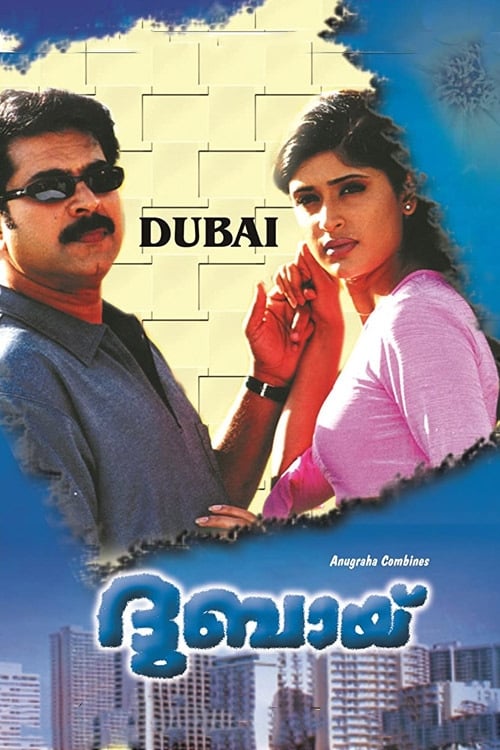
In the sweltering heat of Bangalore in 1989, Major Ravi Mammen strides into a dimly lit interrogation room, his army uniform crisp against the humid air, eyes sharp with unyielding resolve. Two LTTE terrorists, bound and bruised, sit before him--professional assassins disguised as separatists, their mission clear: to gun down the Indian Prime Minister during his city visit. Ravi's voice cuts through the tension like a blade. "Who sent you?" he demands, his fists clenched. The men crack under pressure, revealing no organizational ties, but Ravi pieces it together. The puppet master is Union Home Minister K.J. Nair, a silver-tongued politician plotting a coup, envisioning himself ascending to power amid the chaos of the Prime Minister's assassination.
Ravi's heart races as he goes on the run, shadows lengthening across Bangalore's bustling streets. Nair, sensing the threat, summons Ravi to a opulent government bungalow under the cover of night. "Join me, Major," Nair purrs, swirling whiskey in a crystal glass, his eyes gleaming with false camaraderie. "We can rule together. Name your price." Ravi stands tall, disgust twisting his features. "I serve my country, not traitors," he spits, rejecting the bribe outright. The air thickens with betrayal. Ravi draws his service pistol, lunging to capture Nair and expose the conspiracy to the world. A shot rings out--sharp, deafening. But fate twists cruelly: the bullet meant for Nair ricochets, striking Susan Joseph Pandala, Ravi's devoted girlfriend, who had rushed to his side in blind loyalty. She crumples to the marble floor, blood pooling beneath her pregnant form, her eyes locking onto Ravi's in a final, heartbroken plea. "Ravi... why?" she whispers, life fading as he cradles her, screams echoing into the night.
Nair seizes the moment, his face a mask of feigned outrage. He fabricates evidence overnight, painting Ravi as a cold-blooded murderer. The court-martial is a sham--testimonies rigged, headlines screaming "Army Major Slays Lover in Rage." Ravi, shackled and broken, is sentenced to over a decade in a grim military prison, the weight of Susan's death crushing his spirit day by day.
Time grinds on until 2000, when Ravi emerges from the shadows of incarceration, a hardened man with fire in his veins. He boards a flight to Dubai, the glittering city of gold and ambition, vowing silent revenge. Against all odds, Ravi transforms. With razor-sharp instincts and unyielding drive, he builds a billion-dirham empire spanning the Middle East--real estate towering over skylines, import-export networks pulsing like arteries. At his side stands Chandran Nair, an over-enthusiastic NRI with a perpetual grin and slick suits, handling deals with frenetic energy, and Yousaf, a gentle young office attendant whose quiet loyalty shines like a beacon amid the cutthroat world. Ravi's penthouse office overlooks the Burj Al Arab's sails, but success breeds enemies. Whispers spread: the ex-convict's rise threatens old powers.
Enter Swaminathan, a kindly businessman and father figure to Ravi from his early Dubai days, his wrinkled face etched with worry. Deep in debt, Swaminathan fights a landmark lawsuit in Dubai courts, emerging victorious with millions of dirhams--enough to reclaim his life. Joy floods his modest home as he celebrates with his wife, daughter Ammu (a vibrant young woman played with fiery grace), and Kiran (Swaminathan's other daughter, innocent and wide-eyed). But treachery lurks. Victor Sebastian, Swaminathan's cunning attorney with a serpent's smile and ice-blue eyes, conspires with Kishan Narayan Bhatta, the ruthless Mumbai underworld don whose empire reeks of blood money. Victor forges documents under the cover of a late-night meeting at Swaminathan's villa, transferring properties by force--deeds signed at gunpoint.
Tension erupts in the villa's candlelit living room. "You've been like a son to me, Victor," Swaminathan pleads, voice trembling as goons block the doors. Victor laughs coldly, pistol raised. "Father figures are for fools, old man. Bhatta owns you now." Shots crackle--first Swaminathan's wife falls, a gasp escaping her lips as she shields her husband, blood staining her sari. Swaminathan lunges, but Victor pumps bullets into his chest, the patriarch collapsing in a heap, eyes frozen in betrayal. Victor wipes the barrel, pocketing the deeds, leaving the bodies for the desert winds.
Word reaches Ravi like a thunderclap. Grief reignites his rage; Swaminathan was more than a mentor--he was the family Ravi lost. He vows to protect Ammu and Kiran, now orphaned and hunted, funneling them into hiding at a secluded farmhouse on Dubai's outskirts, golden dunes stretching endlessly under the relentless sun. Chandran Nair, ever the eager aide, escorts them there personally, his reassurances smooth: "Mr. Ravi has it all under control, ladies. No one will touch you."
But cracks form in Ravi's circle. Bhatta's tentacles reach deep, and Chandran--once loyal--succumbs to greed. In a shadowy Dubai bar, Bhatta's emissaries corner him, fat stacks of cash on the table. "Betray the billionaire, Nair. Lead us to the girls, and you're rich forever." Chandran's enthusiasm twists into avarice; he nods, sealing his doom. Tension builds as Ravi senses the shift--Chandran's evasive glances, late-night calls. Ravi confronts him in the penthouse, city lights twinkling below like distant stars. "What's eating you, Chandran? Speak!" Chandran sweats, stammering, "Nothing, boss... just business."
Momentum surges when Bhatta strikes. Goons raid the farmhouse at midnight, engines roaring across the sands. Ammu and Kiran huddle in terror as bullets shatter windows. Chandran, directing the assault from afar, watches via phone feed, heart pounding with regret. Ravi races there in his armored SUV, tires kicking up storms, arriving as flames lick the walls. He bursts in, fists flying--a brutal melee ensues. Ravi dispatches three thugs with precise army-trained strikes, necks snapping, bodies thudding to the dirt. "Stay down!" he roars to the girls, shielding them as he guns down the leader, blood spraying the adobe walls. Ammu clings to Kiran, tears streaming: "Uncle Ravi, they said Chandran sent them!"
Revelation hits like a sandstorm. Ravi drags Chandran to the farmhouse ruins at dawn, the sun rising blood-red. "You sold them out? For Bhatta?" Ravi growls, pinning him against a scorched beam. Chandran breaks, sobbing, "He promised everything! Forgive me!" But Ravi's eyes harden--no mercy for traitors. As Bhatta's reinforcements close in, Chandran grabs a fallen pistol, presses it to his temple. "I can't face this," he mutters, finger squeezing. The shot echoes across the dunes--Chandran Nair slumps dead, self-inflicted, betrayal's final act.
Ravi's empire trembles, but his resolve steels. Bhatta, from his lavish Mumbai resort, sends a gilded invitation: "Come negotiate peace, Mammen. Final settlement. No tricks." Ravi flies in, senses screaming trap, but vengeance demands it. The resort gleams under tropical lights, fountains bubbling innocently. Bhatta greets him in a silk kurta, smirking: "Impressive rise, Major. Let's bury the hatchet--your businesses for my silence." Ravi plays along, sipping chai, eyes scanning.
Twist detonates: in Bhatta's private lounge, K.J. Nair emerges from shadows--aged but venomous, the ghost from 1989. "Surprised, Mammen? Bhatta's my muscle. We've waited years for this." Nair's laugh chills the air; he's the brains, pulling strings from Delhi, funding Bhatta's empire with political grease. Ravi's blood boils--Susan's ghost screams in his mind. "You took everything," Ravi snarls. Nair sneers, "You were a fool then. Still are." Bhatta chuckles, goons circling.
Ravi explodes into action. He hurls a chair at Bhatta, dodging bullets in a whirlwind of fists and fury. Nair flees to his guest house wing, but Ravi pursues, crashing through doors. In the opulent bedroom--silk sheets, gold lamps--Nair cowers, pistol shaking. "Mercy! We can deal!" Ravi advances, unyielding. "For Susan? For Swaminathan?" A single shot--precise, vengeful. K.J. Nair crumples, forehead blooming red, eyes wide in eternal shock. Ravi stands over him, breath ragged, the coup-plotter finally silenced forever.
No time to savor. Bhatta rallies his men, the resort descending into chaos--gunfire stitching the night, guests fleeing. Ravi fights his way out, bodies piling: two goons knifed in the foyer, another's neck broken against marble. He steals a speedboat from the private dock, roaring across moonlit waves back to Dubai, Bhatta's curses fading.
Climax builds to fever pitch at Bhatta's Dubai stronghold--a fortified warehouse on the city's edge, crates of illicit arms stacked high. Bhatta waits, flanked by elite killers, floodlights casting long shadows. Ravi storms in at dusk, helicopter blades whirring overhead as reinforcements arrive. "You killed Nair? Bold, Mammen. But you're done," Bhatta bellows, unleashing hell--automatic fire rakes the air.
Ravi dives behind crates, returning fire with lethal accuracy. Tension peaks in a cat-and-mouse duel: Bhatta's men drop one by one--Victor Sebastian, cornered in a side office, pleads, "It was business!" Ravi's bullet ends him, the attorney twitching on cold concrete, properties meaningless in death. Bhatta charges personally, machete swinging in a berserker rage. They clash amid sparks and shouts--Ravi disarms him with a brutal knee, pinning the don against a wall. "Swaminathan begged you," Ravi hisses. Bhatta spits blood, "He was weak!" Ravi's final shot pierces Bhatta's heart; the underworld king slumps, empire crumbling with his last gasp.
Silence falls, broken only by distant sirens. Ravi emerges bloodied but unbroken, Ammu and Kiran rushing to him at the warehouse gates, Yousaf covering their escape. Back in his penthouse, dawn breaks over Dubai's skyline. Ravi gazes at Susan's faded photo, whispering, "It's over." Ammu embraces him: "You're our family now." He nods, the billionaire orphan finding peace amid the ruins of revenge.
Yousaf survives, ever loyal, managing the empire's remnants. Ammu and Kiran thrive under Ravi's protection, the farmhouse rebuilt as their sanctuary. Victor Sebastian lies cold from Ravi's hand; Swaminathan and his wife from Victor's treachery; Chandran by his own; K.J. Nair by Ravi's justice; Bhatta by Ravi's final reckoning. Susan's accidental death haunts eternally, but Ravi lives--a titan unbroken, his enemies dust in the wind. The city pulses on, Ravi's story etched in its golden spires.



What is the ending?
In the ending of the movie "Dubai," the main character, a businessman named Raju, faces the consequences of his actions as he navigates betrayal and the complexities of love. The film concludes with Raju making a significant decision that impacts his relationships and future.
As the climax unfolds, Raju confronts the reality of his choices. He realizes that his ambition and the pursuit of wealth have led to personal losses. The emotional weight of his decisions culminates in a moment of reckoning, where he must choose between his business aspirations and the people he cares about. Ultimately, Raju decides to prioritize his relationships, leading to a bittersweet resolution.
In the final scenes, Raju's journey comes full circle as he reconciles with those he has hurt, particularly his love interest, and acknowledges the importance of love over material success. The film closes on a note of hope, suggesting that true fulfillment lies in personal connections rather than financial gain.
As the film approaches its conclusion, the tension escalates dramatically. Raju, portrayed as a driven businessman, finds himself at a crossroads. The scene opens with Raju standing in his lavish office, the skyline of Dubai visible through the floor-to-ceiling windows. The city, a symbol of his ambition, now feels suffocating. He gazes out, reflecting on the sacrifices he has made in pursuit of success.
In the next scene, Raju meets with his business partner, who has been secretly undermining him. The atmosphere is thick with tension as accusations fly. Raju's face is a mixture of anger and betrayal, his fists clenched at his sides. The partner reveals that he has been working with Raju's rivals, and the weight of this betrayal hits Raju hard. He feels the sting of isolation, realizing that his ambition has cost him not only trust but also friendships.
The narrative shifts to Raju's love interest, who has been waiting for him to prioritize their relationship. She stands in a beautifully decorated café, her expression a blend of hope and disappointment. As Raju enters, the warmth of the café contrasts sharply with the coldness of his recent experiences. Their conversation is fraught with unspoken words; she pleads for him to see that life is more than just business. Raju's internal conflict is palpable as he grapples with his desire for success and the love he has neglected.
In a pivotal moment, Raju receives a phone call that forces him to make a choice. He learns that a major deal he has been pursuing is about to fall through due to his partner's betrayal. The camera captures the flicker of realization in Raju's eyes; he understands that he must confront the situation head-on. He rushes out of the café, leaving his love interest with a sense of uncertainty.
The climax unfolds at a high-stakes business meeting where Raju confronts his partner and the rival company. The tension is electric as Raju stands up, his voice steady but filled with emotion. He publicly exposes the betrayal, reclaiming his integrity. The room is silent, the weight of his words hanging in the air. Raju's decision to prioritize honesty over profit marks a significant turning point in his character arc.
As the dust settles, Raju returns to the café, where his love interest is still waiting. The scene is intimate, filled with unspoken emotions. Raju takes her hands in his, his eyes filled with regret and determination. He apologizes for his past neglect and expresses his desire to rebuild their relationship. The warmth of their connection is rekindled, and the camera captures the soft smiles exchanged between them, hinting at a hopeful future.
In the final moments of the film, Raju stands once again at the window of his office, but this time, the view of Dubai feels different. He has chosen love and integrity over ambition. The skyline, once a symbol of his relentless pursuit, now represents the possibilities of a life enriched by meaningful relationships. The film closes with Raju looking out, a sense of peace washing over him as he embraces the new path he has chosen.
The fates of the main characters are intertwined in this resolution. Raju, having faced his demons, emerges as a more grounded individual, ready to embrace love and honesty. His partner, now exposed, faces the consequences of betrayal, while Raju's love interest stands by him, symbolizing the strength of their bond. The film ends on a note of hope, emphasizing the importance of personal connections in a world driven by ambition.
Is there a post-credit scene?
The movie "Dubai," produced in 2001, does not feature a post-credit scene. The film concludes its narrative without any additional scenes or content after the credits roll. The story wraps up with the resolution of the main plot, focusing on the characters' journeys and the themes explored throughout the film.
What motivates the main character, a businessman, to travel to Dubai?
The main character, a businessman named Vikram, is motivated to travel to Dubai primarily by the promise of lucrative business opportunities and the allure of the city's rapid development. He is driven by ambition and the desire to expand his business empire, seeking to capitalize on the economic boom in Dubai.
How does the relationship between Vikram and his wife evolve throughout the film?
Vikram's relationship with his wife, Meera, evolves from one of trust and partnership to tension and conflict as he becomes increasingly consumed by his ambitions in Dubai. Meera feels neglected and struggles with feelings of isolation, leading to emotional distance between them as Vikram prioritizes his business over their relationship.
What challenges does Vikram face while trying to establish his business in Dubai?
Vikram faces numerous challenges while trying to establish his business in Dubai, including navigating the complexities of local regulations, dealing with competitive rivals, and overcoming cultural barriers. He also encounters personal dilemmas as he grapples with ethical decisions that test his integrity and commitment to his family.
Who are the key supporting characters that influence Vikram's journey in Dubai?
Key supporting characters include his business partner, who provides both support and conflict, and a local entrepreneur who represents the cultural and business landscape of Dubai. Additionally, Meera's character serves as a moral compass, challenging Vikram's decisions and highlighting the personal stakes involved in his pursuit of success.
What role does the setting of Dubai play in shaping the characters' experiences?
The setting of Dubai plays a crucial role in shaping the characters' experiences, as the city's opulence and rapid growth symbolize both opportunity and temptation. The stark contrast between the glamorous facade of Dubai and the personal struggles of Vikram and Meera highlights the emotional and ethical dilemmas they face, ultimately influencing their decisions and relationships.
Is this family friendly?
The movie "Dubai," produced in 2001, contains several elements that may not be considered family-friendly. Here are some potentially objectionable or upsetting aspects:
-
Violence and Conflict: The film includes scenes of physical confrontations and violence that may be intense for younger viewers or sensitive individuals.
-
Romantic Relationships: There are themes of romantic entanglements that may involve mature situations or emotional complexities that could be confusing for children.
-
Emotional Turmoil: Characters experience significant emotional struggles, including betrayal and loss, which may be distressing for younger audiences.
-
Cultural Tensions: The film touches on themes of cultural conflict and societal issues that may require a more mature understanding to fully grasp.
-
Mature Language: There may be instances of strong language or dialogue that could be inappropriate for children.
These elements contribute to a narrative that may be more suitable for older teens and adults rather than a younger audience.








