




Popular
What is the significance of the three riddles in Turandot?
How does Calaf's character evolve throughout the story?
What role does Liu play in the story, and how does her fate impact the other characters?
What motivates Turandot to impose the riddles on her suitors?
How does the setting of ancient China influence the story of Turandot?
Should I watch it?
Ask Your Own Question

What is the plot?
Sorry, we aren't able to watch and write up a full detailed plot yet. Check back in a few days.




What is the ending?
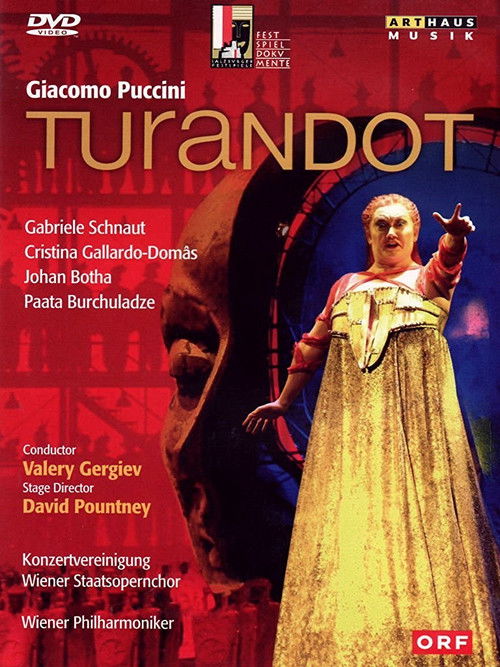
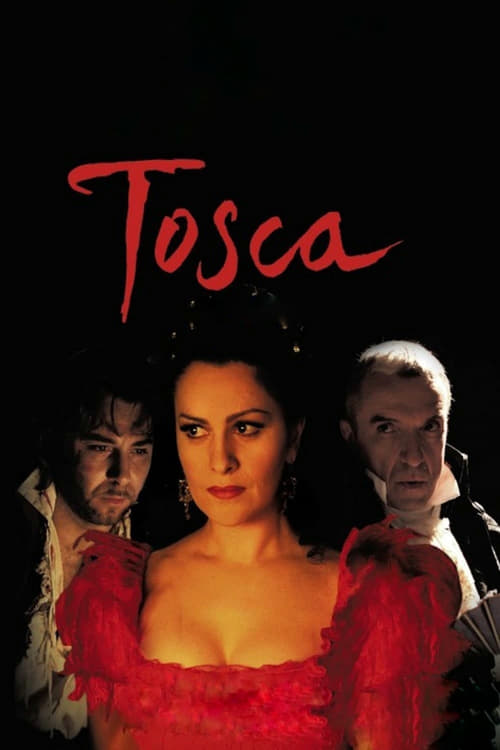
In the ending of the 2002 film "Turandot," the cold-hearted Princess Turandot finally reveals her true feelings for the brave Prince Calaf. After a series of trials and tribulations, she ultimately chooses love over her desire for power, leading to a dramatic resolution.
As the film unfolds towards its conclusion, the tension escalates. The scene opens in the grand palace of Peking, where the atmosphere is thick with anticipation. The people of the city gather, their faces a mix of hope and fear, as they await the outcome of the final challenge set by Turandot. Calaf, having successfully answered the three riddles posed by the princess, stands before her, confident yet vulnerable.
Turandot, initially resolute in her icy demeanor, struggles internally with the emotions that Calaf's bravery has stirred within her. She is torn between her ingrained fear of love and the undeniable connection she feels towards him. The crowd watches in silence, sensing the weight of the moment. Calaf, undeterred, boldly declares his love for Turandot, urging her to embrace her feelings.
In a pivotal moment, Turandot is faced with a choice: to remain the unyielding ruler she has always been or to open her heart to love. As she grapples with this decision, the tension in the air is palpable. The music swells, heightening the emotional stakes. Finally, in a moment of vulnerability, Turandot acknowledges her feelings for Calaf, breaking down the walls she had built around her heart.
The climax reaches its peak as Turandot, now transformed, proclaims her love for Calaf in front of the gathered crowd. The people erupt in joy, celebrating the union of the two. The once cold and distant princess is now a woman who has chosen love, symbolizing a shift in her character and the potential for change.
As the film draws to a close, Calaf and Turandot stand together, united in their love. The fate of the characters is sealed in this moment of triumph. Turandot, who once sought to protect herself from the pain of love, has found strength in vulnerability. Calaf, having proven his worth and love, stands beside her, ready to face the future together.
The final scenes depict the couple surrounded by the jubilant citizens of Peking, celebrating not just their love but the hope for a new era under Turandot's reign. The film ends on a note of optimism, emphasizing the transformative power of love and the possibility of redemption for even the most guarded hearts.
Is there a post-credit scene?
The movie "Turandot," produced in 2002, does not contain a post-credit scene. The film concludes with the resolution of the central conflict surrounding the character of Turandot and her relationship with Calaf. After the dramatic climax, the story wraps up without any additional scenes or epilogues during or after the credits. The focus remains on the operatic elements and the emotional journey of the characters, particularly Turandot's transformation and Calaf's unwavering love.
What is the significance of the three riddles in Turandot?
The three riddles posed by Princess Turandot serve as a central plot device that tests the intelligence and resolve of her suitors. Each riddle is designed to be challenging, reflecting Turandot's cold and unyielding nature. The stakes are high; if a suitor fails to answer correctly, he faces execution. The riddles symbolize not only the intellectual challenge but also Turandot's emotional barriers, as she uses them to protect herself from the pain of love.
How does Calaf's character evolve throughout the story?
Calaf, the protagonist, begins as a determined and passionate suitor who is captivated by Turandot's beauty. His character evolves as he confronts the challenges posed by her riddles. Initially driven by lust and a desire to win her love, he becomes more introspective, reflecting on the nature of love and sacrifice. His willingness to risk his life for Turandot's affection reveals his deepening emotional connection and ultimately leads to a transformative moment when he declares his love.
What role does Liu play in the story, and how does her fate impact the other characters?
Liu is a servant girl who harbors unrequited love for Calaf. Her character serves as a contrast to Turandot, embodying selflessness and devotion. Liu's fate is tragic; she sacrifices herself to protect Calaf and reveal his identity to Turandot. Her death profoundly impacts Calaf, awakening his sense of responsibility and love, while also softening Turandot's heart. Liu's ultimate sacrifice highlights the themes of love and sacrifice, influencing the emotional trajectory of both main characters.
What motivates Turandot to impose the riddles on her suitors?
Turandot's motivation for imposing the riddles stems from her traumatic past, particularly the death of her ancestor at the hands of a suitor. This event instills in her a deep-seated fear of vulnerability and love, leading her to create a barrier between herself and potential lovers. By making the riddles nearly impossible to solve, she seeks to maintain control and protect herself from the pain of loss, reflecting her internal struggle between her desire for love and her fear of intimacy.
How does the setting of ancient China influence the story of Turandot?
The setting of ancient China plays a crucial role in shaping the narrative and characters of Turandot. The opulent palaces, grand ceremonies, and cultural traditions create a backdrop that emphasizes the themes of power, honor, and sacrifice. The societal expectations placed on Turandot as a princess dictate her actions and decisions, while the rigid class structures influence the dynamics between characters like Calaf and Liu. The exotic and dramatic setting enhances the emotional stakes of the story, making the characters' struggles more poignant.
Is this family friendly?
The 2002 film "Turandot," based on the opera by Giacomo Puccini, contains several elements that may be considered objectionable or upsetting for children or sensitive viewers. Here are some aspects to consider:
-
Violence and Death: The story involves themes of execution and the consequences of failure in answering riddles, which may be distressing for younger audiences.
-
Emotional Turmoil: Characters experience intense emotional struggles, including despair, betrayal, and the weight of duty, which could be heavy for sensitive viewers.
-
Themes of Power and Control: The narrative explores themes of tyranny and the manipulation of individuals, particularly in the context of love and sacrifice, which may be complex for children to understand.
-
Cultural and Historical Context: The film is set in a historical context that includes elements of oppression and societal expectations, which might be challenging for younger viewers to grasp fully.
-
Romantic Tension: The relationships depicted can involve intense romantic feelings and conflicts, which may not be suitable for all children.
These elements contribute to a narrative that, while rich in artistry and emotion, may not be entirely family-friendly. Viewer discretion is advised.








