
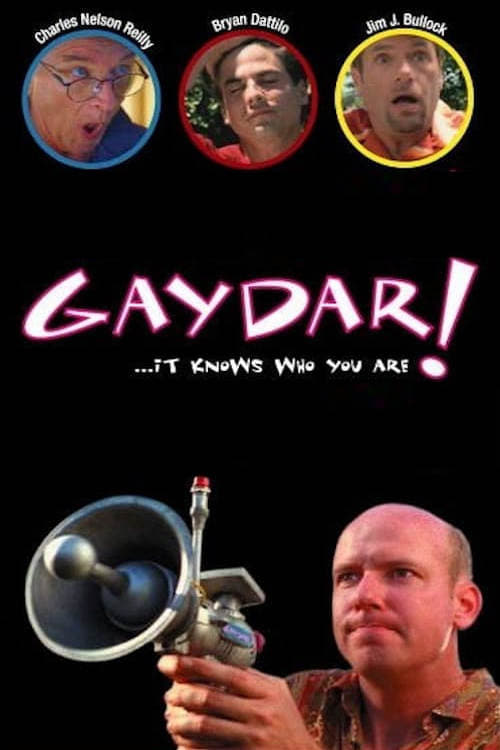








Popular
How does the protagonist's journey of self-discovery unfold throughout the film?
What is the significance of the character's ability to detect sexual orientation in Gaydar?
What role do the supporting characters play in shaping the main character's experiences?
How does the film portray the theme of friendship among LGBTQ+ individuals?
What comedic situations arise from the protagonist's misunderstandings of others' sexual orientations?
Should I watch it?
Ask Your Own Question

What is the plot?
Sorry, we aren't able to watch and write up a full detailed plot yet. Check back in a few days.







What is the ending?
In the ending of "Gaydar," the main characters come to terms with their identities and relationships. The protagonist, a young man named Kyle, finally embraces his sexuality and finds love with his friend, while other characters also resolve their conflicts and misunderstandings.
As the film progresses towards its conclusion, Kyle faces a pivotal moment where he must confront his feelings for his best friend, who has been struggling with his own identity. The film culminates in a heartfelt scene where Kyle and his friend share a significant moment of connection, leading to a romantic resolution. Other characters also find closure, with friendships mending and personal growth evident.
As the final act of "Gaydar" unfolds, the atmosphere is charged with anticipation and emotional tension. The scene opens in a vibrant café where Kyle, the protagonist, sits at a table, nervously tapping his fingers against the surface. His heart races as he waits for his best friend, who has been grappling with his own feelings throughout the film. The café is bustling with life, but for Kyle, the world around him fades as he focuses on the impending conversation.
When his friend arrives, there's an awkward silence that hangs between them, filled with unspoken words and unresolved emotions. Kyle's internal struggle is palpable; he wants to express his feelings but fears the potential fallout. The camera captures the subtle shifts in their expressions, highlighting the tension and vulnerability in the air. As they engage in small talk, Kyle's mind races, contemplating the risks of revealing his true self.
The scene shifts to a quieter corner of the café, where the two friends find a moment of privacy. Kyle takes a deep breath, his heart pounding, and finally musters the courage to speak. He confesses his feelings, his voice trembling with both fear and hope. The moment is charged with emotion, and the camera zooms in on his face, capturing the raw vulnerability of his admission. His friend's reaction is initially one of surprise, but as he processes Kyle's words, a smile begins to form, signaling a shift in their relationship.
In a tender moment, they share a kiss, a culmination of their journey together. The café around them fades into the background, emphasizing the significance of this connection. This scene marks a turning point not only for Kyle but also for his friend, who begins to embrace his own identity. The audience can feel the weight of their struggles lifting as they find solace in each other.
Meanwhile, other characters in the film are also reaching their own resolutions. A subplot involving a group of friends who have been navigating their own relationships comes to a head. They gather for a heartfelt conversation, where misunderstandings are cleared up, and bonds are strengthened. The camera captures the warmth of their camaraderie, showcasing the importance of friendship and acceptance.
As the film draws to a close, the characters are seen in a celebratory atmosphere, perhaps at a party or gathering. Laughter and joy fill the air, symbolizing the newfound freedom and acceptance they have found within themselves and each other. Kyle and his friend are now openly together, their relationship a testament to the power of love and honesty.
The final scenes depict each character in a moment of reflection, showcasing their growth. Kyle stands with his friend, looking out at the world with a sense of hope and belonging. The camera pans out, capturing the vibrant life around them, a stark contrast to the isolation they once felt. The film ends on a high note, leaving the audience with a sense of fulfillment and the message that embracing one's true self can lead to profound connections and happiness.
Is there a post-credit scene?
The movie "Gaydar," produced in 2002, does not feature a post-credit scene. The film concludes its narrative without any additional scenes or content after the credits roll. The story wraps up with the main characters resolving their conflicts and embracing their identities, leaving the audience with a sense of closure. The absence of a post-credit scene aligns with the film's focus on character development and the exploration of themes related to sexuality and self-acceptance.
How does the protagonist's journey of self-discovery unfold throughout the film?
The protagonist embarks on a journey of self-discovery that begins with their initial confusion about their own sexual orientation. As the story progresses, they encounter various characters that challenge their perceptions and beliefs, leading to moments of introspection and growth. This journey is marked by humorous yet poignant interactions that ultimately help the protagonist embrace their true self.
What is the significance of the character's ability to detect sexual orientation in Gaydar?
The character's ability to detect sexual orientation serves as a central plot device that drives the narrative forward. It creates comedic situations and misunderstandings, highlighting the complexities of relationships and attraction. This ability also reflects the character's internal struggles with their own identity and acceptance.
What role do the supporting characters play in shaping the main character's experiences?
The supporting characters serve as catalysts for the main character's development. Each character represents different aspects of the LGBTQ+ community, providing diverse perspectives that influence the protagonist's understanding of love and acceptance. Their interactions range from supportive friendships to challenging confrontations, all of which contribute to the protagonist's evolving identity.
How does the film portray the theme of friendship among LGBTQ+ individuals?
The film portrays friendship among LGBTQ+ individuals as a vital source of support and understanding. Key scenes depict the characters coming together to share their experiences, offering advice and encouragement. These moments emphasize the importance of community and solidarity in navigating the challenges of identity and acceptance.
What comedic situations arise from the protagonist's misunderstandings of others' sexual orientations?
The protagonist's misunderstandings lead to a series of comedic situations, such as awkward encounters and mistaken assumptions about romantic interests. These moments are often exaggerated for comedic effect, showcasing the protagonist's naivety and the absurdity of the situations. The humor serves to lighten the narrative while also highlighting the protagonist's growth as they learn to navigate relationships more effectively.
Is this family friendly?
"Gaydar," produced in 2002, is a comedy that centers around themes of sexuality and relationships, which may not be suitable for all audiences, particularly children or sensitive viewers. Here are some potentially objectionable or upsetting aspects:
-
Sexual Themes: The film explores various aspects of sexual orientation and relationships, which may include discussions or depictions of same-sex attraction that could be confusing or uncomfortable for younger viewers.
-
Language: There may be instances of strong language or crude humor that could be inappropriate for a family audience.
-
Adult Situations: The narrative includes adult situations and scenarios that revolve around dating and sexual encounters, which may not be suitable for children.
-
Stereotypes and Humor: The film employs humor that may rely on stereotypes related to sexual orientation, which could be seen as offensive or upsetting to some viewers.
-
Emotional Conflicts: Characters experience emotional struggles related to acceptance and identity, which could resonate deeply and evoke strong feelings, potentially upsetting sensitive viewers.
Overall, while "Gaydar" is a comedy, its themes and content may not align with family-friendly viewing standards.