









Popular
What motivates Beth Harmon to become a chess prodigy?
How does Beth's relationship with her adoptive mother influence her chess career?
What role does addiction play in Beth's life and chess career?
How does Beth's rivalry with other chess players shape her character?
What is the significance of the chess tournaments in Beth's journey?
Should I watch it?
Ask Your Own Question

What is the plot?
Sorry, we aren't able to watch and write up a full detailed plot yet. Check back in a few days.






What is the ending?
In the ending of "La regina degli scacchi," Beth Harmon faces off against Vasily Borgov in the final match of the World Chess Championship. After a tense and emotionally charged game, Beth ultimately triumphs, solidifying her status as a chess champion. The film concludes with Beth finding peace and a sense of belonging, as she embraces her love for the game and the friendships she has formed along the way.
As the final act unfolds, the scene shifts to the grand setting of the World Chess Championship in Moscow. The atmosphere is thick with anticipation, the audience buzzing with excitement as the match between Beth Harmon and the reigning champion, Vasily Borgov, begins. The camera captures the intensity in Beth's eyes, reflecting her determination and the weight of the moment. She sits at the chessboard, her fingers poised over the pieces, a mix of anxiety and resolve coursing through her.
The match progresses slowly, each move meticulously calculated. The tension is palpable, not just between the players but also within Beth. Flashbacks of her past flicker through her mind--her childhood, her struggles with addiction, and the relationships that have shaped her. These memories serve as both a source of strength and a reminder of her vulnerabilities. As she contemplates her next move, the audience can see the internal battle she faces: the fear of failure versus the desire for victory.
As the game continues, the camera alternates between close-ups of Beth's focused expression and Borgov's calm demeanor. The contrast highlights the different approaches to the game; Beth's passion and emotional investment clash with Borgov's stoic professionalism. The stakes are high, and the pressure mounts with each passing moment. Beth's mind races, and she begins to visualize the chessboard in a way that transcends the physical pieces before her. This moment of clarity allows her to see the game from a new perspective, a breakthrough that reignites her confidence.
In a pivotal moment, Beth makes a bold move that surprises both Borgov and the audience. The tension in the room escalates as the spectators lean forward in their seats, holding their breath. Borgov, taken aback, recalibrates his strategy, but Beth remains resolute. The game reaches a climax, and the final moves unfold with breathtaking precision. Each piece moved is a testament to Beth's growth, her mastery of the game, and her journey from a troubled girl to a formidable chess player.
As the match draws to a close, Beth makes the decisive move that leads to her victory. The realization washes over her, and a wave of emotion crashes in. She has not only defeated Borgov but has also conquered her own demons. The crowd erupts in applause, and Beth's expression shifts from intense concentration to pure joy. She stands, a smile breaking across her face, as she acknowledges the audience and her fellow competitors.
In the aftermath of the match, Beth is celebrated as the new World Chess Champion. The scene transitions to a quieter moment where she reflects on her journey. She finds herself in a park, surrounded by friends and fellow chess enthusiasts. The camaraderie and support she has gained throughout her journey are evident, and she feels a sense of belonging that she had long sought.
The film concludes with Beth walking through the park, her demeanor relaxed and content. She has found peace not only in her victory but also in her relationships and her love for chess. The final shot captures her smiling, a woman who has embraced her identity and the life she has fought so hard to achieve. The fate of each main character is intertwined with Beth's journey; her mentor, Mr. Shaibel, is honored in her victory, and her friendships with Jolene and others reflect the importance of connection and support in overcoming personal struggles. The film closes on a note of hope and resilience, celebrating Beth's triumph both on and off the chessboard.
Is there a post-credit scene?
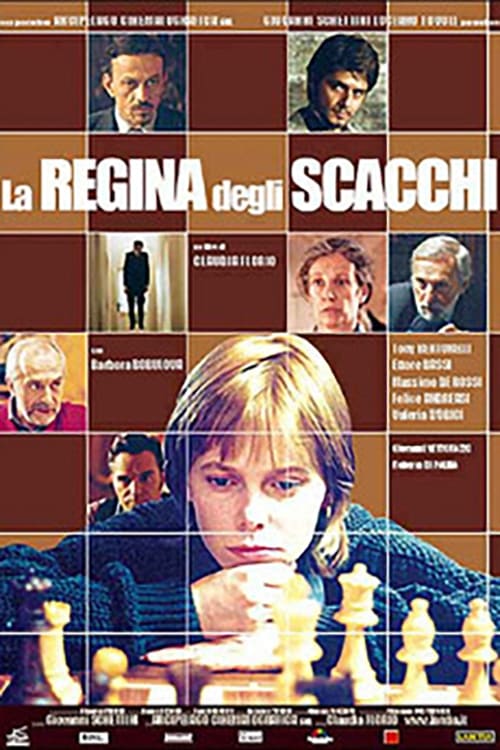
La regina degli scacchi, produced in 2002, does not have a post-credit scene. The film concludes its narrative without any additional scenes after the credits roll. The story wraps up with a focus on the main character's journey and her triumphs in the world of chess, leaving the audience with a sense of closure regarding her development and achievements.
What motivates Beth Harmon to become a chess prodigy?
Beth Harmon, an orphaned girl, discovers her extraordinary talent for chess while in a Kentucky orphanage. Her motivation stems from a deep-seated desire for connection and validation, as well as a need to escape her troubled past. The game becomes a refuge for her, allowing her to channel her emotions and intellect into something that brings her both joy and a sense of purpose.
How does Beth's relationship with her adoptive mother influence her chess career?
Beth's relationship with her adoptive mother, Alma, is complex and fraught with tension. Alma initially supports Beth's chess ambitions, but as her own struggles with alcoholism intensify, she becomes increasingly erratic. This dynamic affects Beth deeply; she craves her mother's approval while also feeling the weight of Alma's dependency. The emotional turmoil drives Beth to seek solace in chess, further fueling her ambition to succeed.
What role does addiction play in Beth's life and chess career?
Addiction plays a significant role in Beth's life, manifesting through her reliance on tranquilizers during her childhood and later, alcohol. These substances serve as both a coping mechanism and a source of conflict. As she rises in the chess world, her struggles with addiction threaten to undermine her success, creating a constant battle between her desire for greatness and the destructive habits that accompany her fame.
How does Beth's rivalry with other chess players shape her character?
Beth's rivalry with players like Benny Watts and Vasily Borgov shapes her character significantly. These rivalries push her to hone her skills and confront her insecurities. Benny, in particular, becomes both a mentor and a romantic interest, challenging her to grow while also highlighting her vulnerabilities. The competition with Borgov, the reigning world champion, represents the ultimate test of her abilities and determination, forcing her to confront her fears and insecurities head-on.
What is the significance of the chess tournaments in Beth's journey?
The chess tournaments are pivotal in Beth's journey, serving as both a battleground for her skills and a reflection of her internal struggles. Each tournament represents a milestone in her growth, showcasing her evolution from a young girl with raw talent to a formidable competitor. The pressure of these events forces Beth to confront her personal demons, including her addiction and her feelings of isolation, ultimately shaping her identity as a chess player and as a person.
Is this family friendly?
"La regina degli scacchi," or "The Queen's Gambit," is a film that explores complex themes and character development, which may not be suitable for all audiences, particularly children or sensitive viewers. Here are some potentially objectionable or upsetting aspects:
-
Substance Abuse: The film depicts characters struggling with addiction, including alcohol and drug use, which may be distressing for younger viewers.
-
Emotional Turmoil: The protagonist experiences significant emotional struggles, including feelings of loneliness, abandonment, and depression, which could be heavy for sensitive audiences.
-
Themes of Isolation: The narrative explores themes of isolation and the impact of a troubled childhood, which may resonate deeply and evoke strong emotions.
-
Intense Competition: The competitive nature of chess is portrayed with high stakes, leading to moments of intense pressure and anxiety that might be unsettling.
-
Loss and Grief: Characters face loss and the impact of death, which could be upsetting for younger viewers or those sensitive to themes of grief.
These elements contribute to the film's depth but may not be appropriate for all viewers, especially children.








