































Popular
What role does the character of Sam play in the story?
What motivates John to rob a bank in Intermission?
How does Deirdre's relationship with John evolve throughout the film?
How does the character of the police officer, Inspector, contribute to the plot?
What is the significance of the film's non-linear storytelling approach?
Should I watch it?
Ask Your Own Question

What is the plot?
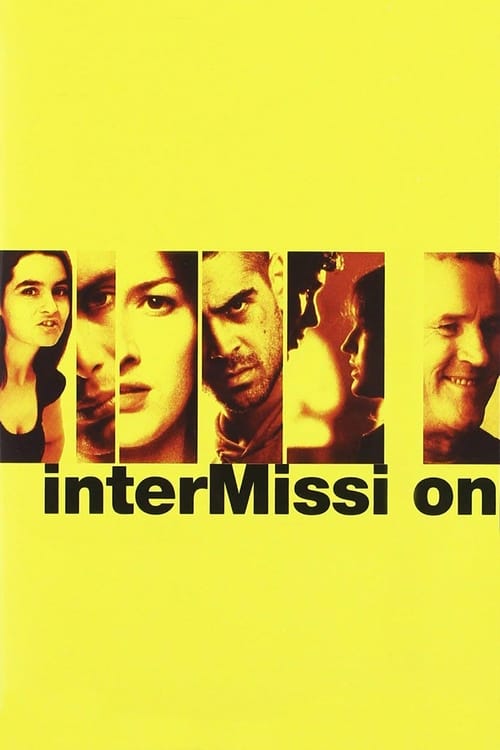
In a bustling Dublin shopping centre cafe, Lehiff (Colin Farrell) leans across the counter, his voice a velvet lure as he charms the young waitress with tales of life's simple joys--love that blooms like wildflowers, affordable kitchen appliances that make a home feel whole. "You ever think about how a good toaster can change your mornings?" he murmurs, his eyes locking hers until she's doe-eyed and smiling, utterly enchanted. The last customer shuffles out, the door chimes shut, and in an instant, his charm shatters. Lehiff's fist cracks against her nose with brutal force, blood spraying as she crumples. He vaults the counter like a predator, yanks open the till, stuffs cash into his pockets, and vanishes into the Dublin streets, leaving her sobbing on the floor. This is Lehiff: volatile, magnetic, a small-time crook dreaming of bourgeois comforts amid his petty chaos.
Cut to the fluorescent hum of a local supermarket, where John (Cillian Murphy), a lanky young man with haunted blue eyes, and his best mate Oscar (David Wilmot), a hulking, sex-starved giant forever lamenting his romantic droughts, skive off work in the stockroom. Their boss, a pinched-faced tyrant, catches them mid-slack and delivers a stern talking-to that sends them scurrying back to the aisles. As John stocks shelves, gossip ripples through: his ex-girlfriend Deirdre (Kelly Macdonald) is now shacked up with Sam (Michael McElhatton), a smug middle-aged bank manager. Rage ignites in John's chest. He storms out, Oscar trailing like a loyal shadow, and barges into Deirdre's modest flat. "Who's this Sam prick?" John demands, hurling questions as he rifles through rooms, flipping cushions, peering under beds. Deirdre stands defiant in the doorway, her voice sharp: "You suggested the intermission, John! You said we needed a break!" Oscar hovers awkwardly, his eyes wide, but John finds no trace of the rival, only the sting of rejection. Deirdre's plea hangs in the air--"Just go, John"--but his heart twists, already plotting his return.
Across town, Noeleen (Deirdre O'Kane), Sam's jilted wife--a fiery woman with a temper like dry tinder--drowns her sorrows at a dimly lit singles bar, her friend dragging her out for a cheer-up. The crowd skews older, desperate for connection, and Oscar, following his own desperate advice to chase grateful older women, spots her. "Fancy a dance?" he rumbles, his grin hopeful. Sparks fly amid the thump of bad music; they tumble into her bed that night, oblivious to the tangled web. Noeleen scratches his back raw during their frantic sex, her rage channeling through nails and fists. The next round ends with her slugging him square in the head. Oscar bolts, bruised and bewildered: "This ain't love, it's war!" Their fling sours fast, but the irony simmers unseen--Sam's wife bedding his rival's best friend.
Meanwhile, on a rainy Dublin bus route hugging the canal, bus driver Mick (Brian F. O'Byrne) grips the wheel, his face etched with quiet frustration. A pre-teen boy in a vivid red coat--Philip--darts into view, spits a massive glob at the windshield, and dances mockingly. Distracted, Mick swerves; the bus crashes spectacularly into a barrier, passengers screaming as metal twists. No fatalities, but chaos reigns. Deirdre's sister Sally (Shirley Henderson), a fragile young woman scarred by past sexual trauma that leaves her paralyzed with fear, and their mother Maura (Ger Ryan) emerge as unlikely heroes, pulling dazed passengers to safety amid the wreckage. Sally's hands tremble, her eyes distant, haunted by memories she shares later in halting whispers. Mick, wrongfully blamed, gets suspended without pay, his obsession igniting: that red-coated demon must pay.
Enter Detective Jerry Lynch (Colm Meaney), a grizzled hotshot Garda obsessed with TV cop dramas, strutting like a star waiting for his close-up. "I'm the real deal," he growls to anyone listening, practicing one-liners from his favorite shows. Ben (Tomás Ó Súilleabháin), a slick TV producer desperate for "edgy" reality content, corners him with a camera: "You're perfect for my documentary--raw, unfiltered cop life." Lynch preens, ego inflating, as Ben films his every swagger. Separately, Ben interviews Sally at her home about the crash, her voice quivering as she reveals her trauma: a past lover who left her jaded, terrified of intimacy. Their connection sparks tentatively, two shy souls amid the madness.
Back at the supermarket, John's desperation boils over. Oscar needles him about Deirdre--"Face it, mate, she's upgraded"--and John snaps. They scrap in the snacks aisle, fists flying amid tumbling crisps and chocolate bars. The boss intervenes, firing them both on the spot. John, unhinged, hurls a can of peas at the boss's head--thwack!--earning wild applause from cheering coworkers and shoppers. Drunk on rebellion, he laps the checkout conveyor belts like a mad champion, only to trip face-first onto the cold tile floor. Humiliation complete, he's escorted out, jobless and seething, his life unraveling.
Fate weaves its threads tighter. John, wandering Dublin's gray streets, bumps into Lehiff, who recognizes a kindred lost soul. "You look like a man with regrets," Lehiff says with that disarming grin. Over pints, John spills his woe: Deirdre, Sam, the banker who stole his girl. Lehiff's eyes gleam. "We hit him where it hurts--his bank. Kidnap the girl, make him pay." Desperate for revenge and redemption, John agrees. Mick, scraping by post-suspension, joins the scheme, his own rage fueling the fire. They rope in disguises--stockings over heads, amateur but fierce--and execute: Mick and John burst into Deirdre's flat, bundling her into a van as she screams. Lehiff watches from shadows, gun in hand. They grab Sam too, tying him up, then release him with orders: "Go to your bank, withdraw the ransom--50 grand--or she dies." Sam's face pales, but he nods, fear etching lines deeper than infidelity ever did.
Tension mounts as Sam enters his bank, hands shaky at the counter. "I need... a large withdrawal," he stammers to staff, sweat beading. Outside, disaster looms. Noeleen, tailing her cheating husband on a hunch, spots him. Fury erupts--she charges, assaulting him on the street with wild swings and curses: "You bastard! Leaving me for that slag?" Sam crumples under her blows, drawing a crowd--and the Gardaí. Sirens wail as Mick and John watch from afar, hearts pounding. The ransom handover crumbles; they flee empty-handed, tires screeching into Dublin traffic. Sam's infidelity explodes publicly, Noeleen dragging him home under threats of more violence: "We're reconciling, or else." Her control reasserts, twisted but ironclad.
Adrenaline surging from the botched job, Mick spots Philip on his bike along the canal road--the red coat a taunting beacon. "That's him!" Mick snarls, throwing John from the car. "Stay out of it!" John tumbles to the pavement, bruised, as Mick peels off in pursuit. Philip pedals furiously, darting through alleys, the chase a manic ballet of vengeance. Mick's car corners the boy near the canal edge; Philip leaps onto the bonnet, smirking defiantly. The vehicle teeters on the brink, balancing precariously over the dark water. Philip jumps free at the last second, landing safely on the bank. Mick's car plummets--splash!--vanishing into the canal depths. Mick's fate seals in the murky plunge, his obsession claiming him at last.
John, limping and cursing, races back to Deirdre's flat. He bursts in to horror: Lehiff, unhinged after the failed heist, has tracked her down--the waitress from the cafe robbery, her broken nose a vivid badge of his earlier violence. She's assaulted Deirdre too, leaving her bruised and terrified. "You think you can just walk away?" Lehiff snarls at John, gun waving. John freezes, the room thick with dread, but Lehiff bolts as Garda sirens near, abandoning the wreckage of their plan.
Parallel chaos builds. Lynch, hot on Lehiff's trail--fueled by Ben's ever-present camera--chases the crook through Dublin's sprawl to a vast open field, golden grass waving under a brooding sky. "This is it, my big scene!" Lynch boasts to the lens, channeling Dirty Harry. He corners Lehiff hand-to-hand, bravado blazing. Punches fly; Lynch lands a few, but Lehiff, feral and skilled, turns the tide. He gains the upper hand, wrenching Lynch's gun free and pressing it to his temple. "Any last words for the camera, copper?" Lehiff taunts, finger tightening. Tension peaks, Ben filming every heartbeat. In a blur, Ben lunges--snatches the gun--and fires. Lehiff crumples, blood blooming on his chest, eyes wide in shock. Dead. Lynch, gasping, straightens his coat. "Cover it up," he mutters to Ben. "Self-defense. My story." Ben nods, the documentary now a powder keg of truth bent to glory. Lynch walks away unscathed, reputation intact through lies.
As dust settles, resolutions ripple like aftershocks. John confronts Deirdre in her flat, the air heavy with regret and bloodstains. Bruised but unbroken, he drops to his knees: "I was a fool. The intermission... it showed me I need you. Every stupid fight, every bad day--it's better with you." Tears well; Deirdre softens, pulling him close. They reconcile, passion reigniting in quiet forgiveness, John's pining rewarded.
Oscar, nursing scratches from Noeleen, crosses paths with Sally during Ben's post-crash wrap-up. Her shyness mirrors his awkward hunger; they bond over shared fragility. "No rush," Oscar says gently, and Sally smiles--her first real one--pairing the sex-starved brute with the trauma-scarred wallflower in sweet, ironic karma.
Sam cowers before Noeleen at home, her threats a leash: "You're mine again, or I'll make your life hell." He submits, reconciliation forged in fear, the banker's stability restored under her volatile rule.
Lynch struts for Ben's camera one last time, Lehiff's death buried in edits. Deirdre's mother Maura watches from afar, shaking her head at the madness. Philip bikes away unscathed, red coat flapping, chaos incarnate. The intersecting lives untangle into uneasy peace: lovers reunited, grudges settled in blood or beds, Dublin's streets humming on. Fade to the canal's ripple, Mick's car a sunken tomb, and the survivors carrying their scars into tomorrow.








What is the ending?
In the ending of "Intermission," the various character arcs converge in a chaotic climax. John, who has been struggling with his feelings for Deirdre, confronts his emotions and the consequences of his actions. Deirdre, caught in a web of relationships and misunderstandings, faces a pivotal moment in her life. The film concludes with a sense of unresolved tension, as the characters grapple with their choices and the impact of their lives on one another.
As the film approaches its conclusion, the narrative unfolds with a series of interconnected scenes that highlight the characters' struggles and resolutions.
The first scene of the ending begins with John, who has been deeply affected by his tumultuous relationship with Deirdre. He finds himself in a bar, reflecting on his life choices. The dim lighting casts shadows on his face, emphasizing his internal conflict. He is torn between his desire for Deirdre and the reality of their situation. The camera captures his pensive expression, revealing the weight of his emotions.
Meanwhile, Deirdre is seen in a different light. She is at home, surrounded by the remnants of her chaotic life. The clutter in her apartment symbolizes the messiness of her relationships. As she looks in the mirror, her expression shifts from frustration to determination. She realizes that she must take control of her life and make a decision about her future. The scene is filled with tension as she grapples with her feelings for John and her current relationship with her boyfriend, who has been unfaithful.
In a parallel scene, we see the character of Lehiff, who has been a source of chaos throughout the film. He is involved in a confrontation that escalates quickly. The atmosphere is charged with aggression as he faces off against a group of men. The camera zooms in on his face, capturing the adrenaline and fear coursing through him. This moment serves as a culmination of his reckless behavior, and the stakes are higher than ever.
As the climax unfolds, John and Deirdre's paths finally intersect. They meet in a tense confrontation, where emotions run high. The dialogue is sharp and filled with unspoken feelings. John expresses his frustrations, while Deirdre reveals her vulnerabilities. The scene is set against the backdrop of a bustling city, symbolizing the chaos of their lives. The tension between them is palpable, and the audience can feel the weight of their unresolved feelings.
In the final moments, the film shifts to a chaotic street scene where all the characters converge. The camera captures the frenetic energy of the city as John, Deirdre, Lehiff, and others find themselves in a series of unexpected encounters. The editing is rapid, reflecting the urgency of their situations. Each character faces a moment of reckoning, and the stakes are raised as their choices lead to unforeseen consequences.
As the film draws to a close, we see John and Deirdre walking away from the chaos, their expressions a mix of relief and uncertainty. They have made choices that will shape their futures, but the outcome remains ambiguous. Lehiff, on the other hand, faces the repercussions of his actions, hinting at a darker fate. The film ends on a note of unresolved tension, leaving the audience to ponder the complexities of relationships and the impact of choices.
In summary, the ending of "Intermission" encapsulates the characters' struggles and the intertwining of their lives, culminating in a chaotic yet poignant conclusion that reflects the film's exploration of love, regret, and the unpredictability of life.
Is there a post-credit scene?
The movie "Intermission," produced in 2003, does not have a post-credit scene. The film concludes its narrative without any additional scenes or content after the credits roll. The story wraps up the various character arcs and conflicts, leaving the audience with a sense of closure regarding the intertwined lives of the characters. The focus remains on the main plot and the emotional resolutions that occur before the credits, emphasizing the themes of love, betrayal, and the complexities of human relationships.
What role does the character of Sam play in the story?
Sam, played by Cillian Murphy, is a pivotal character who serves as a catalyst for many events in the film. His infatuation with Deirdre and his involvement in the bank robbery plot intertwine with John's actions, creating a web of tension and conflict. Sam's motivations are rooted in his desire for love and acceptance, which drives him to make questionable decisions that impact the lives of those around him.
What motivates John to rob a bank in Intermission?
John, played by Colin Farrell, is driven by a mix of desperation and a desire to impress his ex-girlfriend, Deirdre. His impulsive decision to rob the bank stems from his frustration with his stagnant life and his longing to regain Deirdre's affection, showcasing his internal conflict between his reckless impulses and the consequences of his actions.
How does Deirdre's relationship with John evolve throughout the film?
Deirdre, portrayed by Kelly Macdonald, initially appears to have moved on from John, but as the story unfolds, her feelings become more complicated. She grapples with her emotions as she witnesses John's reckless behavior and the chaos surrounding him, ultimately leading her to confront her own feelings about their past relationship and her current life choices.
How does the character of the police officer, Inspector, contribute to the plot?
The Inspector, portrayed by David Wilmot, adds a layer of dark humor and tension to the narrative. His relentless pursuit of the criminals, particularly John and Sam, showcases his determination but also his flawed nature. His interactions with other characters reveal the absurdity of the situation and highlight the chaotic environment of the city, ultimately leading to a climactic confrontation.
What is the significance of the film's non-linear storytelling approach?
The non-linear storytelling in Intermission allows for a deeper exploration of character motivations and relationships. By presenting events out of chronological order, the film creates a sense of unpredictability and mirrors the chaotic lives of the characters. This structure emphasizes the interconnectedness of their stories, revealing how their choices impact one another in unexpected ways.
Is this family friendly?
"Intermission," produced in 2003, is not considered family-friendly due to its mature themes and content. Here are some potentially objectionable or upsetting aspects that may affect children or sensitive viewers:
-
Violence: The film contains scenes of physical altercations and confrontations that may be disturbing.
-
Language: There is frequent use of strong language throughout the film, which may not be suitable for younger audiences.
-
Substance Abuse: Characters are depicted using alcohol and drugs, which could be concerning for sensitive viewers.
-
Adult Themes: The film explores complex adult relationships, infidelity, and emotional turmoil, which may be difficult for children to understand.
-
Mental Health: There are references to mental health issues and emotional distress that could be upsetting for some viewers.
-
Crime: The narrative includes elements of crime and moral ambiguity, which may not be appropriate for younger audiences.
Overall, the film's tone and subject matter are geared towards an adult audience, making it unsuitable for children.






