









Popular
What role does the setting play in shaping the characters' experiences?
What motivates the main character, Redglare, throughout the film?
How does Redglare's relationship with his family influence his actions?
How does Redglare's past impact his present decisions?
What is the significance of the supporting characters in Redglare's journey?
Should I watch it?
Ask Your Own Question

What is the plot?
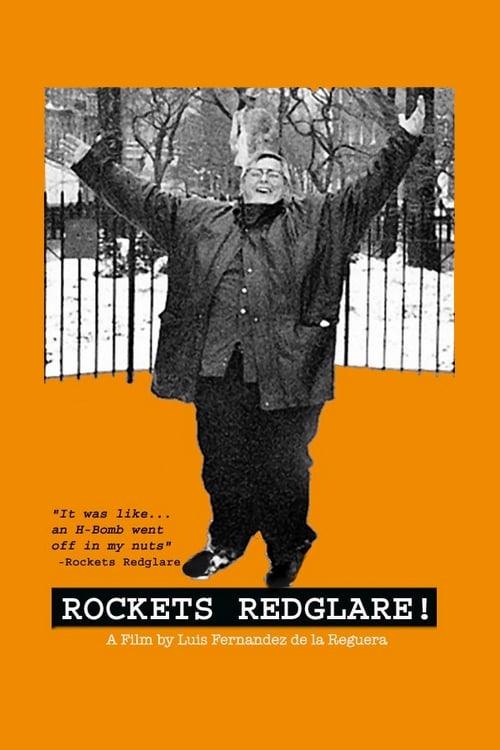
Rockets Redglare! is a documentary portrait rather than a fictional plot, so its "story" unfolds as the life of Michael Morra, better known as Rockets Redglare, is recounted from birth to death through testimony, anecdotes, and a grimly comic self-mythology. It begins in New York City on May 8, 1949, with the birth of Michael Gennaro Morra to Agnes Tarrulli Morra, a 15-year-old heroin addict, and the film immediately frames his life as one shaped by addiction before he can even understand it: he is described as "addicted in utero," with an opiate derivative added to his formula so he can survive withdrawal, making infancy his first detox. The documentary's opening biographical arc also establishes the dark family world around him: his father is a career criminal, his uncle is also tied to violent crime, and his father is eventually deported to Italy after a post office robbery, leaving the boy in a household that is already collapsing under drugs, poverty, and brutality.
As Michael grows up in Brooklyn, the film makes clear that his childhood is not merely rough but actively corrosive, a sequence of wounds that seem to stack one atop another until violence becomes normal. One account says he watches his uncle gun down a man in front of him, with the dead body and brains splattered against the wall seared into memory; another notes that he suffers early sexual abuse from a female neighbor. Meanwhile, his mother, left to support the family and maintain her addiction, turns to prostitution, then takes up with a junkie ex-boxer who repeatedly beats both mother and son. The relationship escalates into catastrophe when the ex-boxer murders Agnes Tarrulli Morra, and this killing becomes the defining rupture in Michael Morra's life. After his mother's death, he casts off the name he was born with and reinvents himself as Rockets Redglare, as though a new identity might serve as armor against the one he was born into.
From there, the documentary moves into the years when Rockets becomes a recognizable underground New York presence, and the film's narrative energy shifts from childhood trauma to self-invention through excess. He emerges on the downtown scene as a bouncer, a hustler, a nightclub comic, and a man whose body and reputation seem built from the same hard material as the city's late-night streets. His stand-up persona grows out of the wreckage of his past; he turns his own misery into material, using raunchy, unfiltered comedy in Alphabet City and other gritty venues to work through the violence that made him. The documentary presents this as a kind of self-exorcism, but it also shows that he is never really free of the life that made him. He is still the kind of man who can move between the stage and the street, between laughter and menace, because both are already part of him.
The film then widens into the New York art and punk underworld, where Rockets becomes a fixture among musicians, filmmakers, and artists who are drawn to his volatility and authenticity. He tours as a comedian with Steve Buscemi, and one source says the pair's "Taxi Cabaret" work helps launch careers in the downtown scene. Rockets also appears in more than 30 films, including Stranger Than Paradise, Down by Law, and Mystery Train, usually playing men who feel like extensions of the same rough, streetwise energy he projects offscreen. In this phase of the documentary, his life is presented less as a stable biography than as a chain of incarnations: dealer, bodyguard, comic, actor, scene-prophet, and cautionary tale all at once. The film's portraiture works by accumulating these roles until Rockets seems less like a person than a living emblem of a particular New York era.
His most notorious role in that world is tied to Sid Vicious, and the documentary's account of this relationship is one of its central dark magnets. Rockets is described as Sid Vicious's bodyguard and drug dealer, a man around whom the late-punk disaster of Sid and Nancy is always orbiting. The sources also note that Rockets is present in the larger legend of Nancy Spungen's murder at the Chelsea Hotel, though the precise extent of his involvement remains disputed. The film does not resolve that controversy into a tidy answer; instead, it lets the surrounding lore stand as part of Rockets' myth, one more example of how his life is inseparable from the violence of the people and places around him. In the broader Sid Vicious narrative, the Chelsea Hotel and the knife associated with Sid's favorite weapon become symbolic objects of the era's chaos, but the documentary uses them mainly to situate Rockets in the eye of a legend that is never cleanly separable from rumor.
As the documentary continues, it keeps returning to the idea that Rockets is both performer and survival story, someone whose body, voice, and habits are marked by the same addictions that began before birth. One source describes him as a man who was "too high to count his change," a dealer and speed source in the seventies, which fits the film's portrait of him as a figure who exists half in lucidity and half in chemical fog. The movie stresses not just heroin but the full chain of dependence--drugs, alcohol, and the compulsive momentum of a life lived without brakes. This is where the tone of the documentary deepens: the stories are funny, filthy, and entertaining, but they are never allowed to lose the undertow of damage that makes them possible. Every anecdote about hustle or excess carries the echo of the boy who began life detoxing in a crib.
The film's more emotional passages come from the way Rockets narrates, or is narrated about, his own past. He is not shown as a man who escapes his origins but as one who keeps circling them, using humor to hold off despair. When he tells stories from the old downtown days, they land with the force of confession and punchline at once, and the documentary lets that contradiction define him. His full name, Michael Morra, matters in these moments because it reminds the viewer that "Rockets Redglare" is not simply a stage name but a rebirth after trauma, a deliberate self-authorship born from murder, addiction, and survival. Even the name itself carries a theatrical violence, as if the man is trying to burn his own past into something louder and harder to ignore.
The narrative then turns toward his later life, when the glamour of underground legend gives way to the physical cost of everything that came before. The film's late material reportedly follows Rockets in his last days as he searches for methadone in Puerto Rico, a bleak and painfully undignified image that undercuts any romantic notion of punk immortality. Instead of a triumphant final act, the documentary shows a man still chasing the substances that have structured his entire life, even as his body begins to fail him. The Puerto Rico setting matters because it places him far from the mythic streets of New York City and reduces the legendary Rockets Redglare to a sick, exhausted human being trying to manage withdrawal and survival one more time. The contrast is sharp: the underground icon is now a man in medical need, not a rebel hero but a patient of his own life.
The film's account of his death is clear and final. Rockets Redglare, born Michael Morra, dies in 2001 from liver failure and hepatitis C caused by years of heroin abuse and other drugs. One source also adds kidney failure, cirrhosis, and morbid obesity as part of the physical collapse that ends his life in hospital. The documentary therefore closes not with a mystery solved or a villain defeated, but with the inevitable completion of a body that has been breaking down since birth. There is no false redemption at the end, only the full accounting of what his life has cost him. In that sense, the death functions as the film's final revelation: the man who spent his life turning damage into persona is finally overtaken by the damage itself.
The emotional weight of the ending comes from the fact that the film has spent its runtime building Rockets as both caricature and tragedy, and by the time the end arrives, both aspects feel inseparable. He has been a bodyguard, a dealer, a comic, an actor, a downtown legend, a friend to famous artists, and a survivor of childhood horror; now he is simply dead, and the documentary's retrospective structure turns that death into the final frame of the story. Nothing about the ending resolves the older disputes around his life, including the unresolved question of the Nancy Spungen murder, which remains part of the mythology rather than a settled fact. Instead, the film leaves viewers with the image of a man whose whole existence has been a collision between performance and ruin, and whose last chapter confirms what the opening already suggests: that Rockets Redglare's legend is inseparable from the violence that made Michael Morra and the addictions that consumed him.
More Movies Like This
Browse All Movies →



What is the ending?
In the ending of "Rockets Redglare!", the main character, a struggling comedian named Rocket, faces the culmination of his personal and professional challenges. After a series of setbacks, he finds a moment of clarity and connection with his friends, leading to a bittersweet resolution where he embraces his identity and the support of those around him.
As the film approaches its conclusion, Rocket is seen grappling with the pressures of his career and the expectations placed upon him. The scene shifts to a dimly lit comedy club where Rocket prepares for a pivotal performance. The atmosphere is thick with tension; the audience is restless, and Rocket's internal conflict is palpable. He stands backstage, pacing, his heart racing as he contemplates the weight of his dreams and the fear of failure.
In the next scene, Rocket steps onto the stage, the spotlight illuminating his figure. The audience's initial indifference weighs heavily on him, but as he begins to share his stories, a transformation occurs. His humor, laced with vulnerability, resonates with the crowd. Laughter begins to ripple through the room, and Rocket's confidence builds. He connects with the audience on a deeper level, revealing his struggles and insecurities, which elicits empathy and understanding.
Meanwhile, his friends, who have been a constant source of support throughout his journey, watch from the sidelines. Their expressions shift from concern to pride as they witness Rocket's breakthrough. Each laugh from the audience serves as a reminder of the bond they share, and the importance of community in overcoming personal battles.
As Rocket finishes his set, the applause is thunderous. He stands at the center of the stage, a mix of relief and joy washing over him. In this moment, he realizes that success is not solely defined by fame or recognition but by the connections he has forged and the authenticity he has embraced. The camera captures the smiles of his friends, their eyes glistening with tears of happiness, reflecting their unwavering belief in him.
The film concludes with Rocket stepping off the stage, greeted by his friends who envelop him in a warm embrace. They celebrate not just his performance but the journey they have all taken together. The final shot lingers on Rocket's face, a blend of determination and contentment, as he acknowledges that while the road ahead may still be uncertain, he is no longer alone in his struggles.
In the closing moments, the screen fades to black, leaving the audience with a sense of hope and the understanding that true success lies in the relationships we build and the courage to be ourselves. Each character's fate is intertwined with Rocket's journey, highlighting the importance of friendship, resilience, and the pursuit of one's passion amidst life's challenges.
Is there a post-credit scene?
The movie "Rockets Redglare!" produced in 2003 does not feature a post-credit scene. The film concludes its narrative without any additional scenes or content after the credits roll. The story wraps up with a focus on the main characters and their journeys, leaving the audience with a sense of closure regarding the events that have unfolded throughout the film.
What role does the setting play in shaping the characters' experiences?
The setting, a gritty urban landscape, reflects the struggles and aspirations of the characters. It serves as a backdrop for Redglare's challenges, highlighting the harsh realities of his environment and the obstacles he must overcome, which in turn shapes his character development and emotional journey.
What motivates the main character, Redglare, throughout the film?
Redglare is driven by a deep desire to prove himself and find his place in the world. His journey is marked by a struggle against personal demons and the need for acceptance, which fuels his determination to succeed in the face of adversity.
How does Redglare's relationship with his family influence his actions?
Redglare's relationship with his family is strained, particularly with his father, who disapproves of his choices. This familial tension creates an internal conflict for Redglare, pushing him to seek validation and success outside of his family, while also grappling with feelings of guilt and longing for approval.
How does Redglare's past impact his present decisions?
Redglare's past is filled with mistakes and regrets that haunt him. These experiences inform his current decisions, often leading him to make choices that are impulsive or self-destructive, as he grapples with the weight of his history and the desire to change his future.
What is the significance of the supporting characters in Redglare's journey?
The supporting characters serve as mirrors and foils to Redglare, each representing different aspects of his struggles and aspirations. Their interactions with him provide critical insights into his character, challenge his beliefs, and ultimately influence his path towards self-discovery and redemption.
Is this family friendly?
"Rockets Redglare!" is a film that contains several elements that may not be suitable for children or sensitive viewers. Here are some potentially objectionable aspects:
-
Language: The film features strong language, including profanity, which may not be appropriate for younger audiences.
-
Substance Use: There are scenes depicting drug use and alcohol consumption, which could be concerning for children and sensitive viewers.
-
Violence: The film includes moments of violence and aggression that may be unsettling, particularly in the context of the characters' struggles.
-
Emotional Turmoil: The characters experience significant emotional distress, including themes of loss, betrayal, and existential crises, which may be heavy for younger viewers to process.
-
Adult Themes: The narrative explores complex adult relationships and personal struggles that may not resonate with a younger audience.
These elements contribute to a tone that is more suited for mature viewers, making it less family-friendly overall.







