









Popular
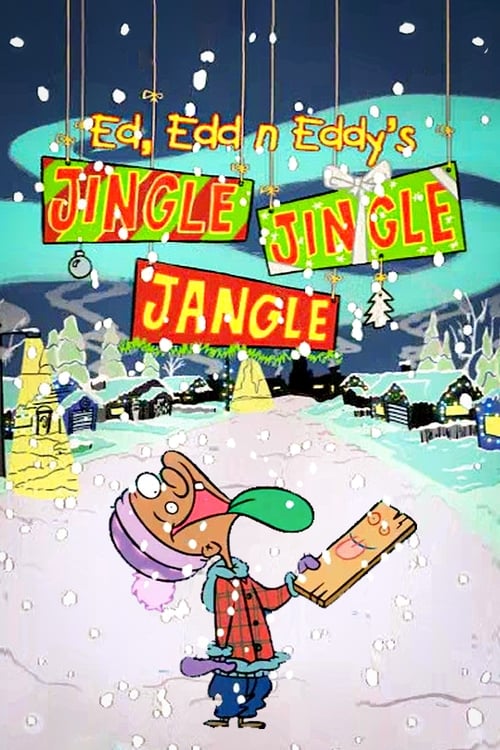
What is the significance of the Christmas tree in Ed, Edd n Eddy's Jingle Jingle Jangle?
How do the Eds plan to earn money for Christmas gifts?
What role does Eddy's brother play in the story?
What challenges do the Eds face while trying to deliver their Christmas ornaments?
How does the character of Nazz influence the Eds' Christmas experience?
Should I watch it?
Ask Your Own Question

What is the plot?
On Christmas Eve in the Cul-de-Sac, the whole neighborhood glows with winter excitement, but Eddy is already in a foul mood, because the holiday has, in his eyes, betrayed him again. He sneaks through his own house, digs up the place where his parents have hidden his Christmas gifts, and tears into the wrapping with greedy anticipation--only to find that every "present" is just clothes. The shock lands like a slap. Instead of toys, gadgets, or anything he can flaunt or resell, he gets practical gifts, and that sends him spiraling into outrage and humiliation.
The moment becomes the emotional engine of the special. Eddy storms out of his house furious, determined to refuse the role fate has assigned him. He is not going to spend Christmas being a kid who gets clothes. If his own family won't give him the kind of haul he thinks he deserves, then he decides he will find another one. In Eddy's warped logic, Christmas is a marketplace, and if his home is a bad investment, he'll simply move his operations elsewhere. That is when he lands on his scheme: he will get himself "adopted" for the day by another neighborhood family so he can cash in on their gifts instead. It is a ridiculous plan even by his standards, but Eddy is fully committed, because he sees no shame in exploiting the holiday if it means a better profit margin.
Edd, in sharp contrast, is horrified by the selfishness of it all. He immediately recognizes that Eddy's idea is not just rude but fundamentally wrong, and he tries to pull him back from the edge with reason, patience, and the earnest belief that Christmas means something more than presents. Ed, meanwhile, is blissfully, almost glowingly festive, treating the season like a sacred miracle. His childlike enthusiasm provides a warm counterpoint to Eddy's bitterness, and together the two of them become the voices of conscience that Eddy refuses to hear.
As Christmas Eve continues, the story widens out into the snow-covered Cul-de-Sac, where each house becomes another stage for Eddy's increasingly absurd campaign. He stalks from home to home, trying to find a family willing to take him in long enough for him to enjoy their holiday loot. The neighborhood, which should be a place of communal cheer, becomes for Eddy a chain of targets. Every doorstep is an opportunity, every living room a possible source of better presents. The special keeps the tension moving through these visits by making each stop a little test of character, and Eddy fails them all because he is looking only for what he can take.
At the same time, another thread begins drifting across the snowy night: the Kanker Sisters. Out at the Park n' Flush trailer park, they open a batch of "Krazy Krackers" and receive paper crowns, which adds a bizarrely festive but unsettling note to their scene. Then May spots a strange bright beam in the sky, one that has been thrown upward by Eddy's flashlight bouncing off a mirror, and the three sisters become fascinated by it. They set off to follow the light, their march through the snow giving the whole special a strange mock-biblical flavor. Their journey mirrors the imagery of the Star of Bethlehem, but in the show's usual warped comic style, the "wise men" are replaced by the Kankers and the holy quest becomes another chaotic stalk through the winter night.
Eddy's first real collision with his conscience comes through Edd, who keeps trying to make him see what he is doing. Edd talks about Christmas as a time of generosity, warmth, and spirit, not a day for scavenging better gifts. Eddy, however, wants none of it. He is still fixated on the humiliation of the clothes and the idea that Christmas has shortchanged him. That sense of being cheated pushes him deeper into his plan, and the special makes that emotional logic painfully clear: Eddy does not just want more stuff, he wants to erase the insult he feels he has been dealt.
From there, the plot unfolds as a kind of holiday odyssey through the cul-de-sac. Eddy pushes from one household to another, trying to wriggle his way into somebody else's celebration. He flirts with the idea of being welcomed, adopted, or otherwise absorbed into a family that has better presents under the tree. But the neighborhood keeps rejecting his greed, even when it does so in goofy, cartoonish ways. Each house becomes a reminder that Christmas is happening all around him as a shared, communal event, while he stands apart, clutching his own bitterness like a shield. The snow, lights, and decorations all emphasize the contrast between the warm holiday atmosphere and Eddy's cold opportunism.
Edd and Ed keep following, trying in their different ways to stop the slide. Edd's role is the moral one--he is the one who keeps naming the problem and insisting that Eddy's plan is selfish. Ed's role is more emotional and physical; he is the exuberant companion whose holiday spirit is so unguarded that it becomes its own argument for joy over greed. Together, they try to intercept Eddy before he damages not only his own holiday but everyone else's. Their efforts create a strong sense of forward pressure, because the special is not content merely to show Eddy being silly. It wants the audience to feel that something important is at stake in his refusal to change.
The Kanker Sisters' subplot keeps crossing the main story in an eerie, comedic way. Their pursuit of the light gives them a sense of direction, as if they are being led by destiny, but the destination is never some sacred revelation. Instead, their wandering serves as a parallel joke about Christmas iconography, turning the solemn image of a guiding star into something chaotic and predatory. The result is that the night feels charged with competing meanings: one path is a greedy quest for presents, another is a warped search for a miracle, and the real holiday spirit keeps getting buried under comic confusion.
As the special moves toward its climax, the pressure builds around Eddy's delusion. His "adoption" fantasy is not sustainable, and the more he tries to force himself into other people's holiday plans, the more obvious it becomes that he is missing the point entirely. The emotional confrontation finally has to happen, because Edd's warnings are no longer enough. Eddy is forced into the consequences of his selfishness, and the story arranges its climax as a correction rather than a punishment. There is no death, no fatal violence, no tragic loss--just the collapse of a greedy scheme under the weight of its own emptiness.
The ending makes the special's message plain. Eddy's attempt to game Christmas fails, and what remains is the insistence that the holiday is not measured by how many presents a kid gets or by whether the wrapping paper is exciting enough. Edd and Ed's efforts to guide him finally carry the day, and Christmas reasserts itself as something rooted in generosity and connection rather than theft and envy. The Kanker Sisters' star-chasing subplot also resolves without catastrophe, preserving the episode's comic tone even as the main theme lands with sincerity. The final feeling is one of hard-won holiday balance: Eddy is not turned into a saint, but his scheme is exposed as hollow, and the season survives his greed.
The last scenes close the loop on the opening disappointment. Eddy began the night furious that his gifts were clothes, seeing that as proof that Christmas has failed him. He ends the story having been taught, however reluctantly, that the holiday is not supposed to serve his selfish calculations. The special does not erase his personality or turn him into a different person overnight, but it does force him to confront the fact that the real loss would have been treating Christmas like a scam. In the end, the Cul-de-Sac remains lit with winter cheer, Edd's sincerity and Ed's optimism stand validated, and Eddy's failed attempt to hijack somebody else's holiday becomes one more absurd chapter in the endless, chaotic life of the Eds.
More Movies Like This
Browse All Movies →


What is the ending?
In the ending of "Ed, Edd n Eddy's Jingle Jingle Jangle," the Eds, after a series of misadventures and misunderstandings, manage to save Christmas for the neighborhood kids. They realize the importance of friendship and the true spirit of the holiday season. The film concludes with the Eds being celebrated by their peers, and they find joy in the holiday spirit, despite the chaos that ensued.
As the climax of "Ed, Edd n Eddy's Jingle Jingle Jangle" unfolds, the scene shifts to the Eds' makeshift Christmas tree, which is a chaotic blend of their earlier attempts to create a festive atmosphere. The trio, Ed, Edd (Double D), and Eddy, are in a state of disarray, having faced numerous challenges throughout the film. The stakes are high as they realize that they must come together to save Christmas for the neighborhood kids, who have been left disappointed by the events that transpired.
Eddy, driven by his desire to impress and be accepted, feels the weight of his earlier mistakes. He is determined to make things right, and his internal conflict is palpable as he grapples with the consequences of his actions. Meanwhile, Edd, the more rational and thoughtful member of the group, tries to keep everyone focused on the task at hand, urging them to work together. Ed, with his childlike innocence and enthusiasm, provides comic relief but also serves as a reminder of the joy that the holiday season can bring.
As they rally together, the Eds embark on a frantic quest to gather the necessary items to create a proper Christmas celebration. They encounter various obstacles, including the antagonistic neighborhood kids who are skeptical of their intentions. However, the Eds' determination shines through as they navigate these challenges, showcasing their resilience and teamwork.
In a pivotal moment, the Eds manage to pull off a last-minute Christmas surprise for their friends. They create a festive atmosphere filled with lights, decorations, and a makeshift Santa Claus. The neighborhood kids, initially hesitant, are drawn in by the spirit of the celebration. The Eds' efforts culminate in a heartwarming scene where everyone comes together, singing carols and sharing in the joy of the season.
As the film draws to a close, the Eds are embraced by their peers, who recognize their efforts and the true meaning of Christmas. Eddy, Edd, and Ed share a moment of camaraderie, realizing that their friendship is what truly matters. The final scenes depict the neighborhood in a festive glow, with laughter and joy echoing through the air. The Eds, once again, find themselves at the center of the celebration, having transformed their earlier misadventures into a memorable holiday experience.
In the end, Eddy learns the value of friendship over material gain, Edd finds satisfaction in the success of their teamwork, and Ed revels in the joy of the holiday spirit. The film concludes with a sense of unity and happiness, leaving the audience with a heartwarming message about the importance of togetherness during the holiday season.
Is there a post-credit scene?
In "Ed, Edd n Eddy's Jingle Jingle Jangle," there is indeed a post-credit scene that adds a humorous touch to the film's conclusion. After the credits roll, the scene opens with Ed, Edd (Double D), and Eddy sitting in a snowy landscape, looking disheveled and exhausted from their earlier adventures.
Eddy, still fixated on the idea of getting rich, is seen trying to convince his friends to come up with another scheme, despite their obvious fatigue and reluctance. He enthusiastically suggests a new plan involving holiday-themed scams, but Ed and Edd are too worn out to engage.
As Eddy rambles on, the camera pans out to reveal that they are surrounded by a massive pile of snow, which they had inadvertently created during their escapades. The scene captures the essence of their friendship, with Ed's goofy innocence, Edd's cautious pragmatism, and Eddy's relentless ambition. The post-credit moment serves as a light-hearted reminder of their dynamic and the ongoing cycle of their misadventures, leaving viewers with a chuckle and a sense of nostalgia for the trio's antics.
What is the significance of the Christmas tree in Ed, Edd n Eddy's Jingle Jingle Jangle?
The Christmas tree serves as a central symbol of the holiday spirit and the characters' desire to celebrate Christmas. It represents the joy and excitement of the season, but also becomes a point of conflict when the Eds attempt to acquire it for their own gain.
How do the Eds plan to earn money for Christmas gifts?
The Eds devise a scheme to create and sell homemade Christmas ornaments to the neighborhood kids. They believe that by capitalizing on the holiday spirit, they can earn enough money to buy gifts for themselves, showcasing their entrepreneurial spirit and desire for acceptance.
What role does Eddy's brother play in the story?
Eddy's brother, who is initially portrayed as a tough and intimidating figure, serves as a catalyst for Eddy's insecurities and motivations throughout the film. His arrival creates tension and forces Eddy to confront his feelings of inadequacy, ultimately leading to a deeper understanding of friendship and the true meaning of Christmas.
What challenges do the Eds face while trying to deliver their Christmas ornaments?
The Eds encounter various obstacles, including rival kids who want to sabotage their efforts, the harsh winter weather, and their own clumsiness. These challenges test their teamwork and resolve, highlighting their growth as characters as they learn to work together despite the odds.
How does the character of Nazz influence the Eds' Christmas experience?
Nazz represents the ideal of kindness and generosity during the holiday season. Her interactions with the Eds inspire them to reconsider their selfish motives and ultimately lead them to embrace the spirit of giving, which is a pivotal moment in their character development.
Is this family friendly?
"Ed, Edd n Eddy's Jingle Jingle Jangle" is generally considered family-friendly, but there are a few aspects that might be potentially objectionable or upsetting for children or sensitive viewers:
-
Mild Scares: There are scenes that involve spooky elements, such as the character of the "Holiday Hooligan," which may be frightening for younger children.
-
Conflict and Rivalry: The Eds often engage in schemes that lead to conflicts with other neighborhood kids, which may include some aggressive behavior or bullying.
-
Emotional Moments: There are scenes that explore themes of disappointment and failure, particularly when the characters face setbacks in their holiday plans, which could evoke feelings of sadness.
-
Silly Violence: The slapstick humor includes exaggerated physical comedy that may involve characters getting hurt in a cartoonish way, which could be concerning for some viewers.
-
Mischief and Deception: The Eds frequently engage in trickery and deceit, which might not be the best example of behavior for impressionable viewers.
Overall, while the movie contains these elements, it maintains a lighthearted tone typical of the series, making it suitable for most family audiences.







