




Popular
What motivates Nameless to confront the King of Qin?
How does the relationship between Broken Sword and Flying Snow evolve throughout the film?
What is the significance of the color palette used in the film, particularly in relation to the characters?
How does the film portray the concept of sacrifice through its characters?
What role does the King of Qin play in shaping the narrative and the motivations of other characters?
Should I watch it?
Ask Your Own Question

What is the plot?
Sorry, we aren't able to watch and write up a full detailed plot yet. Check back in a few days.
More Movies Like This
Browse All Movies →


What is the ending?
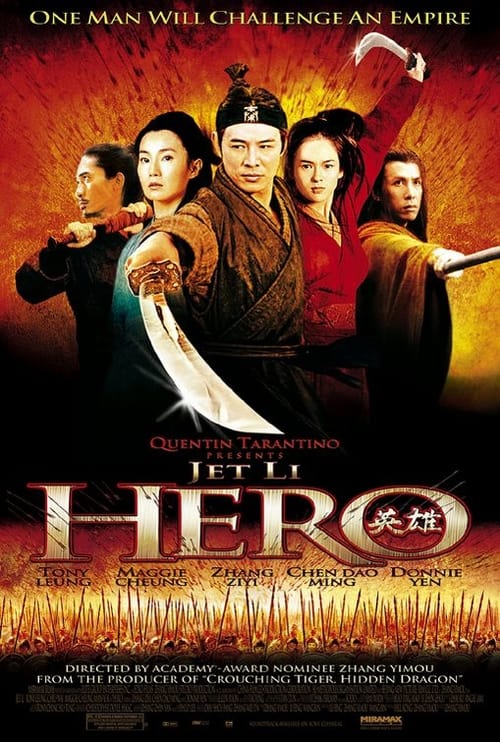
In the ending of the movie "Hero," the protagonist, Nameless, confronts the powerful King of Qin after revealing the truth behind his story. The King, moved by Nameless's tale of sacrifice and the power of unity, ultimately decides to pursue his vision of unifying China, even if it means sacrificing Nameless. The film concludes with Nameless accepting his fate, and the King, now inspired, prepares to lead his people towards a new future.
As the film approaches its climax, the scene shifts to the grand hall of the King of Qin, where Nameless stands before the ruler, having just recounted his story of how he defeated the three assassins: Broken Sword, Flying Snow, and Long Sky. The King, intrigued yet skeptical, listens intently as Nameless describes the events that led to the deaths of the assassins, each moment filled with tension and emotional weight.
Nameless recounts how he faced Broken Sword and Flying Snow in a duel, emphasizing the beauty and tragedy of their love. The visuals are striking, with the vibrant colors of the autumn leaves swirling around them as they fight, symbolizing the fleeting nature of life and love. Nameless's internal conflict is palpable; he admires the strength and skill of his opponents, yet he is driven by a sense of duty to protect his kingdom.
As the story unfolds, the King begins to see the depth of Nameless's motivations. He realizes that the sacrifices made by Broken Sword and Flying Snow were not just for personal glory but for a greater cause. The emotional stakes rise as Nameless reveals that Broken Sword, in his final moments, chose to die for the hope of a united China, a vision that resonates deeply with the King.
In a pivotal moment, Nameless reveals the truth: he did not kill the assassins as he claimed. Instead, they died in a tragic misunderstanding, driven by their own ideals and love for one another. The King, moved by this revelation, grapples with the implications of Nameless's story. He understands that true heroism lies not in the act of killing but in the willingness to sacrifice for a greater good.
The final confrontation occurs as Nameless, having laid bare the truth, prepares to face the consequences of his actions. The King, now inspired by the story of love and sacrifice, acknowledges Nameless's bravery. However, he also recognizes that to unify the fractured states of China, he must be willing to make difficult choices, including the elimination of threats to his rule.
In a moment of quiet acceptance, Nameless understands that his fate is sealed. The King, now resolute in his vision, orders Nameless to be executed, believing that this act will solidify his power and the future of a united China. Nameless, with a serene expression, accepts his fate, embodying the essence of a true hero who understands the weight of his choices.
As the film concludes, the King stands alone, contemplating the path ahead. The final scenes depict him preparing to lead his people, inspired by the sacrifices of Nameless and the assassins. The camera pans out, showing the vast landscape of China, symbolizing the hope for unity and peace, even amidst the sacrifices made along the way.
In the end, Nameless's fate is one of martyrdom, while the King emerges as a leader shaped by the stories of those who came before him. The assassins, though dead, leave behind a legacy of love and sacrifice that will echo through the ages, influencing the future of a nation.
Is there a post-credit scene?
The movie "Hero," directed by Zhang Yimou and released in 2004, does not have a post-credit scene. The film concludes with a powerful and visually stunning finale that encapsulates its themes of sacrifice, honor, and the complexities of truth and deception. After the climactic confrontation between Nameless, the protagonist, and the Emperor, the story wraps up with a poignant resolution that leaves the audience reflecting on the nature of heroism and the cost of peace. The credits roll without any additional scenes or content following them.
What motivates Nameless to confront the King of Qin?
Nameless, a skilled warrior, is motivated by a deep sense of honor and a desire to avenge the deaths of his fellow assassins, Broken Sword and Flying Snow. He seeks to confront the King of Qin not only to fulfill his mission but also to understand the true nature of the King's ambition and the sacrifices made for the unification of China.
How does the relationship between Broken Sword and Flying Snow evolve throughout the film?
The relationship between Broken Sword and Flying Snow is complex and fraught with emotional turmoil. Initially, they are depicted as passionate lovers united in their cause against the King of Qin. However, as the story unfolds, jealousy and betrayal surface, particularly when Flying Snow feels threatened by Broken Sword's growing admiration for Nameless. Their love is ultimately tested by their conflicting loyalties and the tragic consequences of their choices.
What is the significance of the color palette used in the film, particularly in relation to the characters?
The color palette in 'Hero' is meticulously crafted to reflect the emotional states and motivations of the characters. Each segment of the story is dominated by a specific color--red for passion and love, blue for betrayal and sadness, and yellow for honor and sacrifice. These colors not only enhance the visual storytelling but also symbolize the characters' internal struggles and the themes of loyalty and sacrifice that permeate the narrative.
How does the film portray the concept of sacrifice through its characters?
Sacrifice is a central theme in 'Hero,' portrayed through the actions and decisions of its characters. Nameless sacrifices his own life for the greater good, believing that the unification of China under the King of Qin is worth the cost. Similarly, Broken Sword and Flying Snow's tragic end highlights their willingness to sacrifice personal happiness for their ideals and love for one another. The film emphasizes that true heroism often involves profound personal sacrifice.
What role does the King of Qin play in shaping the narrative and the motivations of other characters?
The King of Qin serves as both the antagonist and a catalyst for the actions of other characters. His ambition to unify China drives Nameless to confront him, while also influencing Broken Sword and Flying Snow's decisions. The King's ruthless pursuit of power forces the characters to grapple with their own beliefs about loyalty, love, and the cost of peace, ultimately shaping their destinies and the film's tragic conclusion.
Is this family friendly?
The movie "Hero," directed by Zhang Yimou and released in 2004, is visually stunning and rich in themes of honor, sacrifice, and the complexities of truth. However, it does contain some elements that may be considered objectionable or upsetting for children or sensitive viewers.
-
Violence: The film features several intense and stylized fight scenes, showcasing martial arts combat that can be graphic in nature. While the violence is choreographed beautifully, it may still be unsettling for younger audiences.
-
Death: Characters face death throughout the film, and some scenes depict the aftermath of battles, including fallen warriors. The emotional weight of these moments can be heavy and may evoke sadness.
-
Themes of Betrayal and Sacrifice: The narrative explores deep themes of betrayal, sacrifice, and the moral complexities of loyalty and honor, which may be difficult for younger viewers to fully grasp.
-
Emotional Turmoil: Characters experience significant emotional struggles, including loss and the burden of their choices, which may resonate deeply and provoke strong feelings.
-
Cultural Context: The film is steeped in historical and cultural references that may not be easily understood by younger audiences, potentially leading to confusion about the motivations and actions of the characters.
Overall, while "Hero" is a cinematic masterpiece with breathtaking visuals and profound themes, its content may not be suitable for all children or sensitive viewers.








