
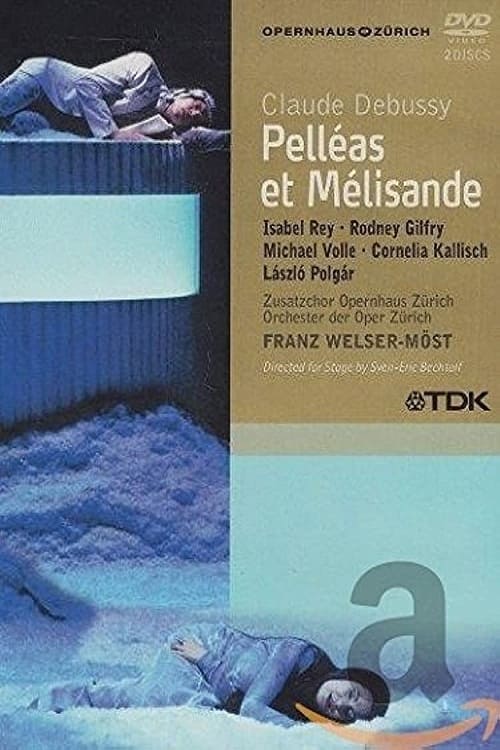







Popular
What is the significance of the underground lake in Pelléas et Mélisande?
How does Golaud's character evolve throughout the film?
What role does the crown play in the relationship between Golaud and Mélisande?
How does the character of Mélisande express her inner turmoil throughout the film?
What is the significance of the final confrontation between Golaud and Pelléas?
Should I watch it?
Ask Your Own Question

What is the plot?
Sorry, we aren't able to watch and write up a full detailed plot yet. Check back in a few days.







What is the ending?
In the ending of the 2004 film "Pelléas et Mélisande," the tragic love story culminates in heartbreak and loss. Pelléas and Mélisande's love is ultimately doomed, leading to a series of tragic events. Golaud, who is consumed by jealousy and rage, confronts Pelléas and kills him. Mélisande, devastated by the loss of Pelléas and the turmoil surrounding her, gives birth to a child but dies shortly after. Golaud is left alone, grappling with the consequences of his actions and the emptiness that follows.
As the film draws to a close, the emotional weight of the characters' fates hangs heavily in the air, underscoring the themes of love, jealousy, and the inevitability of tragedy.
The ending of "Pelléas et Mélisande" unfolds in a series of poignant and heart-wrenching scenes that encapsulate the tragic trajectory of the characters.
Scene 1: The Confrontation The atmosphere is thick with tension as Golaud, driven by jealousy and suspicion, confronts Pelléas in a dimly lit chamber. The air is heavy with unspoken words and unresolved emotions. Golaud's face is a mask of rage and betrayal as he accuses Pelléas of stealing Mélisande's heart. Pelléas, calm yet sorrowful, tries to explain the purity of his love for Mélisande, but Golaud's fury blinds him to reason. In a moment of violent passion, Golaud draws a dagger and, with a swift motion, plunges it into Pelléas. The act is brutal and shocking, echoing the tragic nature of their love story. Pelléas falls to the ground, lifeless, his eyes wide open in disbelief.
Scene 2: Mélisande's Despair The scene shifts to Mélisande, who is in a secluded part of the castle, unaware of the tragedy that has just unfolded. She is alone, her face pale and drawn, reflecting her inner turmoil. As she cradles her newborn child, a sense of foreboding fills the air. The joy of motherhood is overshadowed by the weight of her love for Pelléas and the impending doom that looms over her. When she learns of Pelléas's death, her world shatters. The news hits her like a physical blow, and she collapses, her cries echoing through the castle halls. The camera lingers on her anguished expression, capturing the depth of her sorrow and the profound loss she feels.
Scene 3: The Aftermath In the aftermath of Pelléas's death, Golaud is left to grapple with the consequences of his actions. He wanders the castle, a ghost of his former self, haunted by guilt and regret. The once proud and powerful figure is now diminished, his heart heavy with the realization of what he has done. He seeks out Mélisande, but their reunion is fraught with tension. Mélisande, still reeling from her grief, cannot look at Golaud without seeing the blood on his hands. Their relationship, once filled with love, is now a twisted reflection of betrayal and despair.
Scene 4: Mélisande's Death As Mélisande's health deteriorates, she becomes increasingly frail. In a final, poignant scene, she lies in bed, her body weak and her spirit fading. Golaud stands by her side, a mixture of sorrow and desperation in his eyes. He tries to comfort her, but the chasm between them is insurmountable. Mélisande whispers her last words, expressing her love for Pelléas and her longing for peace. With a final breath, she slips away, leaving Golaud alone with the weight of his actions and the emptiness of his heart.
Scene 5: The Final Reflection The film concludes with Golaud standing in the castle, surrounded by shadows and echoes of the past. The once vibrant halls are now silent, a testament to the tragedy that has unfolded. Golaud's face is etched with grief, and he is left to ponder the futility of his jealousy and the destruction it has wrought. The camera pulls back, revealing the desolate landscape outside, symbolizing the loss and sorrow that permeate the story. The final image lingers, leaving the audience with a profound sense of the characters' fates and the tragic nature of love and loss.
In this haunting conclusion, the fates of Pelléas, Mélisande, and Golaud intertwine, each character marked by the consequences of their desires and actions. The film closes on a note of melancholy, encapsulating the essence of their tragic love story.
Is there a post-credit scene?
The movie "Pelléas et Mélisande" produced in 2004 does not contain a post-credit scene. The film concludes with the emotional and tragic resolution of the story, focusing on the themes of love, loss, and the inevitability of fate. After the final scenes, the credits roll without any additional content or scenes following them. The film leaves the audience to reflect on the poignant events that have unfolded, encapsulating the essence of the original play by Maurice Maeterlinck and the opera by Claude Debussy.
What is the significance of the underground lake in Pelléas et Mélisande?
The underground lake serves as a pivotal setting in the film, symbolizing the depths of emotion and the hidden aspects of the characters' relationships. It is where Pelléas and Mélisande share intimate moments, reflecting their growing bond and the secrecy surrounding their love. The lake's stillness contrasts with the turmoil of their situation, highlighting the tension between their desires and the constraints imposed by their surroundings.
How does Golaud's character evolve throughout the film?
Golaud begins as a seemingly noble character, deeply in love with Mélisande, but as the story progresses, his jealousy and possessiveness become more pronounced. His internal struggle is marked by a growing paranoia about Pelléas and Mélisande's relationship, leading him to commit increasingly desperate acts. This transformation reveals the darker aspects of his personality, showcasing how love can turn into obsession and ultimately lead to tragedy.
What role does the crown play in the relationship between Golaud and Mélisande?
The crown symbolizes Golaud's authority and the weight of his expectations on Mélisande. When he places the crown on her head, it represents both his desire to elevate her status and the constraints of their marriage. Mélisande's discomfort with the crown reflects her struggle for autonomy and her feelings of entrapment within Golaud's world, emphasizing the theme of power dynamics in their relationship.
How does the character of Mélisande express her inner turmoil throughout the film?
Mélisande's inner turmoil is expressed through her physicality and interactions with other characters. She often appears fragile and lost, her movements conveying a sense of vulnerability. Her dialogue is filled with cryptic remarks and a sense of foreboding, revealing her emotional conflict and fear of the consequences of her love for Pelléas. Her haunting presence and ethereal beauty serve to amplify her tragic fate, as she grapples with her feelings of love, guilt, and despair.
What is the significance of the final confrontation between Golaud and Pelléas?
The final confrontation between Golaud and Pelléas is a climactic moment that encapsulates the tragic consequences of jealousy and betrayal. Golaud's rage and desperation culminate in violence, reflecting his inability to control his emotions and the destructive nature of his obsession. This confrontation not only seals the fate of Pelléas but also marks the point of no return for Golaud, as he loses everything he holds dear, leading to a profound sense of loss and regret.
Is this family friendly?
The 2004 film "Pelléas et Mélisande," directed by Arnaud Desplechin, is an adaptation of Maurice Maeterlinck's play and is known for its exploration of complex themes such as love, jealousy, and tragedy. While the film is visually stunning and rich in emotional depth, it does contain elements that may be considered objectionable or upsetting for children or sensitive viewers.
-
Themes of Death and Loss: The narrative revolves around tragic events, including themes of mortality and the impact of loss on the characters, which may be distressing for younger audiences.
-
Emotional Turmoil: Characters experience intense emotional struggles, including jealousy, despair, and unrequited love, which may be difficult for children to fully comprehend or process.
-
Violence and Conflict: There are moments of conflict that may involve physical altercations or aggressive behavior, which could be unsettling.
-
Romantic Tension: The film explores complex romantic relationships that may include themes of infidelity and emotional betrayal, which might not be suitable for younger viewers.
-
Atmospheric Darkness: The overall tone of the film is somber and melancholic, with a haunting atmosphere that may evoke feelings of sadness or discomfort.
These elements contribute to a narrative that is more suited for mature audiences, as it delves into the darker aspects of human relationships and emotions.








