






Popular
How does the protagonist's relationship with his mentor evolve throughout the film?
What motivates the main character in Scratch: The New Sound of Terror?
What role does the underground music scene play in the character's development?
How do the rivalries in the film impact the main character's journey?
What is the significance of the final competition in the story?
Should I watch it?
Ask Your Own Question

What is the plot?
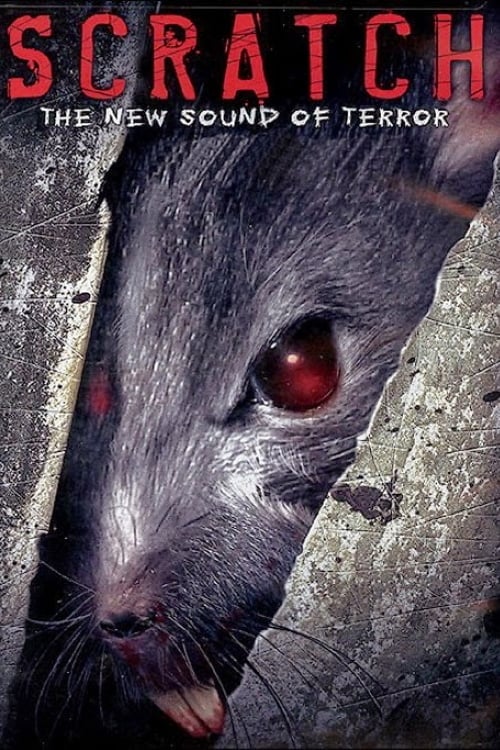
Frank and Katrin return to Frankfurt after the first rat plague, already uneasy before they even understand what is happening again, because the city has begun to feel infected from the inside out. The story opens on a brutal image: a blonde woman is alone, relaxed and vulnerable, and then a rat erupts into her moment of safety, attacking her with shocking speed. The sequence plays like a warning siren. She is bitten to death, and that first killing establishes the pattern that will drive everything that follows: ordinary spaces are no longer safe, and the rats are not behaving like normal animals. The attack is not just a random death; it is the first visible sign that something scientific, engineered, and deeply wrong has been unleashed.
From there, the film shifts into its main setting, a quaint German village near Frankfurt, the kind of place that should feel protected by distance, tradition, and scenery but instead feels trapped in a fog of dread. The town is picturesque in a Gothic way, with castles looming in the background and mist hanging over the roads and rooftops, but beneath that postcard surface the village is tense and disordered. The mayor is preparing for a wedding, and his old army buddies are arriving for the ceremony. Their presence gives the village a strange, almost militarized social energy, as if old history and local power are gathering in one place at the same time. At first, the wedding preparations seem like a separate thread, almost a distraction from the rat problem, but the film slowly uses that celebration to heighten the horror. People are busy, distracted, social, and therefore exposed.
Meanwhile, the true source of the disaster is already in motion. A scientist in town is experimenting on rats, and those experiments are not going well. The rodent plague is not natural; it is genetically engineered, or at least genetically altered into something worse than ordinary vermin. The first death is only the beginning, because the rats begin to attack other residents, and what starts as a single isolated killing rapidly becomes a spreading emergency. The town's normal routines break down under the pressure of the attacks. Doors are no longer barriers, basements and hidden corners become death traps, and every low, dark space seems to promise another sudden strike from the swarm.
Frank and Katrin understand before most others do that this is the same kind of nightmare they faced before, only larger and more deliberate. They are not simply responding to animal attacks; they are following the trail of a recurring plague, one tied to human interference. As they investigate, they try to identify the scientist responsible before the outbreak grows beyond control. Their dynamic carries the film forward: they are the pair who know the danger has a source, and that gives the story a forward momentum that is both procedural and panicked. They move from one clue to the next, from one unsettling sight to another, always trying to stay one step ahead of the infestation.
The tension keeps rising as the village's surface order becomes more and more absurdly fragile. The wedding celebration, the old soldiers, the fog, and the looming castles all create a setting that feels half fairy tale and half war zone. One review description notes that the village seems almost as though war is taking place there, with helicopters overhead and a black-market-style weapons operation in the background. That detail deepens the feeling that the plague is unfolding in a place already burdened by hidden criminal activity, secrecy, and possibly military leftovers. The exact structure of that side plot is not fully preserved, but its effect is clear: the village is not just a victim of the rat attacks, it is a place where human corruption and scientific madness are feeding each other.
As the story progresses, the rat attacks become harder to dismiss. The plague sweeps wider, striking residents who had nothing to do with the initial opening death. Fear becomes communal. The town's vulnerability is exposed in layers: first one woman dies in a private, intimate setting; then other people are attacked in a public setting; then the emergency expands into something that can no longer be treated as a coincidence. Frank and Katrin push harder against the scientist's trail, understanding that the real enemy is not the rats alone but the mind that created them. Their investigation turns the film into a race against time, because every new attack suggests the outbreak is multiplying faster than they can contain it.
The most important revelation arrives clearly: the rodent outbreak is the result of scientific experimentation. The scientist is responsible for unleashing genetically mutated vermin on the area, and this is the central horror of the movie. The rats are evidence made flesh. Their behavior proves that the experiment has escaped control, and their violence reveals the cost of treating living creatures as disposable material. Frank and Katrin are no longer merely solving a series of attacks; they are uncovering the origin of a plague and closing in on the human hand behind it. The film's structure tightens around that realization. Every dark tunnel, every basement, every sudden movement in the frame becomes part of the same mystery: where is the scientist, and how far has he let this go?
The confrontations with the rat threat are relentless. The film repeatedly turns vulnerable spaces into ambush zones, making the audience feel the same claustrophobia as the characters. The rats are not just present; they dominate the rhythm of the story. They strike suddenly, overwhelm people quickly, and force Frank and Katrin into a constant state of defensive urgency. The exact full death tally is not preserved in the available materials, but the opening woman is definitely killed by a rat attack, and the summaries make clear that additional residents are attacked as the plague spreads. What matters narratively is that the deaths are caused by the mutated rats themselves, while the underlying cause is the scientist's manipulation. Human choices are the true source of the bloodshed.
The wedding subplot and the old army friends matter because they create a dramatic contrast between public ritual and private catastrophe. People gather to celebrate, reconnect, and perform normal life while something unnatural is crawling through the edges of the town. That contrast gives several scenes their emotional force: laughter and ceremony are undercut by the knowledge that the rats are nearby, unseen until they strike. The village begins to feel like a sealed container for dread. What was supposed to be a communal moment becomes another layer of vulnerability, because crowds mean more potential victims and more confusion when the attacks begin.
Frank and Katrin continue pressing toward the source, and the film's momentum comes from their refusal to accept the plague as random. They are determined to stop the scientist responsible before the mutated vermin become impossible to suppress. Their search carries the narrative toward a final confrontation that is less about detective work now and more about stopping a catastrophe already in motion. By this point, the rats have become an almost elemental force, but the film keeps insisting that the crisis began with a human decision. The scientist's actions have transformed a town into a battlefield, and the protagonists' task is to force the truth into the open.
The ending details are not fully preserved in the surviving summaries, but the film's shape makes its resolution clear in broad terms. The final confrontation centers on Frank and Katrin closing in on the scientist and trying to end the plague at its source. The story does not leave room for ambiguity about the central conflict: either the scientist is exposed, defeated, or both, and the mutated rats are contained or driven back enough for the immediate danger to pass. What can be stated with confidence is that the climax resolves around the origin of the outbreak rather than around the rats alone, because the film's entire logic is built on the idea that the horror can only end when the human cause is confronted.
The last movement of the film therefore belongs to the emotional aftermath of that struggle. The survivors are left in the shadow of what has happened in their village, a place whose wedding decorations, castle silhouette, and fog-covered streets now seem haunted by the memory of the attacks. The opening death, the spreading plague, the hidden experiment, and the pressure of the investigation all converge in the final stretch. Frank and Katrin's victory is not presented as a clean triumph over nature but as a grim attempt to undo a man-made disaster. The film closes as a sequel should: with the sense that the first plague was never truly gone, only waiting for a new shape, a new sound, and a new way to terrify the people who believed they were safe.
More Movies Like This
Browse All Movies →
What is the ending?
In the ending of "Scratch: The New Sound of Terror," the film culminates in a tense confrontation between the main characters, revealing the consequences of their actions and the impact of their choices. The story concludes with a sense of unresolved tension, leaving the audience to ponder the implications of the characters' journeys.
As the final scenes unfold, we find ourselves in a dimly lit warehouse, the air thick with anticipation. The protagonist, a young man deeply entrenched in the world of underground music, stands at the center of the room, surrounded by his friends and adversaries. The atmosphere is charged, a palpable mix of fear and determination. The stakes are high, as the characters grapple with the repercussions of their previous decisions.
The camera pans to the protagonist's face, capturing the flicker of doubt in his eyes. He reflects on the choices that have led him to this moment, the friendships strained and the loyalties tested. His internal struggle is evident; he is torn between his passion for music and the darker elements that have infiltrated his life.
As the confrontation escalates, the tension reaches a breaking point. The protagonist's friends rally around him, their expressions a blend of fear and resolve. They understand the gravity of the situation, aware that their lives may be forever altered by the outcome of this encounter. The dialogue is sharp, filled with accusations and revelations that lay bare the characters' motivations and fears.
In a climactic moment, the protagonist makes a choice that will define his path. He stands firm, refusing to back down, embodying the spirit of resilience that has characterized his journey. The camera captures the intensity of the moment, the close-ups revealing the sweat on their brows and the determination in their eyes.
As the dust settles, the fate of each character becomes clear. Some emerge from the confrontation with a renewed sense of purpose, while others are left grappling with the consequences of their actions. The protagonist, though scarred by the experience, finds a glimmer of hope in the bonds he has forged with his friends. They stand together, united in their shared struggle, ready to face whatever challenges lie ahead.
The film closes on a haunting note, the final shot lingering on the protagonist's face as he contemplates the future. The music fades, leaving the audience with a sense of uncertainty, a reminder of the complexities of life and the choices that shape our destinies. The ending encapsulates the film's exploration of the intersection between passion and peril, leaving viewers to reflect on the characters' journeys and the paths they have chosen.
Is there a post-credit scene?
The movie "Scratch: The New Sound of Terror," produced in 2004, does not contain a post-credit scene. The film concludes its narrative without any additional scenes or content after the credits roll. The focus remains on the exploration of the themes and characters throughout the main storyline, leaving no further revelations or moments to be uncovered in a post-credit sequence.
How does the protagonist's relationship with his mentor evolve throughout the film?
Initially, the protagonist looks up to his mentor as a source of inspiration and guidance in the world of DJing. However, as the story progresses, tensions arise due to differing artistic visions and the mentor's increasingly controlling nature, leading to a pivotal confrontation that tests their bond.
What motivates the main character in Scratch: The New Sound of Terror?
The main character, a young DJ, is driven by a deep passion for music and a desire to innovate within the hip-hop scene. His journey is fueled by the need to express himself creatively and to push the boundaries of sound, which leads him into a world of competition and conflict.
What role does the underground music scene play in the character's development?
The underground music scene serves as both a backdrop and a catalyst for the protagonist's growth. It exposes him to diverse influences and challenges, pushing him to refine his skills and confront his fears, ultimately shaping his identity as an artist.
How do the rivalries in the film impact the main character's journey?
Rivalries in the film create significant obstacles for the protagonist, forcing him to confront his insecurities and push his creative limits. These conflicts not only heighten the stakes of his journey but also serve as a means for him to discover his true potential and resilience.
What is the significance of the final competition in the story?
The final competition represents the culmination of the protagonist's journey, showcasing his growth as an artist and his ability to overcome personal and external challenges. It is a moment of self-discovery where he must confront his fears and prove his worth, both to himself and to the music community.
Is this family friendly?
"Scratch: The New Sound of Terror" is a documentary that delves into the world of hip-hop and the art of scratching, focusing on its cultural significance and the experiences of various artists. While it primarily explores music and creativity, there are elements that may not be suitable for all audiences, particularly children or sensitive viewers.
-
Language: The film features strong language, including profanity, which may be inappropriate for younger viewers.
-
Violence and Crime: There are discussions and depictions of violence and crime associated with the hip-hop culture, including references to gang activity and street life.
-
Substance Use: Some scenes may depict or reference drug use, which could be unsettling for sensitive viewers.
-
Emotional Themes: The film touches on themes of struggle, poverty, and personal hardship, which may evoke strong emotions and could be distressing for some.
-
Cultural Context: The documentary presents a raw and unfiltered look at the realities of the artists' lives, which may include graphic or intense moments that reflect the challenges they face.
Overall, while the film is an exploration of music and culture, its content may not be suitable for all children or sensitive individuals due to the mature themes and language presented.








