
































Loading additional questions...
Popular
What motivates the character of Professor Alex, and how does his background influence his actions throughout the film?
How does the relationship between Alex and his students evolve throughout the film?
What role does the character of the casino owner play in the story, and how does he impact the main characters?
What specific challenges do the students face as they learn to count cards, and how do these challenges affect their dynamics?
How does the film depict the consequences of gambling addiction through its characters?
Should I watch it?
Ask Your Own Question

What is the plot?
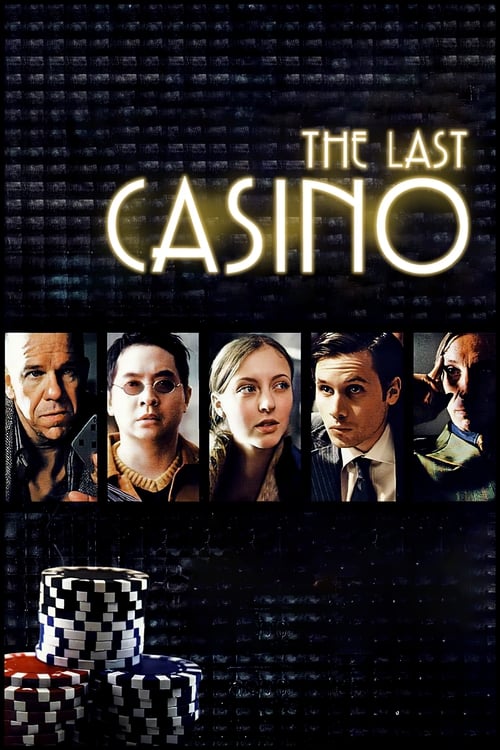
Doug Barnes opens the story already in free fall, a gifted mathematics professor whose gambling addiction has dragged him into a dangerous debt he can no longer outrun. He has been caught counting cards at his local casino and is blacklisted, which means his own face can no longer safely sit at a blackjack table. In the hard fluorescent glow of casino security and the colder, uglier world of debt collection, Barnes learns that the man financing his habits wants his money back now, not later. That man is the vicious loan shark Orr, sometimes described as "the Usurer," and Barnes's panic gives the whole film its engine: if he cannot pay, he is finished.
Barnes's first instinct is not to surrender but to improvise. He tells Orr that he can make the money back with a different kind of team, one built from people who do not look like gamblers and who can be taught to count cards. Orr, sensing there may still be profit in Barnes's desperation, allows the plan to continue and puts money behind it. Barnes now moves through the university with the furtive energy of a man who is both teacher and con artist, scanning the minds around him for the right combination of brilliance and pliability. He finds three students: George, Scott, and Elyse.
George is introduced as an almost absurdly gifted memorizer, someone whose mental range and speed seem unnatural, the kind of student who can retain patterns instantly and perform under pressure. Scott is the strongest pure academic performer, the one who scores high in the tests and handles calculations cleanly. Elyse, who works as a waitress and studies AI, proves her worth in a small, vivid test when Barnes feeds her a complicated pizza order and she remembers it without hesitation. Their talents are different, but Barnes only needs one thing from all of them: the ability to process numbers, stay calm, and obey instructions while money, noise, and temptation swirl around them. He recruits them less like students and more like pieces in a machine he is assembling in secret.
At first, Barnes's pitch is framed almost like a shortcut to easy money. He promises the students they can earn a large nightly payout, around $1,000 a night in some accounts, for what he describes as "a little simple math." He teaches them card counting, the discipline of tracking the changing ratios of cards in play and using that knowledge to make smarter bets. The training is not glamorous; it is repetitive, exacting, and mentally exhausting. Barnes drills them on numbers, table behavior, cover identities, and the choreography needed to avoid looking like a coordinated unit. He gives them separate identities so they can move like strangers in the casino, all while working as one hidden organism.
The first test is tense. Barnes takes them into the casino world he knows so well, but the environment is now hostile to him. Surveillance cameras, floor staff, and the omnipresent "eye in the sky" represent the unseen machinery of casino control. Barnes's own earlier blacklisting hangs over every move. The team is still raw, and George in particular becomes overwhelmed when the pressure of the table, the pace of the cards, and the sensory overload hit at once. Elyse steps in to stabilize things, showing both quick thinking and the beginning of a real bond with the group. The moment is crucial because it reveals that the operation will not fail because the math is wrong; it will fail because human nerves are fragile.
Yet the early runs go well enough to create momentum. The students start winning, and for a brief stretch the scheme feels almost elegant: young minds applying discipline against a system built to exploit impulse. Barnes watches the money accumulate and, for a moment, the fantasy of solvency and control seems within reach. But casino gambling is never just arithmetic, and the film quickly shows that success breeds exposure. The students become bolder, the operation expands, and they begin traveling to major casinos across Ontario and Quebec, trying to keep moving before anyone catches on. The road-travel structure gives the story a steady pulse: new tables, new lights, new risks, the same secret repeated in different cities.
As the money comes in, the moral and emotional pressure increases rather than decreases. Barnes is still addicted, still compromised, and still dependent on Orr, whose patience is thin. The debt itself becomes a moving target in the retellings of the plot: Barnes's obligation is described as growing from an earlier sum to about $100,000, while Orr's broader demands can reach around half a million Canadian dollars. What matters is not the exact arithmetic but the feeling of escalation. Barnes is no longer just trying to settle a debt; he is trapped in a countdown. Orr gives him roughly one week to produce the money, and that deadline hangs over every scene like a blade.
The deadline sharpens the characters. Barnes's mask of calm professor authority cracks more often. The students, initially thrilled by the money and the danger, begin to sense how quickly easy profit turns into fear. They are no longer just playing against the house; they are playing against a man who has already shown he can be physically violent. One of the most brutal moments in the story comes during Barnes's confrontation with Orr, when the loan shark makes his warning concrete by taking the top of one of Barnes's fingers in a coercive act meant to remind him who controls the debt. The injury is small compared with a killing, but that is exactly why it feels so sickening: it is intimate, deliberate, and meant to linger. Orr does not need to murder Barnes to own him. He just needs to make the cost visible.
That threat redefines every subsequent decision. Barnes is not only hiding from casinos now; he is hiding from the consequences of failure. He pushes the students harder, and in one of the film's key revelations, it becomes clear that the entire operation rests on Barnes's own compulsive gambling and self-destruction. He is not a noble mentor sacrificing himself for bright minds. He is a man who has created a criminal solution to a personal addiction and then convinced himself it is temporary. The students, for their part, are not recruited because Barnes believes in their futures, but because their minds make them useful. The irony is sharp: the mathematics classroom becomes a pipeline into organized gambling, and academic intelligence is repurposed as a weapon against casinos.
The students eventually realize the scale of the danger, and another turning point arrives when they choose to protect themselves rather than continue blindly under Barnes's command. In the available plot material, the team decides to pack up and bring the money they have to Barnes, but they also arrange for Orr to meet them there so Barnes cannot pocket the winnings or lie his way out. That decision is a quiet act of rebellion. It shows that the students are no longer children following a professor's promise; they are participants who have learned enough to distrust him. The trust fractures in a practical, almost businesslike way, which makes it more painful than an explosive argument would have been.
When the money is finally handed over, the confrontation becomes a trap laid for Barnes. Orr is there, the students are there, and the whole arrangement is designed to force the truth into the open. The moment carries the tension of a final poker reveal: everyone has played a hand, and everyone is watching for the bluff. Barnes, cornered, makes his last big lie about the debt. Then comes the film's central twist. The movie concludes with the students discovering that Barnes lied about the amount owed. The debt was not what he claimed, and the true scale of his desperation has been distorted all along. Barnes has been inflating the danger to keep the team working, to keep himself in control, and perhaps to buy time for his own weakness. The revelation detonates the emotional logic of the story. The students realize that the professor they trusted has manipulated them, not merely as gamblers but as instruments in his own private crisis.
That ending lands not as a triumphant casino heist but as a bitter exposure of character. Barnes's big plan has delivered cash, but not redemption. Orr's violence has made the stakes real, yet the greatest damage may be moral rather than physical: Barnes has lied to everyone, including those who risked themselves for him. The final emotional movement turns away from the table and toward the students, especially George and Elyse. George gives Elyse money to help with school, a quiet gesture that carries the film's last bit of human warmth. The gesture feels like a partial repair, a recognition that the student relationship was real even if Barnes's version of it was poisoned by manipulation. The two part ways, and the story closes on separation rather than victory, with the future left open but scarred by what they have learned.
No deaths occur in the available plot of The Last Casino. The film's danger is expressed through debt, intimidation, blacklisting, and the threat of violence rather than through bodies on the floor. That makes the finger mutilation and Orr's menacing presence feel even more important, because the film constantly suggests that if Barnes fails, the consequences will become far worse. The climax is not a massacre or a shootout. It is a moral collapse: a professor exposed as a gambler, a debt exposed as a lie, and students who discover they have been enlisted into a trap built from desperation and deceit. The final scene leaves Barnes diminished, Orr still dangerous, and the students freer but disillusioned, having turned a scheme for easy money into a lesson in how quickly intelligence can be exploited when greed and fear take control.









What is the ending?
Is there a post-credit scene?
What motivates the character of Professor Alex, and how does his background influence his actions throughout the film?
Professor Alex, played by Charles Martin Smith, is a disillusioned mathematics professor who feels undervalued in his academic career. His motivation stems from a desire to prove his worth and to escape the mundane life he leads. This drive leads him to teach a group of students about card counting, which he sees as a way to regain control and excitement in his life. His background in mathematics and his past failures fuel his determination to succeed in the high-stakes world of gambling.
How does the relationship between Alex and his students evolve throughout the film?
Initially, Alex's relationship with his students is strictly academic, as he views them as a means to an end in his quest for validation. However, as they delve deeper into the world of gambling, a bond forms based on shared experiences and the thrill of their illicit activities. Tensions arise as the stakes get higher, revealing the students' differing motivations and moral compasses, which ultimately tests their loyalty to Alex and each other.
What role does the character of the casino owner play in the story, and how does he impact the main characters?
The casino owner, portrayed by a supporting actor, serves as both an antagonist and a catalyst for the main characters' actions. His presence represents the high-stakes environment that Alex and his students are trying to navigate. As they begin to win significant amounts of money, the casino owner's increasing suspicion and aggressive tactics create tension and danger, forcing the characters to confront the consequences of their actions and the risks involved in their gambling scheme.
What specific challenges do the students face as they learn to count cards, and how do these challenges affect their dynamics?
As the students learn to count cards, they face various challenges, including mastering the technique itself, dealing with the pressure of real gambling situations, and managing their personal lives outside of the casino. These challenges lead to conflicts among the group, as some students struggle with the moral implications of cheating the casino, while others become increasingly obsessed with winning. This strain on their relationships highlights the differing motivations and ethical boundaries within the group, ultimately affecting their teamwork and trust.
How does the film depict the consequences of gambling addiction through its characters?
The film illustrates the consequences of gambling addiction primarily through the character arcs of the students. As they become more involved in the gambling world, some begin to exhibit signs of addiction, prioritizing their wins over personal relationships and responsibilities. This descent into obsession leads to emotional turmoil, financial strain, and conflicts with each other, showcasing the darker side of gambling and the impact it has on their lives. The film uses these character developments to highlight the fine line between thrill-seeking and addiction.









