
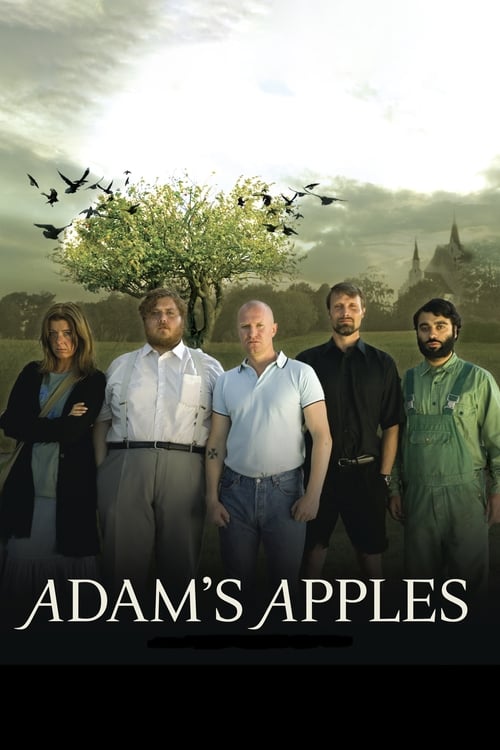













Popular
What is the significance of the apple tree in Adam's Apples?
How does Adam's relationship with the priest, Ivan, evolve throughout the film?
What role does the character of the neo-Nazi play in Adam's journey?
How does the film portray the theme of forgiveness through the character of Adam?
What is the impact of the community's eccentric characters on Adam's transformation?
Should I watch it?
Ask Your Own Question

What is the plot?
Sorry, we aren't able to watch and write up a full detailed plot yet. Check back in a few days.



What is the ending?
In the ending of "Adam's Apples," Adam, the neo-Nazi, faces the consequences of his actions and beliefs. After a series of events that challenge his worldview, he ultimately finds himself in a moment of reckoning. The film concludes with a twist that reveals the true nature of the characters and their struggles, leading to a resolution that intertwines fate and faith.
As the final scenes unfold, Adam is confronted by the reality of his violent past and the impact it has had on those around him. The film culminates in a dramatic confrontation that forces Adam to confront his own beliefs and the choices he has made. The fate of the characters is sealed in a way that reflects their journeys throughout the film, with Adam facing a pivotal moment that could lead to redemption or further despair.
The ending of "Adam's Apples" begins with a tense atmosphere in the small, rural church where Adam, the main character, has been staying. The church, run by the optimistic and unwavering priest Ivan, has been a place of unexpected transformation for Adam, who initially arrives with a hardened heart and a violent past.
As the story progresses, Adam's interactions with the other residents of the church--particularly the simple-minded but kind-hearted Khalid, the troubled and alcoholic former convict, and the deeply faithful Ivan--begin to chip away at his cynical exterior. However, Adam remains resistant, often mocking the faith and optimism of those around him.
In the final act, the tension escalates when Adam's violent tendencies resurface. He is confronted by the consequences of his actions, particularly when he learns that Khalid, who has been a source of innocence and hope, has been deeply affected by Adam's presence. The church community, which has been a refuge for Adam, becomes a battleground for his internal conflict.
The climax occurs when Adam's violent past catches up with him. A confrontation with a group of neo-Nazis leads to a violent showdown. In this moment, Adam is forced to choose between his old life and the new path that Ivan and the church represent. The stakes are high, and the emotional weight of the moment is palpable as Adam grapples with his identity and the possibility of change.
As the dust settles, the fate of the characters becomes clear. Adam, having faced the consequences of his actions, is left to reflect on his choices. The film's final moments reveal a twist: Ivan, who has been a beacon of hope and faith throughout the story, is revealed to have a deeper understanding of the struggles of those around him. His unwavering belief in redemption and the power of faith stands in stark contrast to Adam's nihilism.
In the closing scenes, Adam's journey comes full circle. He is left with the realization that his past cannot be erased, but he has the opportunity to choose a different path moving forward. The film ends on a note of ambiguity, leaving the audience to ponder the complexities of faith, redemption, and the human capacity for change. Each character's fate is intertwined with Adam's, highlighting the interconnectedness of their struggles and the potential for transformation, even in the darkest of circumstances.
Is there a post-credit scene?
The movie "Adam's Apples," produced in 2005, does not have a post-credit scene. The film concludes with its final moments, leaving the audience with the resolution of the main narrative and the fates of the characters without any additional scenes after the credits. The story wraps up with a focus on themes of faith, redemption, and the complexities of human nature, culminating in a powerful and thought-provoking ending that does not extend into a post-credit sequence.
What is the significance of the apple tree in Adam's Apples?
The apple tree in Adam's Apples serves as a central symbol throughout the film. It represents the struggle between good and evil, as well as the idea of redemption. Adam, the main character, is tasked with nurturing the tree, which reflects his own journey of personal growth and the challenges he faces in the community. The tree's health and growth parallel Adam's internal transformation and the impact of the people around him.
How does Adam's relationship with the priest, Ivan, evolve throughout the film?
Initially, Adam views Ivan, the priest, as naive and overly optimistic, which frustrates him. However, as the story progresses, Adam begins to see Ivan's unwavering faith and kindness as a source of strength. Their relationship evolves from one of skepticism to a deeper understanding, as Adam confronts his own beliefs and the darkness in his life. Ivan's influence helps Adam to reconsider his choices and ultimately leads him toward a path of redemption.
What role does the character of the neo-Nazi play in Adam's journey?
The neo-Nazi character, who is also a resident of the community, serves as a foil to Adam. His extremist views and violent tendencies contrast sharply with the themes of forgiveness and acceptance that Ivan promotes. Throughout the film, the neo-Nazi's interactions with Adam highlight the struggle between hatred and love, ultimately pushing Adam to confront his own prejudices and the consequences of his actions. This character's presence adds tension and conflict, forcing Adam to grapple with his own identity and choices.
How does the film portray the theme of forgiveness through the character of Adam?
Adam's journey is marked by his initial inability to forgive those who have wronged him, which is a significant aspect of his character development. As he interacts with Ivan and the other residents, he is challenged to let go of his anger and resentment. The film portrays forgiveness as a gradual process for Adam, culminating in moments where he must confront his past and the people he has hurt. This theme is intricately woven into his relationships, particularly with Ivan, who embodies the power of forgiveness.
What is the impact of the community's eccentric characters on Adam's transformation?
The eccentric characters in the community, including the priest Ivan, the neo-Nazi, and others, play a crucial role in Adam's transformation. Each character represents different facets of humanity, from kindness to hatred, and their interactions with Adam force him to reflect on his own beliefs and actions. Their quirks and unique perspectives challenge Adam's cynical worldview, ultimately leading him to question his own choices and embrace a more compassionate outlook on life. This dynamic creates a rich tapestry of relationships that significantly influence Adam's journey.
Is this family friendly?
"Adam's Apples," produced in 2005, is a dark comedy that explores themes of faith, redemption, and the struggle between good and evil. While it has moments of humor, it also contains several elements that may be objectionable or upsetting for children or sensitive viewers.
-
Violence and Threats: The film includes scenes of violence, including physical confrontations and threats that may be disturbing.
-
Dark Humor: The humor often revolves around serious and sensitive topics, which may not be appropriate for younger audiences.
-
Substance Abuse: There are references to alcohol and drug use, which are depicted in a way that may be unsettling.
-
Death and Suicide: The film addresses themes of death and includes discussions about suicide, which can be distressing.
-
Religious Themes: The portrayal of faith and the challenges faced by the characters may be complex and could provoke strong reactions.
-
Moral Ambiguity: The characters often grapple with moral dilemmas, which may be confusing or troubling for younger viewers.
Overall, while "Adam's Apples" has comedic elements, its darker themes and content may not be suitable for a family-friendly viewing experience.







