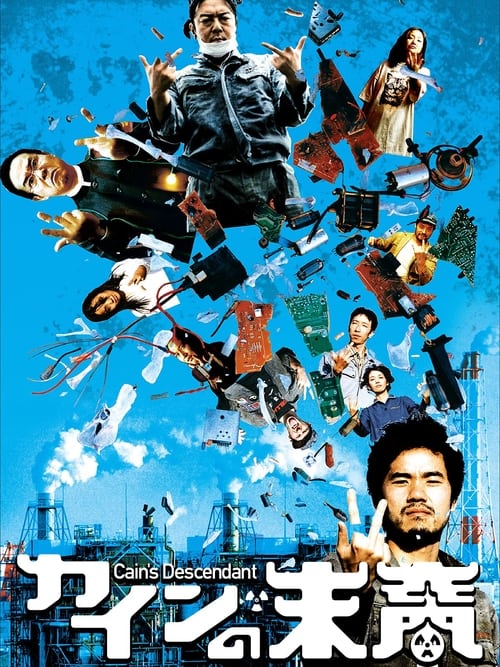








Popular
What role does the character of Sarah play in Jacob's journey?
What motivates the main character, Jacob, throughout the film?
How does the relationship between Jacob and his father evolve in the film?
What are the key events that lead Jacob to discover the truth about his family's past?
How does the film depict the theme of legacy through the character of Jacob?
Should I watch it?
Ask Your Own Question

What is the plot?
Sorry, we aren't able to watch and write up a full detailed plot yet. Check back in a few days.
More Movies Like This
Browse All Movies →








What is the ending?
In the ending of "Cain's Descendant," the main character, Jacob, confronts his dark legacy and the cycle of violence that has plagued his family. After a series of intense confrontations, Jacob makes a pivotal choice that leads to a tragic resolution, ultimately breaking the cycle but at a great personal cost.
As the film reaches its climax, Jacob stands in a dimly lit room, the air thick with tension. He is surrounded by remnants of his family's violent past, photographs and mementos that serve as haunting reminders of the bloodshed that has defined his lineage. The weight of his ancestors' sins presses heavily on him, and he grapples with the decision of whether to continue the cycle of vengeance or to seek redemption.
In a pivotal moment, Jacob faces off against his brother, who embodies the very violence that Jacob has tried to escape. Their confrontation is charged with raw emotion, each brother representing different paths: one clinging to the past and the other yearning for a future free from bloodshed. The dialogue is sharp, filled with accusations and revelations, as they both confront their shared history and the choices that have led them to this moment.
As the confrontation escalates, Jacob makes a desperate choice. He chooses to sacrifice himself, believing that by doing so, he can finally put an end to the cycle of violence that has haunted their family for generations. In a heart-wrenching scene, he embraces his brother one last time, a gesture filled with both love and sorrow, before stepping into the line of fire. The act is both tragic and redemptive, as Jacob's sacrifice symbolizes a break from the past.
The film concludes with a somber tone. The camera lingers on the aftermath of the confrontation, capturing the stillness that follows the storm. Jacob's brother, left alone, is forced to confront the reality of his actions and the loss of his brother. The weight of their family's legacy hangs heavy in the air, suggesting that while Jacob's sacrifice may have ended the cycle of violence, the scars of their past will linger.
In the final scenes, the audience is left with a sense of unresolved tension. Jacob's fate is sealed, but the impact of his choice resonates deeply with his brother, who must now navigate a world without him. The film closes on a haunting note, emphasizing the themes of sacrifice, redemption, and the enduring struggle against one's own nature.
Is there a post-credit scene?
In the movie "Cain's Descendant," there is no post-credit scene. The film concludes its narrative without any additional scenes or content after the credits roll. The story wraps up with a focus on the central themes of family, legacy, and the struggle between good and evil, leaving the audience to reflect on the characters' journeys and the implications of their choices.
What role does the character of Sarah play in Jacob's journey?
Sarah serves as both a love interest and a moral compass for Jacob. Her unwavering support and belief in his quest for truth provide him with the strength to face his fears. As Jacob becomes increasingly consumed by his family's past, Sarah's concern for his well-being highlights the emotional toll of his journey, creating a poignant contrast between love and obsession.
What motivates the main character, Jacob, throughout the film?
Jacob, the protagonist, is driven by a deep-seated need to uncover the truth about his family's dark legacy. As he grapples with the weight of his ancestry, he is haunted by visions and memories that compel him to confront the sins of his forefathers. His internal struggle is marked by a desire for redemption and a fear of repeating the mistakes of the past.
How does the relationship between Jacob and his father evolve in the film?
Initially, Jacob's relationship with his father is strained, filled with tension and unspoken resentment. As Jacob delves deeper into the family's history, he confronts his father's secrets, leading to explosive confrontations. This journey ultimately forces them to reconcile their differences, as both characters come to terms with their shared legacy and the impact of their choices.
What are the key events that lead Jacob to discover the truth about his family's past?
Jacob's journey begins with a series of unsettling dreams and encounters that hint at his family's dark history. Key events include finding an old family journal that reveals hidden secrets, a confrontation with a local historian who knows about the family's legacy, and a climactic visit to the site of a tragic event from the past. Each revelation pushes Jacob closer to understanding the full extent of his family's sins.
How does the film depict the theme of legacy through the character of Jacob?
The film intricately weaves Jacob's personal struggles with the broader theme of legacy. Through flashbacks and haunting visions, viewers witness how Jacob is burdened by the actions of his ancestors. His journey is marked by moments of self-reflection, where he grapples with the question of whether he can break free from the cycle of violence and guilt that has plagued his family for generations.
Is this family friendly?
"Cain's Descendant," produced in 2007, is not considered family-friendly due to its mature themes and content. The film explores dark and complex issues, which may be upsetting for children or sensitive viewers.
Potentially objectionable or upsetting aspects include:
- Violence: The film contains scenes of physical altercations and confrontations that may be intense or graphic.
- Themes of Betrayal: Emotional and psychological manipulation is a recurring theme, which may be distressing for younger audiences.
- Mature Language: The dialogue includes strong language that may not be suitable for children.
- Dark Emotional Themes: The exploration of familial conflict, guilt, and moral dilemmas can be heavy and unsettling.
- Death and Loss: The film addresses themes of mortality and the impact of loss on characters, which can be emotionally charged.
These elements contribute to a tone that is more appropriate for mature audiences rather than children.