
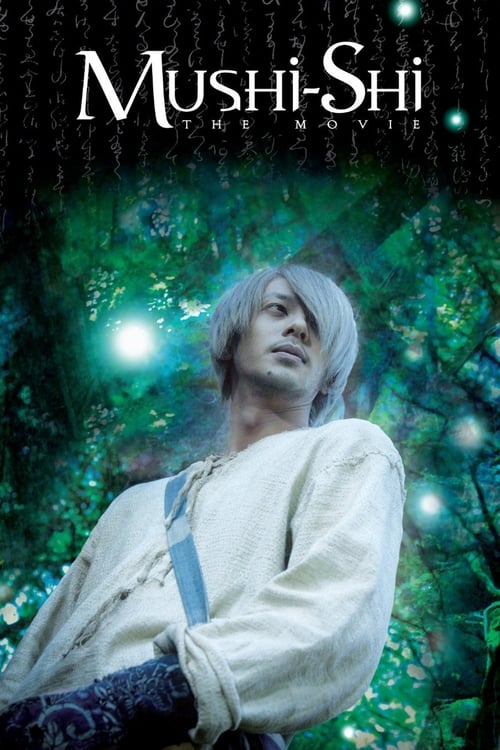













Popular
What is the significance of the Mushi in the film?
How does Ginko's character develop throughout the film?
What role does the character of the girl with the Mushi play in the story?
What is the relationship between Ginko and the other Mushi Masters?
How does the film depict the connection between humans and nature?
Should I watch it?
Ask Your Own Question

What is the plot?
Sorry, we aren't able to watch and write up a full detailed plot yet. Check back in a few days.
More Movies Like This
Browse All Movies →




What is the ending?
In the ending of "Mushi-Shi: The Movie," Ginko confronts the Mushi known as the "Kagirohi," which has been causing a series of mysterious events. He helps a young girl named Tanyuu, who has been affected by the Mushi, and ultimately finds a way to restore balance. The film concludes with Ginko continuing his journey, reflecting on the nature of Mushi and the interconnectedness of life.
As the film approaches its conclusion, Ginko, the protagonist, finds himself in a dense forest, where the air is thick with the presence of Mushi. He has been tracking the elusive Kagirohi, a Mushi that has the ability to manipulate light and shadow, creating illusions that can ensnare the unwary. The atmosphere is heavy with tension, as Ginko understands the potential danger this Mushi poses not only to him but to the surrounding villagers who have been affected by its presence.
In a pivotal scene, Ginko encounters Tanyuu, a young girl who has been deeply impacted by the Kagirohi. She is frail and haunted, her eyes reflecting a mix of fear and curiosity. Ginko, with his calm demeanor, reassures her, explaining the nature of Mushi and how they exist in harmony with the world, despite their sometimes harmful effects. Tanyuu's emotional state shifts from despair to a flicker of hope as Ginko shares his knowledge, revealing his deep understanding of the Mushi's role in the ecosystem.
As they delve deeper into the forest, Ginko and Tanyuu come across a clearing where the Kagirohi manifests in its full form, a shimmering entity that dances between light and shadow. The visual spectacle is breathtaking, with beams of light piercing through the trees, creating an ethereal glow. Ginko, aware of the Mushi's power, approaches it cautiously, his heart racing with both fear and determination. He understands that to confront the Kagirohi, he must not only rely on his knowledge but also connect with Tanyuu, who has a unique bond with the Mushi.
In a moment of clarity, Tanyuu steps forward, her voice steady as she calls out to the Kagirohi. She expresses her desire to understand it, to coexist rather than to fear. This act of bravery resonates with the Mushi, and in response, it begins to reveal its true nature. The shadows around them shift, and Ginko watches as Tanyuu's connection with the Mushi transforms the atmosphere, allowing for a moment of peace and understanding.
As the confrontation reaches its climax, Ginko uses his knowledge of Mushi to guide Tanyuu in a ritual that harmonizes their energies. The Kagirohi, sensing the sincerity of their intentions, begins to dissipate, its form breaking apart into glimmers of light that scatter into the forest. The oppressive atmosphere lifts, and the forest seems to breathe a sigh of relief. Tanyuu, now free from the Mushi's influence, feels a sense of liberation and newfound strength.
In the aftermath, Ginko and Tanyuu stand together, the forest around them transformed. Tanyuu expresses her gratitude, her spirit renewed. Ginko, with a gentle smile, reassures her that the journey of understanding Mushi is ongoing, and she has taken a significant step forward. He encourages her to embrace her connection with nature and the Mushi, as they are all part of a larger cycle of life.
As the film concludes, Ginko prepares to continue his travels, a solitary figure against the backdrop of the vast forest. He reflects on the experiences he has had, the lives he has touched, and the mysteries of the Mushi that still await him. The final scene captures him walking away, a sense of purpose in his stride, as the screen fades to black, leaving the audience with a lingering sense of wonder about the world of Mushi and the delicate balance of life.
Is there a post-credit scene?
The movie "Mushi-Shi: The Movie," released in 2007, does not contain a post-credit scene. The film concludes its narrative without any additional scenes or content after the credits roll. The story wraps up with a sense of closure, focusing on the journey of Ginko, the main character, as he continues his exploration of the mysterious world of mushi and the connections between humans and these ethereal creatures. The absence of a post-credit scene aligns with the film's contemplative and serene tone, leaving viewers to reflect on the themes of nature, existence, and the unseen forces that shape life.
What is the significance of the Mushi in the film?
In 'Mushi-Shi: The Movie', Mushi are ethereal creatures that exist in the natural world, often unseen by humans. They embody the essence of life and nature, influencing the environment and the lives of those who encounter them. The protagonist, Ginko, is a Mushi Master who seeks to understand these beings and their impact on humanity. His journey reveals the delicate balance between humans and Mushi, highlighting themes of coexistence and the mysteries of nature.
How does Ginko's character develop throughout the film?
Ginko, portrayed as a calm and introspective figure, evolves as he encounters various individuals affected by Mushi. His initial detachment gives way to a deeper understanding of human emotions and connections. Through his interactions, particularly with the characters he helps, Ginko grapples with his own loneliness and the burden of knowledge. His character arc culminates in a greater appreciation for the bonds between people and the natural world.
What role does the character of the girl with the Mushi play in the story?
The girl with the Mushi, who is central to one of the film's narratives, represents the intersection of human life and the Mushi. She is afflicted by a Mushi that causes her to experience visions and a unique connection to nature. Her plight draws Ginko into her world, where he must navigate the complexities of her condition and the emotional turmoil it brings. Her character serves as a catalyst for Ginko's growth and understanding of the Mushi's influence on human existence.
What is the relationship between Ginko and the other Mushi Masters?
Ginko's relationship with other Mushi Masters is complex and often marked by a sense of rivalry and respect. Throughout the film, he encounters other practitioners who have differing philosophies regarding Mushi. These interactions challenge Ginko's views and force him to confront the ethical implications of his work. The dynamics between them highlight the varying approaches to understanding and coexisting with Mushi, ultimately enriching Ginko's character and his mission.
How does the film depict the connection between humans and nature?
The film intricately weaves the connection between humans and nature through its portrayal of Mushi and their interactions with people. Each story arc illustrates how Mushi influence human lives, often in profound and mysterious ways. The cinematography captures the beauty of the natural world, emphasizing the harmony and discord that can exist between humans and their environment. This connection is central to Ginko's journey, as he seeks to bridge the gap between understanding Mushi and the human experience.
Is this family friendly?
"Mushi-Shi: The Movie," produced in 2007, is generally considered family-friendly, but it does contain some elements that may be unsettling for younger viewers or sensitive individuals. Here are a few aspects to consider:
-
Themes of Death and Loss: The film explores themes of mortality and the transient nature of life, which may be heavy for children to process.
-
Mysterious Creatures: The mushi, ethereal creatures central to the story, can be depicted in ways that might be eerie or unsettling, particularly for those who are sensitive to supernatural or fantastical elements.
-
Isolation and Loneliness: Characters experience feelings of isolation and emotional turmoil, which may resonate deeply and evoke sadness.
-
Visual Imagery: Some scenes feature dark or haunting visuals that could be disturbing, particularly in the context of the mushi's interactions with humans.
-
Nature's Indifference: The film presents nature as a powerful and sometimes indifferent force, which may be unsettling for those who view nature as solely benevolent.
Overall, while the film is not overtly graphic or violent, its contemplative and sometimes somber tone may require parental guidance for younger audiences.








