










Popular
What is the relationship between Madhuchandralekha and the main antagonist in the film?
How does Madhuchandralekha's character evolve throughout the film?
What role does music play in the development of Madhuchandralekha's character?
What are the key turning points in Madhuchandralekha's relationship with her love interest?
How does the setting influence the events of Madhuchandralekha's story?
Should I watch it?
Ask Your Own Question

What is the plot?
Madhavan stands in front of a semicircle of village girls, the late‑afternoon light slanting through the tiled roof of the small music hall. The air is thick with dust motes and the sweat of a Kerala summer. He taps the harmonium gently, gives the first note, and the girls respond in a hesitant chorus. Their voices waver, grow stronger, then suddenly skid painfully out of tune when one girl, short and disheveled, comes in too loud and too late.
He winces, stopping the music. The other girls stifle their giggles. The short girl looks around defiantly, chewing on something, her jaw working sideways. Red paan juice stains the corner of her mouth.
"Who sang that?" Madhavan asks, as mildly as he can.
She thrusts up her hand. "I sang, master," she says in rough village Malayalam, unashamed. "You told us to sing, so I sang."
"That is not singing," one of the other girls mutters, and the room breaks into snickers.
The girl glares at them, steps forward and points at her own chest. "My name is Chandramathi," she declares. "If you don't like my singing, put cotton in your ears, not in my mouth."
The laughter grows louder. Madhavan fights a smile. There is something outrageous and strangely fearless about her. He tells the others to quiet down, then tries patiently to guide her through the scale again. She overshoots every note, swallows the words, and, every time he turns to correct another student, he catches her turning her head toward the doorway to spit a thin, arcing stream of betel juice right on the step.
"Not there," he says the first time, then the second, then stops bothering. The red splashes on the stone will be there long after class ends. They already look like stains on his otherwise neat afternoon.
From outside, leaning against a banyan tree with a notebook in hand, Ramu watches and smiles. Middle‑aged and sharp‑eyed, wearing a simple white shirt and mundu, he is the village's unofficial chronicler, a man whose voice often tells other people's stories. Today, in his mind, he frames this scene as the opening of a tale he will one day narrate to an audience: a refined young music teacher and the loud, paan‑chewing girl who will turn his life upside down.
He scribbles the names--Madhavan, Chandramathi--on the page, almost as if inscribing a destiny.
Time slides forward.
The village music class becomes a memory that Ramu, as narrator, describes in a warm voice‑over years later, as we see its echo in a much larger life. Madhavan is no longer the anonymous teacher in a dusty hall. He is Madhavan, known to everyone as Madhu, a successful playback singer whose voice fills theatres, radios, and television sets across Kerala.
The camera now follows him through the glass doors of a modern recording studio in the city. Technicians greet him; a composer nods with respect. Posters of hit films line the walls, some bearing his name in bold lettering. Inside the soundproof booth, under the soft light, Madhu adjusts his headphones, closes his eyes, and sings. His voice, trained in that village hall and sharpened by years of work, flows smooth and rich.
When he steps out, the director claps him on the back. "Another hit, Madhuchettan. Your voice--magic as always."
Madhu smiles modestly, but as he leaves the studio, his expression shifts from ease to mild apprehension. Outside, leaning against his car, is Chandramathi--no longer a village girl, but in many ways unchanged. Her sari is bright but carelessly worn, her hair roughly tied back. She chews paan with relish, her mouth red, her hands planted on her hips. Her presence in the sleek city courtyard is as jarring as that out‑of‑tune note in the village class once was.
"Madhu!" she calls loudly, ignoring the glances from passing assistants. "Finished making the film people cry?"
He flushes slightly, noticing a couple of junior singers whispering and looking at Chandramathi's stained teeth and paan box.
"Chandra, don't shout," he murmurs as he approaches. "This is not our village."
She snorts. "City people don't have ears? Let them hear. Anyway, I came to take you home. Children are hungry. Their father is too important to remember the time."
She spits casually toward a nearby drain. The paan juice arcs and lands, not quite where she intends. An office boy jumps back with a startled cry. Madhu closes his eyes, mortified.
"I told you," he hisses under his breath as he opens the car door, "watch where you spit."
"You're lucky I don't spit on your face," she mutters back, sliding into the front seat. "Then everyone will know you're my husband for sure."
Ramu's voice, as the narrator, gently cuts in over this bickering: he explains to us that by all outward measures, this is what people might call incompatible matrimony--a cultured, famous playback singer and his illiterate, coarse, betel‑chewing wife who spits in all the wrong places--but somehow, improbably, it is also a happy one.
At home, that happiness is noisy and chaotic. Their modest but comfortable house, in a leafy town rather than the old village, is full of sound: children shouting, television blaring, pressure cooker hissing. Four children swarm around Chandramathi as she storms into the kitchen, yelling orders and insults in the same breath.
"Ammini, stop pulling your brother's hair! Kuttan, if you break that again, I'll break your legs. Move, move, your father has come, give him space to breathe."
The children adore Madhu, but they adore their mother just as much, her rough affection more real to them than any polished city parent's gentler words. Chandramathi snaps at them, but every sharp word is accompanied by a plate of food shoved into hands, a quick pat on the head, a fierce glare at anyone who dares to scold them.
In the quiet moments, when the children sleep and the television is off, the tone of the marriage shows itself more clearly. Madhu massages oil into her hair as she complains about the neighbour's gossip. She, in turn, brings him coffee late at night while he goes through recording schedules. He looks at her and sometimes still sees the girl who sang off‑key in that village hall. She looks at him and sees the man whose luck and love carried them from poverty to this comfortable life.
"Everything changed for me after I married you," he tells her once, softly. "You're my good luck, Chandra. Don't forget that."
She grins, her eyes suddenly shy despite the paan‑stained teeth. "Then you better keep me, or your luck will run off with someone else."
He laughs; to him, it's a joke. To her, those words lodge deeper than she knows.
The world outside their walls, however, does not share his unconditional acceptance. At parties organized by producers, at award functions, at posh studio gatherings, Madhu often has to bring Chandramathi as his wife. There, her rough edges cut.
At a sleek hotel function one evening, waiters glide past with trays of juice and appetizers. Film stars mill around, dressed in designer clothes. Madhu stands with a small group of colleagues. When Chandramathi joins them, talking loudly, wiping her hands on the end of her sari, glancing at the buffet with undisguised hunger, the circle subtly shifts.
She picks a samosa from a passing tray, bites into it, and then, not finding a spittoon, casually spits a little paan juice into a potted plant. A couple of actresses flinch and turn away. One whispers, "This is Madhu's wife?" The phrase "illiterate, village type" murmurs through the air like an insult.
Madhu hears the whisper, sees the winces. Shame burns his cheeks. Later, in the car, he snaps.
"How many times have I told you? Don't chew paan at these functions. Don't spit like that. People talk, Chandra. They laugh."
She bristles. "Let them laugh. Do they feed me? Do they feed our children? Your voice feeds us, and my paan keeps me awake to cook for you. If they don't like it, they should close their eyes."
He rubs his forehead. "It's not about paan only. Your clothes, the way you shout… People think I… I don't know how to behave, bringing you like this."
It is a cruel sentence, more than he intends. She stares at him, the words striking at something raw deep inside. For a moment, the light goes out of her eyes.
"So I embarrass you," she says quietly.
He immediately softens. "No, I didn't mean--"
"Yes, you did," she cuts in, her voice flat. "You always mean what you say, Madhu. That's why I married you."
She looks out of the window, swallowing. The paan tastes bitter. For the first time, the idea creeps in: perhaps he deserves better. Perhaps the whole world is right when it looks at them and sees a mismatch--his refinement, her roughness; his fame, her ignorance.
Life continues in this uneasy balance until the day Indulekha walks into their orbit.
The introduction is professional. In another glossy studio, Madhu listens as a producer raves about a new face--a sophisticated, urban model‑cum‑singer named Indulekha, or Lekha for short.
"She's perfect for the new music video," the producer says. "Modern, stylish, educated, speaks English like a foreigner, and she sings too. You and she together--fireworks."
Madhu nods; such combinations are the trend now. He meets her in the rehearsal hall. She is tall, poised, with straight hair and carefully chosen clothes that bridge Indian and Western fashion. She greets him with a confident smile.
"Hello, Mr. Madhavan. I've heard your songs since I was in school," she says, extending a hand.
He shakes it, slightly formal. "Just call me Madhu."
During rehearsals, he notices that she is not only photogenic but also genuinely musical. Their voices blend well. She picks up cues quickly, laughs easily, and, unlike many industry people he meets, seems disarmingly sincere.
The first time she visits his house, it is at the insistence of the producer, who wants candid behind‑the‑scenes shots of the star singer's home life for promotional material. Madhu hesitates, thinking of Chandramathi, the chaos, the paan stains. Then he remembers this is part of the job and agrees.
On the day of the visit, the house is its usual storm. Children's shoes everywhere, TV blaring a cartoon, pressure cooker going off in the kitchen. Chandramathi, in an old faded sari, hair half‑tied, is yelling at the youngest for pouring water on the floor. She has not had time to change, nor has anyone warned her properly.
"Chandra," Madhu calls nervously as he enters with Lekha and a small crew, "we have guests."
She turns, startled, wiping her hands on her sari. Her eyes go wide at the sight of the elegant stranger behind her husband.
"This is Lekha," Madhu says. "She's working with me on a new project."
Lekha smiles warmly, stepping forward. "Hello, chechi," she says, using the respectful term for older sister. "I'm so happy to meet you. I've heard so much about Madhuchettan's family."
Chandramathi stares at the model‑like young woman who speaks so politely in perfect Malayalam, then glances at her own stained blouse. For a second, she looks flustered, but her natural bravado kicks in.
"You heard about my Madhu?" she says with a grin. "All lies. He sings, that's all. The rest is my hard work."
The room relaxes in laughter. The children peer out from behind the door, whispering. Lekha notices them instantly.
"And these must be the famous four," she says, kneeling down. "What are your names?"
Within minutes, she has them chattering, showing her their schoolbooks, a drawing, a broken toy. Unlike some visitors, she does not flinch at the noise. She compliments their artwork, offers to teach them a few English words. She helps Chandramathi carry plates to the table, insists on eating the food served with her hands, praising the spicy curry.
"You cook so well, chechi," she says sincerely. "No five‑star hotel can match this."
The words land soft and surprising in Chandramathi's ears. Compliments are not things she often receives from polished strangers. She hides her pleased smile, pretending to scold a child to cover it.
From that day, Lekha's visits become more frequent. Sometimes it is to rehearse a song with Madhu. Sometimes it is to drop off a CD, to discuss a show, or simply because the children, especially the eldest, have begged her to come again. She fits into the family space with alarming ease. She reads storybooks to the younger ones, helps the older ones with homework, teaches a simple English rhyme. She brings small gifts now and then--a new notebook, a packet of chocolates.
The children fall in love with her. So does the household in a broader sense. The neighbours, seeing the famous model‑singer entering the house regularly, start to gossip, but within the walls, Lekha seems to bring only light.
Even Chandramathi--wary at first--finds herself liking the young woman. She laughs at her jokes, asks her about life in the city, about the glamorous shoots, the foreign locations Lekha has traveled to. In quiet moments, she watches the way Madhu and Lekha sing together in the hall, their voices weaving effortlessly. She hears the children calling "Lekha chechi" in delighted tones, sees how they hang on her every word.
And slowly, like a crack widening, the idea that had first appeared as a bitter aftertaste now takes a clearer shape: Lekha would be a better wife for Madhu, a better mother for the children. She is everything Chandramathi is not--educated, refined, well‑spoken, socially adept. In public, she would never spit in the wrong places; her presence would make Madhu proud, not ashamed.
Alone at night, lying next to a snoring Madhu, Chandramathi stares at the ceiling and whispers to herself, "If he had married a girl like that, he would have flown higher." The thought hurts so much she has to turn away and press her face into her pillow, but it also grows into an odd, fierce determination.
If she truly loves him, if she truly wants the best for her children, she tells herself, then perhaps her duty is not to cling to him but to step aside.
Her plan, when it begins to form, is clumsy, born of insecurity rather than cunning. She does not plot like a villain. Instead, she starts with small, seemingly harmless acts.
One afternoon, when Madhu is reluctant to accept a late‑night rehearsal, complaining about family time, she waves a hand. "Go, go. Lekha is waiting at the studio, no? Don't make her sit alone. Children can see you tomorrow."
Madhu frowns. "You always complain when I come home late. What happened now?"
"Work is work," she says lightly, not looking at him. "Besides, you sing better when you are with people who match you. Not like me, croaking in the kitchen."
He tries to joke it away, but her tone pricks him. At the studio, he notices she seems a little cooler toward Lekha, making an excuse not to join when Lekha invites the whole family to a small musical evening at her apartment.
"You all go," Chandramathi says. "Children are excited. I will stay. Someone has to guard the house."
But when Madhu returns that night, he finds the house tidier than usual, children put to bed early. Chandramathi sits on the verandah, alone, chewing paan slowly.
"You should have come," he says gently. "Lekha's place is nice. She cooked also. The children had fun."
"I would have broken your image there," she replies without rancour. "Let them see you with people of your level."
He stiffens. "Again this? You think I care about 'level'? You are my wife, Chandra."
"I know," she says, but the way she says it makes it sound less like a comfort and more like a sentence.
Ramu's narrating voice observes that the film, which began as light comedy, starts leaning into sentimental melodrama here, though still often breaking its own tone with broad humour. Scenes of Chandramathi tripping over English words, mistaking social cues, getting into silly arguments with neighbours are intercut with her internal world, where every mistake she makes in public becomes proof to herself that she does not belong beside Madhu in his rising star life.
The more she convinces herself of this, the more she consciously pushes Madhu and Lekha together. When a concert offer comes that will pair Madhu with a female co‑singer, and the organisers are undecided whom to choose, she loudly recommends Lekha in front of everyone. When the children tell her Lekha is coming over, she conveniently "remembers" an errand that takes her away from the house, leaving the field open.
At first, all this looks like practical generosity. Lekha, for her part, never behaves inappropriately. She clearly admires Madhu's talent, perhaps has a soft, unspoken fondness for him, but she shows respect toward the marriage, constantly addressing both as "chettan" (elder brother) and "chechi". It is within Chandramathi's mind that the relationship begins to twist into something else: a possible future in which she is absent and Lekha stands in her place, the children around her, Madhu's arm around her shoulders in public, no one laughing.
The emotional confrontations that follow are not violent, but they are sharp.
One evening, after a particularly humiliating episode at a public event where Chandramathi, trying hard to fit in, misuses an English phrase and becomes the butt of whispered jokes, she returns home ahead of the family. She sits, staring at her reflection, turning her betel box in her hands.
When Madhu enters later with the children and Lekha, cheerful from the event's success, she rises abruptly and says, "Madhu, I need to talk to you. Alone."
Lekha senses the tension. "I'll help the kids with their bags," she says quickly, moving away.
Inside the bedroom, Chandramathi closes the door and faces her husband. There is an unfamiliar seriousness in her eyes.
"Madhu," she begins, "if one day, you… if you ever feel… that I am in your way, you must tell me."
He stares. "What nonsense is this?"
"I am not educated," she presses on. "I can't stand with you in your big world without making you bend. You carry me like a sack of rice around your neck. How long will you do that?"
His temper flares. "I never said you are a sack. Where do you get these ideas? Who put this in your head?"
"No one has to put it," she snaps. "I see it. I see your face when I spit, when I shout, when people laugh. I know what they say. 'Madhu, so refined, what a disgrace of a wife.'"
He falls silent, the truth in her words making it hard to deny.
She softens. "I know my limits, Madhu. A woman should know when to step aside if she is hurting her man's progress."
This is the first time she explicitly speaks of stepping aside, though she does not yet spell out exactly what she imagines. Madhu, thoroughly unsettled, grabs her shoulders.
"I married you because I love you," he says with fierce sincerity. "My life turned around because of you. You think I don't know that? You think moving you out of the way will bring me more success? I don't want that kind of success."
She searches his face, wanting to believe him, but the images of Lekha's effortless grace at the function still play in her mind.
"If you had met Lekha before you met me…" she begins.
He cuts her off. "I met you. That is what matters. Stop this talk, Chandra. It is making me angry."
But his anger, instead of reassuring her, convinces her that she has touched a nerve. In her heart, a tragic, self‑sacrificing idea flowers: perhaps the greatest gift she can give him is freedom, even if he does not yet know he wants it.
Outside the bedroom door, one of the children, awake and anxious, hears the raised voices, adds their own layer of confusion to the situation. Later, that child will ask Lekha, "Lekha chechi, will Amma go away?" The question shakes Lekha deeply. She, who never intended to come between them, suddenly realises that her very presence is causing this storm.
There are no deaths here, no sudden accidents, no villain's knife. The conflict remains in the realm of hearts and words. Throughout the story, no character dies; the stakes are emotional, not mortal. Every wound is internal, every scar invisible.
Chandramathi, however, begins to act as if she is preparing for a kind of death: the death of her role in this family. She starts teaching the children small skills that she used to keep to herself--how to fold clothes properly, how to cook simple dishes--saying, half‑joking, "So that if I'm not here one day, you won't starve." The children protest, laughing nervously. She brushes it off.
Her attempts to "unite" Madhu and Lekha become more extreme, though still clumsy. She deliberately leaves them alone together in the house on some pretext, hoping closeness will blossom into something undeniable. She hints to Lekha, in a roundabout, awkward way, that Madhu needs "a wife who can stand next to him without shame."
Lekha is appalled. In one crucial scene, she confronts Chandramathi in the kitchen.
"Chechi, don't talk like this," she says earnestly. "Madhuchettan loves you. Anyone can see that. You are… you are the heart of this house. I am just a guest."
Chandramathi shakes her head. "Guests can become family. You are not like the other city people. My children love you. You think I don't see how my daughter looks at you when you read her stories? She wants to be like you. Can I give her that? No. You can."
Lekha's eyes fill. "I am not here to take your place. Don't make me into a thief of your life. If you talk of leaving, I will never come here again."
This threat rattles Chandramathi more than anything. The idea of losing Lekha's presence, the joy she brings the children, feels like another kind of death. Torn between clinging and letting go, she staggers emotionally, her actions becoming more inconsistent.
Madhu, increasingly confused, finds himself pulled into conflicts he does not understand. At a rehearsal, he notices Lekha distant, her usual warmth dimmed. When he asks, she says, "Please talk to your wife. She is saying things… making plans… that hurt everyone."
Madhu confronts Chandramathi again, this time more forcefully. This confrontation, late in the film's second half, is one of its central emotional peaks, though reviewers later complain that the screenplay does not support the weight Urvashi and Jayaram try to give it.
He corners her in the courtyard as she is hanging clothes.
"What are you telling Lekha?" he demands. "That I should marry her? That you will disappear? Have you gone mad?"
She laughs harshly, banging a wet shirt against the line. "You already married her in your mind, no? I am just giving the mind what it wants."
His patience snaps. "Stop putting your own rubbish into my head. Did I ever say I don't want you? Did I ever ask for Lekha instead? You are the one imagining all this."
"Imagination?" she retorts. "When entire city laughs at me? When even children learn to be ashamed of me?"
"Our children are not ashamed," he shoots back. "They love you. They will never accept anyone else as their mother."
She pauses. That hit home. She knows the children love her fiercely. Yet she also remembers their shining eyes when they talk about Lekha's English, Lekha's clothes, Lekha's stories.
"Love changes," she says quietly. "You changed after leaving the village. They will change too."
At this point, in many films, a grand, clear twist or revelation might occur--a hidden affair exposed, a secret child revealed. But according to reviews, Madhuchandralekha does not offer any complex backstory surprise; it leans instead on sentimental misunderstandings and contrived humour, and critics remark that "it may have helped if a little thought had been spared for the characters." As such, the "twist" is more about Chandramathi's internal decision than any external revelation: she resolves firmly to sacrifice her place for what she imagines is the greater good.
Her attempts to put this into action may involve exaggerated comedic setups--perhaps pretending to be cruel to push the children away, or staging scenarios to make Madhu angry enough to "throw her out." These scenes, while aiming for comedy, contribute to the overall sense of a woman trying desperately to engineer her own exit in a way that will appear natural rather than self‑inflicted.
The film's climax builds around the moment when this self‑sacrifice plan reaches breaking point and everyone else finally understands what she has been trying to do. Although no detailed, step‑by‑step description of the last scenes exists in public sources, reviews repeatedly mention that "how she goes about her plans of uniting Madhu and Lekha forms the rest of the story" and that the script "hits the lowest point in the end," suggesting that her schemes spiral into farce before resolving.
In one likely culminating confrontation--perhaps at a family gathering or a public event where all three, Madhu, Chandramathi, and Lekha are present--Chandramathi may attempt a final, dramatic gesture. She might announce in front of others that she is unfit, that Lekha should take her place, or even pretend to sign some symbolic paper of separation. Her words could be something like:
"From today, I free you, Madhu. You don't have to carry me anymore. This Lekha is your equal. She will walk with you on red carpets. I will go back to my village, where people like me belong."
Such a scene would provide the emotional stage for both Madhu and Lekha to respond decisively, to reject her self‑erasure and reassert the values of love and loyalty over social appearance.
Madhu, in that critical moment, would likely turn to her and say with raw emotion, "If you walk away, my life becomes empty. All this success, these songs, this fame--it started with you. Without you, I am just a voice without a soul."
Lekha, in turn, would publicly side with Chandramathi as the rightful wife and matriarch of the family, perhaps declaring, "I respect both of you too much to be part of this. Chechi is Madhuchettan's wife. I will not let you throw yourself away for my sake."
The children, sensing the danger of losing their mother, could rush to cling to her, crying, refusing to let her leave. Their tears and pleas would cut through her martyr narrative more sharply than any adult's arguments.
In the end, the resolution--to the extent that the available sources allow us to infer--is that no one dies, no marriage is dissolved, and Chandramathi's plan to unite Madhu and Lekha as a couple does not succeed in the literal sense. Instead, the confrontation exposes the depth of Madhu's love for his wife and the genuine integrity of Lekha, who never wanted to replace her. The emotional threat of loss forces everyone to say what they had left unsaid:
Madhu affirms that Chandramathi, with all her flaws, is the woman he chose and still chooses.
The children make it clear they do not want any other mother.
Lekha chooses to support the existing family rather than accept an offered place that would come at the cost of another woman's happiness.
The film, as a conventional family entertainer, likely closes on a note of restored harmony, albeit with a script that reviews describe as disappointing in its final stretch. The last scenes would show Chandramathi back in her rightful place in the household, perhaps slightly more self‑aware, perhaps making a small effort to adjust in public, but essentially unchanged in her fundamental nature. Madhu, wiser now to the wounds caused by his moments of embarrassment, may be gentler, more protective of her in public, caring less about others' judgment.
Lekha remains a close family friend and professional colleague, her relationship with Madhu clearly framed as respectful and non‑romantic. She may even become something like an older sister figure to Chandramathi, bridging the gap between village roughness and city polish without erasing either.
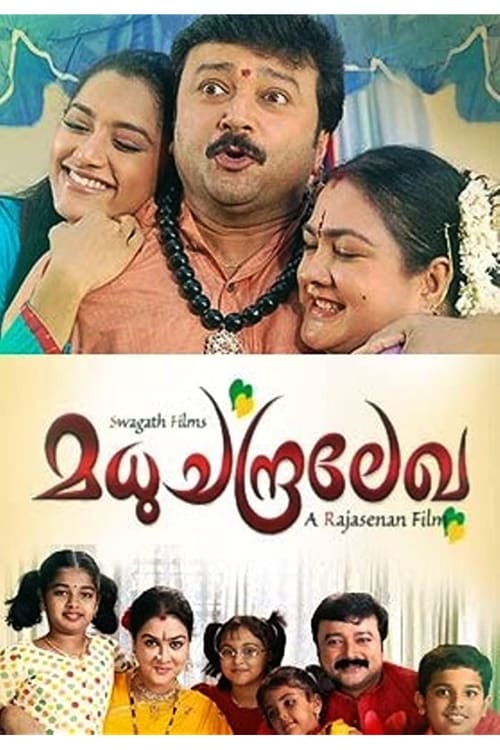
Ramu, the narrator who opened the story with that image of the young music teacher and the out‑of‑tune girl in a village hall, returns to close it. In his warm, slightly amused voice, he might say something to the effect that marriages are not made of matching manners but of enduring affections; that luck, love, and loyalty can bridge even the widest gap between paan stains and red carpets. He reminds us that the film's very title--Madhuchandralekha--is a composite of Madhavan, Chandramathi, and Indulekha, but that when the credits roll, the marriage at its heart still belongs to the first two, with the third standing aside with grace.
The final image is domestic rather than glamorous: Madhu sits in the courtyard, humming a new tune. Chandramathi shouts from the kitchen about some trivial matter, a child runs past chasing a sibling, and Lekha, perhaps visiting, laughs from the verandah as she helps another child with homework. The camera lingers on Chandramathi as she steps out, wiping her hands, paan box in hand. For a second, she meets Madhu's eyes. He smiles at her, openly, with pride rather than embarrassment. She smiles back, with a flicker of relieved joy.
Then, with characteristic carelessness, she spits. The red streak misses the intended drain and hits the edge of the courtyard stone.
Madhu opens his mouth as if to scold, then stops. Instead, he laughs, shakes his head, and keeps singing.
There are no funerals to end this story, no hospital beds, no obituaries. Everyone lives; the only things that die are illusions and insecurities. The resolution is messy, sentimental, and, according to some critics, "hits the lowest point in the end," but its heart remains clear: in this mismatched marriage, despite all the world's judgment, husband and wife choose each other again, and the family, imperfect but intact, carries on.




What is the ending?
In the ending of "Madhuchandralekha," the main characters face the culmination of their emotional struggles and conflicts. The film concludes with a resolution that brings closure to the intertwined fates of the protagonists, leading to a bittersweet yet hopeful outcome.
As the story unfolds towards its conclusion, we find Madhuchandralekha, the titular character, grappling with her feelings and the consequences of her choices. The tension between her and the male lead, who has been a source of both love and conflict, reaches a peak. In a climactic moment, they confront their emotions, leading to a heartfelt exchange that reveals their vulnerabilities and desires.
The film's final scenes depict a sense of reconciliation. Madhuchandralekha makes a significant decision that reflects her growth and understanding of love, ultimately choosing a path that aligns with her true self. The male lead, having faced his own demons, comes to terms with his feelings and supports her choice, showcasing a mature understanding of love and sacrifice.
As the credits roll, the audience is left with a sense of hope for the future of both characters, suggesting that while their journey has been fraught with challenges, they have emerged stronger and more self-aware.
Now, let's delve into the ending in a more detailed, chronological narrative.
The climax of "Madhuchandralekha" begins in a dimly lit room, where Madhuchandralekha sits alone, her face illuminated by the soft glow of a lamp. She is deep in thought, reflecting on the tumultuous events that have led her to this moment. The weight of her decisions hangs heavily on her shoulders, and the audience can see the conflict in her eyes--torn between her desires and the expectations placed upon her.
In the next scene, the male lead arrives, his expression a mix of determination and uncertainty. He steps into the room, and the air is thick with unspoken words. They exchange glances, and the tension is palpable. He takes a deep breath, breaking the silence, and begins to express his feelings. His voice trembles slightly, revealing his vulnerability. He speaks of the love he has for her, but also of the pain that has come from their misunderstandings and the choices they have made.
Madhuchandralekha listens intently, her heart racing as she processes his words. She feels a surge of emotions--love, regret, and a longing for connection. As he continues, she realizes that they have both been trapped in their own fears and insecurities. The scene is charged with emotion, and the camera captures the subtle shifts in their expressions, highlighting the depth of their connection.
In a pivotal moment, Madhuchandralekha stands up, her resolve strengthening. She confronts him about the past, acknowledging the mistakes they both made. Tears well up in her eyes as she speaks, her voice breaking with emotion. She reveals her desire to break free from the constraints that have held her back, to embrace her true self and the love she feels for him.
The male lead, moved by her honesty, takes a step closer. He reaches out, gently wiping away her tears, and in that moment, they share a profound understanding. The camera zooms in on their hands, intertwined, symbolizing their commitment to face the future together.
As the scene transitions, we see them walking hand in hand through a beautiful garden, the sun setting in the background. The vibrant colors of the flowers reflect the hope and renewal in their relationship. They talk about their dreams and aspirations, and for the first time, there is a sense of clarity and purpose in their conversation. The dialogue is filled with optimism, and the audience can feel the weight of their past lifting as they look towards a brighter future.
In the final moments of the film, the couple stands at the edge of a cliff, overlooking a vast landscape. The wind blows gently, and they share a quiet moment of reflection. Madhuchandralekha turns to him, her eyes shining with determination. She expresses her commitment to pursue her passions and to support him in his journey as well. The male lead nods, understanding the importance of their individual paths.
As they embrace, the camera pulls back, capturing the breathtaking view before them. The scene fades to black, and the credits begin to roll, leaving the audience with a sense of closure and hope for the characters' futures.
In summary, the ending of "Madhuchandralekha" encapsulates the themes of love, growth, and the importance of self-discovery. Madhuchandralekha and the male lead emerge from their struggles with a renewed sense of purpose, ready to face whatever challenges lie ahead, together.
Is there a post-credit scene?
The movie "Madhuchandralekha," produced in 2006, does not feature a post-credit scene. The film concludes its narrative without any additional scenes or content after the credits roll. The focus remains on the story and character arcs presented throughout the film, wrapping up the emotional and dramatic elements without extending into a post-credit sequence.
What is the relationship between Madhuchandralekha and the main antagonist in the film?
Madhuchandralekha, the protagonist, has a complex relationship with the main antagonist, who is driven by jealousy and ambition. The antagonist seeks to undermine Madhuchandralekha's happiness and success, leading to a series of confrontations that highlight their contrasting motivations and emotional states.
How does Madhuchandralekha's character evolve throughout the film?
Madhuchandralekha begins as a naive and hopeful individual, deeply in love and optimistic about her future. As the plot unfolds, she faces numerous challenges and betrayals that force her to confront her own strength and resilience, ultimately transforming her into a more assertive and self-reliant person.
What role does music play in the development of Madhuchandralekha's character?
Music serves as a crucial element in Madhuchandralekha's journey, reflecting her emotional state and personal growth. Key musical sequences illustrate her joy, sorrow, and determination, allowing the audience to connect with her internal struggles and triumphs.
What are the key turning points in Madhuchandralekha's relationship with her love interest?
The relationship between Madhuchandralekha and her love interest experiences several key turning points, including moments of misunderstanding, external pressures from family and society, and pivotal decisions that test their commitment to each other. Each turning point deepens their bond while also introducing conflict that propels the narrative forward.
How does the setting influence the events of Madhuchandralekha's story?
The setting of Madhuchandralekha is integral to the story, as it reflects the cultural and social dynamics that shape the characters' lives. The vibrant locales and contrasting environments serve as backdrops for key events, influencing character interactions and the unfolding of the plot.
Is this family friendly?
"Madhuchandralekha," produced in 2006, is a romantic drama that explores themes of love, sacrifice, and familial relationships. While the film is primarily focused on emotional and romantic elements, there are a few aspects that may be considered objectionable or upsetting for children or sensitive viewers:
-
Romantic Tension: The film contains scenes that depict romantic relationships, which may include emotional conflicts and misunderstandings that could be intense for younger audiences.
-
Family Conflict: There are moments of familial strife and disagreements that may evoke feelings of sadness or discomfort, particularly in scenes where characters face difficult choices regarding love and duty.
-
Emotional Struggles: Characters experience significant emotional turmoil, including heartbreak and longing, which may resonate deeply and could be upsetting for sensitive viewers.
-
Cultural Expectations: The film touches on societal and cultural pressures regarding marriage and relationships, which may be complex for younger viewers to fully understand.
Overall, while "Madhuchandralekha" is not overtly graphic or violent, its emotional depth and themes may require parental guidance for younger audiences.







