






Popular
What motivates Prince Vladimir to convert to Christianity?
How does Prince Vladimir's relationship with his mother influence his decisions?
What role does the character of Svyatoslav play in Vladimir's journey?
How does the conflict with the Khazars impact Vladimir's leadership?
What is the significance of the character of Princess Anna in Vladimir's story?
Should I watch it?
Ask Your Own Question

What is the plot?
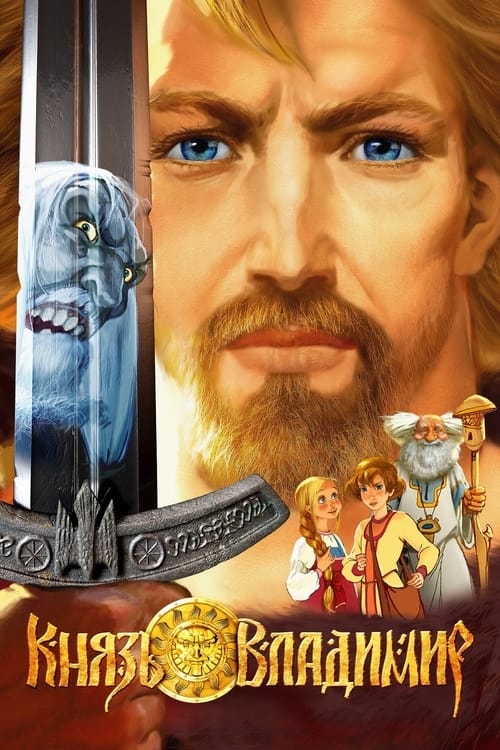
The film opens in the wilderness, where a nameless volkhv sits in a small camp with his ambitious young apprentice, and the mood is already charged with spiritual menace. The old man speaks of the Law, a higher order above princes and ordinary ambition, warning that only those who obey it can understand its power, but the apprentice wants power for himself, not wisdom. In a flash of cruelty he kills a nearby bird with pale green flames, and that sickly green glow becomes the visual signature of the darkness he chooses. Before the night is over, he turns on his own master, seizes the old man's magical staff, and kills him. As he lies dying, the master curses the student and names him Krivzha, a word that marks him as crooked, broken, and spiritually warped. From the first scene, the film makes clear that this is not just a political story but a struggle between the path of Pravzha and the path of Krivzha, between right order and corruption.
From this mythic beginning, the story cuts into the world of ancient pagan Rus', where three brother-princes rule in a fragile balance: Prince Vladimir of Novgorod, Prince Oleg of Drelinia, and Prince Yaropolk of Kiev. Their lands are still divided, but there is at least peace, and the wise volkhvy still give spiritual shape to the world. Vladimir is introduced as young, forceful, and already dangerous under Krivzha's influence. He is not the noble saint of later legend yet; he is impulsive, harsh, and capable of cruelty, a warrior prince whose strength is not yet guided by wisdom. The film's larger historical ambition is already visible, however: this is the period when the scattered Slavic peoples are moving toward a single state, and Vladimir's life will become tied to that transformation.
Krivzha, now carrying the dead master's staff as a stolen token of authority, begins to shape events from the shadows. Seeking dominance, he allies himself with the Pecheneg Khan Kurya, and together they begin a campaign of sabotage against Rus'. Their strategy is not simply conquest in the open field. Instead, Krivzha encourages Kurya to raid and burn Slavic villages, spread fear, and destabilize the princes' legitimacy by making them seem unable to protect their people. The villages burn, the people panic, and the political order starts to crack in the heat of those raids. The film repeatedly returns to this idea that violence is being used not only to kill but to fracture trust. Krivzha is a warlord of deception as much as a sorcerer of flames.
Amid this turmoil, a village boy named Aleksha becomes an accidental witness to the hidden alliance. He sees Krivzha meeting with Khan Kurya, and because he is only a simple boy, his knowledge is innocent in a world already corrupted by intrigue. His presence matters because he is one of the few people who actually sees the conspiracy taking shape before the princes understand it. Soon afterward, fate pushes him further into the center of the story when he encounters Prince Vladimir. Instead of dismissing him, Vladimir casually suggests that the boy join his retinue, folding this unimportant witness into the prince's orbit. Aleksha thus becomes both observer and participant, a small human thread connecting the political plot with the moral one.
The film then moves into a stretch of action and brutality that reveals what Vladimir is like before his transformation. Under Krivzha's influence, he is a young pagan ruler who rushes headlong into battle and hunts with ruthless confidence. One account emphasizes that he shows his ferocity in the hunt, even stunning Dobrynya when Dobrynya tries to restrain him. Dobrynya, Vladimir's uncle and warrior protector, is the more seasoned and disciplined man, but at this stage he cannot fully redirect the prince's violence. Vladimir's world is one of longboats, raids, and the physical domination of enemies. In the south, he and his men attack a fortress, storm it, and slaughter its occupants, including women and children gathered around treasure. The scene is brutal and unmistakably savage, making clear that the prince is capable of great bloodshed before he ever becomes the unifier of Rus'. The film does not hide this part of his character; it uses it to show how far he must travel morally before he can become the ruler history remembers.
The fraternal conflict begins to sharpen when Vladimir's ambitions clash with those of the other princes. The film's accounts differ slightly in emphasis, but the central event is the same: Vladimir comes to believe that Yaropolk is responsible for the death of Oleg, and he acts on that belief by turning against his brother. In the background, Krivzha feeds suspicion and confusion, making sure Vladimir sees betrayal where there is manipulation. In one version of the story, Vladimir accuses Yaropolk of killing Oleg and then moves against him in fury. In another, the prince's military success against his brother ends in Yaropolk's death, and Vladimir is left with the horror of having killed kin in battle. Either way, the emotional outcome is the same. Vladimir wins the fight, but victory tastes like ash. He regrets the death of his brother, yet he does not suspect that the priest and the Pechenegs have engineered much of what has happened. His guilt is real, but his understanding is incomplete.
One of the film's most important twists centers on communication, because truth in this story is repeatedly delayed, intercepted, forged, or destroyed. At one point, Yaropolk sends Vladimir a letter revealing the truth about Oleg's death and Krivzha's betrayal, but Krivzha transforms into a bear, intercepts the messenger, kills him, and destroys the letter before Vladimir can read it. The image is striking and symbolic: a monstrous, shapeshifting predator physically devours the possibility of reconciliation. The letter would have exposed the conspiracy and perhaps prevented the fratricidal war, but it never reaches its intended recipient. Later, Krivzha commits the opposite deception. During Maslenitsa, when Vladimir returns home and the people are celebrating, Krivzha intrudes on the festivities and presents a false letter of alliance between Yaropolk and Kurya, a forgery he has made himself. The forged document is the film's most consequential lie, because it turns political confusion into personal betrayal and pushes Vladimir toward war against his brother under false pretenses.
The Maslenitsa scene is one of the film's great turns of atmosphere, because the warmth of celebration is invaded by suspicion. Vladimir has returned to his homeland tired of campaigns and raids, and there is a moment when normal life seems almost possible again. But Krivzha arrives like poison in the middle of feast-time, carrying the false letter and seeding discord among the brother-princes. The mood breaks. Trust fractures. The celebration becomes the site where the hidden conspiracy finally begins to achieve its public effect. Vladimir, already burdened by anger and grief, is manipulated into believing that Yaropolk has joined forces with Kurya. From that lie comes the decision to march from Novgorod toward Kiev, a march that is both a military campaign and a march deeper into tragedy.
As Vladimir moves toward Kiev, the film folds personal drama into grand historical purpose. He is not just fighting a sibling; he is slowly becoming the ruler who will unite the scattered Slavic lands. The movie presents this as the central challenge of his life. He wants to gather the tribes into one state, to turn a loose semi-military alliance into something stronger and more enduring. That political goal is repeatedly obstructed by war, betrayal, and the spiritual poison Krivzha spreads through the land. Yet the film insists that the effort itself is historically meaningful. Vladimir's transformation from violent prince to unifier is not instantaneous; it is purchased through suffering, error, and the deaths caused by his own and others' mistakes.
The conflict with Yaropolk reaches its fullest tragic force when the battle between the brothers ends in death. Depending on the version of the plot summary, Vladimir either attempts to kill Yaropolk or wins a battle that kills him, and in at least one account Dobrynya is the one who directly kills Yaropolk. That detail matters because it deepens Vladimir's guilt: even if his hand is not the one that delivers the fatal blow, the war he unleashes is the reason the blood is shed at all. Vladimir later regrets what has happened, and the regret is one of the film's most human moments. He is not presented as joyfully murderous; he is a ruler discovering, too late, the cost of his own manipulation. The brotherhood is broken, and the political tragedy becomes irreversible. At the same time, Krivzha remains hidden in the background, continuing to profit from the devastation he has engineered.
The story then widens again into spiritual conflict. Boyan, the wise poetic figure and opponent of Krivzha, emerges as a defender of the old sacred order. In the later stages of the film he directly confronts Krivzha in a shamanic or spiritual duel. Boyan's power is shown not as brute force but as connection to prayer, protection, and the living sacred world. One description says that his prayer-like strength is enough to shield his hut with an anti-arrow field projected from a divine tree, creating a shimmering defensive space that repels danger. This scene is visually distinct from the war scenes, because it turns the film toward sacred geometry and mystical resistance. Krivzha's magic is aggressive, hungry, and corrosive; Boyan's is protective, rooted, and aligned with the higher law that the opening volkhv described.
Aleksha remains close to Vladimir through much of this unfolding disaster, and his role quietly grows more important. He is not merely a witness anymore; he becomes a moral mirror for the prince. In one dramatic moment, Vladimir shields the boy from a wild bison, taking the animal's heavy blow on himself. That act does not erase his earlier cruelty, but it shows the first clear sign of his capacity for protection rather than domination. The prince who once slaughtered enemies without hesitation now risks himself for the life of a child. The film uses that gesture to suggest that Vladimir is changing from within, even before the final political and religious resolution is reached. The boy who accidentally saw the conspiracy is now at the center of the prince's human awakening.
The final confrontation gathers all the film's energies at once: political, mystical, and personal. Krivzha must be stopped, and Khan Kurya must be defeated, because the conspiracy between them has become the engine of Rus''s disintegration. In one account of the climax, Boyan defeats Krivzha in a spiritual contest first, stripping away part of the sorcerer's power. Then Vladimir faces the Pecheneg chief Kurya directly while the remaining darkness still hangs over the field. The earlier chaos of raids, forged letters, and family murder now converges into open battle. Vladimir's enemies are no longer hidden behind lies. They stand before him, and he can finally strike back at the powers that have manipulated his life.
The confrontation with Krivzha is especially vivid. In one version, Vladimir stuns him with a fiery torch, a deliberate echo of the green flame with which Krivzha killed the bird at the beginning. The prince answers corrupted magic with fire of his own, but this time the fire serves a just cause. Krivzha, unable to withstand the turn of the Law against him, collapses and explodes into a cloud of green mist, a visual image that completes the circle of his corruption. He returns to the same poisonous color with which his evil first announced itself, but now that color signifies his unraveling rather than his power. In the broader logic of the film, this is the moment when deceit, theft, and domination finally fail before a more ordered moral force.
At the same time, Vladimir defeats Khan Kurya in the decisive battle. This victory ends the Pecheneg threat that Krivzha has used to torment the land for so long. The raids, the burned villages, the fear imposed on the Slavic people--all of it is checked here. Kurya's defeat is not just a military triumph but a symbolic one: the external force that Krivzha invited into Rus' to weaken it is pushed back and broken. With Kurya defeated and Krivzha destroyed, the two sources of corruption that have driven the plot are finally removed.
The ending does not stop at the battlefield. It turns toward Vladimir's larger historical destiny. Having passed through guilt, manipulation, war, and moral struggle, he emerges as the ruler who will gather the Slavic tribes into a united state. The film closes with that unifying movement in mind and with the implication of the coming Christianization of Rus'. Several sources frame the whole film as leading toward Vladimir's conversion of Kievan Rus' to Christianity and the long process by which Orthodox Christianity becomes the state religion. In one account, the prince even sends a pipe to Princess Anna as a gift in anticipation of marriage, a sign that his future is moving toward alliance with Byzantium and a new religious identity. The film's final note is therefore not simply military victory but historical transformation: the broken pagan world is giving way to a more unified Rus', and Vladimir is becoming the ruler who will embody that shift.
By the final scene, the emotional arc has fully turned. Vladimir is no longer only the impulsive, cruel prince who was manipulated into fratricide. He has passed through remorse into responsibility. The bloodshed remains, and the dead brothers cannot be restored, but the film insists that his growth matters. The land is no longer being torn apart by Krivzha's lies and Kurya's raids. The peasants and princes have a future larger than revenge. The story ends with the sense that Rus' is moving toward unification under Vladimir's hand and toward the spiritual change that history remembers as his great legacy.

What is the ending?
In the ending of "Prince Vladimir," the film culminates in a climactic battle where Prince Vladimir faces off against his enemies. After a series of intense confrontations, he emerges victorious, solidifying his rule. The film concludes with Vladimir embracing Christianity, marking a significant transformation for both him and his kingdom.
As the final act unfolds, the tension escalates. The scene opens with the battlefield set against a darkening sky, the air thick with anticipation. Prince Vladimir, clad in armor, stands resolute, his face a mask of determination. He knows that the fate of his people rests on his shoulders. The camera pans to his loyal warriors, their expressions a mix of fear and courage, reflecting the stakes of the impending conflict.
The battle erupts with a cacophony of clashing swords and the cries of men. Vladimir leads his troops with fervor, his heart pounding with the weight of leadership. Each swing of his sword is fueled by a desire to protect his realm and prove his worth as a ruler. The choreography of the fight is brutal and chaotic, showcasing the raw intensity of medieval warfare.
Amidst the chaos, we see glimpses of his adversaries, who are equally fierce and determined. The leader of the opposing forces, a formidable warrior, locks eyes with Vladimir, and a fierce duel ensues. The two men clash, their swords ringing out like thunder. The struggle is not just physical; it is a battle of ideologies, with Vladimir fighting for a vision of unity and faith.
As the duel reaches its climax, Vladimir's internal conflict becomes palpable. He reflects on his past decisions, the weight of his choices pressing down on him. In a moment of clarity, he remembers the teachings of faith and the promise of a better future for his people. With renewed vigor, he overcomes his opponent, delivering a decisive blow that signifies not just a victory in battle, but a turning point in his life.
With the enemy forces defeated, the scene shifts to the aftermath of the battle. The battlefield is strewn with the remnants of conflict, and the air is heavy with the scent of smoke and blood. Vladimir stands amidst his warriors, their faces a mix of relief and sorrow. They have won, but at a great cost. The camera captures the somber expressions of the men, highlighting the toll of war.
In the following scenes, Vladimir returns to his kingdom, where he is greeted as a hero. However, the victory feels bittersweet. He walks through the streets, observing the devastation left in the wake of the battle. His heart aches for the lives lost and the families torn apart. This moment of reflection is crucial; it marks a shift in his character from a warrior to a leader who understands the weight of his responsibilities.
The film concludes with a powerful scene of transformation. Vladimir stands before a gathering of his people, the sun setting behind him, casting a golden glow. He speaks of unity, faith, and the importance of embracing Christianity. His words resonate deeply, and the crowd listens intently, their faces illuminated by hope. This moment signifies not only Vladimir's personal journey but also the beginning of a new era for his kingdom.
As the credits roll, we see glimpses of the main characters' fates. Vladimir, now a wise and compassionate ruler, leads his people towards a brighter future. His loyal warriors, who fought bravely by his side, stand united with him, ready to rebuild and heal. The film closes on a note of hope, emphasizing the themes of redemption, faith, and the enduring strength of community.
Is there a post-credit scene?
The movie "Prince Vladimir," produced in 2006, does not feature a post-credit scene. The film concludes its narrative without any additional scenes or content after the credits roll. The story wraps up with the resolution of Prince Vladimir's journey, focusing on his transformation and the establishment of Christianity in Kievan Rus, leaving the audience with a sense of closure regarding his character arc and the historical implications of his reign.
What motivates Prince Vladimir to convert to Christianity?
Prince Vladimir's conversion to Christianity is driven by a combination of personal ambition and a desire for unity among his people. Initially, he is depicted as a pragmatic leader who seeks to strengthen his rule and consolidate power. His encounters with various religious representatives, particularly the Byzantine emissaries, spark a deep internal conflict as he weighs the benefits of adopting Christianity against the traditional pagan beliefs of his ancestors. Ultimately, his decision is influenced by a vision of a united and prosperous Kievan Rus under a single faith.
How does Prince Vladimir's relationship with his mother influence his decisions?
Prince Vladimir's relationship with his mother plays a significant role in shaping his character and decisions throughout the film. His mother, a devout Christian, instills in him the values of faith and morality from a young age. As he grapples with the responsibilities of leadership, her teachings echo in his mind, creating a tension between his desire for power and the moral implications of his choices. This internal struggle is particularly evident when he faces the decision to convert to Christianity, as he seeks to honor her legacy while also fulfilling his ambitions.
What role does the character of Svyatoslav play in Vladimir's journey?
Svyatoslav, Vladimir's father, serves as a pivotal figure in the narrative, representing the legacy of paganism that Vladimir must confront. His father's warrior spirit and adherence to traditional beliefs create a shadow over Vladimir's aspirations. Throughout the film, Svyatoslav's past decisions and the consequences of his rule haunt Vladimir, pushing him to seek a different path. This dynamic illustrates Vladimir's struggle to reconcile his father's legacy with his vision for a new, unified Kievan Rus, ultimately leading him to embrace Christianity as a means of forging a new identity.
How does the conflict with the Khazars impact Vladimir's leadership?
The conflict with the Khazars is a significant catalyst for Vladimir's development as a leader. The Khazars, a powerful neighboring empire, pose a direct threat to Kievan Rus, forcing Vladimir to confront the realities of warfare and diplomacy. This conflict tests his strategic acumen and leadership skills, as he must rally his people and forge alliances to defend his territory. The pressure of this external threat also accelerates his journey towards embracing Christianity, as he sees the potential for a united front under a single faith to strengthen his position against the Khazars.
What is the significance of the character of Princess Anna in Vladimir's story?
Princess Anna, a Byzantine princess, is a crucial figure in Vladimir's narrative, symbolizing the political and cultural ties between Kievan Rus and Byzantium. Her character represents the allure of Christianity and the potential for a powerful alliance through marriage. As Vladimir pursues her hand, he is not only motivated by love but also by the desire to legitimize his rule and elevate his status. Anna's presence challenges Vladimir to consider the implications of his choices, as their relationship becomes a focal point for his internal conflict between personal desire and political necessity.
Is this family friendly?
"Prince Vladimir," produced in 2006, is a historical drama that explores themes of power, faith, and conflict. While the film is centered around the life of Prince Vladimir of Kiev and his conversion to Christianity, it does contain some scenes that may be considered objectionable or upsetting for children or sensitive viewers.
-
Violence and Battle Scenes: The film includes depictions of battles and warfare, showcasing sword fighting, bloodshed, and the chaos of conflict. These scenes may be intense and frightening for younger audiences.
-
Death and Loss: Characters experience significant loss, including the deaths of loved ones. The emotional weight of these moments may be distressing for some viewers.
-
Religious Conflict: The film addresses themes of religious conversion and the tensions between paganism and Christianity, which may be complex or confusing for younger viewers.
-
Dark Themes: The narrative explores themes of betrayal, power struggles, and moral dilemmas, which may be heavy for children to fully grasp.
-
Emotional Turmoil: Characters undergo significant emotional struggles, including feelings of guilt, fear, and despair, which may resonate deeply and evoke strong emotions.
Overall, while "Prince Vladimir" can be educational and thought-provoking, it contains elements that may not be suitable for all children or sensitive viewers. Parental guidance is recommended.









