





Popular
What challenges does the main character face while trying to survive in the Arctic?
How does the relationship between Dr. John and his team evolve throughout the film?
What specific events lead to the team's abandonment in the Arctic?
What internal conflicts does Dr. John experience during his time in the Arctic?
How does the environment of the Arctic influence the characters' mental states?
Should I watch it?
Ask Your Own Question

What is the plot?
Abandoned in the Arctic is a documentary rather than a fictional feature, so it does not unfold like a conventional death-heavy drama with scripted confrontations and twists. Even so, its story still plays like a suspenseful, tragic survival narrative, moving between the present-day journey of Greely's descendant and the grim historical record of the 1881 Lady Franklin Bay Expedition.
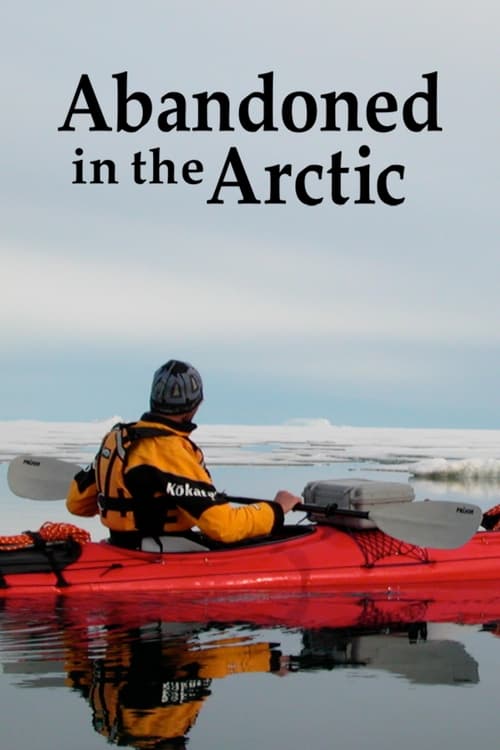
The film opens in the present with a small team of scientists, field guides, and a descendant of U.S. polar explorer Adolphus Greely heading into the Arctic by kayak, determined to retrace the route of the old expedition. Their journey is not framed as simple adventure; instead, it is a pilgrimage into a place where history has frozen into memory. The landscape is stark, luminous, and punishing, and the expedition immediately carries the feeling of a family confronting a wound that never fully healed. The modern Greely descendant--identified in the PBS description as Greely's great, great-grandson--returns to this haunted region to decide for himself whether Adolphus Greely should be remembered as a hero or a villain. That question hangs over everything that follows.
The documentary then cuts back to 1881, when Civil War hero Adolphus W. Greely leads a government-backed scientific expedition to Ellesmere Island, an isolated place near the North Pole, roughly 450 miles from it. The mission begins with optimism and the confidence of empire and science, but the film steadily reveals how fragile that confidence is. Greely and his 24 men are deposited at a remote spit of land to establish a scientific research station, and the very remoteness that makes the station scientifically valuable also dooms it. The place is all wind, ice, and glare; the men are cut off from the world almost as soon as they arrive. The documentary's use of diary entries, letters, and archival photographs gives the historical story an intimate, haunted texture, as though the men are speaking from inside the ice itself.
As the historical narrative builds, the documentary emphasizes how the expedition becomes not just a failure, but an abandonment. Supplies are expected, then delayed. Hope turns into watchfulness, then dread. The men keep recording, writing, and waiting, and those written fragments become the only steady bridge between their isolated outpost and the outside world. The film's tension comes from the knowledge that the site is not merely remote; it is a trap. The outpost is supposed to be a place of observation and progress, but it becomes a place of slow erasure. The modern expedition mirrors that descent, giving the present-day team a physical sense of what the historical men endured as they move through Arctic waters in the same stark environment.
The central revelation of the film is that Greely's expedition was not simply unlucky--it was catastrophically abandoned in one of the harshest environments on Earth. The government-backed mission that began as a symbol of ambition becomes a survival ordeal, and the documentary repeatedly underscores that almost none of Greely's men make it back alive. That fact is delivered not as a sensational beat but as a crushing historical truth. The diary entries and letters make the danger feel immediate, while the archival photographs turn the men into ghosts before they are even gone. The film's emotional logic is therefore cumulative: each image and document adds another layer of dread until the story becomes less about exploration than about the cost of being left behind.
The documentary does not provide a conventional line-by-line account of every death in the accessible summary materials, and it does not identify a scene-by-scene list of fatal confrontations. What it does make clear is that the expedition collapses into a lethal struggle against starvation, exposure, and isolation, and that most of the men perish before rescue or return. The haunting power of the film lies in the fact that the dead are never presented as abstract casualties. They are individual men whose words, faces, and records remain in the archive, even as the environment silently removes them one by one. There is no single villain in the snowdrifts, no climactic fight, no sudden betrayal in the traditional sense; the antagonistic force is the Arctic itself, amplified by the long human failure of delayed support and abandonment.
That makes the modern expedition especially poignant. Greely's descendant is not merely reenacting a route; he is testing the emotional inheritance of a family story that is bound up with disaster. His presence turns the documentary into a reckoning. As the team travels by kayak, the camera draws a direct line between present-day endurance and nineteenth-century suffering. The modern men and women are not in the same immediate danger as Greely's original party, but they are surrounded by the same silence, the same cold, the same scale of emptiness. The result is a layered structure where the past and present echo each other, and where every paddle stroke feels like an answer to a century-old question: what happened here, and who was responsible?
The film's dramatic tension comes from this moral uncertainty. Was Adolphus Greely a heroic commander who did his best in an impossible situation, or a man whose expedition helped lead his men into needless death? The PBS description explicitly says the descendant returns to determine whether Greely should be remembered as a hero or villain. That framing gives the documentary its final emotional engine. Rather than presenting a single verdict, the film builds toward the recognition that the truth is shaped by harsh conditions, bureaucratic failure, and human endurance all at once. Greely is neither simplified nor absolved. He becomes a figure at the center of a tragedy that is bigger than one man, but not so big that his choices disappear.
The ending ties the two timelines together, letting the modern kayak journey and the historical retelling coexist in one reflective conclusion. There is no neat victory lap. Instead, the film closes on the sense that the past has been physically revisited, witnessed, and temporarily reanimated through the descendant's journey. The modern expedition does not undo the old catastrophe, but it gives it a face in the present. The final feeling is one of remembrance rather than resolution: the dead remain dead, the Arctic remains unforgiving, and the family legacy remains unsettled. The documentary ends by leaving the viewer with the weight of survival, memory, and judgment, and with the understanding that the place itself still holds the story of men who were sent out in hope and abandoned in ice.







What is the ending?
In the ending of "Abandoned in the Arctic," the main characters face the dire consequences of their survival struggle. After a series of harrowing events, the remaining survivors confront the harsh realities of their situation. Ultimately, they must make critical decisions that lead to a tragic conclusion for some, while others find a glimmer of hope.
As the film progresses towards its conclusion, the tension escalates. The survivors, who have been battling the unforgiving Arctic environment, are dwindling in number. The emotional weight of their predicament is palpable, as they grapple with despair and the instinct to survive.
In the final scenes, the group is faced with a critical choice: to stay together and risk their chances of survival or to split up in hopes of finding help. The decision weighs heavily on them, revealing their internal struggles and the bonds they have formed amidst the chaos.
One character, driven by desperation, decides to venture out alone, believing that this is the only way to save themselves. This choice is fraught with tension, as the others watch, torn between hope and fear for their friend. The harsh Arctic landscape looms large, a constant reminder of the dangers that lie ahead.
As the story unfolds, the remaining characters are left to confront their own fears and the reality of their situation. They share poignant moments, reflecting on their lives and the relationships they have built. The emotional stakes are high, and the audience can feel the weight of their choices.
In the end, the character who ventured out alone faces the brutal elements and ultimately succumbs to the unforgiving cold. The remaining survivors are left to grapple with the loss, their hopes dashed but their spirits still flickering. They find a small measure of solace in each other, realizing that their shared experience has forged an unbreakable bond.
The film concludes with a haunting image of the Arctic landscape, a stark reminder of the fragility of life and the resilience of the human spirit. The fate of the characters serves as a poignant reflection on survival, sacrifice, and the enduring power of hope in the face of overwhelming odds.
Is there a post-credit scene?
The movie "Abandoned in the Arctic," produced in 2007, does not feature a post-credit scene. The film concludes its narrative without any additional scenes or content after the credits roll. The focus remains on the intense survival story and the emotional journey of the characters throughout the film, leaving no room for a post-credit moment.
What challenges does the main character face while trying to survive in the Arctic?
The main character, a scientist named Dr. John, faces extreme cold temperatures, dwindling supplies, and the psychological toll of isolation. He struggles with frostbite, hunger, and the constant threat of wildlife, all while trying to maintain hope and find a way to signal for rescue.
How does the relationship between Dr. John and his team evolve throughout the film?
Initially, Dr. John has a strong camaraderie with his team, but as the situation becomes dire, tensions rise. The stress of survival leads to conflicts and mistrust, particularly with one team member who becomes increasingly paranoid, creating a rift that tests their bonds.
What specific events lead to the team's abandonment in the Arctic?
The team is abandoned after a severe storm damages their communication equipment and supplies. A critical decision is made to leave them behind for a rescue mission, which goes awry, leaving Dr. John and his colleagues stranded without adequate resources.
What internal conflicts does Dr. John experience during his time in the Arctic?
Dr. John grapples with feelings of guilt for being the leader, questioning his decisions that led to their predicament. He also battles despair and fear of death, reflecting on his life choices and the impact of his work on his family and colleagues.
How does the environment of the Arctic influence the characters' mental states?
The harsh, unforgiving Arctic landscape amplifies the characters' fears and anxieties. The isolation and relentless cold create a sense of hopelessness, leading to paranoia and despair among the team members, which ultimately affects their ability to work together and survive.
Is this family friendly?
"Abandoned in the Arctic," produced in 2007, is a survival drama that may not be considered family-friendly due to its intense themes and situations. Here are some potentially objectionable or upsetting aspects that could affect children or sensitive viewers:
-
Isolation and Desperation: The film explores themes of isolation, which can be distressing. Characters face extreme loneliness and the psychological toll it takes on them.
-
Survival Situations: There are scenes depicting the struggle for survival in harsh Arctic conditions, including the challenges of finding food and shelter, which may be intense for younger viewers.
-
Emotional Distress: Characters experience fear, anxiety, and despair, which could be upsetting for sensitive audiences. The emotional weight of their situation is palpable and may evoke strong feelings.
-
Dangerous Encounters: The film includes moments of peril, such as encounters with wildlife and the harsh elements, which could be frightening.
-
Loss and Grief: Themes of loss and the impact of tragedy on the characters are present, which may be heavy for younger viewers to process.
Overall, the film's serious tone and the emotional and physical challenges faced by the characters may not be suitable for all audiences, particularly children.