











Popular
What motivates E.V. Ramasamy to challenge the caste system in Periyar?
How does the relationship between E.V. Ramasamy and his wife evolve throughout the film?
What role does the character of Periyar's mentor play in his journey?
How does the film depict the opposition faced by E.V. Ramasamy from traditionalists?
What significant events lead to E.V. Ramasamy's decision to form the Self-Respect Movement?
Should I watch it?
Ask Your Own Question

What is the plot?
Sorry, we aren't able to watch and write up a full detailed plot yet. Check back in a few days.





What is the ending?
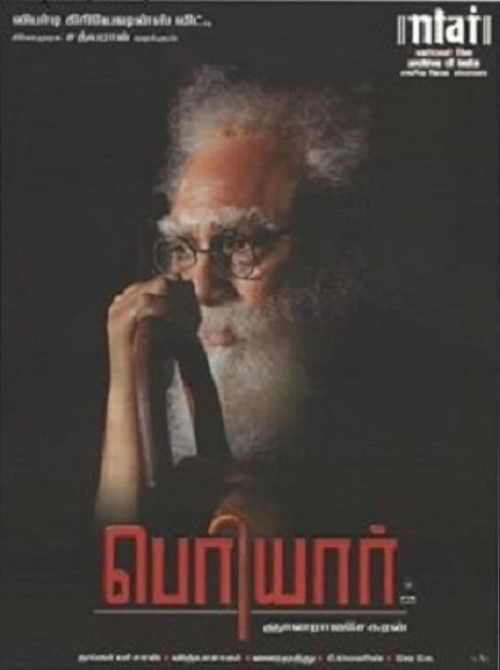
In the ending of the movie "Periyar," the protagonist, E.V. Ramasamy, also known as Periyar, faces the culmination of his lifelong struggle against social injustice and caste discrimination. He continues to advocate for rationalism and equality, but his health deteriorates. The film concludes with his death, leaving behind a legacy of social reform and a movement that inspires future generations.
As the final scenes unfold, we see Periyar, now aged and frail, surrounded by his close associates and followers. His health has significantly declined, and he is aware that his time is limited. Despite this, he remains resolute in his beliefs, passionately discussing the need for social change and the importance of rational thought. His followers listen intently, absorbing his wisdom and determination.
In a poignant moment, Periyar reflects on his life's work, expressing both pride and a sense of urgency for the continuation of his mission. He urges his followers to carry on the fight against caste oppression and to promote equality among all people. His words resonate deeply, highlighting the emotional weight of his legacy.
As the scene shifts, we see the reactions of his close associates, who are visibly emotional yet inspired by his unwavering spirit. They promise to uphold his ideals and continue the struggle for social justice. The atmosphere is heavy with a mix of sorrow and hope, as they understand the significance of his teachings and the impact he has had on their lives.
In the final moments, Periyar passes away peacefully, surrounded by those who love and respect him. The camera lingers on his serene face, capturing the essence of a man who dedicated his life to fighting for the marginalized. The film closes with a montage of his contributions to society, showcasing the changes he inspired and the movement he ignited.
The fate of the main characters is intertwined with Periyar's legacy. His close associates, who have been deeply influenced by his teachings, are left with the responsibility of continuing his work. They are determined to honor his memory by advocating for the principles he stood for, ensuring that his vision for a just society lives on. The film ends on a note of resilience, emphasizing that while Periyar may be gone, his ideals will continue to inspire future generations in the fight against injustice.
Is there a post-credit scene?
The movie "Periyar," released in 2007, does not feature a post-credit scene. The film concludes its narrative without any additional scenes or content after the credits roll. The focus remains on the life and contributions of E.V. Ramasamy, also known as Periyar, and his efforts in social reform, particularly regarding caste and gender equality. The ending emphasizes the impact of his ideology and the legacy he left behind, leaving the audience with a sense of reflection on the themes presented throughout the film.
What motivates E.V. Ramasamy to challenge the caste system in Periyar?
E.V. Ramasamy, portrayed as a passionate reformer, is deeply motivated by his own experiences with caste discrimination. His emotional turmoil is evident as he witnesses the injustices faced by the lower castes, including his own family. This personal connection fuels his determination to advocate for social equality and justice, leading him to become a prominent figure in the anti-caste movement.
How does the relationship between E.V. Ramasamy and his wife evolve throughout the film?
Initially, E.V. Ramasamy's wife, Maniyammai, supports his endeavors, but as the story progresses, she struggles with the societal implications of his activism. Her emotional conflict is palpable as she grapples with the repercussions of his public stance against caste, leading to moments of tension and understanding between them. This evolution highlights the personal sacrifices made in the pursuit of social change.
What role does the character of Periyar's mentor play in his journey?
Periyar's mentor serves as a guiding force in his life, instilling in him the values of rationalism and social justice. This character is pivotal in shaping Ramasamy's ideology, providing him with the intellectual tools to question societal norms. Their interactions are filled with warmth and wisdom, showcasing the mentor's influence on Ramasamy's transformation into a leader.
How does the film depict the opposition faced by E.V. Ramasamy from traditionalists?
The film vividly portrays the fierce opposition Ramasamy encounters from traditionalists who uphold the caste system. These confrontations are charged with tension, showcasing the emotional stakes involved. The traditionalists' anger and resistance are depicted through heated debates and public protests, emphasizing the societal divide and the personal risks Ramasamy faces in his quest for reform.
What significant events lead to E.V. Ramasamy's decision to form the Self-Respect Movement?
A series of pivotal events, including public humiliations faced by lower castes and the lack of political representation, catalyze Ramasamy's decision to establish the Self-Respect Movement. These moments are depicted with emotional intensity, illustrating his growing frustration and sense of urgency. The film captures his realization that systemic change requires organized action, leading to the formation of this crucial movement.
Is this family friendly?
The movie "Periyar," produced in 2007, is a biographical drama that explores the life and philosophy of E.V. Ramasamy, also known as Periyar, who was a social reformer in India. While the film aims to highlight important social issues, it does contain some elements that may not be suitable for children or sensitive viewers.
-
Social Injustice: The film addresses themes of caste discrimination and social inequality, which may be distressing for younger audiences or those sensitive to issues of oppression.
-
Emotional Conflict: There are scenes depicting intense emotional struggles, including personal loss and societal rejection, which may evoke strong feelings.
-
Confrontational Dialogues: The film features confrontations and heated discussions about caste and gender issues, which may be challenging for younger viewers to understand.
-
Historical Context: Some scenes may depict the harsh realities of societal norms and practices that were prevalent during Periyar's time, which could be upsetting.
-
Depictions of Violence: While not graphic, there are moments that may suggest violence or aggression related to social conflicts.
Overall, while "Periyar" is an important film that addresses significant social issues, its themes and emotional depth may not be suitable for all children or sensitive individuals.








