







Popular
What is the relationship between Rodolfo and Mimi in La Bohème?
How does the character of Marcello influence the story in La Bohème?
What role does Musetta play in the dynamics of the group in La Bohème?
What is the significance of Mimi's illness in La Bohème?
How does the setting of Paris influence the characters in La Bohème?
Should I watch it?
Ask Your Own Question

What is the plot?
Sorry, we aren't able to watch and write up a full detailed plot yet. Check back in a few days.




What is the ending?
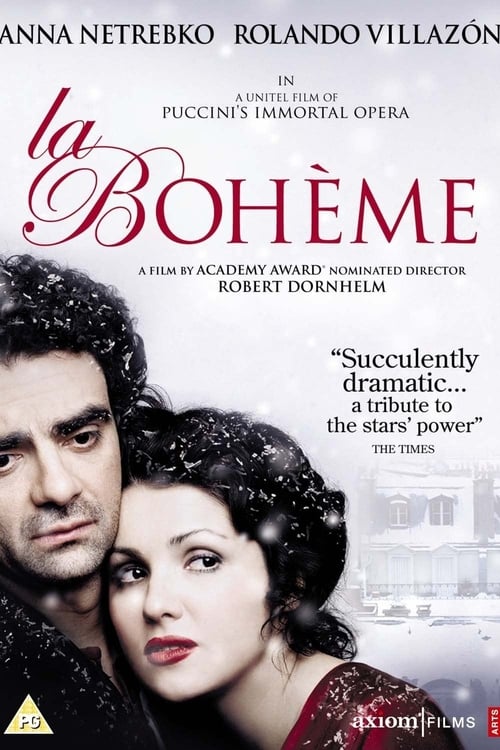
In the ending of the movie "La Bohème" (2008), the story culminates in a poignant and emotional farewell between the main characters, Rodolfo and Mimi. After a series of struggles and misunderstandings, Mimi's health deteriorates, leading to a heartbreaking conclusion where she passes away in Rodolfo's arms, leaving him devastated.
As the film draws to a close, the atmosphere is heavy with sorrow. Rodolfo is left alone, grappling with the loss of his beloved Mimi, reflecting on their passionate yet tumultuous relationship. The film ends on a note of profound sadness, emphasizing the themes of love, loss, and the fleeting nature of life.
As the final act of "La Bohème" unfolds, the scene opens in a dimly lit room, where the air is thick with tension and unspoken words. Rodolfo, played with a mix of desperation and hope, is anxiously pacing back and forth. He is deeply troubled by Mimi's declining health, which has become increasingly evident. The once vibrant and lively Mimi, portrayed with grace and fragility, is now frail and weak, her spirit dimmed by illness.
In this intimate setting, the couple shares a moment filled with both love and regret. Rodolfo's eyes are filled with concern as he tries to comfort Mimi, who is struggling to breathe. The camera captures the raw emotion on their faces, highlighting the depth of their connection and the pain of their circumstances. Mimi, despite her suffering, attempts to reassure Rodolfo, her voice soft yet filled with a lingering strength. She speaks of their dreams and the life they envisioned together, evoking memories of happier times.
As the scene progresses, the reality of Mimi's condition becomes undeniable. Rodolfo's desperation grows, and he pleads with her to hold on, to fight against the illness that is consuming her. The emotional weight of the moment is palpable, as the audience can feel Rodolfo's fear of losing the love of his life. Mimi, however, is aware of her fate and tries to comfort Rodolfo, telling him that she will always be with him in spirit.
The climax of the film arrives as Mimi's health deteriorates further. In a heart-wrenching moment, she collapses, and Rodolfo rushes to her side, cradling her in his arms. The room is filled with a haunting silence, broken only by Rodolfo's desperate cries for help. The camera lingers on their faces, capturing the anguish and despair that envelops them. Mimi's breathing becomes shallow, and her eyes begin to close as she slips away, leaving Rodolfo in a state of utter devastation.
In the aftermath of Mimi's passing, the scene shifts to Rodolfo, who is left alone in the room, surrounded by memories of their love. The once vibrant space now feels empty and cold, mirroring Rodolfo's shattered heart. He sits in silence, grappling with the weight of his loss, his expression a mixture of grief and disbelief. The camera captures the tears streaming down his face, emphasizing the profound impact of Mimi's absence.
As the film concludes, Rodolfo is seen wandering the streets, lost in his thoughts. The vibrant world around him feels muted, a stark contrast to the joy and passion he once shared with Mimi. The final shots depict him standing alone, a solitary figure against the backdrop of a bustling city, symbolizing the isolation that follows such a profound loss.
The ending of "La Bohème" serves as a poignant reminder of the fragility of life and the enduring power of love, even in the face of tragedy. Each character's fate is intertwined with the themes of love, loss, and the bittersweet nature of existence, leaving a lasting impression on the audience as the credits roll.
Is there a post-credit scene?
The movie "La Bohème" produced in 2008 does not contain a post-credit scene. The film concludes its narrative without any additional scenes or content after the credits roll. The story wraps up with a poignant resolution, focusing on the emotional arcs of the characters, particularly the love story between the protagonists, Rodolfo and Mimi, which is central to the film's themes of love, art, and the struggles of bohemian life. The ending leaves a lasting impression, emphasizing the bittersweet nature of their relationship and the impact of their experiences.
What is the relationship between Rodolfo and Mimi in La Bohème?
Rodolfo and Mimi share a passionate yet tumultuous love story. They meet in a Parisian garret where Rodolfo, a struggling poet, lives with his friends. Their initial encounter is filled with romantic tension as Rodolfo is captivated by Mimi's beauty and fragility. As their relationship develops, they experience intense moments of love and joy, but also face challenges due to their financial struggles and Mimi's deteriorating health. Rodolfo's deep love for Mimi is evident, but he also grapples with feelings of helplessness as he watches her suffer.
How does the character of Marcello influence the story in La Bohème?
Marcello, a painter and Rodolfo's close friend, serves as a foil to Rodolfo's character. He is in a tumultuous relationship with Musetta, which mirrors the ups and downs of Rodolfo and Mimi's romance. Marcello's passionate nature and artistic temperament often lead to conflicts, particularly with Musetta, but he also provides comic relief and a sense of camaraderie among the group of friends. His struggles with love and jealousy highlight the emotional stakes of the story, and his interactions with Musetta add depth to the themes of love and loss.
What role does Musetta play in the dynamics of the group in La Bohème?
Musetta is a vibrant and flirtatious character who brings energy and drama to the group of friends. Her relationship with Marcello is marked by passion and conflict, often leading to humorous and poignant moments. Musetta's entrance into scenes is always dramatic, and her desire for attention often creates tension, especially when she tries to rekindle her romance with Marcello. Despite her playful demeanor, Musetta also reveals a deeper emotional side, particularly when she expresses her love for Marcello and her concern for Mimi's health, showcasing her complexity as a character.
What is the significance of Mimi's illness in La Bohème?
Mimi's illness serves as a central plot point that drives the emotional weight of the story. Her struggle with tuberculosis symbolizes the fragility of life and love in the bohemian lifestyle. As her health deteriorates, it creates a sense of urgency and despair in her relationship with Rodolfo. Mimi's illness not only affects her physically but also emotionally, as she grapples with feelings of inadequacy and fear of losing Rodolfo. This tragic element of her character adds depth to the narrative, highlighting the themes of love, sacrifice, and the harsh realities faced by the young artists.
How does the setting of Paris influence the characters in La Bohème?
The setting of Paris plays a crucial role in shaping the lives and aspirations of the characters in La Bohème. The vibrant yet impoverished bohemian lifestyle of the Montmartre district serves as a backdrop for their artistic pursuits and romantic entanglements. The city is depicted as both a place of inspiration and struggle, where the characters navigate their dreams and harsh realities. The cafes, streets, and garrets of Paris are filled with a sense of camaraderie and creativity, but also reflect the challenges of poverty and illness that the characters face, ultimately influencing their relationships and emotional journeys.
Is this family friendly?
"La Bohème," produced in 2008, is a film that explores themes of love, art, and the struggles of young bohemians in Paris. While it is a poignant and beautifully crafted story, it does contain elements that may not be suitable for children or sensitive viewers.
-
Depictions of Poverty: The film portrays the harsh realities of poverty, including scenes of struggle and desperation that may be upsetting for younger audiences.
-
Romantic Relationships: There are romantic entanglements that involve emotional intensity, heartbreak, and the complexities of love, which may be difficult for children to fully understand.
-
Illness and Death: The narrative includes themes of illness and the impact of loss, which can be emotionally heavy and potentially distressing for sensitive viewers.
-
Substance Use: There are references to alcohol and possibly drug use, reflecting the lifestyle of the bohemian characters, which may not be appropriate for younger viewers.
-
Emotional Turmoil: Characters experience significant emotional struggles, including jealousy, despair, and longing, which may resonate deeply and evoke strong feelings.
Overall, while "La Bohème" is a rich artistic expression, its themes and content may require parental discretion for younger audiences.








