






Popular
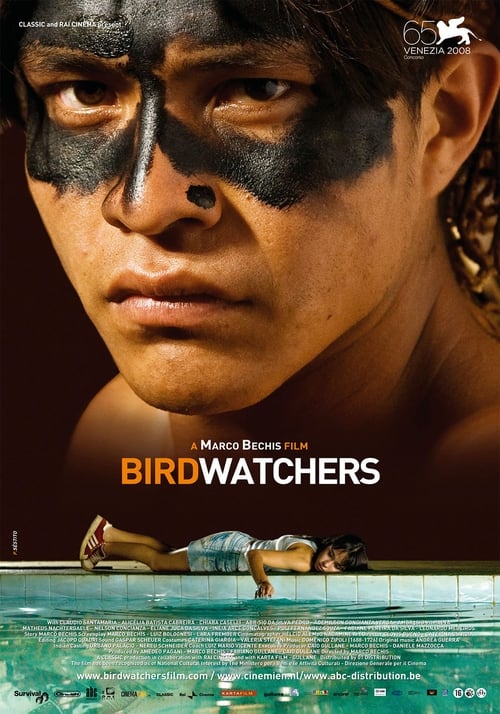
What motivates the character of Tato in Birdwatchers?
How does the relationship between Tato and his father evolve throughout the film?
What role does the land play in the conflict faced by the indigenous community in Birdwatchers?
How does the character of the birdwatcher influence the events in Birdwatchers?
What is the significance of the birdwatching motif in the film?
Should I watch it?
Ask Your Own Question

What is the plot?
Sorry, we aren't able to watch and write up a full detailed plot yet. Check back in a few days.
More Movies Like This
Browse All Movies →

What is the ending?
In the ending of "Birdwatchers," the conflict between the indigenous Guarani people and the landowners escalates, leading to a tragic confrontation. The Guarani, led by their leader, face the harsh realities of their struggle for land and identity. The film concludes with a sense of unresolved tension, highlighting the ongoing plight of the indigenous community.
As the final scenes unfold, the narrative begins with the Guarani community gathering in their village. The atmosphere is heavy with anticipation and anxiety as they prepare for a confrontation with the landowners who have encroached upon their territory. The leader of the Guarani, a man deeply connected to his heritage and the land, expresses his determination to protect their rights and way of life. His internal struggle is palpable; he feels the weight of his people's history and the urgency of their current plight.
The scene shifts to the landowners, who are depicted as powerful and unyielding. They are shown discussing their plans to further exploit the land, dismissing the Guarani's claims with a sense of entitlement. This juxtaposition highlights the stark contrast between the two groups--the Guarani, fighting for survival and dignity, and the landowners, driven by greed and a sense of superiority.
As tensions rise, the Guarani decide to take a stand. They gather their community and prepare to confront the landowners. The leader rallies his people, invoking their shared history and the importance of their connection to the land. The emotional weight of this moment is significant; it is not just a fight for land but a fight for their identity and future.
The confrontation occurs in a tense standoff, where words are exchanged, and the stakes become clear. The landowners, armed and aggressive, represent the oppressive forces that the Guarani have faced for generations. The leader of the Guarani stands firm, embodying the spirit of resistance, but the situation quickly escalates into violence. The emotional turmoil is evident on both sides, as fear, anger, and desperation collide.
In the chaos that ensues, the leader of the Guarani is tragically killed, a moment that reverberates through the community. His death symbolizes the loss of hope and the harsh reality of their struggle. The remaining members of the Guarani community are left to grapple with their grief and the uncertain future that lies ahead. The film closes on a somber note, with the surviving characters reflecting on their loss and the ongoing fight for their rights.
The fate of the main characters is marked by tragedy and resilience. The leader's death leaves a void in the community, but it also ignites a deeper resolve among the Guarani to continue their fight. The film ends without resolution, emphasizing the ongoing nature of their struggle and the broader themes of identity, land rights, and the fight against oppression. The final images linger on the landscape, a poignant reminder of the connection between the Guarani and their ancestral land, underscoring the film's exploration of cultural survival in the face of adversity.
Is there a post-credit scene?
The movie "Birdwatchers," produced in 2008, does not contain a post-credit scene. The film concludes its narrative without any additional scenes or content after the credits roll. The story wraps up with a focus on the themes of cultural conflict, the relationship between indigenous people and their land, and the impact of modernity on traditional lifestyles. The ending leaves viewers with a sense of reflection on these issues, but there are no further developments or scenes presented after the credits.
What motivates the character of Tato in Birdwatchers?
Tato, a young indigenous man, is driven by a deep connection to his ancestral land and a desire to protect it from encroaching development. His internal conflict arises from the tension between his traditional upbringing and the modern world, as he grapples with the impact of outside forces on his community.
How does the relationship between Tato and his father evolve throughout the film?
Initially, Tato's father, a traditional leader, is skeptical of Tato's modern ideas and his interest in birdwatching. As the story progresses, their relationship is tested by differing views on tradition and progress. Tato's father ultimately comes to understand Tato's passion and the importance of preserving their culture, leading to a reconciliation of their beliefs.
What role does the land play in the conflict faced by the indigenous community in Birdwatchers?
The land is central to the identity of the indigenous community, representing their heritage and way of life. The encroachment of developers threatens not only their physical territory but also their cultural existence. The struggle to protect their land becomes a symbol of their fight for survival and autonomy.
How does the character of the birdwatcher influence the events in Birdwatchers?
The birdwatcher, an outsider, represents a bridge between the indigenous community and the outside world. His presence brings attention to the beauty of the land and the plight of the indigenous people. However, he also inadvertently complicates the situation, as his interest in the birds highlights the exploitation of the land and the community's struggles.
What is the significance of the birdwatching motif in the film?
Birdwatching serves as a metaphor for observation and understanding. It reflects the characters' desire to connect with nature and their heritage. The act of watching birds parallels the community's struggle to be seen and heard in a world that often overlooks their existence, emphasizing themes of awareness and preservation.
Is this family friendly?
"Birdwatchers," produced in 2008, is a film that explores themes of cultural conflict, identity, and the impact of modernization on indigenous communities. While it offers a rich narrative, it contains several elements that may not be suitable for children or sensitive viewers.
-
Violence and Conflict: The film depicts tensions between indigenous people and land developers, which can include scenes of confrontation and aggression. These moments may be unsettling for younger audiences.
-
Cultural Tensions: The portrayal of the struggles faced by the indigenous community can be intense, highlighting issues of displacement and loss, which may be difficult for some viewers to process.
-
Emotional Struggles: Characters experience deep emotional pain related to their identity and heritage, which may evoke strong feelings of sadness or discomfort.
-
Mature Themes: The film addresses complex themes such as colonialism, exploitation, and the fight for rights, which may be challenging for children to understand fully.
Overall, while "Birdwatchers" offers a poignant narrative, its mature themes and emotional depth may not be appropriate for all audiences, particularly younger viewers.









