










Loading additional questions...
Popular
What incident causes the main character, Veronica, to question her reality?
How does Veronica's behavior change after the accident?
What role does Veronica's family play in her emotional state throughout the film?
What does Veronica discover about the potential victim of the accident?
How does the film portray Veronica's internal struggle with guilt and denial?
Should I watch it?
Ask Your Own Question

What is the plot?
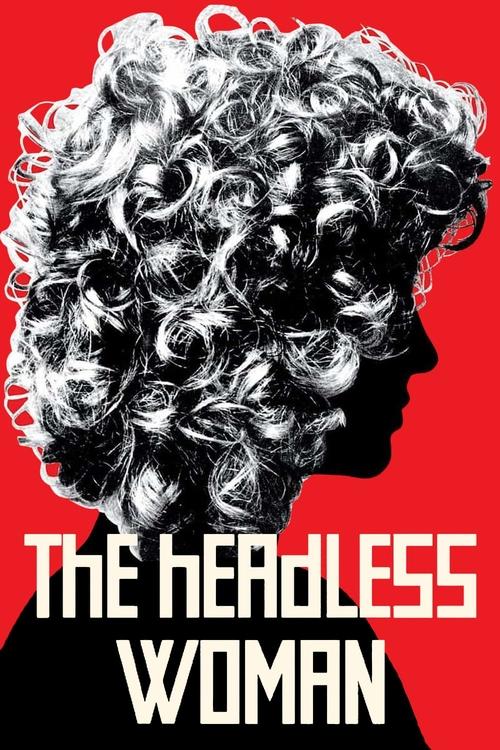
Verónica "Vero" wakes on the edge of a crisis she does not yet understand, and Lucrecia Martel lets the whole story unfurl as if the world itself has lost its bearings. In the Salta region of northwestern Argentina, Vero is driving home from a family gathering along a lonely rural road when her mobile phone rings and she glances down for only a moment. That tiny distraction is enough. Something strikes the car with a dull, violent jolt. The windshield shudders, her body snaps forward, and the force seems to knock her head against the glass. For a second she is frozen in the night, stunned and breathing hard, hearing only the hum of the road and the ringing phone. She does not get out. She does not check. She simply keeps driving, and the film's central wound is opened in that silence. What she has hit is never made fully certain: the image and the aftermath remain deliberately ambiguous, and the entire narrative grows out of that uncertainty.
Vero is a bourgeois, middle-aged dentist, a woman whose life is supposed to be orderly, secure, and professional. She works in the family dental practice with her brother, and that detail matters because the film keeps placing her inside a web of class privilege, medical routines, and social insulation. After the impact, she reaches the hospital and is examined for a head injury or concussion. The setting is clinical, fluorescent, and oddly detached, as though her body is already becoming a record other people can manage. She is shaken, disoriented, and not fully herself. The city and the countryside feel equally unstable now, as if the road has cracked open the structure of her identity. From this point forward, she moves through the story in a half-dazed state, unable to settle on what happened, unable to trust the evidence of her own senses.
At home, Vero slips into the domestic machinery of her life, but everything around her now feels slightly wrong. Her husband, Marcos, notices her confusion. He is skeptical when she begins to voice her fear, and at first he treats her anxiety as shock, confusion, maybe guilt without substance. Vero, however, cannot let it go. The collision returns to her in fragments, and she begins to suspect the worst: that she may have killed a person rather than an animal. That possibility hangs over every scene. She confesses to Marcos that she thinks she hit someone on the highway, and the moment lands with a strange mix of intimacy and disbelief. Marcos does not immediately accept it. He is concerned, but he is also trying to keep reality in a shape that can be managed. The film's tension grows out of that mismatch between her dread and his reluctance.
Marcos begins helping, and Juan Manuel, Marcos's cousin and a man with ties to the police, becomes another crucial intermediary. He functions almost like a social hinge between private guilt and public institutions, between the family's desire to contain the event and the official world that might expose it. Through him, the family checks whether there has been any report of an accident on that road. There is none. No police report, no body logged, no official sign that anything terrible happened there at all. That absence does not comfort Vero. It makes the event feel even more unreal, like something that has occurred outside the legal and social framework that would make it legible. The film keeps pressing on this instability: if no report exists, did the event happen as she remembers it? If something did happen, why is there no trace?
They return to the road. The landscape is sparse and exposed, a lonely stretch outside Salta where the scrub and darkness seem to swallow evidence. There, the family finds a dead dog. This becomes the first concrete explanation they can grasp and use. The body of the dog appears to offer a way to seal the crack in reality: perhaps Vero struck the animal, not a person. Marcos and the others lean toward this possibility, and for a moment the story seems to slide into a less horrifying register. Yet Martel never allows relief to settle fully. The rearview-mirror image from the night of the collision, the shape of the unseen thing, and Vero's own persistent unease keep undermining the dog explanation. Even if the dog is real, it may not be the whole truth. The film turns on that moral remainder.
As the days pass, Vero drifts through her own life like a woman sleepwalking through the wrong house. She continues moving through family spaces, social obligations, and professional routines, but she is increasingly detached from what is happening around her. Her face is drawn, her attention partial, her mind elsewhere. The film is fascinated by this trance state: Vero seems to see people without fully recognizing them, hear conversations without absorbing them, and inhabit rooms without belonging to them. Her middle-class environment, instead of grounding her, becomes another source of unreality. Doors open and close, drinks are poured, meals are eaten, and everything looks ordinary from the outside while she quietly falls apart within it. The emotional pressure builds not through overt action but through the eerie way normal life continues around a private catastrophe.
One of the film's great revelations is that the family's response is not simply emotional support but quiet erasure. Traces of the day begin to vanish. The hospital records are removed. The x-rays disappear. Her brother's access to the clinic makes the disappearance especially chilling, because the people who should preserve evidence become the ones who help destroy it. Her car is repaired, too, smoothing away the physical sign of impact. What might have been investigated becomes absorbable. The bourgeois family's instinct is not to pursue truth but to restore appearance. They are careful, polite, and efficient, and their care becomes a mechanism for concealment. This is one of the film's sharpest social insights: privilege does not merely protect; it cleans up.
The story keeps tightening around Vero's psychological collapse. She becomes unsure not only of what she hit, but of what she is allowed to know. Her own memory seems to betray her. The film repeatedly places her in situations where she appears present but is actually far away, as if some part of her has stepped outside the frame. Her sense of time becomes unstable. The days after the collision blur into each other. The hospital, the home, the road, the family gathering, and the empty spaces in between feel connected by a dream logic rather than a factual one. The title itself begins to feel literal: Vero is present in body but stripped of orientation, as though her head has been removed from the ordinary world of cause and effect.
The atmosphere darkens further when the news breaks of a gruesome discovery: a child's body is found drowned in a canal. The film does not answer this with any comforting certainty. Instead, it drops the discovery into the story like a stone into still water, letting ripples of dread spread outward. The canal matters because it links back to the roadside environment where something may have been struck near the drainage area. It also transforms the unresolved hit-and-run from a vague moral anxiety into something much more horrifying: perhaps Vero did not hit a dog at all, but a child. Or perhaps the child's death is connected to the event in some other way. The film does not fix the relationship in a way that would satisfy a conventional mystery. The discovery remains emotionally devastating precisely because it cannot be neatly assigned.
A crucial detail emerges around the opening roadside scene: children and a dog had been playing near a canal beside the road. That image, which had seemed incidental, now returns with terrible force. The possibility that one of those children might have been struck or lost becomes harder to dismiss. The film's tension comes from this accumulation of partial knowledge. Nothing is directly proven, yet everything points toward something hidden and awful. Vero's fear is not shown to be irrational; it is shown to be unable to find a stable object. She may have caused a child's death, but the story refuses to hand the audience certainty in place of guilt. That refusal is the film's formal and moral engine.
The social and emotional confrontations remain quiet but devastating. Vero confronts Marcos with what she believes she has done. Marcos confronts her uncertainty with skepticism and concern, trying to hold the family together while also preserving some version of reality that he can live with. Juan Manuel confronts the police system indirectly, using his connections to verify that no official accident exists, and in doing so helps strengthen the family's ability to deny the event. No one explodes. No one confesses publicly. Instead, every confrontation is filtered through politeness, evasion, and strategic uncertainty. The result is more unsettling than a melodramatic argument would be. The film shows how guilt can be managed socially without being resolved morally.
A later sequence intensifies the sense of erasure and substitution. Vero revisits the world around the accident and finds that even the places where she should be able to anchor her memory have been stripped of proof. The hospital no longer preserves her trail. The hotel room connected to that day has no record of her stay. The family's interventions have made the incident harder to reconstruct from the outside, but they also make Vero feel as though she is disappearing from her own life. She even changes her appearance, dyeing her blond hair dark again, returning to a more natural color, as if trying to retreat into a prior self or erase the visible sign of dislocation. The transformation is subtle, but it matters: she is not simply covering up the accident; she is being absorbed back into a system that wants everything smooth, legible, and intact.
The film's most haunting emotional strategy is to let the world behave as though nothing irreparable has happened. Meals are eaten. Family gatherings continue. People smile with careful gentleness. Vero is surrounded by people who care about her, but that care is threaded with denial. The social order reasserts itself through comfort, silence, and practical solutions. This makes the missing truth more oppressive, not less. The body can be repaired. The car can be fixed. The records can vanish. But the interior rupture remains. Vero's mind cannot be patched in the same way.
In the final stretch, the film turns back toward the beginning without ever solving the central event in a definitive legal sense. The road, the canal, the dead dog, the drowned child, the missing records, the altered hair, the false normality of family life--all of these elements now sit together in a single poisoned field of meaning. The ending does not deliver confession, arrest, or public reckoning. Instead, it reveals the cruel power of social camouflage. The family has done what it can to absorb the incident into silence, and outwardly that silence works. But the discovery of the child's body prevents any genuine closure. The possibility of what Vero hit remains alive inside the film, even if it can never be proven in the ordinary way.
The final scenes return to Vero in a state that is calmer on the surface and more devastated underneath. She is still among her family, still within the fragile cocoon of bourgeois normality, but she has not been restored. If anything, she has become more ghostlike. The film ends without a clean revelation, yet it leaves the audience with a devastating moral impression: something terrible happened on that road, something the family has helped bury, and Vero must live on inside the gap between what she saw and what can be said. The dead dog may be the only death that is concretely linked to the collision, but the drowned child's body hangs over the entire story as the film's darkest possible truth. No one is punished. No neat answer arrives. The world goes on. That is the horror of the ending: the disaster is not resolved, only absorbed, and Vero remains alive inside the silence of what cannot be fully named.






What is the ending?
Is there a post-credit scene?
What incident causes the main character, Veronica, to question her reality?
Veronica, a well-off woman, accidentally hits something with her car while driving on a remote road. This incident triggers a series of psychological and emotional unraveling as she grapples with the possibility that she may have harmed someone.
How does Veronica's behavior change after the accident?
Following the accident, Veronica becomes increasingly detached and paranoid. She struggles with memory lapses and begins to isolate herself from her family and friends, leading to a sense of disconnection from her previous life.
What role does Veronica's family play in her emotional state throughout the film?
Veronica's family, particularly her husband and children, exhibit concern for her well-being but also seem to be oblivious to the depth of her psychological turmoil. Their attempts to support her often highlight her isolation and the growing rift between her and her loved ones.
What does Veronica discover about the potential victim of the accident?
As Veronica's paranoia deepens, she learns about a missing person case that may be connected to her accident. This discovery intensifies her internal conflict and fear, as she grapples with the implications of her actions and the possibility of having caused harm.
How does the film portray Veronica's internal struggle with guilt and denial?
Veronica's internal struggle is depicted through her fragmented thoughts and disjointed memories. She oscillates between denial of her involvement in the accident and guilt over the potential consequences, leading to a haunting sense of dread that permeates her daily life.







