




















Popular
What challenges does Primo Carnera face in his boxing career?
How does Carnera's relationship with his manager influence his career?
What personal sacrifices does Carnera make for his boxing career?
How does Carnera cope with the pressures of fame and public scrutiny?
What role does Carnera's Italian heritage play in his story?
Should I watch it?
Ask Your Own Question

What is the plot?
Sorry, we aren't able to watch and write up a full detailed plot yet. Check back in a few days.








What is the ending?
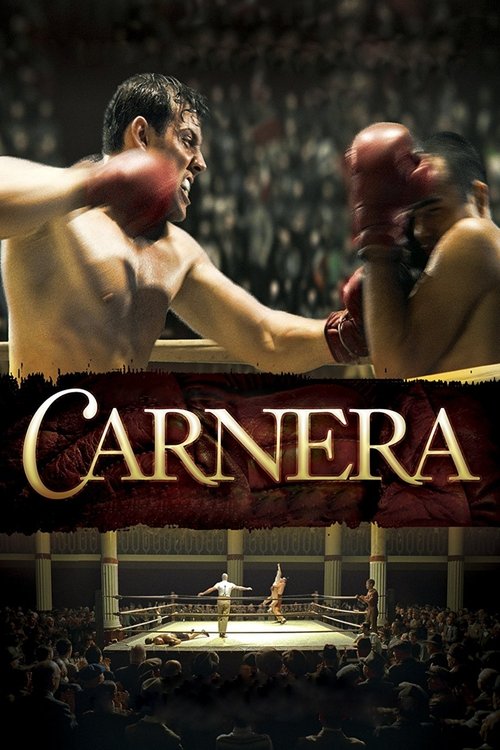
In the ending of "Carnera: The Walking Mountain," Primo Carnera faces his final boxing match against the reigning champion, Max Baer. Despite the intense struggle and the toll it takes on him, Carnera ultimately loses the fight. The film concludes with Carnera reflecting on his journey, the sacrifices he made, and the impact of his career on his life and those around him.
As the final act of "Carnera: The Walking Mountain" unfolds, the atmosphere is charged with anticipation. The scene opens in a packed arena, the crowd buzzing with excitement as the heavyweight championship match between Primo Carnera and Max Baer approaches. The camera pans over the audience, capturing the diverse faces of fans, each one eager to witness the clash of titans. The tension is palpable, and the stakes are high, not just for the fighters but for the legacy of boxing itself.
Primo Carnera, towering and imposing, stands in his corner, his expression a mix of determination and anxiety. He reflects on his journey from a humble beginning in Italy to becoming a heavyweight champion. Memories flash before him: the struggles he faced, the sacrifices he made, and the people who believed in him, including his supportive wife, who watches from the sidelines, her eyes filled with hope and concern. Carnera's internal conflict is evident; he grapples with the weight of expectations and the fear of failure.
As the bell rings, the fight begins. Carnera and Baer exchange powerful blows, each punch resonating with the crowd. The cinematography captures the raw intensity of the match, with close-ups of Carnera's face revealing his grit and determination. He fights valiantly, drawing on every ounce of strength he has, but Baer proves to be a formidable opponent. The fight is brutal, with Carnera taking heavy hits, yet he continues to push forward, embodying the spirit of a true fighter.
As the rounds progress, Carnera's stamina begins to wane. The audience can sense his struggle; he is not just fighting Baer but also battling his own limitations. The film juxtaposes the physicality of the match with Carnera's emotional turmoil, showcasing his resilience but also the toll that boxing has taken on him. His wife watches anxiously, her heart in her throat, as she knows the risks he faces in the ring.
In the final round, the fight reaches its climax. Carnera, exhausted but undeterred, makes one last push, hoping to turn the tide in his favor. However, Baer lands a decisive blow that sends Carnera to the canvas. The referee begins the count, and the arena falls silent, the weight of the moment hanging heavy in the air. Carnera struggles to rise, his body battered and bruised, but he embodies the spirit of perseverance. Despite his efforts, he cannot get back on his feet in time, and the referee calls the match in favor of Baer.
As the fight concludes, the camera captures Carnera's expression of defeat. He sits on the canvas, reflecting on his journey, the sacrifices he made, and the dreams he chased. The crowd erupts in mixed reactions, some cheering for Baer, while others show respect for Carnera's valiant effort. His wife rushes to his side, her concern evident as she comforts him. In this moment, the film emphasizes the emotional weight of defeat, showcasing the bond between them and the love that transcends the outcome of the fight.
In the aftermath, Carnera's fate is revealed. He may have lost the championship, but he gains a deeper understanding of himself and the impact he has had on the sport and his community. The film closes with Carnera walking away from the ring, a giant in stature but humbled by the experience. His journey is not just about boxing; it is about resilience, the human spirit, and the pursuit of dreams, regardless of the outcome. The final scenes depict him embracing his wife, symbolizing the support and love that will carry him forward, even in the face of defeat.
Is there a post-credit scene?
The movie "Carnera: The Walking Mountain" does not have a post-credit scene. The film concludes its narrative without any additional scenes or content after the credits roll. The story wraps up with the life and struggles of Primo Carnera, focusing on his journey as a boxer and the challenges he faced both in and out of the ring. The ending emphasizes his legacy and the impact he had on the sport, leaving the audience with a sense of closure regarding his character and story.
What challenges does Primo Carnera face in his boxing career?
Primo Carnera faces numerous challenges throughout his boxing career, including intense physical training, the pressure of public expectations, and the manipulation by those around him who seek to exploit his talent for their own gain. He struggles with the physical toll of the sport, the mental strain of being in the spotlight, and the emotional burden of being seen as a giant both in stature and in the boxing world.
How does Carnera's relationship with his manager influence his career?
Carnera's relationship with his manager, who is portrayed as both a mentor and a manipulator, significantly influences his career. The manager sees Carnera's potential and pushes him into the limelight, but also exploits him financially and emotionally. This dynamic creates a tension where Carnera must navigate his loyalty to his manager while also seeking to assert his own identity and desires.
What personal sacrifices does Carnera make for his boxing career?
Primo Carnera makes several personal sacrifices for his boxing career, including distancing himself from his family and friends, enduring grueling training sessions, and sacrificing his health for the sake of success in the ring. His dedication to boxing often leads to loneliness and a sense of isolation, as he prioritizes his career over personal relationships.
How does Carnera cope with the pressures of fame and public scrutiny?
Carnera copes with the pressures of fame and public scrutiny through a mix of resilience and vulnerability. He often feels overwhelmed by the expectations placed upon him, leading to moments of self-doubt and anxiety. Despite this, he tries to maintain a strong exterior, relying on his inner strength and the support of a few close allies to navigate the challenges of being a public figure.
What role does Carnera's Italian heritage play in his story?
Carnera's Italian heritage plays a significant role in his story, influencing his identity and the way he is perceived by the public. As an immigrant in America, he faces both admiration and prejudice, which shapes his experiences in the boxing world. His heritage is a source of pride for him, but it also complicates his journey as he grapples with the expectations of representing his country while trying to succeed in a foreign land.
Is this family friendly?
"Carnera: The Walking Mountain" is a biographical drama that tells the story of Primo Carnera, an Italian heavyweight boxing champion. While the film focuses on Carnera's life and career, it does contain several elements that may be considered objectionable or upsetting for children or sensitive viewers.
-
Violence and Boxing Matches: The film features intense boxing scenes that depict physical violence, including brutal punches and knockouts. These scenes may be graphic and could be distressing for younger audiences.
-
Themes of Exploitation: Carnera's story includes elements of exploitation in the boxing world, where he is manipulated by promoters and faced with the harsh realities of fame and fortune. This theme may be difficult for younger viewers to fully understand.
-
Emotional Struggles: The film explores Carnera's internal conflicts, including feelings of isolation, pressure, and the burden of expectations. These emotional struggles may resonate deeply but could also be heavy for sensitive viewers.
-
Historical Context: The film is set during a tumultuous time in history, including references to World War II and the impact of fascism in Italy. These historical elements may be unsettling for some viewers.
-
Personal Loss and Tragedy: Carnera experiences personal losses and tragedies throughout his life, which are depicted in a poignant manner. These moments may evoke strong emotions and could be upsetting for some audiences.
Overall, while "Carnera: The Walking Mountain" offers a compelling narrative about resilience and determination, its themes and content may not be suitable for all children or sensitive viewers.