























Popular
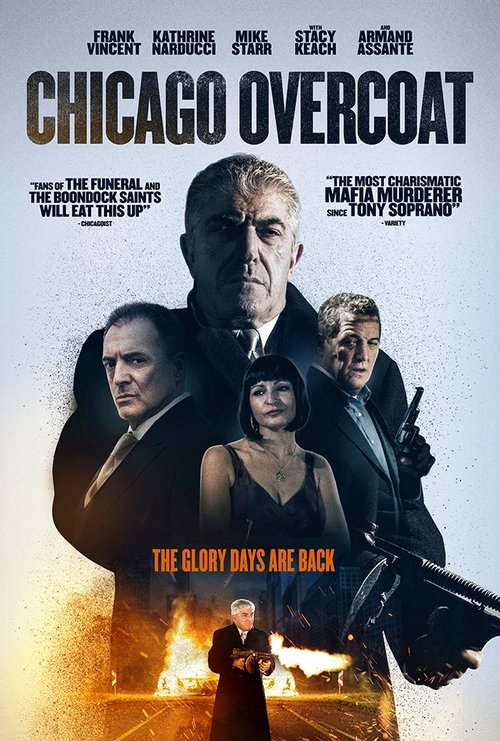
Who is the main character in Chicago Overcoat and what motivates him throughout the film?
What role does the character of Detective O'Leary play in the story?
How does the relationship between Lou Marazano and his former partner evolve throughout the film?
What is the significance of the title 'Chicago Overcoat' in relation to the plot?
What are the key events that lead to Lou Marazano's decision to return to his violent past?
Should I watch it?
Ask Your Own Question

What is the plot?
Sorry, we aren't able to watch and write up a full detailed plot yet. Check back in a few days.




What is the ending?
In the ending of "Chicago Overcoat," the story culminates in a tense confrontation between the main characters, leading to a tragic resolution that highlights the consequences of their choices. The protagonist, Lou, faces the repercussions of his past actions, and the film concludes with a sense of loss and inevitability.
As the final act unfolds, we find Lou, a retired mob enforcer, grappling with the ghosts of his past. He is haunted by memories of his former life and the violence that accompanied it. The atmosphere is thick with tension as Lou's internal struggle becomes increasingly evident. He is not just battling external threats but also the weight of his own conscience.
In a pivotal scene, Lou confronts his former associates, who are now embroiled in a power struggle. The setting is dimly lit, reflecting the moral ambiguity of the characters involved. Lou's motivations are clear; he seeks redemption but is also drawn back into the world he tried to leave behind. The dialogue is sharp, filled with unspoken regrets and the bitterness of betrayal.
As the confrontation escalates, Lou's resolve is tested. He is faced with a choice: to continue down the path of violence or to seek a different way out. The stakes are high, and the tension is palpable. The camera captures the subtle shifts in Lou's expression, revealing his internal conflict. He is a man caught between loyalty and the desire for a peaceful life.
In the climax, the violence erupts, and Lou's fate is sealed. The scene is chaotic, with gunfire and shouts echoing in the air. Lou's past catches up with him in a brutal manner, and the consequences of his choices become painfully clear. The emotional weight of the moment is heavy, as Lou realizes that there is no escaping the life he once led.
As the dust settles, we see the aftermath of the confrontation. Lou's fate is tragic; he is left to confront the reality of his decisions alone. The film closes on a somber note, emphasizing the themes of loss and the inescapable nature of one's past. The final images linger on Lou's face, reflecting a mixture of regret and acceptance, leaving the audience with a haunting sense of closure.
In summary, the ending of "Chicago Overcoat" serves as a poignant reminder of the consequences of a life steeped in crime and the struggle for redemption amidst a world of violence. Each character's fate is intertwined with the choices they made, culminating in a powerful conclusion that resonates with the film's overarching themes.
Is there a post-credit scene?
The movie "Chicago Overcoat," produced in 2009, does not feature a post-credit scene. The film concludes its narrative without any additional scenes or content after the credits roll. The story wraps up with a focus on the main characters and their arcs, leaving the audience with a sense of closure regarding the events that transpired throughout the film.
Who is the main character in Chicago Overcoat and what motivates him throughout the film?
The main character in Chicago Overcoat is Lou Marazano, a retired hitman who is drawn back into the world of crime after the murder of his former partner. His motivation stems from a mix of loyalty to his past, a desire for revenge, and the need to confront his own legacy as a hitman.
What role does the character of Detective O'Leary play in the story?
Detective O'Leary is a key character who is investigating the murders connected to Lou Marazano's past. He represents the law and the moral complexities of the criminal world, often clashing with Lou's methods and motivations. O'Leary's pursuit of justice adds tension to the narrative as he tries to piece together the connections between the murders.
How does the relationship between Lou Marazano and his former partner evolve throughout the film?
Lou Marazano's relationship with his former partner, who is murdered early in the film, is central to the plot. Flashbacks reveal their camaraderie and the bond they shared in their criminal activities. Lou's grief and sense of betrayal drive him to seek vengeance, highlighting the emotional weight of their friendship and the impact of loss on Lou's psyche.
What is the significance of the title 'Chicago Overcoat' in relation to the plot?
The title 'Chicago Overcoat' refers to a specific type of coat worn by mobsters, symbolizing the criminal underworld that Lou Marazano is a part of. It represents the cold, harsh reality of the life he once led and the inevitability of death that looms over the characters. The coat serves as a metaphor for the burdens of the past that Lou must confront.
What are the key events that lead to Lou Marazano's decision to return to his violent past?
Key events that lead Lou Marazano to return to his violent past include the shocking murder of his former partner, which reignites old memories and unresolved feelings of loyalty. Additionally, the pressure from the criminal underworld and the sense of unfinished business compel Lou to take action, culminating in a series of violent confrontations that force him to confront his identity as a hitman.
Is this family friendly?
"Chicago Overcoat," produced in 2009, is not considered family-friendly due to its mature themes and content. The film contains several potentially objectionable aspects that may be upsetting for children or sensitive viewers:
-
Violence: The film features scenes of gun violence and murder, which are depicted in a gritty and realistic manner, contributing to a dark atmosphere.
-
Crime and Corruption: The narrative revolves around organized crime, showcasing illegal activities and the moral complexities associated with them, which may be difficult for younger audiences to understand.
-
Strong Language: The dialogue includes profanity and harsh language, reflecting the rough environment and the characters' emotional states.
-
Adult Themes: The film explores themes of betrayal, loss, and the consequences of a life of crime, which may be heavy and unsettling for younger viewers.
-
Drug Use: There are references to drug use and the impact it has on the characters' lives, which may not be suitable for all audiences.
Overall, the film's tone and content are geared towards an adult audience, making it inappropriate for children or those sensitive to such themes.









