









Popular
How does Jack's relationship with his father influence his actions throughout the film?
What role does the character of Sam play in Jack's journey?
What motivates Jack Said to become involved in the criminal underworld?
How does Jack's perception of loyalty change throughout the film?
What are the key turning points in Jack's character development?
Should I watch it?
Ask Your Own Question

What is the plot?
Sorry, we aren't able to watch and write up a full detailed plot yet. Check back in a few days.








What is the ending?
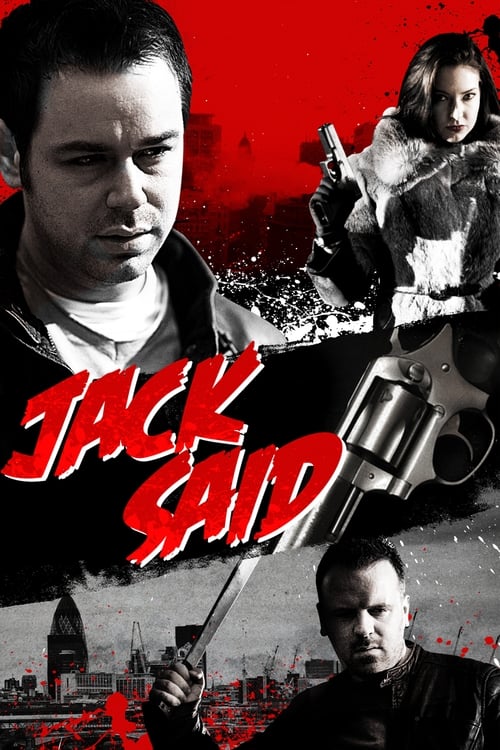
In the ending of "Jack Said," Jack confronts the consequences of his actions and the tangled web of betrayal surrounding him. He faces off against his enemies, leading to a violent climax that ultimately results in his demise. The film concludes with a sense of unresolved tension, leaving the fates of several characters ambiguous.
As the final act unfolds, Jack Said finds himself cornered by the very people he once trusted. The atmosphere is thick with tension as Jack, a man who has navigated the treacherous underworld, realizes that his past decisions have led him to this moment of reckoning. The scene is set in a dimly lit warehouse, a stark contrast to the vibrant life he once led. Shadows dance across the walls, mirroring the turmoil within Jack.
Jack's internal struggle is palpable; he grapples with feelings of betrayal and desperation. He recalls the faces of those he has lost along the way, each memory weighing heavily on his conscience. As he prepares for the confrontation, his heart races, a mix of fear and determination coursing through him. He knows that this is not just a fight for survival but a final stand against the chaos that has consumed his life.
The confrontation erupts violently. Jack faces off against his enemies, a group that includes former allies turned adversaries. The air is thick with the sound of gunfire and shouts, each echoing the finality of Jack's choices. In the chaos, Jack fights fiercely, but the odds are stacked against him. He is outnumbered, and the realization dawns on him that he may not escape this time.
As the dust settles, Jack is gravely wounded. He collapses to the ground, the weight of his decisions crashing down on him. In his final moments, he reflects on the life he has led, the choices he made, and the people he has hurt. The camera lingers on his face, capturing the mix of regret and acceptance as he takes his last breaths.
Meanwhile, the fates of other key characters unfold in parallel. Jack's closest ally, who has been torn between loyalty and self-preservation, watches the chaos unfold from a distance. This character is left to grapple with the consequences of their inaction, haunted by the knowledge that they could have intervened but chose not to. The emotional weight of this decision hangs heavily, suggesting that the cycle of betrayal and violence may continue.
As the film draws to a close, the screen fades to black, leaving the audience with a lingering sense of uncertainty. The unresolved fates of the remaining characters serve as a stark reminder of the film's themes of loyalty, betrayal, and the inescapable consequences of one's choices. The final scene encapsulates the tragic nature of Jack's journey, a poignant reflection on the cost of living in a world where trust is a rare commodity.
Is there a post-credit scene?
In the movie "Jack Said," there is no post-credit scene. The film concludes without any additional scenes or content after the credits roll. The narrative wraps up with the resolution of the main plot, focusing on the character of Jack, his struggles, and the consequences of his actions throughout the story. The absence of a post-credit scene allows the audience to reflect on the film's themes and character arcs without any further distractions.
How does Jack's relationship with his father influence his actions throughout the film?
Jack's relationship with his father is strained and filled with unresolved issues. His father's disapproval and absence create a void in Jack's life, pushing him to seek validation through his criminal endeavors. This dynamic fuels Jack's reckless decisions and his quest for recognition, as he attempts to prove himself worthy in a world that constantly undermines him.
What role does the character of Sam play in Jack's journey?
Sam serves as both a mentor and a cautionary figure in Jack's life. Initially, he introduces Jack to the criminal world, providing him with opportunities that seem enticing. However, as the story unfolds, Sam's influence becomes a double-edged sword, leading Jack into dangerous situations that test his moral compass and ultimately force him to confront the consequences of his choices.
What motivates Jack Said to become involved in the criminal underworld?
Jack Said, portrayed as a complex character, is driven by a mix of desperation and ambition. His initial involvement in the criminal underworld stems from a need to escape his mundane life and the desire for power and respect. As he navigates through the treacherous landscape of crime, his motivations evolve, revealing deeper insecurities and a longing for acceptance.
How does Jack's perception of loyalty change throughout the film?
At the beginning of the film, Jack views loyalty as a fundamental aspect of his relationships, particularly with his criminal associates. However, as betrayals and shifting alliances occur, his understanding of loyalty becomes increasingly complicated. Jack grapples with feelings of betrayal, leading him to question whom he can truly trust, which ultimately shapes his character arc and decisions.
What are the key turning points in Jack's character development?
Key turning points in Jack's character development include his initial foray into crime, where he experiences a rush of power, followed by moments of betrayal that shatter his trust in others. A significant turning point occurs when he faces the consequences of his actions, leading to a moment of introspection where he must choose between continuing down a dark path or seeking redemption. These moments are pivotal in shaping his transformation from a naive participant to a hardened player in the criminal world.
Is this family friendly?
"Jack Said," produced in 2009, is not considered family-friendly. The film contains several potentially objectionable or upsetting elements that may be unsuitable for children or sensitive viewers.
-
Violence: The film features scenes of physical violence, including fights and confrontations that can be graphic and intense.
-
Crime and Drug Use: The narrative revolves around criminal activities, including drug dealing, which may be disturbing for younger audiences.
-
Strong Language: There is frequent use of profanity throughout the film, which may not be appropriate for children.
-
Adult Themes: The film explores dark themes such as betrayal, revenge, and moral ambiguity, which may be challenging for younger viewers to understand.
-
Emotional Distress: Characters experience significant emotional turmoil, including feelings of despair and hopelessness, which could be upsetting for sensitive individuals.
Overall, the film's mature content and themes make it more suitable for an adult audience.








