




Popular
What challenges do the wrestlers face on the road during their travels?
How does the relationship between Colt Cabana and his fellow wrestlers evolve throughout the film?
What specific moments highlight the personal sacrifices made by the wrestlers?
How do the wrestlers cope with the physical demands of their profession during the tour?
What role does humor play in the interactions between the wrestlers on the road?
Should I watch it?
Ask Your Own Question

What is the plot?
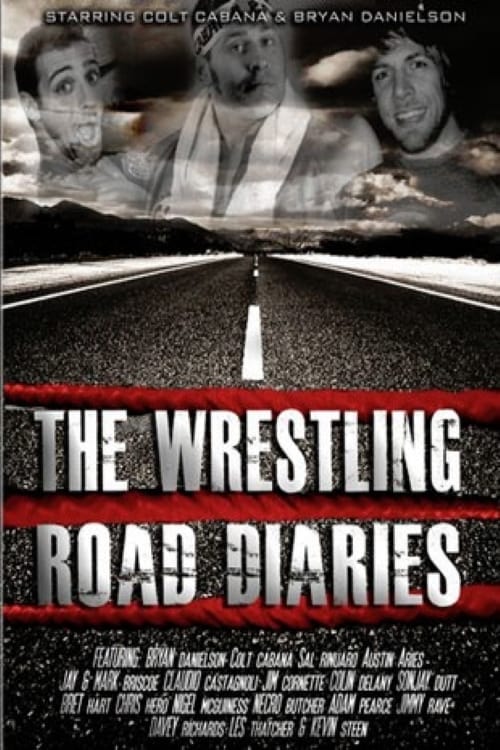
The Wrestling Road Diaries is not a fictional thriller with deaths, secrets, or a hidden climax; it is a road documentary that follows Colt Cabana, Sal Rinauro, and Bryan Danielson over a ten-day independent wrestling run across America. Its narrative is built from travel, matches, training sessions, and backstage camaraderie, with Bryan Danielson's looming move toward WWE and his health concerns giving the film its strongest sense of tension.
The film opens in motion, not with a dramatic setup but with the lived-in rhythm of the wrestling road, and it quickly establishes the three men as both workers and companions. Colt Cabana, whose real name is Scott Colton, comes across as the loudest comic force in the group, the guy always ready with a joke, a prank, or a bit of mischief to lighten the hours between shows. Sal Rinauro is the quieter third wheel in the traveling trio, but he is fully part of the same grind, sharing the van, the meals, the locker rooms, and the endless miles with the others. Bryan Danielson, still wrestling under his real name in the documentary's era, is the most emotionally charged presence because the film keeps circling back to the fact that he is on the edge of a major career transition.
From the start, the road itself feels like a character. The wrestlers move from venue to venue across America, and each stop is another small chapter in the life of an independent performer: drive, unpack, greet people, warm up, wrestle, talk, laugh, and get back on the road. The documentary's power comes from how ordinary that repetition feels and how much it reveals. These are not larger-than-life heroes in a scripted storyline. They are exhausted, funny, competitive, talented men trying to keep their bodies working and their careers moving forward. The constant travel gives the film its pace, and the sense of being trapped in motion builds a quiet emotional pressure beneath all the humor.
As the journey unfolds, the film shows the trio not only as performers but as trainers for younger wrestlers. That detail matters because it expands their identities beyond their own careers. They are not just trying to survive the indie circuit; they are also passing knowledge down to the next generation. The training scenes give the documentary a sense of continuity, as if the road is not only about today's bookings but about the future of wrestling itself. The older, more experienced men correct, joke, demonstrate, and guide. Their teaching is part mentorship and part confession: this is what it takes, this is what hurts, this is what you will become if you stay in this life long enough.
The lightest scenes often revolve around Cabana's instinct for absurdity and the trio's easy chemistry. The documentary highlights jokes, pranks, and a playful competitiveness that keeps the long days from collapsing into monotony. One of the most memorable comic moments is a watermelon-eating contest between Colt Cabana and Sal Rinauro, which captures the goofy, almost juvenile energy that coexists with the seriousness of the wrestlers' working lives. These moments are not just filler. They show how the wrestlers survive the road: by turning boredom into bits, fatigue into teasing, and stress into laughter.
Yet under that surface, Bryan Danielson's storyline gives the documentary its deepest tension. The film makes clear that he is approaching a major turning point, with a WWE developmental deal waiting in the wings and his future on the independent scene uncertain. That uncertainty hangs over many of his scenes. He is not just another wrestler on the route; he is someone standing at the threshold of a different life. The possibility of leaving the independents behind gives even the most ordinary conversations a bittersweet edge. He is still here, still traveling, still wrestling, but the documentary knows the road is about to split.
That transition is complicated by his health. The film stresses that Danielson is dealing with medical examinations and high liver enzymes, which inject a real-world fragility into what might otherwise feel like a celebratory career ascent. The body that has carried him through years of wrestling is suddenly part of the story in a more alarming way. The documentary does not dramatize this into a fake crisis, but it quietly lets the concern settle in. The future is not only about opportunity; it is about whether the body can handle the next step. That gives the road trip an undertow of anxiety. Every match and every mile feels like a test.
The documentary's structure remains loose and observational, so there is no single villain or showdown, but there are still moments of friction and pressure. The strongest conflict is internal and professional: the wrestlers versus the instability of independent wrestling, versus exhaustion, versus uncertainty, versus the knowledge that the road never really ends. Danielson's impending change amplifies that tension because it means the group is traveling in a moment that may never return. The banter between the men becomes a way of holding time still, even as the documentary keeps moving forward.
Throughout the run, the film captures the everyday realities of indie wrestling life. The men perform in different venues, meet fans, prepare for matches, and keep themselves going with whatever food, sleep, and energy they can manage. The travel scenes are as important as the wrestling. The long stretches between appearances emphasize the physical and mental grind. Nothing is glamorous for long. The road is a blur of highways, hotel rooms, parking lots, locker rooms, and arenas, and the film understands that those in-between spaces are where the real story lives.
Because it is a documentary, there are no deaths, no murders, no hidden conspiracies, and no final twist in the conventional sense. The biggest revelation is simply the reality of the life being documented: wrestling as work, wrestling as friendship, and wrestling as a profession that can be both thrilling and precarious at once. The film reveals how much these men rely on humor, repetition, and mutual understanding to survive the strain of the circuit. It also reveals how much of a wrestler's future can hinge on health, timing, and opportunity, especially for someone like Danielson who is about to step into a larger stage.
As the ten-day journey progresses, the documentary builds toward its emotional center not through a climactic match result but through the sense that Bryan Danielson is leaving one world for another. The other two men remain part of the same road culture, but Danielson's path is narrowing toward change. That creates a subtle melancholy beneath the joking and the matches. The audience watches a snapshot of three wrestlers together at a moment that will soon pass. The road keeps going, but the configuration of the group is temporary.
The final stretch of the documentary does not resolve like fiction because it is not trying to. It ends as the road itself ends: with movement, work, and the awareness that tomorrow will bring another booking, another drive, another chapter. Bryan Danielson's looming WWE move remains the most important endpoint, and his health concerns remain part of the uneasy background, but the film does not offer a dramatic farewell speech or a grand closing confrontation. Instead, it leaves viewers with the feeling of having spent time inside a very specific, very real world. The trio's jokes, routines, and shared mileage become the memory the film preserves.
So the complete story of The Wrestling Road Diaries is the story of three independent wrestlers living out the ordinary chaos of the road, with Colt Cabana bringing comedy, Sal Rinauro adding to the camaraderie, and Bryan Danielson standing on the verge of a career-defining transition while wrestling with his health and uncertainty. The documentary begins in motion and ends in motion, and that is exactly its point: for these men, life is not a single climax but a continuous, exhausting, funny, and fragile journey across America.






What is the ending?
In the ending of The Wrestling Road Diaries, the film culminates with a series of emotional moments as the main characters reflect on their journeys. The film closes with a sense of camaraderie and the realization of the sacrifices made for their passion for wrestling.
As the film progresses towards its conclusion, we find ourselves in a small, dimly lit venue where the atmosphere is charged with anticipation. The camera captures the faces of the wrestlers, each one a mix of excitement and anxiety as they prepare for their matches. The audience is a blend of die-hard fans and curious newcomers, all eager to witness the spectacle of independent wrestling.
The first scene of the ending unfolds backstage, where Colt Cabana, one of the central figures, is seen pacing nervously. He is preparing for his match, and the weight of his aspirations hangs heavily on him. Colt's internal struggle is palpable; he is torn between the desire for success and the reality of the sacrifices he has made along the way. His friends, including fellow wrestler and mentor, are there to support him, offering words of encouragement. The camaraderie among the wrestlers is evident, showcasing the bonds formed through shared experiences in the wrestling world.
As the matches begin, the camera shifts to the ring, where Colt steps into the spotlight. The crowd erupts in cheers, and the energy is electric. Each move he makes is a testament to his dedication and love for the sport. The camera captures the intensity of the match, focusing on Colt's expressions of determination and passion. He fights not just for victory but for validation and a sense of belonging in the wrestling community.
Following Colt's match, the film transitions to a quieter moment. The wrestlers gather in a circle, reflecting on their experiences and the challenges they face. There is a sense of vulnerability as they share their fears and dreams. This scene highlights the emotional toll that wrestling takes on them, both physically and mentally. The audience can feel the weight of their words, as each wrestler reveals their motivations and the sacrifices they have made for their passion.
In the final moments of the film, Colt and his friends share a heartfelt conversation about their futures. They discuss the uncertainty that lies ahead, but there is a shared understanding that their love for wrestling will always be a part of them. The camera captures their expressions of hope and determination, emphasizing the bonds they have formed through their shared struggles.
As the credits begin to roll, the film leaves the audience with a sense of closure. Colt, along with his friends, walks away from the venue, their silhouettes framed against the backdrop of the night sky. The journey they have taken together is evident in their camaraderie, and while the future remains uncertain, they are united by their passion for wrestling and the memories they have created along the way. Each character's fate is intertwined with their love for the sport, leaving the audience with a poignant reminder of the sacrifices made in pursuit of one's dreams.
Is there a post-credit scene?
The Wrestling Road Diaries, produced in 2009, does not feature a post-credit scene. The film concludes without any additional footage or scenes after the credits roll. The documentary focuses on the experiences of professional wrestlers, particularly focusing on the journeys of Colt Cabana and his friends as they travel and perform in various wrestling events. The film wraps up with a sense of camaraderie and reflection on the life of independent wrestlers, leaving the audience with the emotional weight of their stories rather than a teaser or additional content.
What challenges do the wrestlers face on the road during their travels?
Throughout 'The Wrestling Road Diaries,' the wrestlers encounter various challenges that test their resilience and camaraderie. They deal with the physical toll of constant travel, the emotional strain of performing night after night, and the financial instability that comes with independent wrestling. These challenges are depicted through scenes of cramped car rides, late-night drives, and the exhaustion that sets in after multiple matches.
How does the relationship between Colt Cabana and his fellow wrestlers evolve throughout the film?
The relationship between Colt Cabana and his fellow wrestlers, particularly his friend and mentor, is central to the narrative. As they travel together, their bond deepens through shared experiences, laughter, and the struggles they face. Moments of vulnerability are highlighted, such as when they discuss their dreams and fears, showcasing their support for one another in the often harsh world of wrestling.
What specific moments highlight the personal sacrifices made by the wrestlers?
Personal sacrifices are poignantly illustrated in several scenes, such as when Colt Cabana reflects on missing family events and the toll that a wrestling career takes on personal relationships. There are moments of introspection where he grapples with the decision to pursue his passion at the expense of time with loved ones, emphasizing the emotional weight of his choices.
How do the wrestlers cope with the physical demands of their profession during the tour?
The physical demands of wrestling are depicted through various scenes showing the wrestlers preparing for matches, warming up, and nursing injuries. They often discuss their training regimens and the importance of staying in shape, while also revealing the toll that injuries take on their bodies. The camaraderie among them is evident as they share tips on recovery and support each other through pain.
What role does humor play in the interactions between the wrestlers on the road?
Humor is a vital element in 'The Wrestling Road Diaries,' serving as a coping mechanism for the wrestlers. Their interactions are filled with jokes, playful banter, and light-hearted moments that provide relief from the stresses of their profession. These comedic exchanges not only entertain but also strengthen their bonds, showcasing the importance of laughter in their challenging lifestyle.
Is this family friendly?
The Wrestling Road Diaries, produced in 2009, is a documentary that follows professional wrestlers, particularly focusing on the lives and experiences of independent wrestlers. While it provides an insightful look into the wrestling world, there are several aspects that may not be considered family-friendly or suitable for children and sensitive viewers.
-
Language: The film contains strong language, including profanity, which may not be appropriate for younger audiences.
-
Violence: As it revolves around professional wrestling, there are scenes depicting physical confrontations and staged violence, which might be unsettling for some viewers.
-
Adult Themes: The documentary touches on themes related to the struggles of life on the road, including financial difficulties, personal relationships, and the emotional toll of pursuing a career in wrestling.
-
Substance Use: There are references to alcohol and the lifestyle associated with wrestling, which may not be suitable for children.
-
Emotional Struggles: The film explores the emotional highs and lows of the wrestlers, including moments of vulnerability and despair, which could be upsetting for sensitive viewers.
Overall, while The Wrestling Road Diaries offers a unique perspective on the wrestling industry, its content may not be appropriate for all audiences, particularly children.