
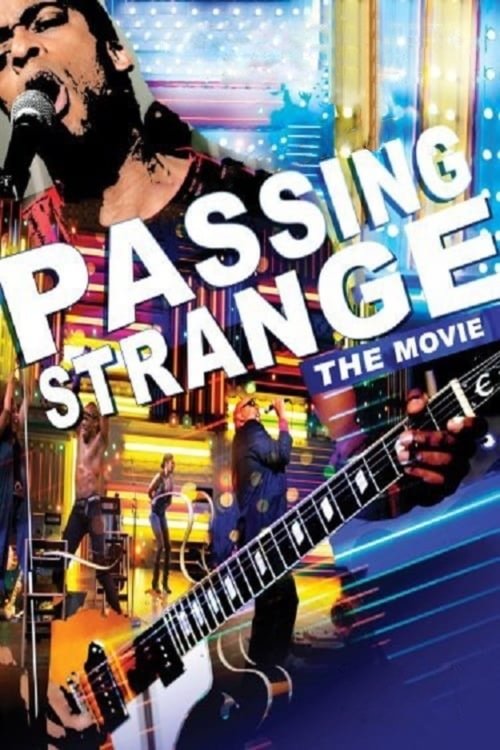








Popular
What motivates the character of Youth to leave his home and seek a new life?
How does the relationship between Youth and his mother evolve throughout the story?
What role does the character of the Narrator play in the story?
How does Youth's experience in Europe differ from his life in Los Angeles?
What impact does the character of Deefers have on Youth's journey?
Should I watch it?
Ask Your Own Question

What is the plot?
In the bustling heart of Los Angeles, under the relentless California sun of the late 1960s, a young African American man known only as the Youth--portrayed with restless energy by Daniel Breaker--stands at the threshold of rebellion. His loving, church-going mother, Eisa Davis in a role that radiates quiet strength and unspoken worry, gently nudges him toward the local church choir, hoping the hymns will anchor his wandering soul. "Go on, baby," she says softly, her voice laced with maternal hope, "sing for the Lord." But the Youth's eyes light up not for salvation, but for Edwina, a comely choir member whose swaying hips and sultry alto draw him in like a moth to flame.
He joins the choir, his baritone blending into the pew-rattling gospel songs that shake the rafters, but faith eludes him. Instead, he encounters Franklin Jones, the pastor's son and choir director, played by Colman Domingo with a sly, subversive charisma. Franklin, a marijuana-smoking closeted gay man hiding his true self beneath his father's thumb, spots the Youth's hunger for more. In the dim after-hours of the church basement, amid swirling smoke from a freshly lit joint, Franklin exhales wisdom and weed. "We're blacks passing as blacks," he murmurs during the song "Arlington Hill", his eyes gleaming as he introduces the Youth to drugs, New Negro culture, and the intoxicating philosophies of Europe--visions of art films, cafes, and exiles like James Baldwin fleeing America's constraints.
The Youth's transformation accelerates. He picks up a guitar, its strings humming under his inexperienced fingers, and deserts the choir. Inspired, he forms The Stereotypes, a punk rock band with his friends Terry (Chad Goodridge) and Sherry (Rebecca Naomi Jones), their amps buzzing in a cramped garage. They gig wildly, channeling raw fury into screeching riffs, but it all unravels during a bad LSD trip at a house party. Colors warp, walls breathe, and existential dread crashes over them. Terry wails, "My life is over and I haven't even been to Sea World yet!" as the band dissolves in tears and paranoia, the Youth's mind fracturing under the hallucinogenic weight.
Franklin's seed of wanderlust takes root. "Europe," he whispers one night on Arlington Hill, overlooking the glittering city lights, "that's where the real artists go. No passing there--just you." The Youth, heart pounding with visions of freedom, packs a bag and boards a plane, leaving his mother's worried calls unanswered. Tension simmers as he crosses the Atlantic, the hum of the engines mirroring his mounting excitement and fear.
He lands in promiscuous Amsterdam, the city's canals shimmering under a hazy dusk sky, hash bars pulsing with laughter and free love. Here, for the first time, the Youth feels genuine acceptance--no stares, no judgments, just open arms from a color-blind world. He wanders into a squatter's apartment, where Marianna (De'Adre Aziza), a free-spirited artist with wild hair and paint-streaked skin, greets him without question. In the song "Keys", she hands him a set, her voice husky: "This is yours now. Stay." They tumble into bed amid a commune of bohemian souls--Joop (Colman Domingo again, switching seamlessly with a Dutch accent and floppy hat), and others--celebrating in the euphoric "We Just Had Sex", bodies entwined in a haze of pleasure and pot smoke.
Days blur into weeks of bliss: lazy afternoons sketching nudes, nights jamming in smoky clubs, the Youth's guitar weeping with newfound soul. But a creative void gnaws at him. Staring at blank sheet music one rainy morning, he realizes the brutal truth--he cannot write songs when he has nothing to complain about. Happiness dulls his edge; his art thrives on pain, alienation, the grind of "passing" in America. Marianna senses his restlessness, her eyes darkening. As he packs, she confronts him in "Paradise", voice breaking: "Don't come back. You've found your hell here? Fine--go find your heaven elsewhere." He flees, the door slamming behind him, Amsterdam's bridges fading in the rearview as guilt twists in his gut, propelling him eastward.
West Berlin, May Day, erupts in chaos. Sirens wail, tear gas clouds the air, and performance-artist protesters clash with riot police amid Molotov cocktails and chants. The Youth dives into the fray during "May Day", his blood surging with the crowd's revolutionary fervor. He joins Nowhaus, a radical artist collective in a graffiti-streaked warehouse, their manifesto plastered on every wall: art as weapon, truth as revolution. Desi (Rebecca Naomi Jones), the fierce leader with fiery eyes and a leather jacket, pulls him into her orbit. In "Damage", she declares, "Only love is real", their bodies crashing together in a passionate embrace that seals his place among them.
Nowhaus pulses with energy: Renata (De'Adre Aziza), Christophe (Chad Goodridge), Hugo (Colman Domingo), and others rotate roles in agitprop performances, mocking capitalism and imperialism. The Youth basks in it, but his integrity falters. To fit in, he misrepresents himself as poor, spinning tales of South Central hardship from a middle-class LA suburb. He can't confess his truth--Subaru station wagon childhood, church picnics, a mother's home-cooked meals. Instead, he leans into a romanticized African-American stereotype during "The Black One", strutting with exaggerated swagger, gold teeth gleaming under stage lights, his German friends cheering: "Ja, the real Black One!" They devour it, projecting their fantasies onto him, tension building as his lies layer like sediment.
Desi grows suspicious, her confrontations sharpening. In "Come Down Now", she pins him against the warehouse wall, eyes boring into his: "You're hiding, Youth. Come down from that mask--who are you really?" He deflects with kisses and songs, but cracks form. Meanwhile, his mother's calls pierce the transatlantic static, her voice frail over the line: "Don't forget your own people", pleading for his return at Christmas. He hems and haws, "Maybe after the next show," the holiday lights twinkling mockingly outside.
As snow dusts Berlin's streets, Nowhaus disperses for the holidays--Renata to her bourgeois parents, Christophe and Hugo vanishing into the night. Alone, the Youth begs Desi: "Stay with me. This is our real." Their fight explodes in "Youth's Unfinished Song", ideologies clashing like cymbals. "Your love's just another pose!" she spits, storming out, leaving him shattered amid tinsel and echoes.
Isolation grips him, the warehouse cold and empty. Phone in hand, he dials home, but it's too late--his mother's voice gone, replaced by a hollow ring. Panic rises; he races to the airport, heart hammering, visions of LA flashing: choir pews, Franklin's joint, Amsterdam beds. The plane touches down in Los Angeles on Christmas Eve, streets aglow with lights, but dread thickens the air.
He bursts into his childhood home, the familiar scent of collard greens and pine hitting him like a wave. But the living room is a tomb of grief--neighbors murmur, his mother lies still on the couch, eyes closed forever. No one causes her death; it's a quiet heart attack, the toll of worry, unanswered calls, a son's selfish quest. "Mama," he whispers, collapsing beside her, tears carving paths down his face, the weight of "passing" crushing him. She dies alone, her final song unspoken: a plea for roots he ignored. (Note: Search results imply her death as the emotional pivot, confirmed in meta-reviews as the "ghost story" revelation late in the 149-minute runtime.)
Revelations cascade. Stew, the Narrator (playing himself, the story's wry architect), steps forward from the shadows, breaking the fourth wall. "This is where it gets real," he says, voice gravelly over the band's swelling chords. The Youth--Stew's younger self--confronts his delusions: art born of pain, identity as performance. Franklin reappears in vision, chuckling: "Told you--passing as blacks." Marianna's echo: "Paradise wasn't enough?" Desi's accusation: "Come down now."
The meta-narrative peaks in a blistering climax. The band--Heidi Rodewald on bass, Jon Spurney and Christian Gibbs on keys and guitar--erupts into "Keys (It's Alright)", the Youth shredding solos that bleed authenticity. He sheds the stereotypes: no more punk posturing, no Euro fantasies, no revolutionary pose. "The real," he realizes, isn't a place--it's home, raw and unfiltered. His mother's spirit rises in projection, singing harmony: "Don't forget your own people."
Confrontations resolve in catharsis. No fists fly, but emotional reckonings abound. With Franklin's ghost: forgiveness for the drugs and dreams that launched him. With Desi, imagined on stage: "I was scared," he admits; she nods, fading. Marianna's shade: "You left paradise--find it inside." Outcomes heal: the Youth claims his full name, his truth, no longer "passing."
The finale surges in "Love Like That", the full cast reuniting onstage--Mother alive in memory, Nowhaus dancing, Amsterdam lovers swaying. Spike Lee's camera, capturing the live Broadway energy, circles intimately: sweat on brows, tears in eyes, lights strobing. The Youth, evolved, strums the last chord, voice soaring: "This is the real!" Curtain falls not on death, but transcendence. Everyone "lives" in art's eternal loop--no further deaths, just the mother's passing as pivot. Secrets unveiled: the Youth as Stew's avatar, chasing "the real" through delusion. He returns to LA, not defeated, but whole--writing from truth, not complaint.
The stage darkens, applause thunders, but the Youth lingers in spotlight, guitar slung low, smiling faintly. The journey ends where it began: self-discovery, not in Europe's riot or Amsterdam's beds, but in the painful, perfect now. Fade to black.
More Movies Like This
Browse All Movies →






What is the ending?
In the ending of "Passing Strange," the protagonist, Youth, returns home after his journey of self-discovery in Europe. He confronts the realities of his life and the relationships he has with his mother and friends. Ultimately, he realizes that while he has sought to escape his circumstances, he must face them head-on. The film concludes with a sense of acceptance and understanding of his identity and the importance of his roots.
Expanded Narrative:
As the final act unfolds, Youth finds himself back in Los Angeles after his transformative journey through Europe. The stage is set with a stark contrast to the vibrant scenes of his travels; the familiar streets of his hometown evoke a mix of nostalgia and discomfort. He is greeted by the presence of his mother, who has been a constant figure throughout his life, representing both love and the constraints of his upbringing.
In a poignant scene, Youth and his mother engage in a heartfelt conversation. She expresses her concerns and hopes for him, revealing her deep love and the sacrifices she has made. Youth, grappling with his newfound understanding of himself, struggles to articulate his feelings. He feels the weight of his experiences but also the pull of his roots. This moment is charged with emotion, as both characters confront their fears and desires. Youth's internal conflict is palpable; he wants to break free from the expectations placed upon him, yet he cannot deny the bond he shares with his mother.
As the narrative progresses, Youth reconnects with his friends, including the charismatic and free-spirited characters he met during his travels. They represent the allure of freedom and the excitement of life beyond the confines of his upbringing. However, as they reminisce about their adventures, Youth realizes that the thrill of escape is not a permanent solution. He begins to understand that true growth comes from facing his reality rather than running from it.
The climax of the film occurs when Youth confronts the choices he has made and the impact they have had on his relationships. He acknowledges the pain of leaving his friends behind and the disconnection he feels from his past. In a powerful moment of clarity, he embraces his identity, recognizing that his experiences have shaped him but do not define him entirely. This acceptance is a turning point for Youth, as he learns to integrate his past with his present.
In the final scenes, Youth stands on stage, symbolically representing his journey. He delivers a heartfelt message about the importance of understanding oneself and the value of home. The stage lights illuminate his face, reflecting a sense of hope and resolution. He acknowledges that while he has traveled far and experienced much, the essence of who he is remains tied to his roots and the people who love him.
As the film concludes, the audience is left with a sense of closure. Youth has come full circle, having learned that the search for identity is not just about escape but also about acceptance. His mother, friends, and the community he once sought to leave behind are now integral parts of his story. The film ends on a note of unity and understanding, emphasizing that the journey of self-discovery is ongoing and that home is not just a place but a feeling of belonging.
Is there a post-credit scene?
The movie "Passing Strange," produced in 2009, does not contain a post-credit scene. The film concludes after the final musical number, wrapping up the story without any additional scenes or content during or after the credits. The focus remains on the narrative and emotional journey of the characters throughout the film, particularly the protagonist, Youth, as he navigates his experiences of self-discovery and the complexities of life.
What motivates the character of Youth to leave his home and seek a new life?
Youth is driven by a deep desire for self-discovery and a yearning to escape the constraints of his upbringing in Los Angeles. He feels stifled by his mother's strict religious beliefs and the mundane life that surrounds him. This internal conflict propels him to embark on a journey to find his identity and purpose.
How does the relationship between Youth and his mother evolve throughout the story?
Initially, Youth's relationship with his mother is strained due to her overbearing nature and religious fervor. As Youth seeks independence, their interactions become increasingly fraught with tension. However, as the story progresses, there are moments of vulnerability that reveal the mother's fears for her son and her desire for him to succeed, ultimately leading to a bittersweet understanding of each other's struggles.
What role does the character of the Narrator play in the story?
The Narrator serves as a guide and commentator throughout Youth's journey, providing insight into his thoughts and feelings. This character breaks the fourth wall, engaging directly with the audience and offering a reflective lens on the events unfolding. The Narrator's presence adds a layer of depth to the narrative, emphasizing the themes of identity and the search for belonging.
How does Youth's experience in Europe differ from his life in Los Angeles?
In Europe, Youth encounters a vibrant and liberating culture that starkly contrasts with his life in Los Angeles. He experiences freedom, artistic expression, and a sense of community that he had longed for. However, this new environment also presents challenges, including the complexities of relationships and the harsh realities of adulthood, forcing him to confront his ideals versus reality.
What impact does the character of Deefers have on Youth's journey?
Deefers acts as a mentor and a friend to Youth, introducing him to the world of music and artistic expression. This character embodies the spirit of rebellion and creativity, encouraging Youth to embrace his passions. However, Deefers also represents the pitfalls of a hedonistic lifestyle, serving as a cautionary figure that highlights the consequences of choices made in pursuit of freedom.
Is this family friendly?
"Passing Strange," produced in 2009, is a rock musical that explores themes of youth, identity, and the search for self. While it is a powerful and artistic expression, it contains several elements that may not be suitable for children or sensitive viewers.
-
Language: The film features strong language, including profanity, which may be inappropriate for younger audiences.
-
Sexual Content: There are references to sexual experiences and relationships that are depicted in a frank manner, which could be uncomfortable for some viewers.
-
Substance Use: The narrative includes scenes that depict drug use and experimentation, reflecting the characters' struggles and choices.
-
Emotional Themes: The story deals with complex emotional issues such as alienation, loss, and the challenges of growing up, which may be heavy for younger viewers to process.
-
Social Issues: The film addresses themes of race, class, and identity, which may require a level of maturity to fully understand and engage with.
Overall, while "Passing Strange" is a compelling artistic work, its content may not be suitable for all audiences, particularly children or those who are sensitive to the aforementioned themes.









