





Popular
Should I watch it?
Ask Your Own Question

What is the plot?
Sorry, we aren't able to watch and write up a full detailed plot yet. Check back in a few days.
More Movies Like This
Browse All Movies →




What is the ending?
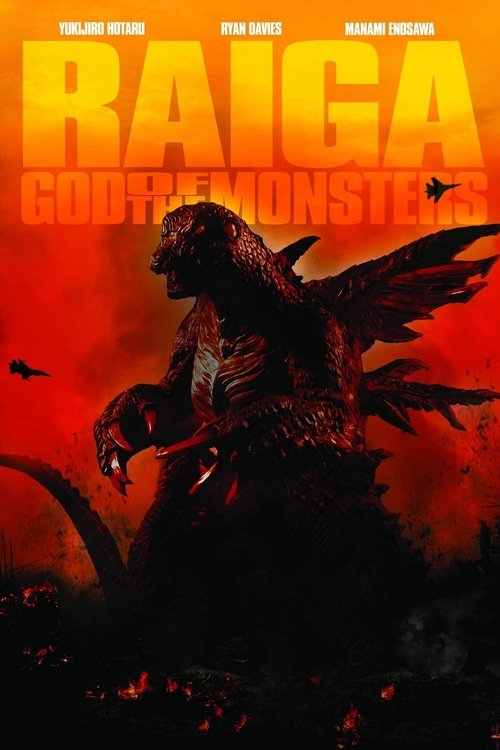
In the ending of "Deep Sea Monster Raiga," the giant monster Raiga is ultimately defeated by the combined efforts of the characters, particularly through the use of a powerful weapon. The film concludes with a sense of relief as the threat is neutralized, but it leaves the characters reflecting on their experiences and the destruction caused by the monster.
As the climax of "Deep Sea Monster Raiga" unfolds, the scene is set with the city in chaos, buildings crumbling under the weight of Raiga's rampage. The air is thick with tension as the military and the main characters scramble to devise a plan to confront the monstrous creature. The protagonist, a determined young man named Kenta, is driven by a mix of fear and a desire to protect his loved ones. His internal struggle is palpable as he grapples with the enormity of the situation.
In a pivotal moment, Kenta and his friends gather at a makeshift command center, where they discuss the monster's weaknesses. The atmosphere is charged with urgency; they know time is running out. Kenta's resolve strengthens as he recalls the devastation Raiga has caused, fueling his determination to fight back. The camaraderie among the group is evident, showcasing their shared fear but also their unwavering support for one another.
As the military launches an assault on Raiga, the scene shifts to the battlefield. Explosions light up the night sky, and the sound of gunfire echoes as soldiers engage the creature. Raiga, a towering figure with scales glistening in the moonlight, retaliates with ferocity, swatting helicopters from the sky and sending tanks flying. The destruction is overwhelming, and the stakes are raised as Kenta watches helplessly, his heart racing.
In a moment of clarity, Kenta realizes that they need to use a special weapon designed to exploit Raiga's vulnerabilities. The weapon, a massive energy cannon, is positioned on a nearby cliff. Kenta and his friends race against time to reach it, dodging debris and the chaos of battle. Their journey is fraught with danger, but their determination to save their city propels them forward.
As they reach the cannon, Kenta takes charge, directing his friends to help him prepare it for firing. The tension builds as they work together, their hands shaking with adrenaline. Just as Raiga turns its attention toward them, they manage to activate the cannon. A brilliant beam of energy shoots forth, striking Raiga directly. The creature roars in pain, thrashing wildly as the energy surges through it.
In the final moments, Raiga collapses, defeated. The ground shakes as it falls, and a hush falls over the battlefield. Kenta and his friends stand breathless, watching as the monster lies still, the threat finally neutralized. Relief washes over them, but it is tinged with sorrow for the destruction that has occurred.
As the dust settles, the characters reflect on their experiences. Kenta, now more mature and resolute, understands the weight of their victory. His friends, though shaken, share a sense of camaraderie that has deepened through their ordeal. The film closes with a shot of the city beginning to rebuild, symbolizing hope and resilience in the face of adversity. Each character has been changed by the experience, carrying the memories of their battle with Raiga as they move forward into a new chapter of their lives.
Is there a post-credit scene?
In the movie "Deep Sea Monster Raiga," there is indeed a post-credit scene that adds an intriguing twist to the story. After the credits roll, the scene opens with a dark, stormy ocean, the waves crashing violently against each other. The camera pans down into the depths of the sea, where the remnants of Raiga, the titular monster, can be seen partially submerged and lifeless on the ocean floor.
As the camera zooms in, a faint glow begins to emanate from Raiga's body, suggesting that there is still some form of life within the creature. The glow intensifies, and suddenly, a surge of energy pulses through Raiga, causing its eyes to flicker open. The creature, once thought to be defeated, begins to stir, hinting at a potential resurrection or transformation.
The scene then cuts to a distant underwater view, where a new, larger shadow looms in the depths, suggesting that Raiga may not be the only monster lurking beneath the waves. This ominous presence hints at future threats and sets the stage for potential sequels, leaving the audience with a sense of unease and anticipation. The post-credit scene effectively encapsulates the themes of the film, emphasizing the idea that danger can arise from the depths at any moment, and that the battle against these monstrous forces is far from over.
How does the character of Kenta evolve throughout the film?
Kenta begins as a young man fascinated by the ocean and its mysteries, but as the chaos unfolds due to Raiga's rampage, he transforms from a passive observer into an active participant. His emotional journey reflects a growing sense of responsibility and bravery as he confronts the monster and seeks to protect his loved ones.
What motivates the character of Raiga in the film?
Raiga, the titular deep sea monster, is driven by a primal instinct to protect its territory and respond to threats. As a creature awakened from its slumber, Raiga's motivations are rooted in survival and the instinctual need to assert dominance over its environment, leading to destructive confrontations with humans.
What role does the military play in the conflict with Raiga?
The military is depicted as a primary force attempting to combat Raiga's destructive path. Their efforts are characterized by a mix of determination and desperation, showcasing advanced weaponry and strategic planning, but ultimately highlighting the futility of human technology against the sheer power of the ancient creature.
What is the significance of the underwater scenes in the film?
The underwater scenes serve as a visual representation of Raiga's domain, emphasizing the beauty and danger of the ocean depths. These sequences are crucial for building tension, as they juxtapose the serene underwater world with the impending chaos of Raiga's emergence, reflecting the duality of nature's allure and its ferocity.
How do the human characters react to Raiga's attacks?
The human characters exhibit a range of emotions in response to Raiga's attacks, from fear and panic to determination and resilience. Their reactions are often visceral, showcasing the chaos of fleeing from destruction, the heartbreak of loss, and the courage to stand against the monster, which ultimately shapes their character arcs.
Is this family friendly?
"Deep Sea Monster Raiga" is a Japanese kaiju film that features several elements that may not be suitable for younger audiences or sensitive viewers. Here are some potentially objectionable or upsetting aspects:
-
Monster Violence: The film includes scenes of destruction caused by the titular monster, Raiga, which may be intense for children. There are moments of chaos and mayhem as the creature rampages through cities.
-
Human Casualties: There are depictions of people being attacked or killed by the monster, which could be distressing for younger viewers.
-
Tense Situations: The film contains suspenseful moments where characters are in peril, leading to heightened emotional tension that might be overwhelming for sensitive audiences.
-
Destruction of Property: The visual of buildings collapsing and the aftermath of destruction can be unsettling, especially for children who may not fully understand the context of such events.
-
Dark Themes: The film explores themes of survival and fear in the face of a monstrous threat, which may evoke anxiety in younger viewers.
Overall, while the film is a creature feature with fantastical elements, its portrayal of violence and destruction may not be appropriate for all children or sensitive individuals.








