





























Popular
What is the significance of the Kamen Riders' powers in the battle against Dai-Shocker?
How does Tsukasa Kadoya's character evolve throughout the film?
What role do the other Kamen Riders play in the fight against Dai-Shocker?
What is the relationship between Tsukasa and the other Kamen Riders, particularly in terms of trust and camaraderie?
What are the motivations behind Dai-Shocker's actions in the film?
Should I watch it?
Ask Your Own Question

What is the plot?
Sorry, we aren't able to watch and write up a full detailed plot yet. Check back in a few days.
More Movies Like This
Browse All Movies →
What is the ending?
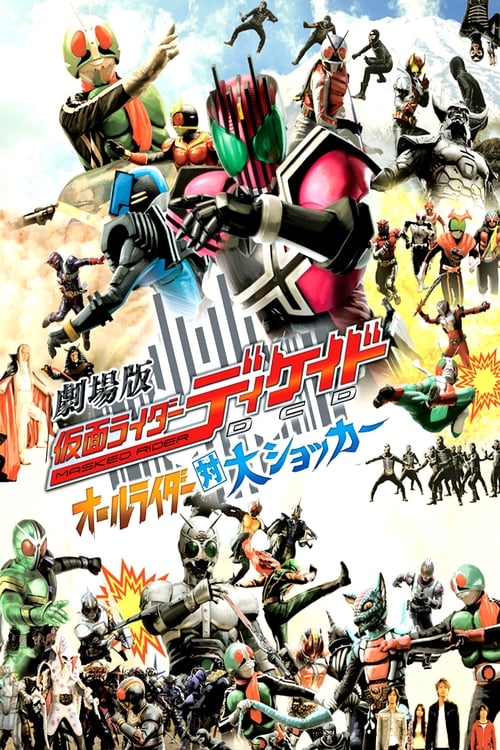
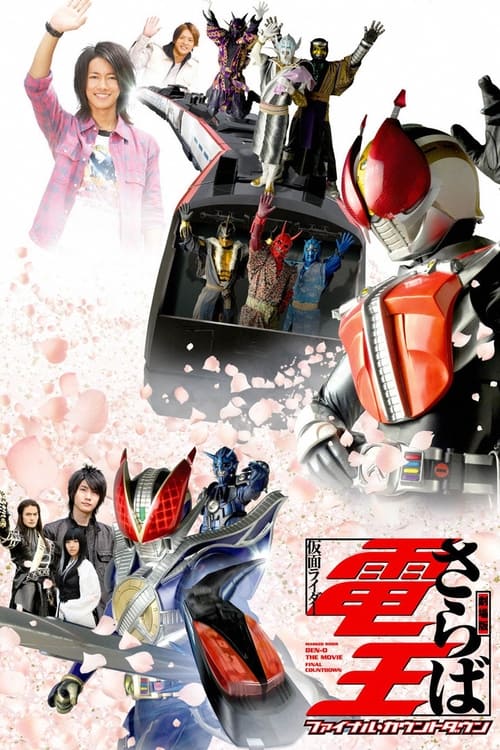
In the ending of "Kamen Rider Decade: All Riders vs. Dai-Shocker," Tsukasa Kadoya, as Kamen Rider Decade, faces off against the powerful organization Dai-Shocker. After a fierce battle, he ultimately defeats the main antagonist, the leader of Dai-Shocker, and restores peace to the worlds. The other Kamen Riders, who had joined him in the fight, return to their respective worlds, while Tsukasa is left to ponder his own identity and purpose. The film concludes with a sense of hope and the possibility of new beginnings.
As the climax of "Kamen Rider Decade: All Riders vs. Dai-Shocker" unfolds, the scene is set in a desolate landscape, a battlefield that has been ravaged by the conflict between the Kamen Riders and the sinister organization known as Dai-Shocker. The air is thick with tension, and the remnants of previous battles litter the ground, a testament to the struggle that has taken place.
Tsukasa Kadoya, embodying Kamen Rider Decade, stands resolute, his eyes reflecting determination and a hint of uncertainty. He is surrounded by the other Kamen Riders, each representing different eras and powers, united in their common goal to defeat Dai-Shocker. The atmosphere is charged with camaraderie, but also with the weight of their individual journeys and sacrifices.
As the battle commences, the Kamen Riders launch a coordinated attack against the Dai-Shocker forces. The screen is filled with vibrant colors and dynamic movements as each Rider showcases their unique abilities. The choreography is fluid, with Tsukasa leading the charge, his heart pounding with the responsibility of being the one who can bridge the worlds of the Riders.
The leader of Dai-Shocker, a formidable figure cloaked in darkness, emerges as the primary antagonist. His presence is menacing, and he taunts the Riders, challenging their resolve. Tsukasa, fueled by the memories of his friends and the weight of their hopes, steps forward to confront him. The tension escalates as they engage in a fierce duel, exchanging blows that resonate with the emotional stakes of their conflict.
In a pivotal moment, Tsukasa taps into the power of the other Riders, channeling their strength and resolve. The scene is visually stunning, with bursts of energy and light as he transforms into a more powerful form. The other Riders rally behind him, their spirits intertwined as they fight against the darkness that threatens to consume them all.
As the battle reaches its zenith, Tsukasa delivers a final, decisive blow to the leader of Dai-Shocker. The impact sends shockwaves through the battlefield, and the dark figure crumbles, his power dissipating into the air. The remaining Dai-Shocker forces retreat, their morale shattered by the defeat of their leader.
With the threat neutralized, the atmosphere shifts from one of chaos to a serene calm. The Kamen Riders gather, their expressions a mix of relief and reflection. They share a moment of camaraderie, acknowledging the bonds they have forged through their struggles. Each Rider prepares to return to their respective worlds, a bittersweet farewell filled with unspoken gratitude and understanding.
Tsukasa, however, stands apart, contemplating his own journey. He has fought valiantly, but the question of his identity and purpose lingers in his mind. As the other Riders depart, he watches them fade into their own realities, a sense of loneliness washing over him. Yet, there is also a glimmer of hope, a realization that he has the power to shape his own destiny.
The film concludes with Tsukasa standing alone in the vast landscape, the sun setting in the distance. The colors of the sky reflect the myriad of possibilities that lie ahead. He takes a deep breath, ready to embrace whatever comes next, embodying the spirit of a true Kamen Rider. The screen fades to black, leaving the audience with a sense of closure and the promise of new adventures.
In the end, Tsukasa's fate is one of introspection and growth, while the other Riders return to their worlds, each carrying the lessons learned from their battle against Dai-Shocker. The film encapsulates themes of unity, sacrifice, and the ongoing journey of self-discovery, resonating deeply with the legacy of the Kamen Riders.
Is there a post-credit scene?
Yes, "Kamen Rider Decade: All Riders vs. Dai-Shocker" features a post-credit scene that adds an intriguing layer to the film's narrative.
As the credits roll, the scene opens with a serene landscape, showcasing a quiet, idyllic setting. The camera pans slowly, revealing a familiar figure standing alone. It is Tsukasa Kadoya, the protagonist known as Kamen Rider Decade. He appears contemplative, gazing into the distance, reflecting on the events that have transpired throughout the film.
In this moment, Tsukasa's expression is a mix of determination and uncertainty. He has just faced immense challenges, battling against the forces of Dai-Shocker and the various Kamen Riders who have come together to fight for their worlds. The weight of his journey is evident on his face, as he grapples with the responsibilities that come with being a Kamen Rider and the implications of his actions.
Suddenly, the tranquility is interrupted by a flash of light. The scene shifts, and we see a portal opening, hinting at the multiverse that Tsukasa has navigated. From this portal, a shadowy figure emerges, cloaked in mystery. The figure's identity is obscured, but there is an unmistakable aura of power surrounding them. Tsukasa's eyes widen, a mix of surprise and readiness washing over him as he prepares for whatever challenge lies ahead.
The scene concludes with a lingering shot of Tsukasa, standing resolute, as the screen fades to black. This post-credit moment leaves viewers with a sense of anticipation, suggesting that Tsukasa's journey is far from over and that new adventures await him in the vast multiverse of Kamen Riders.
What is the significance of the Kamen Riders' powers in the battle against Dai-Shocker?
In 'Kamen Rider Decade: All Riders vs. Dai-Shocker', the powers of the Kamen Riders are crucial as they represent the collective strength and legacy of the previous Riders. Each Rider brings unique abilities that are essential in combating the overwhelming forces of Dai-Shocker, which seeks to dominate all worlds. The combination of their powers symbolizes unity and the fight against evil, showcasing how their individual strengths can create a formidable force when united.
How does Tsukasa Kadoya's character evolve throughout the film?
Tsukasa Kadoya, as Kamen Rider Decade, experiences significant character development throughout the film. Initially, he is portrayed as a somewhat aloof and detached figure, burdened by the weight of his role as a traveler between worlds. As the story progresses, Tsukasa confronts his own identity and the consequences of his actions, particularly in relation to the Kamen Riders he encounters. His emotional journey is marked by moments of doubt and determination, ultimately leading him to embrace his role as a protector and ally to the other Riders, culminating in a deeper understanding of friendship and sacrifice.
What role do the other Kamen Riders play in the fight against Dai-Shocker?
The other Kamen Riders play pivotal roles in the fight against Dai-Shocker, each contributing their unique skills and experiences. Characters like Kamen Rider Kuuga, Kamen Rider Agito, and others join forces with Tsukasa, showcasing their individual fighting styles and powers. Their interactions highlight camaraderie and the shared goal of defeating a common enemy. Each Rider's presence not only adds to the action but also emphasizes the theme of legacy, as they fight to protect their respective worlds and support Tsukasa in his quest.
What is the relationship between Tsukasa and the other Kamen Riders, particularly in terms of trust and camaraderie?
The relationship between Tsukasa and the other Kamen Riders is initially strained due to his mysterious nature and the uncertainty surrounding his intentions. However, as they face the threat of Dai-Shocker together, trust begins to build. Tsukasa's willingness to fight alongside them and his moments of vulnerability allow the other Riders to see him as an ally rather than a lone wolf. This evolution of trust is marked by shared battles and personal sacrifices, ultimately leading to a strong sense of camaraderie as they unite against a common foe.
What are the motivations behind Dai-Shocker's actions in the film?
Dai-Shocker's motivations in 'Kamen Rider Decade: All Riders vs. Dai-Shocker' stem from a desire for domination and control over all Kamen Rider worlds. The organization seeks to eliminate the Kamen Riders, viewing them as obstacles to their goal of creating a world where they reign supreme. Their actions are driven by a belief in their superiority and a desire to reshape reality according to their vision. This antagonistic force serves as a catalyst for the Kamen Riders to unite and fight back, highlighting the stakes of their battle.
Is this family friendly?
"Kamen Rider Decade: All Riders vs. Dai-Shocker" is generally considered family-friendly, but it does contain some elements that may be unsettling for younger viewers or sensitive individuals. Here are a few potentially objectionable aspects:
-
Violence: The film features action sequences with combat between Kamen Riders and various enemies, including scenes of fighting and the use of weapons. While not excessively graphic, the violence may be intense for some children.
-
Dark Themes: The overarching narrative involves themes of evil organizations, betrayal, and the struggle between good and evil, which may be complex or heavy for younger audiences to fully grasp.
-
Monsters and Villains: The presence of monstrous villains and their threatening behavior can be frightening. Some characters may have grotesque appearances or exhibit menacing traits.
-
Emotional Conflict: Characters experience moments of despair, loss, and conflict, which could evoke strong emotions. The stakes are high, and the characters face significant challenges that may be distressing.
-
Mild Language: There may be instances of mild language or expressions that could be considered inappropriate for very young viewers.
Overall, while the film is designed for a younger audience, parents may want to consider these elements when deciding if it is suitable for their children.