













Popular
What motivates Georges to pursue Marguerite after finding her wallet?
How does Marguerite react to Georges' advances throughout the film?
What role does the theme of chance play in the interactions between Georges and Marguerite?
How does the film depict Georges' internal conflict regarding his feelings for Marguerite?
What is the significance of the recurring motif of flight in the film?
Should I watch it?
Ask Your Own Question

What is the plot?
Sorry, we aren't able to watch and write up a full detailed plot yet. Check back in a few days.






What is the ending?
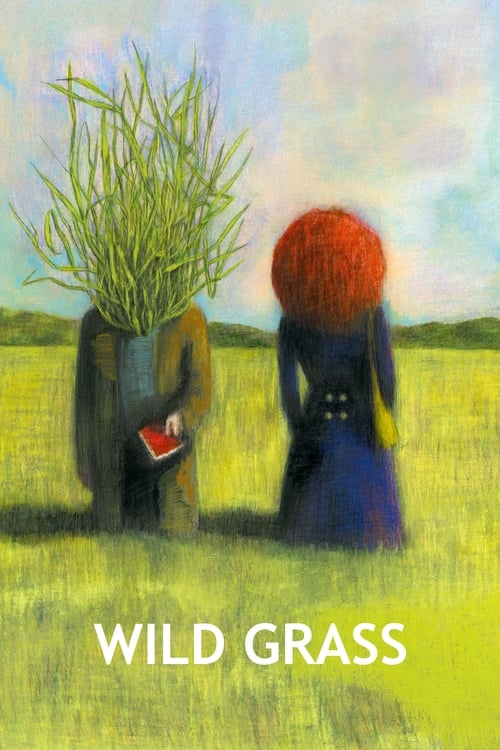
In the ending of "Wild Grass," the story culminates in a series of events that lead to a confrontation between the main characters, Marguerite and Georges. Their relationship, marked by misunderstandings and emotional turmoil, reaches a critical point. The film concludes with a sense of ambiguity regarding their future together, leaving the audience to ponder the complexities of love and connection.
As the film approaches its conclusion, we find Marguerite, a middle-aged woman, grappling with her feelings for Georges, a man she has become increasingly entangled with. The tension between them has been building throughout the narrative, characterized by moments of both attraction and conflict.
In a pivotal scene, Marguerite confronts Georges about the misunderstandings that have plagued their interactions. The atmosphere is thick with unspoken emotions as they stand in a dimly lit room, the shadows reflecting their inner turmoil. Marguerite's vulnerability is palpable; she expresses her fears of being hurt and her desire for connection. Georges, on the other hand, is conflicted. He is drawn to Marguerite but is also wary of the emotional risks involved.
As they navigate this charged moment, the dialogue reveals their deep-seated insecurities. Marguerite's voice trembles as she speaks, her eyes glistening with unshed tears, while Georges struggles to articulate his feelings, his brow furrowed in concentration. The tension escalates, and for a brief moment, it seems they might bridge the gap between them.
However, just as they seem on the verge of a breakthrough, an unexpected event disrupts their fragile connection. A phone call interrupts their conversation, pulling Georges away and leaving Marguerite feeling abandoned once again. This moment encapsulates the film's exploration of the difficulties in human relationships, where timing and circumstance can thwart even the most earnest attempts at intimacy.
In the final scenes, we see Marguerite walking alone through the streets, her expression a mix of sadness and determination. The camera lingers on her face, capturing the complexity of her emotions as she reflects on her choices and the nature of her relationship with Georges. Meanwhile, Georges is shown in a separate scene, contemplating his own feelings and the implications of his actions.
The film closes with a sense of unresolved tension. Marguerite and Georges are left at a crossroads, their futures uncertain. The audience is left to ponder whether they will find a way to connect or if their paths will diverge permanently. The ending emphasizes the themes of longing, miscommunication, and the intricate dance of human relationships, leaving viewers with a lingering sense of ambiguity about love and connection.
Is there a post-credit scene?
The movie "Wild Grass," directed by Alain Resnais and released in 2009, does not contain a post-credit scene. The film concludes its narrative without any additional scenes or content after the credits roll. The story wraps up with a focus on the complex relationship between the main characters, Marguerite and Georges, leaving the audience to reflect on the themes of chance, desire, and the unpredictability of life. The absence of a post-credit scene aligns with the film's contemplative tone, emphasizing the emotional and psychological journeys of the characters rather than providing further plot developments.
What motivates Georges to pursue Marguerite after finding her wallet?
Georges, a middle-aged man, is initially intrigued by Marguerite after he finds her wallet, which leads him to a series of obsessive thoughts about her. His motivation stems from a mix of curiosity and a desire for connection, as he feels a sense of excitement and adventure in pursuing someone he has never met. This impulsive decision reflects his longing for something more in his mundane life.
How does Marguerite react to Georges' advances throughout the film?
Marguerite's reactions to Georges' advances are complex and evolve throughout the film. Initially, she is taken aback and somewhat dismissive of his attention, viewing him as an intrusion into her orderly life. However, as the story progresses, she becomes increasingly intrigued and conflicted, oscillating between fear and fascination, which highlights her own emotional struggles and desire for change.
What role does the theme of chance play in the interactions between Georges and Marguerite?
Chance plays a pivotal role in the interactions between Georges and Marguerite, as their initial meeting is purely accidental, stemming from the lost wallet. This element of randomness sets off a chain of events that intertwines their lives, leading to unexpected encounters and emotional turmoil. The unpredictability of their relationship reflects the film's exploration of fate and the randomness of human connections.
How does the film depict Georges' internal conflict regarding his feelings for Marguerite?
Georges' internal conflict is depicted through his obsessive thoughts and erratic behavior as he grapples with his feelings for Marguerite. He oscillates between excitement and anxiety, often reflecting on his loneliness and the monotony of his life. His fixation on Marguerite becomes a source of both hope and despair, illustrating his struggle to reconcile his desires with the reality of their situation.
What is the significance of the recurring motif of flight in the film?
The motif of flight recurs throughout the film, symbolizing both freedom and escape. It is visually represented through scenes of airplanes and birds, reflecting Georges' yearning for liberation from his mundane existence. This motif also parallels the emotional journeys of both Georges and Marguerite, as they navigate their desires and the constraints of their lives, ultimately seeking a sense of release from their respective confines.
Is this family friendly?
"Wild Grass," directed by Alain Resnais, is a film that explores themes of obsession, chance encounters, and the complexities of human relationships. While it is not explicitly a family film, it does not contain overtly graphic content. However, there are a few aspects that may be considered objectionable or upsetting for children or sensitive viewers:
-
Themes of Obsession: The film delves into the obsessive behavior of the characters, which may be unsettling for younger audiences. The protagonist's fixation on a stranger can be portrayed in a way that raises questions about boundaries and personal space.
-
Emotional Turmoil: The characters experience a range of emotions, including anxiety, confusion, and distress. These emotional states may be difficult for younger viewers to understand or process.
-
Mature Relationships: The film includes adult relationships that may involve complexities and nuances that are not suitable for children. The interactions can sometimes be awkward or uncomfortable.
-
Violence and Threats: There are moments that involve implied threats or confrontations, which could be distressing for sensitive viewers, even if they are not graphically depicted.
-
Existential Themes: The film touches on themes of fate and chance, which may be abstract and challenging for younger audiences to grasp.
Overall, while "Wild Grass" is not overtly inappropriate, its themes and emotional depth may not resonate well with children or those who are particularly sensitive to complex human emotions and relationships.








