
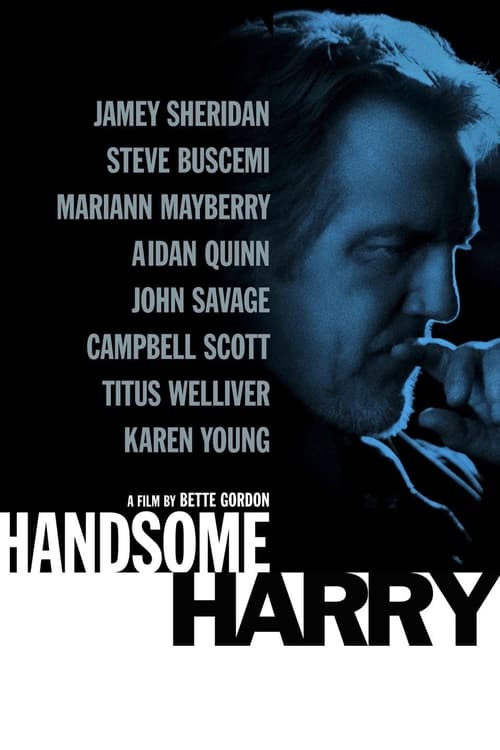















Popular
What is the significance of Harry's relationship with his childhood friend, Dickie?
How does Harry's confrontation with his past affect his relationships with his friends?
What role does the character of the priest play in Harry's journey?
How does the film depict the theme of masculinity through Harry's character?
What is the impact of the reunion of Harry and his old friends on the narrative?
Should I watch it?
Ask Your Own Question

What is the plot?
Harry Sweeney wakes before dawn in a small New England town that still has clapboard houses and narrow, tree‑shaded streets. The light is a soft gray, the kind that flattens color, and his alarm doesn't need to ring; he is fifty‑two years old now and his body keeps its own schedule. He lies there for a moment listening to the quiet of his little house, the faint hum of the refrigerator, the distant tires on wet asphalt, and then he pushes the covers back and swings his feet onto the cool floor.
He moves through the morning with mechanical efficiency. Coffee, black. A plain shirt, work pants, tool belt. In the cramped office of his electrical business--Receipts stacked in neat piles, a faded Navy photo in a frame turned slightly toward the wall--he flips open a ledger and runs a finger down the column of numbers. The business is modest but solid, and Harry is known in town as a good electrician, a man who shows up when he says he will, fixes what needs fixing, says little and charges fairly. It is the sort of competence that lets him stay in motion and never linger too long on anything inside himself.
By mid‑morning he is up a ladder in an old house, rewiring a stubborn junction box. The homeowner chatters somewhere behind him; Harry answers politely but sparsely. On another job, he crouches under a counter, his forearms taut as he threads cable, the metal and dust familiar beneath his hands. Every gesture says he knows what he is doing, and that he prefers the certainty of wires and voltage to the ambiguity of people.
He takes lunch at the same place he always does, a bar‑and‑grill with a long worn counter and a muted TV mounted in the corner. Muriel moves easily behind the bar, replenishing coffee, sliding plates, laughing at another regular's joke. She is roughly Harry's age, maybe a little younger, with the calm eyes of someone who has seen enough of people's bad behavior not to be surprised anymore. She looks up as soon as he walks in.
"Hey, birthday boy," Muriel says, smirking as she wipes down a spot and sets a mug where she knows he'll sit.
"Don't start," Harry answers, but there's the faintest curve at the corner of his mouth. He sits, stretches his fingers out around the warmth of the mug.
"You think I don't see the date when you sign your check?" she asks. "You hiding from cake now, too?"
"Just trying to get through the day," he says.
She leans on her elbows. "Retire and you won't even have that. Retire, Harry, and it'll kill you. Man like you, you stop working, you just… stop."
The line lands with more weight than she knows. Harry shifts, looks away, brushing it off with a small, noncommittal grunt. But inside, it pricks--this suggestion that stopping, slowing, looking back could be lethal.
There is an ease between them, an almost‑but‑not‑quite dance. Muriel lingers when she doesn't need to, asks about his day, the business, his plans. Harry deflects gently. She's "the waitress" when he thinks of her, though he has long since learned her name. He notices the way her hair curls damply at her neck when she's been working hard, the way she studies him when she thinks he isn't looking. He notices and then, out of habit, he looks away.
That evening, the door to his house opens on a colder gust of air and the sound of a younger man's voice. "Surprise!" Bobby announces, standing in the doorway with a duffel on his shoulder and an uncertain smile. Harry's son has come in from Chicago for the weekend to celebrate, to bridge a distance neither of them can fully articulate.
"You didn't have to do that," Harry says, startled, and then, as if correcting himself, he steps forward, claps a hand to Bobby's shoulder in a clumsy half‑hug. "You should've told me. I'd have picked you up."
"Would've ruined the surprise, right?" Bobby says. Underneath the practiced casualness, there is an edge of something raw--his own life cracking elsewhere, hinted at by the tiredness in his eyes, the way he glances around the house as if gauging how much of his father is here.
They share dinner at the small kitchen table. Bobby asks about the business; Harry asks in vague terms about Chicago. Bobby starts to talk about "some stuff" that's not going well, then thinks better of it when he sees his father's face close down. The conversation stumbles. Decades of unspoken things sit between them like another guest.
Later, the phone rings.
Harry is in the living room, half listening to Bobby flipping channels, when the shrill sound cuts across the room. He stands, picks it up. The voice on the other end is weaker than he remembers, but it is unmistakable.
"Harry?" The breath is ragged, the words pulled out of a chest that doesn't want to give them up.
"Tom?" Harry says. The name tastes like metal and saltwater.
"Yeah. It's Kelley," Tom says. "I'm at the VA. Philadelphia. They say I'm… not long."
There is a pause where Harry could say, "I'm sorry," or "What happened?" Instead, he says, "What do you want, Tom?" The sharpness surprises even him.
"I need you to come," Tom says. "Please, Harry. I need… I need to talk about Kagan."
At the name--David Kagan--the room seems to drop a few degrees. Harry closes his eyes for a beat. The TV mutters on behind him. In the doorway, Bobby looks over, curious.
"I'm busy," Harry answers reflexively. "It's my birthday. Bobby's here."
"Hear you're a big man now," Tom's voice scrapes. "Electrical business. Town hero. I'm dying, Harry. I don't want to go without… without trying to fix what we did. You and me and the others. To David."
Images flicker--corridors of a Navy ship in the late 1970s, the hum of generators, the tang of beer, the sound of a man's laughter in a cramped bunk, water beating down in a shower. Harry presses his free hand against the wall.
"I don't think there's anything to fix," Harry says, but the words are brittle.
"Bullshit," Kelley croaks. "We almost killed him. You know we did. I remember enough to be afraid, Harry. I need to ask him to forgive me. I can't go out like this, thinking I'm going down for that. You gotta find him. You gotta tell him for me. Promise me."
Harry's first instinct is to hang up, to let the old life finally die with Tom. Instead, after a long silence where Bobby's eyes search his face, he says quietly, "I'll think about it."
"There's no time to think," Tom insists. "Please. Come. I'm at the VA hospital in Philly. Tom Kelley. They know me. Please, Harry. Don't leave me like this."
Harry hangs up without promising. The rest of the evening with Bobby is strained. Bobby, sensing something, tries to draw Harry out.
"Who was that?" he asks.
"Old Navy friend," Harry says. "He's sick. Wants a visit."
"You going?" Bobby asks.
"I don't know," Harry says, the words heavy. "It's complicated."
Bobby absorbs the rebuff; he knows that tone. They sit together, but the gulf widens. Eventually, in the face of his father's distraction, Bobby cuts his visit short, making arrangements to go back sooner than planned. This is how Harry's past steals even the little present he has with his son.
The next morning, Harry is on the road to Philadelphia.
The highway stretches out, a gray ribbon under low clouds. The hum of the tires and the steady rhythm of passing mile markers leave too much space for memories. He grips the steering wheel tighter when the shape of David Kagan's face appears unbidden, younger than his own now, framed by the narrow metal bunk of a Navy ship, lit by fluorescent glare.
In the late 1970s, the ship is its own world of noise and steel and men. Harry, then in his twenties, moves through it in dungarees, a tool pouch on his hip. He is an electrician's mate, his hands already comfortable with wire and circuit breakers. In the cramped generator room, the machines thrum, the heat rising off metal housings. The air smells of oil and sweat. David Kagan stands beside him, sleeves rolled up, gesturing animatedly at a panel.
"I'm telling you, it's not the fuse, it's the relay," David says, his Brooklyn accent softening the sharper consonants. His eyes are bright, alive, a contrast to Harry's quieter watchfulness.
"You talk too much," Harry mutters, but he's smiling. They work easily together, shouldering past each other in tight spaces. When they're off duty, they lean side by side against railings, smoke, talk about home, about where they'll go when this is over. David talks about his parents, their apartment, the way his mother cooks too much food when he's on leave. Harry listens more than he speaks, but he pays attention to every word.
One shore leave, Harry goes with David to visit those parents. The apartment is small but warm, framed photographs on the walls, the smell of simmering sauce. David's mother fusses over Harry, urging more food on him, asking about his family. His father shakes Harry's hand, calls him "son." Flashing forward, Harry remembers that day as something almost painfully gentle--a version of family that felt like a possibility.
In the present, the VA hospital rises ahead, institutional and tired. Harry parks, walks through automatic doors into the sterile brightness of the lobby. The smell of antiseptic,
the squeak of nurses' shoes, televisions murmuring in waiting rooms--all of it feels colder than the weather outside. He finds Tom Kelley's room.
Tom is reduced now. The man Harry remembers--a rough‑edged, loudmouthed sailor who drank hard and laughed harder--is gone, replaced by a gaunt figure sunk into white sheets, skin sallow, eyes sunken but still sharp. Tubes snake into his arms. Machines tick and sigh around him.
"You came," Tom says, voice a rasp, but there is a spark of satisfaction.
Harry stands just inside the doorway, fingers flexing and closing. "Didn't think you'd give me a choice," he answers.
They talk first about small things, because that is easier. Kelley cracks a dark joke about hospital food; Harry lets out a short, unwilling laugh. But underneath, like a current, is the shared knowledge of why Harry is here.
Finally, Tom waves a shaky hand. "Enough bullshit. I don't have time." He swallows, his throat working. "I need you to do something for me, Harry."
"I figured," Harry says.
"We did something bad," Tom says. "You know what I'm talking about. David Kagan. That night. We got drunk. We thought we were… I don't even know what we thought we were. Men. Protecting the Navy. Punishing a fag. We almost killed him."
Harry's jaw tightens. "We were kids," he says, yet even he can hear the weakness in the justification.
"Kids don't drop generators on people's hands," Tom says. His eyes search Harry's face. "I remember… pieces. I remember the bottle. I remember yelling. I remember him on the floor. I remember… the sound." He grimaces. "But I don't remember who did it. Who let go. Who crushed him."
Harry looks away, focusing on the bland hospital art on the wall, as if it might offer a distraction. In his mind, the generator room swims up again--concrete floor, painted lines, the hulking bulk of machinery. Shadows, men's voices echoing off metal. Something heavy slipping.
"I need him to forgive me," Tom says, dragging Harry back. "They say I'm dying. I can't go into that dark with this… thing on me. I need you to find David. Tell him I'm sorry. Ask him to forgive me. For what I did. For what we all did."
"You think he owes you that?" Harry asks, not unkindly but with a bewildered edge. "After what we did to him?"
"I don't know what he owes me. I just know I can't ask him myself," Tom says. "I can't get out of this bed. You can. You've been out there, living a life. You owe me, Harry. You owe him."
Harry hears both charges. He hears the old loyalty, the old complicity. He hears David's name inside Tom's plea, like a wound reopened. His throat feels dry.
"I don't even know where he is," Harry says.
"Find the others," Tom says. "Peter. Rheems. Porter. They'll remember something. They'll know. They're out there, like you. Living over it. You find David. You look him in the eye and you tell him Tom Kelley is sorry. And you…" He falters, eyes glistening. "You tell him what you need to tell him."
There is a long silence. Machines beep. Somewhere in the corridor, a code is called overhead. Harry feels like the walls of the room are drawing closer.
"I'll try," he says finally. It is the closest he can come to a promise, but Tom takes it as one.
"Good," Tom whispers. "Good. Maybe… maybe that'll count for something where I'm headed."
Harry spends a little more time in the room, but neither of them has much left to say. Tom's wife appears at the doorway, older and tired, with a plastic bag of personal items in her hand. Harry steps aside, nods. She looks from her husband to Harry.
"You're Harry," she says. "Tom talked about you. Thank you for coming. He's been… troubled."
Harry wants to say, "We almost killed a man. Your husband led the pack." He wants to say, "I loved that man." Instead he says only, "We served together. We were close." He cannot bring himself to describe the night that has brought them all here. He mutters condolences, then leaves.
The next day, Tom Kelley dies in that bed, illness taking the last of him. No one in the narrative causes his death; it comes from within his failing body, the predictable end of disease. But his last act--this request--is the spark that ignites everything that follows.
Back in his small town, Harry sits in his office surrounded by Navy mementos--photos of young men in dress whites, a folded flag, bits of memorabilia. He pulls one frame closer. The picture shows a row of sailors with arms slung around shoulders. Tom's grin is wide. Somewhere in the edge of the frame, a sliver of David's face appears. Harry traces it with his thumb, then pulls his hand back as if burned.
He looks up a number, makes a call. He starts with Peter.
The first stop on this road back through time is a suburban house in some middle‑class nowhere, neat lawn, two‑car garage. Harry drives up, checking the address, heart beating faster than a simple condolence call warrants. He knocks. The door opens on Peter Rheems--older, softer around the middle, his hair thinning but his eyes still sharp.
"Harry?" Peter says, surprised. "Christ, it's been…"
"Long time," Harry says.
They clasp hands, the grip awkwardly strong, as if both men need the reassurance of flesh. Peter ushers him in. The house is comfortable but tense. There is a sense of things unsaid in the air, brittle. In the kitchen, Peter's wife moves around like someone waiting for an excuse to break out of orbit.
They sit at the table first. Peter pours coffee, then, after a beat, something stronger into his own mug.
"So you heard about Kelley?" Harry says.
Peter nods, his jaw tightening. "Got the call from his wife. You went?"
"Yeah. He's gone," Harry says. The words drop between them like something heavy.
Peter shakes his head. "Bastard. Tough son of a bitch, though. Never thought anything could kill him except his own liver."
Harry studies him. "He was scared," he says. "Scared about what we did. To David."
A flicker crosses Peter's face. "That again," he mutters.
"It never stopped being 'that,'" Harry says quietly.
Peter's wife hovers, listening. When Peter gets up to fetch something from the garage--some old photo, maybe, or a bottle--she slips into the chair opposite Harry. Her eyes are weary and hungry at once.
"He doesn't talk about those days," she says. "He doesn't talk about much at all."
Harry shifts. "Lot of things people don't talk about," he says.
She lets her gaze linger on him, assessing. "You seem… different," she says. "Quieter. Gentler." She reaches, lays her fingers on his forearm. The touch is deliberate.
He pulls back slightly. "Ma'am…"
She leans in. "You don't have to call me 'ma'am.'" Her voice is low. "You ever think about just… leaving? All of this?" There is an unspoken "with me" at the end of the question.
Harry is saved from answering by Peter's return. Peter catches the tail end of the tableau, the closeness. His eyes narrow, but his reaction is buried under years of practiced denial. They sit down to dinner later--a strained affair. Conversation fractures into sharp edges, criticisms, accusations about the marriage, about Peter's absences, his coldness. Harry watches, uncomfortable. The argument escalates until Peter slams his napkin down and stalks out, muttering something about getting some air or going to the store.
Left alone in the quiet that follows, Harry and Peter's wife sit at opposite ends of the table. She gets up, walks around behind him, lays her hands on his shoulders.
"You're not like him," she whispers.
Harry says, "I'm worse," but she doesn't hear, or pretends not to. Her lips brush his neck. He stands, turns. For a long moment, he hesitates. This is a crossroads, and he could step back. Instead, driven by loneliness, self‑loathing, and some confused hunger to be wanted--even wrongly--he lets himself be drawn into her orbit. They have sex, a betrayal that echoes another betrayal from decades ago.
In the aftermath, he lies awake, staring at the ceiling, hating himself more. This act doesn't bring him closer to the truth; it only confirms that the rot from that night with David has reached into everything.
The next day, he sits across from Peter again. Peter's jaw is tight; whether he suspects anything about his wife and Harry is unclear, but the atmosphere is brittle. Harry pushes past small talk.
"I need to know what you remember about David," Harry says. "About that night."
Peter exhales, looks away. "We were drunk," he says. "Kelley was on a tear. He'd found out about… you know. About Kagan. About you." The word hangs. "He was going on about queers in the Navy, how he wasn't gonna let one of 'em contaminate the unit. We all followed him. We were stupid."
"You remember the generator?" Harry asks.
Peter's brow furrows. "I remember yelling. Shoving. I remember Kagan on the floor. Somebody grabbed him. Somebody pushed him. The generator… I remember it fell. I remember him screaming. But I don't know… I don't know who dropped it, Harry. We were all there. We were all… guilty." He looks at Harry. "Why are you digging this up?"
"Because Kelley asked me to," Harry says. "Because he wants forgiveness. And I don't know if I do. But I need to know what I did. Who I am."
Peter shrugs, defensive. "We were different then. It was the times. Guys like that… they didn't belong. We were drunk. It was a mistake."
Harry stares at him. "It wasn't the times. It was us," he says, but Peter has already retreated behind his excuses, his religious platitudes, his belief that some other act--some later suffering--has paid the debt.
Later, Harry visits Peter's home again in another guise: Peter's life as a devout Christian, his wife now paralyzed, dependent on others after a terrible accident. In some versions of their story, this is the same house, the same man--Peter Rheems, abuser turned caregiver, his faith deepened by tragedy. The house is full of medical equipment, religious paraphernalia, and the cloying smell of antiseptic. Peter moves through it with a mixture of resignation and fervor. He talks about God's plan, about how the accident "brought him to his knees," made him realize the error of his ways.
Harry watches him fuss over his wife's immobile body, adjusting pillows, checking a feeding tube. The combination of past abuse, present penitence, and fervent faith--this is Peter's way of living with his own ghosts. But when Harry mentions David again, Peter's face closes.
"I've made my peace with God," Peter says. "That's what matters."
"Doesn't matter to David," Harry replies.
Peter doesn't answer. The road continues.
Another stop takes Harry into the orbit of Rheems--the same man or a closely related figure--who is not just flawed but actively cruel. In this version, Rheems is an abusive husband and father, a man who rejects his homosexual son with disgust and belittles his wife at every turn. Harry sits in Rheems' living room, a place thick with tension. The son is a ghostly presence in the hallway, shoulders hunched, eyes wary. The wife brings drinks with trembling hands.
"You hear about Kelley?" Harry asks.
Rheems snorts. "Dumb bastard finally drank himself to death? Figures."
"He was scared," Harry says. "About what we did to Kagan."
Rheems' lip curls. "That fairy? We should've finished the job. He brought it on himself. Faggots got no place in the Navy." The word lands like a slap.
Harry feels his stomach knot. The son flinches visibly at the slur, shrinking against the doorframe. Rheems doesn't notice or doesn't care.
"You think that's what made you a man?" Harry asks quietly. "Dropping a generator on a guy's hand? Ganging up on one of your own?"
Rheems leans forward, eyes hard. "We were protecting the unit," he growls. "Keeping filth out."
Harry stands, anger moving through him like current. "You weren't protecting anything," he says. "You were scared. Just like me."
Rheems laughs, a harsh sound. "You always were soft," he sneers. "You still carrying a torch for that queer?"
Harry takes a step toward him, fists clenching, but he forces himself to stop. Punching this man will change nothing. The confrontation is less about physical blows than about the ideology that made the assault possible. Harry sees Rheems' son in the corner of his vision, sees the way the boy's eyes are fixed on him, on this moment.
"You're the reason we did what we did," Harry says. "Men like you. Worse than the generator, worse than the bottle. You."
Rheems waves him off. "Get out of my house," he says.
Harry does. Outside, in the car, his hands shake. He sees the pattern clearly now: every man from those days has found a way to live with the crime--through religion, denial, brutality, domestic martyrdom. None of it answers the central question: who let the generator fall?
Harry's next stop is a college campus, all brick buildings and manicured lawns, young people in backpacks moving in streams between classes. He feels like a ghost drifting through another world. He finds the building where William Porter teaches.
He steps into the back of a lecture hall just as William is in mid‑sentence, talking about literature or history, something abstract and elevated. William Porter looks very different from the sailor Harry remembers--he is neatly dressed, glasses, a professor's casual authority in the way he gestures.
Harry waits until a pause, then says from the doorway, "Bill."
The class turns as one. William falters. His eyes find Harry, and for a moment, it's as if time collapses. Then he recovers.
"Can I help you?" he says, trying to keep his tone even.
"It's me," Harry says. "Harry Sweeney. Navy. Remember?"
A ripple moves through the students. William's jaw clenches. "I think you have the wrong person," he says. "I've never been in the Navy."
Harry walks down the aisle, his work boots at odds with the rows of laptops and notebooks. He stops near the lectern. "That's funny," he says. "Because I remember you there. I remember you, Kelley, Peter, Rheems. I remember David Kagan's hand. I remember blood."
The class is dead silent now. William forces a smile that doesn't reach his eyes. "Class dismissed," he says tightly. "Read chapters four and five for next time." The students file out, whispering behind their hands. Once the door closes, the room feels smaller.
"What are you doing?" William hisses. "You can't just… show up like that."
"I need to know what you remember," Harry says. "Kelley's dead. He wanted forgiveness. I can't even remember enough to know what I'm asking for. I thought you might."
William sinks into one of the front‑row seats, rubbing his face. "I tried to leave that life behind," he says. "I built something different. A professor, for Christ's sake. I taught myself to forget."
"Then I'm sorry," Harry says. "But I can't forget anymore."
They talk for about twenty minutes--Harry's estimation exactly matches the feel of the conversation. In that time, William admits what he had tried to deny publicly.
"Yes, I was there," he says. "I was in the Navy. I was part of that group. We… we all were. We followed Kelley. He was the alpha. We were drunk. That's not an excuse, but it's a fact."
"What about the generator?" Harry asks. "Do you remember who dropped it?"
William stares at the floor. "I remember shouting. I remember somebody saying, 'Teach the faggot a lesson.' I remember David begging us to stop. I remember him saying your name." William's eyes meet Harry's. "He said, 'Harry, please.' And you… I don't know what you did. I don't know who let go. I just remember the sound. Like a car trunk slamming. And then he screamed."
Harry feels the echo of that sound in his chest. He searches his own mind, but the image refuses clarity. The memory has been buried too deep, or he has buried it.
"What about before?" Harry asks, almost in a whisper. "Before that night. In the showers."
William looks at him carefully. "We all knew," he says. "Or at least suspected. You and David, the way you were. The way you looked at each other. Kelley caught you, right? In the shower?"
The scene rises in Harry's mind, sharp now. Hot water pounding off tile, steam curling around bodies. David's hands on his shoulders, mouths meeting in a stolen moment. The intimacy and the fear braided together. Then a shout, the clatter of boots.
"What the hell is this?" Tom Kelley's voice, shock and rage. Harry jerks back, slips on the wet tile. David's hand reaches for him.
"It's not what it looks like," Harry blurts, even as he knows that it is exactly what it looks like. The look in David's eyes is not shame but a kind of quiet resignation; he was always braver than Harry.
"Faggots," Kelley spits. "On my ship?"
Harry panics, his mind racing through possible consequences--court martial, dishonorable discharge, the shame, the end of everything he thinks of as his life. He pushes David away.
"He came on to me," Harry says. "He's the one. He's the queer." The word feels like acid in his mouth, directed at the man he loves.
David looks at him, wounded not just by Kelley's disgust but by Harry's betrayal. "Harry…" he says, but the word dies there. That is the first turning.
Back in the empty classroom, Harry presses the heels of his hands into his eyes. "I remember," he says hoarsely. "I remember that part. I don't remember the generator."
William stands. "Maybe you don't want to," he says. "Maybe that's all that's keeping you together."
"Maybe I don't deserve to be together," Harry says.
William picks up his bag. "You coming to my place? We can talk more there," he offers, perhaps out of habit, perhaps out of a flicker of guilt.
Harry shakes his head. "Twenty minutes is enough," he says with a bitter half‑smile. "I don't want déjà vu."
He leaves William there, surrounded by books and the thin polite air of academia, a man who has built a life on knowledge while hiding from the most important knowledge of all.
The pattern is clear now: every visit gives Harry another piece of the night in question but never the central fact. Kelley's confused terror, Peter's partial recollections and excuses, Rheems' unrepentant homophobia, William's fragmented memory of pleas and screams--each clarifies and clouds the truth at once.
Between these visits, the film's narrative slips back continually to the late 1970s, filling in the bond between Harry and David. Flashbacks show them working side by side in the generator room, joking, sparring. They show the warmth of the visit to David's parents' home, the way Harry fits, for an afternoon, into the domestic circle at that table. They show stolen glances in mess halls, hands brushing in narrow passages, the tentative first time in the shower, when both men laugh softly afterward, emboldened for a moment.
These are the memories that make what happens later not just cruelty but tragedy.
Harry's road takes him finally to Miami. The shift in light is abrupt--New England's muted grays give way to the bright, almost harsh sun of Florida. Palm trees line boulevards, the air is thick and warm, and the sea is a solid line of blue at the horizon. According to what he has pieced together, this is where David Kagan has ended up, living his life with a permanently damaged hand and a past no one has acknowledged.
Before he gets there, though, the narrative pulls us back fully to the night in the generator room.
It is sometime in the late 1970s, late at night, the ship quieting down. The men have been drinking--cheap liquor smuggled, shared in cramped quarters. Tom Kelley is in full swagger, fueled by outrage and alcohol.
"Not on my watch," he keeps saying. "We're not gonna have some fairy making us look bad." The other men--Peter, Rheems, William--laugh uneasily or stay silent, pulled along by his momentum. Harry is there too, trying to disappear, but he is the center of this storm whether he likes it or not.
They funnel down to the generator room, where David is working a late shift, finishing up maintenance. The space is cramped, industrial--metal railings, pipes, the massive bulk of the generator looming like a beast at rest. The smell of grease and heat mixes with the sour tang of liquor on breath.
David looks up, surprised. "What's going on?" he asks, wiping his hands on a rag.
Kelley steps forward. "We're here to give you a little send‑off, sweetheart," he sneers.
"Tom, come on," Harry says quietly. "Let's just--"
"Shut up, Harry," Kelley snaps. "We all saw what you were doing. We're not gonna let this fag drag us all down."
He shoves David hard. David stumbles back, hits a railing. The others close in. The confrontation escalates--words traded, David trying to talk them down, then fists, then kicks. They "gang up" on him, a pack now, and the line between moral pressure and physical assault erases. Harry is in the circle, throwing at least one punch, shouting at David not to "make it worse," his own voice high with fear.
"Harry, please," David says at one point, looking directly at him. "You know me."
Harry can't meet his eyes. The details blur into blows, shoves, the scrape of boots on concrete. Someone grabs David, pushes him toward the generator. In the chaos, as they jostle him, someone's hand finds the control, someone's grip on the heavy unit slips.
There is a moment of imbalance--the weight tipping, gravity inexorable. David's left hand is on the edge, steadying himself. The generator, small enough to be man‑handled but heavy enough to be lethal, drops.
The sound is horrifying: metal on bone, a wet crunch, the clang as it hits the floor fully. David's scream is high and animal. Blood spreads fast on the concrete. He collapses, clutching his hand, which is visibly mangled, fingers at wrong angles, crushed.
The men freeze for a long second. The reality of what they've done crashes in. Then they scatter--some to fetch help, some to hide. Harry stands, paralyzed in the doorway, the image of David's ruined hand searing itself into him. Then, like a switch flipping, the memory blanks. This is the moment his mind will choose not to remember clearly.
In the present, in Miami, the residue of that scream echoes in Harry's chest as he stands outside the apartment building where David lives now. He has an address, a door number. He has taken all the steps Kelley demanded--found the others, dredged up the past. What remains is the hardest thing: facing the man he loved and maimed.
He knocks.
There is a shuffle inside, then the door opens. David Kagan stands there, older now, his hair threaded with gray, his face bearing lines of a life lived in the shadow of an old injury. His left hand is twisted, scarred, the fingers fused and misshapen, a visible marker of that night's violence. He looks at Harry for a long moment, recognition moving slowly across his features.
"Harry," he says. His voice is hoarse, filled with layers--surprise, bitterness, something else.
"David," Harry says.
They stand in the threshold, forty years collapsing between them. The air in the hallway is warm, humid. A ceiling fan whirs somewhere inside the apartment.
"Can I come in?" Harry asks finally.
David studies him. "You came a long way," he says. "Might as well."
Inside, the apartment is simple. Functional furniture, a few framed photos, a desk with papers. Everything is arranged so David can manage with one good hand. Harry notices how he picks up a glass, how he moves around obstacles. Maimed for life--that is not just a phrase; it is in every movement.
They sit. Silence stretches.
"Kelley's dead," Harry says at last. "He called me. From the VA in Philadelphia. He was… scared. About what we did. He asked me to find you. To ask you to forgive him."
David lets out a short, humorless laugh. "Tom Kelley asking for forgiveness," he says. "Now I've heard everything." He looks down at his hand. "What did you say?"
"I said I'd try," Harry answers.
"And what do you want?" David asks, eyes lifting to meet his. "You didn't come all this way just to run errands for Tom Kelley."
Harry exhales slowly. "I don't know what I want," he says. "Maybe the truth. Maybe… something like forgiveness. If I deserve it."
"Do you?" David asks.
Harry doesn't answer immediately. Instead, he starts talking--not in a smooth, rehearsed speech, but in a halting, raw way, the words drawn out the way Tom's had been.
"I remember parts," he says. "I remember the ship. The generator room. Your parents' place. Your mother's cooking. I remember the shower. I remember Kelley's face when he saw us. I remember… what I said."
"What did you say?" David asks, though he knows.
"I called you a fag," Harry says, the word heavy with disgust now only at himself. "I told him you came on to me. I let him believe it was all you. I threw you under the bus to save myself. I was scared. Of losing the Navy. Of what it meant, being with you. I was a coward."
David's jaw tightens. "You were a coward," he agrees.
"I thought if I just… distanced myself, if I joined them, I could make it go away," Harry says. "That it wouldn't be real. That we wouldn't be real. But that night… we made it more real than anything."
He tells David about the visits--Peter with his brittle faith and his paralyzed wife, Rheems with his hatred, William in his classroom pretending never to have worn a uniform. He describes Kelley in the hospital bed, terrified of damnation.
"He couldn't remember who dropped the generator," Harry says. "None of them could. Or they said they couldn't. I couldn't. I've been living with this image I can't quite see. This sound. I came here to ask you who it was. Who crushed your hand."
David looks at him steadily. "You don't remember," he says. It is not a question.
Harry shakes his head. "I remember holding you. I remember the generator falling. And then it's like… like my mind blinked out. I wanted to believe it was Kelley. Or Rheems. Someone else. Anyone else. I thought if I could prove it was them, maybe I could live with myself."
David is quiet for a while. When he speaks, his voice is low. "You want to know who dropped it?" he asks. "You sure?"
Harry swallows. "Yes."
David leans back, eyes unfocusing slightly as he looks back. "We were in the generator room," he says. "They were all around me. Tom had the bottle. Rheems was yelling. Peter was crying, almost, like he didn't want to be there. Porter was hanging back. You were… you were right in front of me."
Harry's heart hammers. His palms are damp.
"I kept looking at you," David continues. "Because you were the only one I trusted. Even after you sold me out in the shower, I thought… maybe you'll stop this. Maybe you'll remember who we were. What we were."
He flexes his good hand, fingers restless. "They pushed me. I stumbled. My hand went out to steady myself on the generator. Tom said something like, 'Let's see how he likes it when the power's on him,' some stupid line. And you… you grabbed the handle. You said, 'I'll do it.'"
Harry's breath catches. "No," he whispers, but it's not denial--it's the last resistance of a dam about to break.
"You grabbed it," David says. "You looked at me. And then you let go." His mangled hand rests on his knee, an accusation all its own. "You dropped it on my hand, Harry. Not Tom. Not Rheems. Not Peter. You."
The room seems to tilt. Harry feels dizzy, nauseous. The suppressed memory slams back into place with brutal clarity.
In the flashback, he sees it vividly now. He hears himself say, "I'll do it," his voice strained, desperate to prove something--to Kelley, to the others, to himself. He sees his own hands, strong and sure from years of handling heavy equipment, grip the handle of the generator. He sees David's eyes meet his, confusion and fear and love all at once.
"Harry, don't," David says.
For a heartbeat, Harry could stop. He could set it down gently. He could say, "No. This ends here." Instead, driven by self‑hatred and terror--of being exposed, of being seen, of being the thing they are mocking--he tightens his grip and then opens his hands. The generator drops. The sound is as he remembered, but now he knows whose fault it is.
Back in the present, he doubles over, elbows on his knees, hands clutching his head.
"Oh, God," he says. "Oh, Jesus. I did it. I did it."
David watches him. "I know you did," he says. "I knew then. I've known for thirty years."
Harry looks up, eyes wet. "Why didn't you tell anyone? Why didn't you… come after me? Sue? Something?"
David shrugs one shoulder. "What would that have done?" he says. "The Navy would've buried it. They already did. Men like Tom and Rheems and Peter and Porter… they went on with their lives. I… made a different one. With this." He lifts the damaged hand. "The punishment was baked in."
Harry shakes his head. "I don't have an excuse," he says. "I can say I was scared, that the Navy wouldn't tolerate… us. I can say it was the 70s, that we were drunk, that I was trying to survive. But the truth is, I betrayed you. I betrayed myself. I chose them. I chose their hate over my love for you. And then I made it permanent."
He looks directly at David. "I'm sorry," he says. The words are simple, but they carry the weight of decades. "I am so sorry. For your hand. For your life. For that day in the shower. For every day since I pretended you didn't exist."
David's face is hard but not unreadable. The "battle of forgiveness" begins in earnest here, not with shouting, but with the grinding of two lives against each other.
"You want me to forgive you," David says. "And you want me to forgive Tom. You want me to give you some kind of blessing so you can go back to your little town and feel… what? Clean?"
Harry flinches. "I don't know if I deserve to feel clean," he says. "Maybe I don't. Maybe I never will. I just… I couldn't keep living without facing you. Without knowing. Without telling you that I know now. That I did this. That I loved you and I hurt you worse than anyone ever could."
The word hangs there: loved.
"You loved me," David repeats slowly.
"Yes," Harry says. "I loved you. I still do, in some broken way. And I hated that about myself back then. I thought if I could destroy you, I could destroy that part of me. I was wrong. All I destroyed was you. And me. Every relationship I've ever had since… my son… that woman back home…" He trails off, thinking of Muriel, of his awkward flirtations, his inability to take the step she offered.
"You think your bad marriage and awkward love life compare to this?" David raises the scarred hand again.
"No," Harry says quickly. "No. I'm not asking you to care about my pain. I'm just saying… everything that came after was built on this lie. On my pretending I was something I wasn't. A straight guy, a good guy, just a regular Navy man who did "one bad thing" when he was drunk. But that bad thing was me. It was my true self, twisted."
David leans forward. "You know what the worst part was?" he says. "It wasn't the pain. It wasn't the surgeries, the rehab, losing the use of my hand. It wasn't even getting discharged like I was the problem. The worst part was the look on your face when you let go. You looked… relieved."
Harry closes his eyes, devastated by the accuracy. "I know," he whispers.
They sit with that for a long time. The battle is not shouting; it is a grinding negotiation between rage, grief, and the faint, stubborn possibility of grace. Harry doesn't try to defend himself anymore. He doesn't say, "I was a victim of my time." He doesn't say, "I was just following orders." He just keeps saying, in different ways, "I did it. I am sorry."
"Tom wanted forgiveness," David says finally. "Do you?"
Harry nods, unable to speak.
"Do you forgive yourself?" David asks.
Harry laughs once, bitterly. "No," he says. "I don't know if I ever can. That's not why I came. I came because… it felt like it was time to stop hiding. To look at you, and at myself, and stop lying. If you spit in my face, if you tell me to go to hell, I'll accept that. It'd be more than I deserve."
David studies him for a long time. The anger in him is old, settled; it has had time to scar as deeply as his hand. But in that scar tissue there is also something like fatigue.
"I've been angry at you for thirty years," he says. "I've replayed that night in my head a thousand times. Every time, you drop the generator. Every time, I wake up with the same hand. Forgiveness isn't about you. It's about me. It's about whether I want to keep living with that weight."
He looks down at his hand again, then back at Harry. "I don't forgive Tom," he says. "He was a bully. He never cared about me. He only cared about his soul when it was too late."
Harry nods. "Okay," he says. "I'll tell him, wherever he is."
"And you…" David continues. "You were a coward. You loved me and you were ashamed. You let that shame turn into violence. You hurt me in a way no enemy ever could." He takes a breath. "But you also came here. You dug all this up. You didn't have to. You could've let Tom die scared. You could've kept living your quiet little life, pretending. You didn't."
Harry doesn't say anything. He can't.
"I don't know if I forgive you," David says. "Not completely. Maybe I never will. Maybe forgiveness isn't a switch you flip. Maybe it's… something that happens a little at a time, or not at all. But I can tell you this: I see you. I see that you're finally telling the truth. I see that you're broken in ways I wouldn't wish on anyone, even you. And I don't want to spend whatever time I've got left letting you live in my head rent‑free."
He leans back. "So I let you go," he says quietly. "You did what you did. You have to live with it. I'm done letting it be the only thing that defines me. Whether that's forgiveness or just… exhaustion, I don't know. Call it whatever you want."
For Harry, these words are both more and less than he had hoped for. There is no neat absolution, no "I forgive you, Harry" that would magically cleanse him. There is, instead, a recognition of truth and a relinquishing of perpetual punishment.
"Thank you," Harry says, the words catching. "For listening. For… anything you're giving me."
David nods once. "Go home, Harry," he says. "Whatever that means for you. Stop hiding."
The film doesn't linger on their goodbye. We do not see them embrace. It is possible they shake hands, possible they don't touch at all. What matters is that the confrontation has happened, the truth has been spoken aloud.
Harry returns to his small New England town. The light there seems different now--both harsher and clearer. He goes into his house, into the office with its wall of Navy mementos. He pulls down the frames one by one. Photographs of young men with their arms around each other, Tom's grin, his own face decades younger, David in a corner of one shot. He opens drawers, pulls out old medals, commendations, souvenirs.
One by one, he drops them into a trash bag. The glass clinks, the metal clatters. He carries the bag outside, sets it by the curb. He is throwing away not just objects but a version of himself--the "Handsome Harry" they used to call him, the charming, straight, golden boy sailor. He is stripping down to something rawer and more honest.
He goes to the bar‑and‑grill where Muriel works. She looks up, surprised to see him after his sudden disappearance.
"You took off," she says. "No call, nothing."
"I had to take care of something," he answers. "Old Navy business."
She searches his face. "And? It taken care of?"
"No," he says. "But it's… not ignored anymore."
He sits, they talk. There is still chemistry, a possibility of connection. He mentions, haltingly, that he's been thinking about "trying" with her, about seeing if there's something there.
Muriel's eyes soften but also harden in a certain way; she's not a naive woman. "You've got a lot going on in there, Harry," she says, tapping a finger lightly against his chest. "I like you. I do. But I'm not here to fix you. You gotta figure out who you are before you pull someone else into that."
He nods, accepting it. He doesn't push. The potential romance that seemed so easy in the opening has soured; the attempt fails, not because she is unkind, but because he is not ready. The journey with David has made it impossible for him to pretend anymore; until he knows how to live as the man who dropped the generator and loved the man he maimed, he cannot offer himself honestly to anyone.
At home, he writes. The note is simple. To David. He explains a little more, perhaps, than he could say in the moment. He might repeat "I'm sorry." He might say that he will honor whatever boundaries David chooses. He might mention Tom again, though Tom is beyond hearing now. The act of writing is itself a step; it is an honest communication, not filtered through fear or bravado.
David receives the note in Miami. We see him open it, his good hand holding the paper. He reads, expression unreadable. Then, despite everything, he decides to come.
In the last fifteen minutes of the story's present timeline, David shows up in Harry's town, reversing the direction of travel. The meeting we saw in Miami may slide into this final visit, or they may meet again here--the sources compress the geography of their climactic confrontation. What matters is that the "battle of forgiveness" plays out to its end in a quiet, unassuming setting rather than a grand stage.
Perhaps they meet in Harry's house, the walls now barer without Navy photos. Perhaps they sit on the stoop, looking out at the small‑town street, kids riding bikes, dogs barking in yards. They talk less this time, because most of what needed to be said has been said. The atmosphere is calmer, the edges slightly worn down.
"Funny," David might say, looking around. "I never pictured you here."
"Me neither," Harry answers. "But it's where I ended up. Running from you."
"You gonna keep running?" David asks.
Harry thinks about Muriel, about Bobby in Chicago, about the bag of Navy junk at the curb. "I don't think I can anymore," he says. "I'm tired."
They sit in that shared fatigue. Whatever label we put on this--partial forgiveness, mutual recognition, the beginning of Harry's self‑forgiveness--there is no blockbuster resolution. No one dies in this final act; the only deaths in the film are Tom Kelley's in the hospital, from illness, and the metaphorical death of the identities these men have clung to. David lives. Harry lives. They live with what happened.
As the story closes, there is no sweeping music, no grand gesture. The camera lingers instead on Harry in his small town, going back to work, rewiring houses, his movements the same as before but his gaze different. He looks at his own hands more often now, remembering what they did. He looks at other men--at their camaraderie, their guardedness--with fresh understanding of how a "code of silence" can twist everything.
The last images are quiet. Harry stands at his window, watching the street. He is not redeemed in any easy way. He is not condemned to cinematic punishment. He is a man who has finally confronted the truth of a long‑buried crime, accepted his own central role in it, acknowledged the lost love at its heart, and stepped, however haltingly, into a life where he does not hide from who he is.
Whether David will ever fully forgive him, whether Harry will ever fully forgive himself, the film does not say. The resolution is somber and ambiguous, but honest: the past cannot be undone, only faced, and Harry Sweeney has at last done that.



What is the ending?
In the ending of "Handsome Harry," Harry returns to confront his past and the unresolved issues surrounding his relationship with his childhood friend, Dickie. After a series of emotional confrontations with his former friends, Harry ultimately seeks forgiveness for his past actions. The film concludes with Harry finding a sense of closure, but the emotional scars of his past remain.
As the film approaches its conclusion, we see Harry, played by Steve Buscemi, grappling with the weight of his past decisions. He has traveled back to his hometown to attend the funeral of his old friend, Dickie, who was a significant figure in his life. The atmosphere is heavy with nostalgia and regret as Harry reconnects with other friends from his youth, including the tough and stoic character, Joe, and the more sensitive and introspective character, Frank.
In a pivotal scene, Harry meets with Joe, who has been harboring his own feelings of betrayal and anger towards Harry. The tension is palpable as they discuss the events that led to their estrangement. Joe's tough exterior begins to crack as he reveals the pain he has felt over the years, and Harry, filled with remorse, tries to explain his actions. This confrontation is raw and emotional, showcasing the deep scars left by their shared past.
Next, Harry seeks out Frank, who has also been affected by the events that transpired during their youth. Frank's demeanor is more forgiving, but he still carries the burden of their shared history. Their conversation is filled with unspoken words and lingering emotions, as Frank expresses his disappointment in Harry's choices. Harry's vulnerability shines through as he admits his fears and regrets, seeking some form of redemption.
The climax of the film occurs when Harry finally confronts the truth about his relationship with Dickie. In a flashback sequence, we see the tender moments they shared as young men, juxtaposed with the tragic events that led to their fallout. This revelation is crucial, as it highlights the complexity of their bond and the societal pressures that influenced their actions.
As the film draws to a close, Harry stands at Dickie's grave, a place of both sorrow and reflection. He speaks softly, expressing his remorse and longing for forgiveness. The weight of his past actions hangs heavily in the air, but there is a sense of catharsis as he acknowledges his mistakes. The camera lingers on Harry's face, capturing the mix of pain and relief as he finally lets go of some of the guilt that has haunted him.
In the final moments, we see Harry walking away from the cemetery, a solitary figure against the backdrop of the setting sun. The journey he has taken throughout the film has been one of self-discovery and confrontation, and while he may not have fully resolved the pain of his past, there is a glimmer of hope for his future.
The fates of the main characters are intertwined with Harry's journey. Joe, while still carrying his anger, begins to understand Harry's struggles, suggesting a potential for reconciliation. Frank, having faced his own demons, finds a sense of peace in their conversations. Dickie, though gone, remains a pivotal figure in Harry's life, symbolizing the unresolved issues that continue to shape his identity. Ultimately, the film leaves viewers with a sense of the complexity of human relationships and the enduring impact of past choices.
Is there a post-credit scene?
The movie "Handsome Harry," produced in 2009, does not contain a post-credit scene. The film concludes its narrative without any additional scenes or content after the credits roll. The story wraps up with a focus on the emotional journey of the main character, Harry, as he confronts his past and seeks redemption for his actions. The absence of a post-credit scene allows the audience to reflect on the themes of forgiveness, love, and the complexities of human relationships that are central to the film.
What is the significance of Harry's relationship with his childhood friend, Dickie?
Harry's relationship with Dickie is central to the emotional core of the film. Their bond, which is rooted in childhood innocence, becomes complicated as Harry grapples with his feelings of guilt and shame over a traumatic event from their past. This relationship serves as a catalyst for Harry's journey of self-discovery and redemption.
How does Harry's confrontation with his past affect his relationships with his friends?
As Harry confronts his past, particularly the unresolved issues surrounding Dickie's death, his relationships with his friends become strained. The emotional weight of his secrets creates tension, leading to moments of confrontation and vulnerability, ultimately forcing Harry to face the truth about himself and his actions.
What role does the character of the priest play in Harry's journey?
The priest serves as a moral compass for Harry, representing a figure of forgiveness and understanding. Their conversations highlight Harry's internal struggle with guilt and the search for redemption. The priest's guidance helps Harry navigate his feelings and ultimately encourages him to confront his past.
How does the film depict the theme of masculinity through Harry's character?
Harry's character embodies the complexities of masculinity, particularly in how he deals with vulnerability and emotional pain. His initial stoicism and reluctance to express his feelings reflect societal expectations of masculinity, but as the story unfolds, he begins to confront his emotions, challenging traditional notions of what it means to be a man.
What is the impact of the reunion of Harry and his old friends on the narrative?
The reunion of Harry and his old friends serves as a pivotal moment in the narrative, bringing unresolved tensions and buried emotions to the surface. It forces each character to confront their shared past, leading to revelations that impact their relationships and ultimately drive Harry towards a path of self-acceptance and healing.
Is this family friendly?
"Handsome Harry," produced in 2009, is not considered family-friendly due to its mature themes and content. The film explores complex issues surrounding masculinity, sexuality, and the impact of past traumas. Here are some potentially objectionable or upsetting aspects:
-
Violence: There are scenes that depict physical confrontations and emotional violence, which may be distressing for younger viewers.
-
Sexual Content: The film addresses themes of homosexuality and features scenes that involve sexual relationships, which may be inappropriate for children.
-
Emotional Trauma: Characters grapple with deep emotional pain and past traumas, including themes of guilt and regret, which could be upsetting for sensitive viewers.
-
Death and Loss: The narrative includes elements of loss and the impact of death on relationships, which may evoke strong emotional responses.
-
Strong Language: The dialogue contains profanity and harsh language that may not be suitable for younger audiences.
Overall, the film delves into heavy emotional and psychological themes that may not be appropriate for children or sensitive individuals.









